Compare commits
| Author | SHA1 | Date | |
|---|---|---|---|
 Yao Fang |
1545ed83ea | ||
|
Yao Fang
|
646fa5fa4e | ||
|
Yao Fang
|
26c6ee0f82 | ||
|
Yao Fang
|
1912a7e0bc | ||
|
Yao Fang
|
b0700b8b8e | ||
|
Yao Fang
|
d42796b99e | ||
|
Yao Fang
|
28ba185604 | ||
|
Yao Fang
|
742d3c6e0d | ||
|
Yao Fang
|
b65e0c9f29 | ||
|
Yao Fang
|
061bdc62c6 | ||
|
Yao Fang
|
4d5e672195 | ||
|
Yao Fang
|
268b7f9b0e | ||
|
Yao Fang
|
3cda7a6608 | ||
|
Yao Fang
|
cb24e18c22 | ||
|
Yao Fang
|
9fc2aaeb5f | ||
|
Yao Fang
|
7f4240a363 | ||
|
Yao Fang
|
daa6888eb2 | ||
|
Yao Fang
|
78da31da08 | ||
|
Yao Fang
|
7788c5b442 | ||
|
Yao Fang
|
7c7f3941f2 | ||
|
Yao Fang
|
c3a571cb18 | ||
|
Yao Fang
|
bab0a5de24 | ||
|
Yao Fang
|
27d8ef4fb0 | ||
|
Yao Fang
|
dc1e2d13c0 | ||
|
Yao Fang
|
4d8c37d20f | ||
|
Yao Fang
|
697e00d6d4 | ||
|
Yao Fang
|
821ae87ac2 | ||
|
Yao Fang
|
e4bfb324dc | ||
|
Yao Fang
|
7c5849ebe5 | ||
|
Yao Fang
|
5b40900933 | ||
|
Yao Fang
|
0ed6e6ab52 | ||
|
Yao Fang
|
d5bf96a764 | ||
|
Yao Fang
|
cfa711ba9a | ||
|
Yao Fang
|
fe82dd8605 | ||
|
Yao Fang
|
f36733ee3e | ||
|
Yao Fang
|
c9c4eddac6 | ||
|
Yao Fang
|
048302b38b | ||
|
Yao Fang
|
217c523092 | ||
|
Yao Fang
|
0f60c36eed | ||
|
Yao Fang
|
6789a49b9d | ||
 方耀 |
4c2182cd86 | ||
|
方耀
|
6f642d3961 | ||
|
方耀
|
5a5ad32769 | ||
|
方耀
|
56703ea78f | ||
|
Yao Fang
|
b592e9d60d | ||
|
Yao Fang
|
f0b45846db | ||
|
Yao Fang
|
4a700ccd1c | ||
|
Yao Fang
|
f7d93ef1e3 | ||
|
Yao Fang
|
af17b54a76 | ||
|
Yao Fang
|
531c36427d | ||
|
Yao Fang
|
f892187c1c | ||
|
Yao Fang
|
db8873bce4 | ||
|
Yao Fang
|
0cdfecf453 | ||
|
Yao Fang
|
3ce54ed2bd | ||
|
Yao Fang
|
f57e9f02d8 | ||
 Yao Fang |
a185784fbd | ||
|
Yao Fang
|
6f22ba5ff8 | ||
|
Yao Fang
|
8fd665041c | ||
|
Yao Fang
|
0d91aac6fe | ||
|
Yao Fang
|
af9ae698b0 | ||
|
Yao Fang
|
d41010cc36 | ||
|
Yao Fang
|
42ff902d84 | ||
|
Yao Fang
|
c3a875ce6d | ||
|
Yao Fang
|
614d2258c1 | ||
|
Yao Fang
|
ac871e81dc | ||
|
Yao Fang
|
77bd92d0fe | ||
|
Yao Fang
|
7a96222042 | ||
|
Yao Fang
|
24b8fbcdd1 | ||
|
Yao Fang
|
069021ce58 | ||
|
Yao Fang
|
f4c789f763 | ||
|
Yao Fang
|
0a0d226545 | ||
|
Yao Fang
|
6db73ea8d8 | ||
|
Yao Fang
|
701a634f47 |
No files matched your search
+324
-3
@@ -1,6 +1,95 @@
|
||||
|
||||
# Created by https://www.toptal.com/developers/gitignore/api/macos
|
||||
# Edit at https://www.toptal.com/developers/gitignore?templates=macos
|
||||
# Created by https://www.toptal.com/developers/gitignore/api/intellij+all,python,pycharm+all,macos,windows
|
||||
# Edit at https://www.toptal.com/developers/gitignore?templates=intellij+all,python,pycharm+all,macos,windows
|
||||
|
||||
### Intellij+all ###
|
||||
# Covers JetBrains IDEs: IntelliJ, RubyMine, PhpStorm, AppCode, PyCharm, CLion, Android Studio, WebStorm and Rider
|
||||
# Reference: https://intellij-support.jetbrains.com/hc/en-us/articles/206544839
|
||||
|
||||
# User-specific stuff
|
||||
.idea/**/workspace.xml
|
||||
.idea/**/tasks.xml
|
||||
.idea/**/usage.statistics.xml
|
||||
.idea/**/dictionaries
|
||||
.idea/**/shelf
|
||||
|
||||
# Generated files
|
||||
.idea/**/contentModel.xml
|
||||
|
||||
# Sensitive or high-churn files
|
||||
.idea/**/dataSources/
|
||||
.idea/**/dataSources.ids
|
||||
.idea/**/dataSources.local.xml
|
||||
.idea/**/sqlDataSources.xml
|
||||
.idea/**/dynamic.xml
|
||||
.idea/**/uiDesigner.xml
|
||||
.idea/**/dbnavigator.xml
|
||||
|
||||
# Gradle
|
||||
.idea/**/gradle.xml
|
||||
.idea/**/libraries
|
||||
|
||||
# Gradle and Maven with auto-import
|
||||
# When using Gradle or Maven with auto-import, you should exclude module files,
|
||||
# since they will be recreated, and may cause churn. Uncomment if using
|
||||
# auto-import.
|
||||
# .idea/artifacts
|
||||
# .idea/compiler.xml
|
||||
# .idea/jarRepositories.xml
|
||||
# .idea/modules.xml
|
||||
# .idea/*.iml
|
||||
# .idea/modules
|
||||
# *.iml
|
||||
# *.ipr
|
||||
|
||||
# CMake
|
||||
cmake-build-*/
|
||||
|
||||
# Mongo Explorer plugin
|
||||
.idea/**/mongoSettings.xml
|
||||
|
||||
# File-based project format
|
||||
*.iws
|
||||
|
||||
# IntelliJ
|
||||
out/
|
||||
|
||||
# mpeltonen/sbt-idea plugin
|
||||
.idea_modules/
|
||||
|
||||
# JIRA plugin
|
||||
atlassian-ide-plugin.xml
|
||||
|
||||
# Cursive Clojure plugin
|
||||
.idea/replstate.xml
|
||||
|
||||
# Crashlytics plugin (for Android Studio and IntelliJ)
|
||||
com_crashlytics_export_strings.xml
|
||||
crashlytics.properties
|
||||
crashlytics-build.properties
|
||||
fabric.properties
|
||||
|
||||
# Editor-based Rest Client
|
||||
.idea/httpRequests
|
||||
|
||||
# Android studio 3.1+ serialized cache file
|
||||
.idea/caches/build_file_checksums.ser
|
||||
|
||||
### Intellij+all Patch ###
|
||||
# Ignores the whole .idea folder and all .iml files
|
||||
# See https://github.com/joeblau/gitignore.io/issues/186 and https://github.com/joeblau/gitignore.io/issues/360
|
||||
|
||||
.idea/
|
||||
|
||||
# Reason: https://github.com/joeblau/gitignore.io/issues/186#issuecomment-249601023
|
||||
|
||||
*.iml
|
||||
modules.xml
|
||||
.idea/misc.xml
|
||||
*.ipr
|
||||
|
||||
# Sonarlint plugin
|
||||
.idea/sonarlint
|
||||
|
||||
### macOS ###
|
||||
# General
|
||||
@@ -11,6 +100,7 @@
|
||||
# Icon must end with two \r
|
||||
Icon
|
||||
|
||||
|
||||
# Thumbnails
|
||||
._*
|
||||
|
||||
@@ -30,4 +120,235 @@ Network Trash Folder
|
||||
Temporary Items
|
||||
.apdisk
|
||||
|
||||
# End of https://www.toptal.com/developers/gitignore/api/macos
|
||||
### PyCharm+all ###
|
||||
# Covers JetBrains IDEs: IntelliJ, RubyMine, PhpStorm, AppCode, PyCharm, CLion, Android Studio, WebStorm and Rider
|
||||
# Reference: https://intellij-support.jetbrains.com/hc/en-us/articles/206544839
|
||||
|
||||
# User-specific stuff
|
||||
|
||||
# Generated files
|
||||
|
||||
# Sensitive or high-churn files
|
||||
|
||||
# Gradle
|
||||
|
||||
# Gradle and Maven with auto-import
|
||||
# When using Gradle or Maven with auto-import, you should exclude module files,
|
||||
# since they will be recreated, and may cause churn. Uncomment if using
|
||||
# auto-import.
|
||||
# .idea/artifacts
|
||||
# .idea/compiler.xml
|
||||
# .idea/jarRepositories.xml
|
||||
# .idea/modules.xml
|
||||
# .idea/*.iml
|
||||
# .idea/modules
|
||||
# *.iml
|
||||
# *.ipr
|
||||
|
||||
# CMake
|
||||
|
||||
# Mongo Explorer plugin
|
||||
|
||||
# File-based project format
|
||||
|
||||
# IntelliJ
|
||||
|
||||
# mpeltonen/sbt-idea plugin
|
||||
|
||||
# JIRA plugin
|
||||
|
||||
# Cursive Clojure plugin
|
||||
|
||||
# Crashlytics plugin (for Android Studio and IntelliJ)
|
||||
|
||||
# Editor-based Rest Client
|
||||
|
||||
# Android studio 3.1+ serialized cache file
|
||||
|
||||
### PyCharm+all Patch ###
|
||||
# Ignores the whole .idea folder and all .iml files
|
||||
# See https://github.com/joeblau/gitignore.io/issues/186 and https://github.com/joeblau/gitignore.io/issues/360
|
||||
|
||||
|
||||
# Reason: https://github.com/joeblau/gitignore.io/issues/186#issuecomment-249601023
|
||||
|
||||
|
||||
# Sonarlint plugin
|
||||
|
||||
### Python ###
|
||||
# Byte-compiled / optimized / DLL files
|
||||
__pycache__/
|
||||
*.py[cod]
|
||||
*$py.class
|
||||
|
||||
# C extensions
|
||||
*.so
|
||||
|
||||
# Distribution / packaging
|
||||
.Python
|
||||
build/
|
||||
develop-eggs/
|
||||
dist/
|
||||
downloads/
|
||||
eggs/
|
||||
.eggs/
|
||||
parts/
|
||||
sdist/
|
||||
var/
|
||||
wheels/
|
||||
pip-wheel-metadata/
|
||||
share/python-wheels/
|
||||
*.egg-info/
|
||||
.installed.cfg
|
||||
*.egg
|
||||
MANIFEST
|
||||
|
||||
# PyInstaller
|
||||
# Usually these files are written by a python script from a template
|
||||
# before PyInstaller builds the exe, so as to inject date/other infos into it.
|
||||
*.manifest
|
||||
*.spec
|
||||
|
||||
# Installer logs
|
||||
pip-log.txt
|
||||
pip-delete-this-directory.txt
|
||||
|
||||
# Unit test / coverage reports
|
||||
htmlcov/
|
||||
.tox/
|
||||
.nox/
|
||||
.coverage
|
||||
.coverage.*
|
||||
.cache
|
||||
nosetests.xml
|
||||
coverage.xml
|
||||
*.cover
|
||||
*.py,cover
|
||||
.hypothesis/
|
||||
.pytest_cache/
|
||||
pytestdebug.log
|
||||
|
||||
# Translations
|
||||
*.mo
|
||||
*.pot
|
||||
|
||||
# Django stuff:
|
||||
*.log
|
||||
local_settings.py
|
||||
db.sqlite3
|
||||
db.sqlite3-journal
|
||||
|
||||
# Flask stuff:
|
||||
instance/
|
||||
.webassets-cache
|
||||
|
||||
# Scrapy stuff:
|
||||
.scrapy
|
||||
|
||||
# Sphinx documentation
|
||||
docs/_build/
|
||||
doc/_build/
|
||||
|
||||
# PyBuilder
|
||||
target/
|
||||
|
||||
# Jupyter Notebook
|
||||
.ipynb_checkpoints
|
||||
|
||||
# IPython
|
||||
profile_default/
|
||||
ipython_config.py
|
||||
|
||||
# pyenv
|
||||
.python-version
|
||||
|
||||
# pipenv
|
||||
# According to pypa/pipenv#598, it is recommended to include Pipfile.lock in version control.
|
||||
# However, in case of collaboration, if having platform-specific dependencies or dependencies
|
||||
# having no cross-platform support, pipenv may install dependencies that don't work, or not
|
||||
# install all needed dependencies.
|
||||
#Pipfile.lock
|
||||
|
||||
# poetry
|
||||
#poetry.lock
|
||||
|
||||
# PEP 582; used by e.g. github.com/David-OConnor/pyflow
|
||||
__pypackages__/
|
||||
|
||||
# Celery stuff
|
||||
celerybeat-schedule
|
||||
celerybeat.pid
|
||||
|
||||
# SageMath parsed files
|
||||
*.sage.py
|
||||
|
||||
# Environments
|
||||
# .env
|
||||
.env/
|
||||
.venv/
|
||||
env/
|
||||
venv/
|
||||
ENV/
|
||||
env.bak/
|
||||
venv.bak/
|
||||
pythonenv*
|
||||
|
||||
# Spyder project settings
|
||||
.spyderproject
|
||||
.spyproject
|
||||
|
||||
# Rope project settings
|
||||
.ropeproject
|
||||
|
||||
# mkdocs documentation
|
||||
/site
|
||||
|
||||
# mypy
|
||||
.mypy_cache/
|
||||
.dmypy.json
|
||||
dmypy.json
|
||||
|
||||
# Pyre type checker
|
||||
.pyre/
|
||||
|
||||
# pytype static type analyzer
|
||||
.pytype/
|
||||
|
||||
# operating system-related files
|
||||
*.DS_Store #file properties cache/storage on macOS
|
||||
Thumbs.db #thumbnail cache on Windows
|
||||
|
||||
# profiling data
|
||||
.prof
|
||||
|
||||
|
||||
### Windows ###
|
||||
# Windows thumbnail cache files
|
||||
Thumbs.db
|
||||
Thumbs.db:encryptable
|
||||
ehthumbs.db
|
||||
ehthumbs_vista.db
|
||||
|
||||
# Dump file
|
||||
*.stackdump
|
||||
|
||||
# Folder config file
|
||||
[Dd]esktop.ini
|
||||
|
||||
# Recycle Bin used on file shares
|
||||
$RECYCLE.BIN/
|
||||
|
||||
# Windows Installer files
|
||||
*.cab
|
||||
*.msi
|
||||
*.msix
|
||||
*.msm
|
||||
*.msp
|
||||
|
||||
# Windows shortcuts
|
||||
*.lnk
|
||||
|
||||
# End of https://www.toptal.com/developers/gitignore/api/intellij+all,python,pycharm+all,macos,windows
|
||||
/backend/models/ch_rec/inference.pdiparams
|
||||
/output/
|
||||
/test.py
|
||||
@@ -1,47 +1,114 @@
|
||||
简体中文 | [English](README_en.md)
|
||||
|
||||
## 项目简介
|
||||

|
||||

|
||||

|
||||
|
||||
video-subtitle-extractor是一款将视频中的硬字幕提取为外挂字幕文件(srt格式)的软件。
|
||||
主要实现了以下功能:
|
||||
- 提取视频中的关键帧
|
||||
- 检测视频帧中文本的所在位置
|
||||
- 识别视频帧中文本的内容
|
||||
- 过滤非字幕区域的文本
|
||||
- 去除重复字幕行,去除水印(台标)文本
|
||||
- 生成srt字幕文件
|
||||
|
||||
## 项目特色
|
||||
|
||||
- 采用本地进行OCR识别,无需设置调用任何API,不需要接入百度、阿里等在线OCR服务即可本地完成文本识别
|
||||
- 支持GPU加速,GPU加速后可以获得更高的准确率与更快的提取速度
|
||||
- (CLI版本) 无需用户手动设置字幕区域,项目通过文本检测模型自动检测字幕区域
|
||||
- (GUI版本) 图形化界面
|
||||
|
||||
<img src="https://z3.ax1x.com/2021/04/09/cNrA1A.png">
|
||||
|
||||
点击【打开】后选择视频文件,调整字幕区域,点击【运行】
|
||||
|
||||
> **有任何改进意见请在ISSUES中提出**
|
||||
|
||||
|
||||
## 演示视频 (CLI版)
|
||||
|
||||
- GUI版:
|
||||
|
||||
<div align="center">
|
||||
<img src="design/demo.gif"/>
|
||||
</div>
|
||||
|
||||
- CLI版:
|
||||
|
||||
[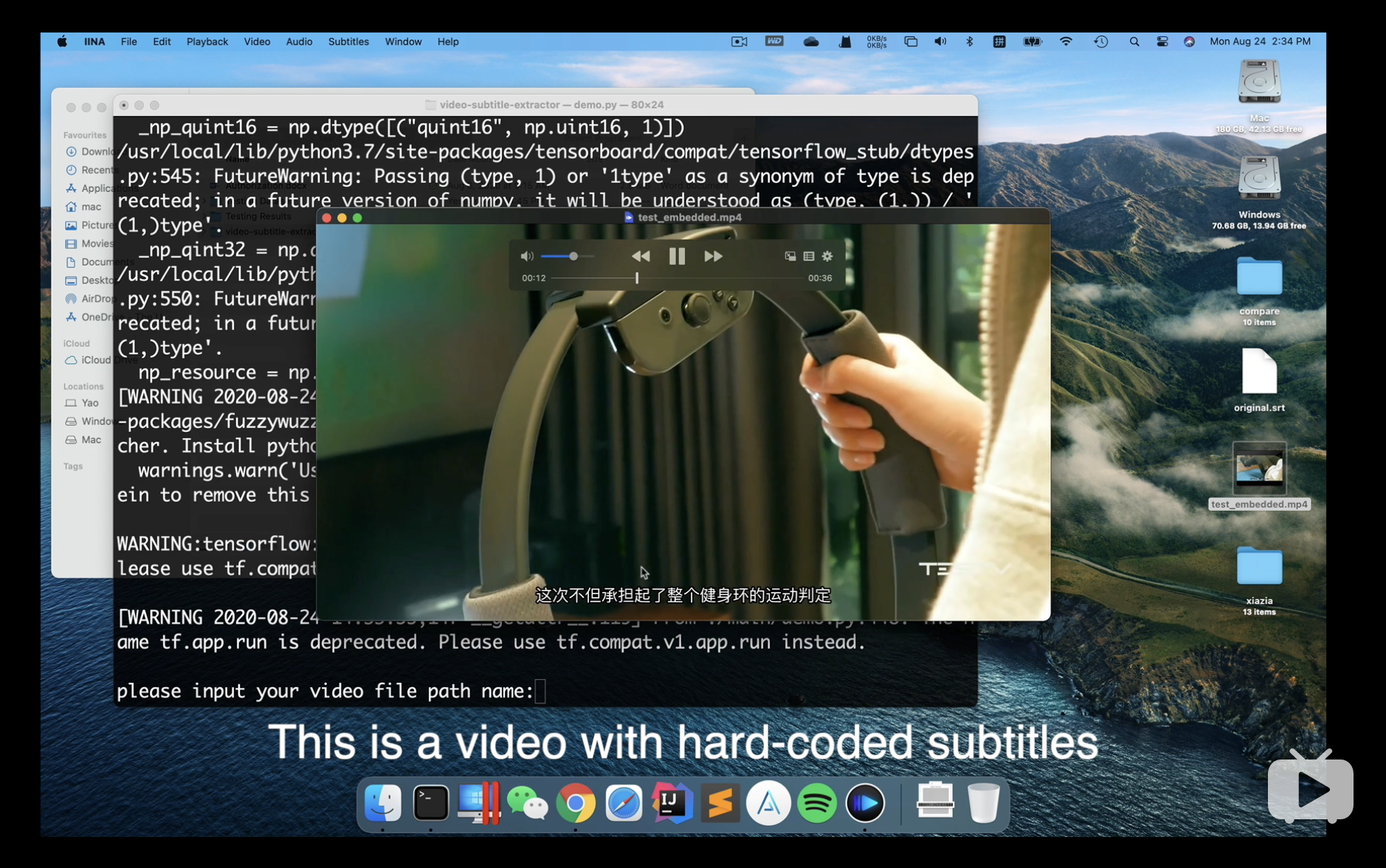](https://www.bilibili.com/video/BV1t5411h78J "Demo Video")
|
||||
|
||||
|
||||
## 在线运行
|
||||
|
||||
- 使用**Google Colab Notebook**(免费GPU): <a href="https://colab.research.google.com/github/YaoFANGUK/video-subtitle-extractor/blob/main/google_colab.ipynb"><img src="https://colab.research.google.com/assets/colab-badge.svg" alt="Open In Colab"></a>
|
||||
|
||||
> PS: Google Colab只能运行CLI版本
|
||||
|
||||
## 使用说明
|
||||
#### 0. 下载项目文件,将工作目录切换到项目文件所在目录
|
||||
```shell
|
||||
cd video-subtitle-extractor
|
||||
```
|
||||
|
||||
#### 1. 下载安装Anaconda
|
||||
<a href="https://www.anaconda.com/products/individual">https://www.anaconda.com/products/individual</a>
|
||||
#### 1. (推荐) 下载安装Anaconda
|
||||
|
||||
<a href="https://www.anaconda.com/products/individual">https://www.anaconda.com/products/individual#Downloads</a>
|
||||
|
||||
#### 2. (推荐) 使用conda创建项目虚拟环境并激活环境 (建议创建虚拟环境运行,以免后续出现问题)
|
||||
|
||||
#### 2. 使用conda创建项目虚拟环境并激活环境
|
||||
```shell
|
||||
conda create --name videoEnv python=3.8
|
||||
conda create --name videoEnv python=3.7
|
||||
conda activate videoEnv
|
||||
```
|
||||
|
||||
#### 3. 使用pip安装依赖文件
|
||||
|
||||
如果没有安装Anaconda,请确保你已经安装 python 3.7
|
||||
|
||||
- mac用户, CPU用户:
|
||||
|
||||
```shell
|
||||
pip install -r requirements.txt
|
||||
```
|
||||
|
||||
#### 4. 编译bbox文件
|
||||
- 有N卡的GPU用户: **要达到高精度的识别率请使用GPU版**
|
||||
|
||||
```shell
|
||||
cd utils/bbox
|
||||
chmod +x make.sh
|
||||
./make.sh
|
||||
pip install -r requirements_gpu.txt
|
||||
```
|
||||
|
||||
#### 5. 运行程序
|
||||
#### 4. 运行程序
|
||||
|
||||
- 运行图形化界面版本(GUI)
|
||||
|
||||
```shell
|
||||
python3 ./main/demo.py
|
||||
python gui.py
|
||||
```
|
||||
|
||||
#### 6.性能检测(可选)
|
||||
```shell
|
||||
python3 ./main/accuracyCal.py
|
||||
- 运行命令行版本(CLI)
|
||||
|
||||
```shell
|
||||
python main.py
|
||||
```
|
||||
|
||||
## 演示视频
|
||||
<a href="https://youtu.be/0gq8FQHb448">https://youtu.be/0gq8FQHb448</a>
|
||||
## Debug
|
||||
|
||||
Note:
|
||||
1. install requirements before running
|
||||
2. download trained model files from: (other Supplementary material also can be found here)
|
||||
https://drive.google.com/drive/folders/1AuthnUK7bqYOlLcKi1GkoLyHbq3GyjfX?usp=sharing
|
||||
3. unzip checkpoints_mlt.zip and put it into the checkpoints_mlt directory
|
||||
4. **This project is based on eragonruan's code**: https://github.com/eragonruan/text-detection-ctpn
|
||||
- Windows下出现geos_c.dll错误
|
||||
|
||||
```integrationperformancetest
|
||||
_lgeos = CDLL(os.path.join(sys.prefix, 'Library', 'bin', 'geos_c.dll'))
|
||||
File "C:\Users\Flavi\anaconda3\envs\subEnv\lib\ctypes\__init__.py", line 364, in __init__
|
||||
self._handle = _dlopen(self._name, mode)
|
||||
OSError: [WinError 126] 找不到指定的模块。
|
||||
```
|
||||
|
||||
解决方案:
|
||||
|
||||
1) 卸载Shapely
|
||||
```shell
|
||||
pip uninstall Shapely -y
|
||||
```
|
||||
|
||||
2) 使用conda重新安装Shapely
|
||||
```shell
|
||||
conda install Shapely
|
||||
```
|
||||
+117
@@ -0,0 +1,117 @@
|
||||
[简体中文](README.md) | English
|
||||
|
||||
## Introduction
|
||||

|
||||

|
||||

|
||||
|
||||
video-subtitle-extractor is used to extract hard-coded subtitles and generate **srt** file. It includes the following implementations:
|
||||
|
||||
- detect and extract subtitle frames (and keyframes using traditional graphic method)
|
||||
- detect the position (i.e. coordinates) of subtitles (as well as scene text if you want) (using deep learning method)
|
||||
- recognise the content of subtitles (i.e. converting graphic text into plain-text) (using deep learning method)
|
||||
- filter non-subtitle text
|
||||
- remove duplicated subtitle line
|
||||
- generate srt file
|
||||
|
||||
|
||||
|
||||
## Features
|
||||
|
||||
- You don't need to do any preprocessing to get an ideal result.
|
||||
- This is an offline project. You don't need to make any API call from Internet service provider in order to get results.
|
||||
- For Command Line Interface(CLI) version, you don't need to manually set the location of subtitle. This program will automatically detect the subtitle area for you.
|
||||
- GPU support is available. You can install CUDA and cuDNN to speed up the detection and recognition process and even get more accurate results.
|
||||
|
||||
|
||||
|
||||
## Demo
|
||||
|
||||
- Graphic User Interface:
|
||||
|
||||
<img src="https://z3.ax1x.com/2021/04/09/cNrA1A.png">
|
||||
|
||||
<div align="center">
|
||||
<img src="design/demo.gif"/>
|
||||
</div>
|
||||
|
||||
- Command Line Interface:
|
||||
|
||||
[](https://www.bilibili.com/video/BV1t5411h78J "Demo Video")
|
||||
|
||||
|
||||
|
||||
## Getting Started
|
||||
|
||||
#### 1. (Optional) Download and Install Anaconda
|
||||
|
||||
<a href="https://www.anaconda.com/products/individual">https://www.anaconda.com/products/individual#Downloads</a>
|
||||
|
||||
#### 2. (Optional) create and activate a conda virtual environment
|
||||
|
||||
```shell
|
||||
conda create --name videoEnv python=3.7
|
||||
conda activate videoEnv
|
||||
```
|
||||
|
||||
#### 3. Install dependencies via pip
|
||||
|
||||
make sure you have python 3.7 installed
|
||||
|
||||
- for macOS users and users who have CPU only:
|
||||
|
||||
```shell
|
||||
pip install -r requirements.txt
|
||||
```
|
||||
|
||||
- for users who have Nvidia graphic card:
|
||||
|
||||
```shell
|
||||
pip install -r requirements_gpu.txt
|
||||
```
|
||||
|
||||
#### 4. Running the program
|
||||
|
||||
- Run GUI version
|
||||
|
||||
```shell
|
||||
python gui.py
|
||||
```
|
||||
|
||||
- Run CLI version
|
||||
|
||||
```shell
|
||||
python main.py
|
||||
```
|
||||
|
||||
|
||||
|
||||
## Run on Google Colab
|
||||
|
||||
- **Google Colab Notebook with free GPU**: <a href="https://colab.research.google.com/github/YaoFANGUK/video-subtitle-extractor/blob/main/google_colab.ipynb"><img src="https://colab.research.google.com/assets/colab-badge.svg" alt="Open In Colab"></a>
|
||||
|
||||
## Debug
|
||||
|
||||
- For Windows users, if you encounter errors related to "geos_c.dll"
|
||||
|
||||
```text
|
||||
_lgeos = CDLL(os.path.join(sys.prefix, 'Library', 'bin', 'geos_c.dll'))
|
||||
File "C:\Users\Flavi\anaconda3\envs\subEnv\lib\ctypes\__init__.py", line 364, in __init__
|
||||
self._handle = _dlopen(self._name, mode)
|
||||
OSError: [WinError 126] The specified module could not be found。
|
||||
```
|
||||
|
||||
Solution:
|
||||
|
||||
1) Uninstall Shapely
|
||||
|
||||
```shell
|
||||
pip uninstall Shapely -y
|
||||
```
|
||||
|
||||
2) Reinstall Shapely via conda (make sure you have anaconda or miniconda installed)
|
||||
|
||||
```shell
|
||||
conda install Shapely
|
||||
```
|
||||
|
||||
@@ -0,0 +1,134 @@
|
||||
Global:
|
||||
use_gpu: true
|
||||
epoch_num: 1200
|
||||
log_smooth_window: 20
|
||||
print_batch_step: 2
|
||||
save_model_dir: ./output/ch_db_mv3/
|
||||
save_epoch_step: 1200
|
||||
# evaluation is run every 5000 iterations after the 4000th iteration
|
||||
eval_batch_step: [3000, 2000]
|
||||
# if pretrained_model is saved in static mode, load_static_weights must set to True
|
||||
load_static_weights: True
|
||||
cal_metric_during_train: False
|
||||
pretrained_model: ./pretrain_models/MobileNetV3_large_x0_5_pretrained
|
||||
checkpoints:
|
||||
save_inference_dir:
|
||||
use_visualdl: False
|
||||
infer_img: doc/imgs_en/img_10.jpg
|
||||
save_res_path: ./output/det_db/predicts_db.txt
|
||||
|
||||
Architecture:
|
||||
model_type: det
|
||||
algorithm: DB
|
||||
Transform:
|
||||
Backbone:
|
||||
name: MobileNetV3
|
||||
scale: 0.5
|
||||
model_name: large
|
||||
disable_se: True
|
||||
Neck:
|
||||
name: DBFPN
|
||||
out_channels: 96
|
||||
Head:
|
||||
name: DBHead
|
||||
k: 50
|
||||
|
||||
Loss:
|
||||
name: DBLoss
|
||||
balance_loss: true
|
||||
main_loss_type: DiceLoss
|
||||
alpha: 5
|
||||
beta: 10
|
||||
ohem_ratio: 3
|
||||
|
||||
Optimizer:
|
||||
name: Adam
|
||||
beta1: 0.9
|
||||
beta2: 0.999
|
||||
lr:
|
||||
name: Cosine
|
||||
learning_rate: 0.001
|
||||
warmup_epoch: 2
|
||||
regularizer:
|
||||
name: 'L2'
|
||||
factor: 0
|
||||
|
||||
PostProcess:
|
||||
name: DBPostProcess
|
||||
thresh: 0.3
|
||||
box_thresh: 0.6
|
||||
max_candidates: 1000
|
||||
unclip_ratio: 1.5
|
||||
|
||||
Metric:
|
||||
name: DetMetric
|
||||
main_indicator: hmean
|
||||
|
||||
Train:
|
||||
dataset:
|
||||
name: SimpleDataSet
|
||||
data_dir: ./train_data/icdar2015/text_localization/
|
||||
label_file_list:
|
||||
- ./train_data/icdar2015/text_localization/train_icdar2015_label.txt
|
||||
ratio_list: [1.0]
|
||||
transforms:
|
||||
- DecodeImage: # load image
|
||||
img_mode: BGR
|
||||
channel_first: False
|
||||
- DetLabelEncode: # Class handling label
|
||||
- IaaAugment:
|
||||
augmenter_args:
|
||||
- { 'type': Fliplr, 'args': { 'p': 0.5 } }
|
||||
- { 'type': Affine, 'args': { 'rotate': [-10, 10] } }
|
||||
- { 'type': Resize, 'args': { 'size': [0.5, 3] } }
|
||||
- EastRandomCropData:
|
||||
size: [960, 960]
|
||||
max_tries: 50
|
||||
keep_ratio: true
|
||||
- MakeBorderMap:
|
||||
shrink_ratio: 0.4
|
||||
thresh_min: 0.3
|
||||
thresh_max: 0.7
|
||||
- MakeShrinkMap:
|
||||
shrink_ratio: 0.4
|
||||
min_text_size: 8
|
||||
- NormalizeImage:
|
||||
scale: 1./255.
|
||||
mean: [0.485, 0.456, 0.406]
|
||||
std: [0.229, 0.224, 0.225]
|
||||
order: 'hwc'
|
||||
- ToCHWImage:
|
||||
- KeepKeys:
|
||||
keep_keys: ['image', 'threshold_map', 'threshold_mask', 'shrink_map', 'shrink_mask'] # the order of the dataloader list
|
||||
loader:
|
||||
shuffle: True
|
||||
drop_last: False
|
||||
batch_size_per_card: 8
|
||||
num_workers: 4
|
||||
|
||||
Eval:
|
||||
dataset:
|
||||
name: SimpleDataSet
|
||||
data_dir: ./train_data/icdar2015/text_localization/
|
||||
label_file_list:
|
||||
- ./train_data/icdar2015/text_localization/test_icdar2015_label.txt
|
||||
transforms:
|
||||
- DecodeImage: # load image
|
||||
img_mode: BGR
|
||||
channel_first: False
|
||||
- DetLabelEncode: # Class handling label
|
||||
- DetResizeForTest:
|
||||
# image_shape: [736, 1280]
|
||||
- NormalizeImage:
|
||||
scale: 1./255.
|
||||
mean: [0.485, 0.456, 0.406]
|
||||
std: [0.229, 0.224, 0.225]
|
||||
order: 'hwc'
|
||||
- ToCHWImage:
|
||||
- KeepKeys:
|
||||
keep_keys: ['image', 'shape', 'polys', 'ignore_tags']
|
||||
loader:
|
||||
shuffle: False
|
||||
drop_last: False
|
||||
batch_size_per_card: 1 # must be 1
|
||||
num_workers: 2
|
||||
@@ -0,0 +1,133 @@
|
||||
Global:
|
||||
use_gpu: true
|
||||
epoch_num: 1200
|
||||
log_smooth_window: 20
|
||||
print_batch_step: 2
|
||||
save_model_dir: ./output/ch_db_res18/
|
||||
save_epoch_step: 1200
|
||||
# evaluation is run every 5000 iterations after the 4000th iteration
|
||||
eval_batch_step: [3000, 2000]
|
||||
# if pretrained_model is saved in static mode, load_static_weights must set to True
|
||||
load_static_weights: True
|
||||
cal_metric_during_train: False
|
||||
pretrained_model: ./pretrain_models/ResNet18_vd_pretrained
|
||||
checkpoints:
|
||||
save_inference_dir:
|
||||
use_visualdl: False
|
||||
infer_img: doc/imgs_en/img_10.jpg
|
||||
save_res_path: ./output/det_db/predicts_db.txt
|
||||
|
||||
Architecture:
|
||||
model_type: det
|
||||
algorithm: DB
|
||||
Transform:
|
||||
Backbone:
|
||||
name: ResNet
|
||||
layers: 18
|
||||
disable_se: True
|
||||
Neck:
|
||||
name: DBFPN
|
||||
out_channels: 256
|
||||
Head:
|
||||
name: DBHead
|
||||
k: 50
|
||||
|
||||
Loss:
|
||||
name: DBLoss
|
||||
balance_loss: true
|
||||
main_loss_type: DiceLoss
|
||||
alpha: 5
|
||||
beta: 10
|
||||
ohem_ratio: 3
|
||||
|
||||
Optimizer:
|
||||
name: Adam
|
||||
beta1: 0.9
|
||||
beta2: 0.999
|
||||
lr:
|
||||
name: Cosine
|
||||
learning_rate: 0.001
|
||||
warmup_epoch: 2
|
||||
regularizer:
|
||||
name: 'L2'
|
||||
factor: 0
|
||||
|
||||
PostProcess:
|
||||
name: DBPostProcess
|
||||
thresh: 0.3
|
||||
box_thresh: 0.6
|
||||
max_candidates: 1000
|
||||
unclip_ratio: 1.5
|
||||
|
||||
Metric:
|
||||
name: DetMetric
|
||||
main_indicator: hmean
|
||||
|
||||
Train:
|
||||
dataset:
|
||||
name: SimpleDataSet
|
||||
data_dir: ./train_data/icdar2015/text_localization/
|
||||
label_file_list:
|
||||
- ./train_data/icdar2015/text_localization/train_icdar2015_label.txt
|
||||
ratio_list: [1.0]
|
||||
transforms:
|
||||
- DecodeImage: # load image
|
||||
img_mode: BGR
|
||||
channel_first: False
|
||||
- DetLabelEncode: # Class handling label
|
||||
- IaaAugment:
|
||||
augmenter_args:
|
||||
- { 'type': Fliplr, 'args': { 'p': 0.5 } }
|
||||
- { 'type': Affine, 'args': { 'rotate': [-10, 10] } }
|
||||
- { 'type': Resize, 'args': { 'size': [0.5, 3] } }
|
||||
- EastRandomCropData:
|
||||
size: [960, 960]
|
||||
max_tries: 50
|
||||
keep_ratio: true
|
||||
- MakeBorderMap:
|
||||
shrink_ratio: 0.4
|
||||
thresh_min: 0.3
|
||||
thresh_max: 0.7
|
||||
- MakeShrinkMap:
|
||||
shrink_ratio: 0.4
|
||||
min_text_size: 8
|
||||
- NormalizeImage:
|
||||
scale: 1./255.
|
||||
mean: [0.485, 0.456, 0.406]
|
||||
std: [0.229, 0.224, 0.225]
|
||||
order: 'hwc'
|
||||
- ToCHWImage:
|
||||
- KeepKeys:
|
||||
keep_keys: ['image', 'threshold_map', 'threshold_mask', 'shrink_map', 'shrink_mask'] # the order of the dataloader list
|
||||
loader:
|
||||
shuffle: True
|
||||
drop_last: False
|
||||
batch_size_per_card: 8
|
||||
num_workers: 4
|
||||
|
||||
Eval:
|
||||
dataset:
|
||||
name: SimpleDataSet
|
||||
data_dir: ./train_data/icdar2015/text_localization/
|
||||
label_file_list:
|
||||
- ./train_data/icdar2015/text_localization/test_icdar2015_label.txt
|
||||
transforms:
|
||||
- DecodeImage: # load image
|
||||
img_mode: BGR
|
||||
channel_first: False
|
||||
- DetLabelEncode: # Class handling label
|
||||
- DetResizeForTest:
|
||||
# image_shape: [736, 1280]
|
||||
- NormalizeImage:
|
||||
scale: 1./255.
|
||||
mean: [0.485, 0.456, 0.406]
|
||||
std: [0.229, 0.224, 0.225]
|
||||
order: 'hwc'
|
||||
- ToCHWImage:
|
||||
- KeepKeys:
|
||||
keep_keys: ['image', 'shape', 'polys', 'ignore_tags']
|
||||
loader:
|
||||
shuffle: False
|
||||
drop_last: False
|
||||
batch_size_per_card: 1 # must be 1
|
||||
num_workers: 2
|
||||
@@ -0,0 +1,133 @@
|
||||
Global:
|
||||
use_gpu: true
|
||||
epoch_num: 1200
|
||||
log_smooth_window: 20
|
||||
print_batch_step: 10
|
||||
save_model_dir: ./output/db_mv3/
|
||||
save_epoch_step: 1200
|
||||
# evaluation is run every 2000 iterations
|
||||
eval_batch_step: [0, 2000]
|
||||
# if pretrained_model is saved in static mode, load_static_weights must set to True
|
||||
load_static_weights: True
|
||||
cal_metric_during_train: False
|
||||
pretrained_model: ./pretrain_models/MobileNetV3_large_x0_5_pretrained
|
||||
checkpoints:
|
||||
save_inference_dir:
|
||||
use_visualdl: False
|
||||
infer_img: doc/imgs_en/img_10.jpg
|
||||
save_res_path: ./output/det_db/predicts_db.txt
|
||||
|
||||
Architecture:
|
||||
model_type: det
|
||||
algorithm: DB
|
||||
Transform:
|
||||
Backbone:
|
||||
name: MobileNetV3
|
||||
scale: 0.5
|
||||
model_name: large
|
||||
Neck:
|
||||
name: DBFPN
|
||||
out_channels: 256
|
||||
Head:
|
||||
name: DBHead
|
||||
k: 50
|
||||
|
||||
Loss:
|
||||
name: DBLoss
|
||||
balance_loss: true
|
||||
main_loss_type: DiceLoss
|
||||
alpha: 5
|
||||
beta: 10
|
||||
ohem_ratio: 3
|
||||
|
||||
Optimizer:
|
||||
name: Adam
|
||||
beta1: 0.9
|
||||
beta2: 0.999
|
||||
lr:
|
||||
learning_rate: 0.001
|
||||
regularizer:
|
||||
name: 'L2'
|
||||
factor: 0
|
||||
|
||||
PostProcess:
|
||||
name: DBPostProcess
|
||||
thresh: 0.3
|
||||
box_thresh: 0.6
|
||||
max_candidates: 1000
|
||||
unclip_ratio: 1.5
|
||||
|
||||
Metric:
|
||||
name: DetMetric
|
||||
main_indicator: hmean
|
||||
|
||||
Train:
|
||||
dataset:
|
||||
name: SimpleDataSet
|
||||
data_dir: ./train_data/icdar2015/text_localization/
|
||||
label_file_list:
|
||||
- ./train_data/icdar2015/text_localization/train_icdar2015_label.txt
|
||||
ratio_list: [1.0]
|
||||
transforms:
|
||||
- DecodeImage: # load image
|
||||
img_mode: BGR
|
||||
channel_first: False
|
||||
- DetLabelEncode: # Class handling label
|
||||
- IaaAugment:
|
||||
augmenter_args:
|
||||
- { 'type': Fliplr, 'args': { 'p': 0.5 } }
|
||||
- { 'type': Affine, 'args': { 'rotate': [-10, 10] } }
|
||||
- { 'type': Resize, 'args': { 'size': [0.5, 3] } }
|
||||
- EastRandomCropData:
|
||||
size: [640, 640]
|
||||
max_tries: 50
|
||||
keep_ratio: true
|
||||
- MakeBorderMap:
|
||||
shrink_ratio: 0.4
|
||||
thresh_min: 0.3
|
||||
thresh_max: 0.7
|
||||
- MakeShrinkMap:
|
||||
shrink_ratio: 0.4
|
||||
min_text_size: 8
|
||||
- NormalizeImage:
|
||||
scale: 1./255.
|
||||
mean: [0.485, 0.456, 0.406]
|
||||
std: [0.229, 0.224, 0.225]
|
||||
order: 'hwc'
|
||||
- ToCHWImage:
|
||||
- KeepKeys:
|
||||
keep_keys: ['image', 'threshold_map', 'threshold_mask', 'shrink_map', 'shrink_mask'] # the order of the dataloader list
|
||||
loader:
|
||||
shuffle: True
|
||||
drop_last: False
|
||||
batch_size_per_card: 16
|
||||
num_workers: 8
|
||||
use_shared_memory: False
|
||||
|
||||
Eval:
|
||||
dataset:
|
||||
name: SimpleDataSet
|
||||
data_dir: ./train_data/icdar2015/text_localization/
|
||||
label_file_list:
|
||||
- ./train_data/icdar2015/text_localization/test_icdar2015_label.txt
|
||||
transforms:
|
||||
- DecodeImage: # load image
|
||||
img_mode: BGR
|
||||
channel_first: False
|
||||
- DetLabelEncode: # Class handling label
|
||||
- DetResizeForTest:
|
||||
image_shape: [736, 1280]
|
||||
- NormalizeImage:
|
||||
scale: 1./255.
|
||||
mean: [0.485, 0.456, 0.406]
|
||||
std: [0.229, 0.224, 0.225]
|
||||
order: 'hwc'
|
||||
- ToCHWImage:
|
||||
- KeepKeys:
|
||||
keep_keys: ['image', 'shape', 'polys', 'ignore_tags']
|
||||
loader:
|
||||
shuffle: False
|
||||
drop_last: False
|
||||
batch_size_per_card: 1 # must be 1
|
||||
num_workers: 8
|
||||
use_shared_memory: False
|
||||
@@ -0,0 +1,111 @@
|
||||
Global:
|
||||
use_gpu: true
|
||||
epoch_num: 10000
|
||||
log_smooth_window: 20
|
||||
print_batch_step: 2
|
||||
save_model_dir: ./output/east_mv3/
|
||||
save_epoch_step: 1000
|
||||
# evaluation is run every 5000 iterations after the 4000th iteration
|
||||
eval_batch_step: [4000, 5000]
|
||||
# if pretrained_model is saved in static mode, load_static_weights must set to True
|
||||
load_static_weights: True
|
||||
cal_metric_during_train: False
|
||||
pretrained_model: ./pretrain_models/MobileNetV3_large_x0_5_pretrained
|
||||
checkpoints:
|
||||
save_inference_dir:
|
||||
use_visualdl: False
|
||||
infer_img:
|
||||
save_res_path: ./output/det_east/predicts_east.txt
|
||||
|
||||
Architecture:
|
||||
model_type: det
|
||||
algorithm: EAST
|
||||
Transform:
|
||||
Backbone:
|
||||
name: MobileNetV3
|
||||
scale: 0.5
|
||||
model_name: large
|
||||
Neck:
|
||||
name: EASTFPN
|
||||
model_name: small
|
||||
Head:
|
||||
name: EASTHead
|
||||
model_name: small
|
||||
|
||||
Loss:
|
||||
name: EASTLoss
|
||||
|
||||
Optimizer:
|
||||
name: Adam
|
||||
beta1: 0.9
|
||||
beta2: 0.999
|
||||
lr:
|
||||
# name: Cosine
|
||||
learning_rate: 0.001
|
||||
# warmup_epoch: 0
|
||||
regularizer:
|
||||
name: 'L2'
|
||||
factor: 0
|
||||
|
||||
PostProcess:
|
||||
name: EASTPostProcess
|
||||
score_thresh: 0.8
|
||||
cover_thresh: 0.1
|
||||
nms_thresh: 0.2
|
||||
|
||||
Metric:
|
||||
name: DetMetric
|
||||
main_indicator: hmean
|
||||
|
||||
Train:
|
||||
dataset:
|
||||
name: SimpleDataSet
|
||||
data_dir: ./train_data/icdar2015/text_localization/
|
||||
label_file_list:
|
||||
- ./train_data/icdar2015/text_localization/train_icdar2015_label.txt
|
||||
ratio_list: [1.0]
|
||||
transforms:
|
||||
- DecodeImage: # load image
|
||||
img_mode: BGR
|
||||
channel_first: False
|
||||
- DetLabelEncode: # Class handling label
|
||||
- EASTProcessTrain:
|
||||
image_shape: [512, 512]
|
||||
background_ratio: 0.125
|
||||
min_crop_side_ratio: 0.1
|
||||
min_text_size: 10
|
||||
- KeepKeys:
|
||||
keep_keys: ['image', 'score_map', 'geo_map', 'training_mask'] # dataloader will return list in this order
|
||||
loader:
|
||||
shuffle: True
|
||||
drop_last: False
|
||||
batch_size_per_card: 16
|
||||
num_workers: 8
|
||||
|
||||
Eval:
|
||||
dataset:
|
||||
name: SimpleDataSet
|
||||
data_dir: ./train_data/icdar2015/text_localization/
|
||||
label_file_list:
|
||||
- ./train_data/icdar2015/text_localization/test_icdar2015_label.txt
|
||||
transforms:
|
||||
- DecodeImage: # load image
|
||||
img_mode: BGR
|
||||
channel_first: False
|
||||
- DetLabelEncode: # Class handling label
|
||||
- DetResizeForTest:
|
||||
limit_side_len: 2400
|
||||
limit_type: max
|
||||
- NormalizeImage:
|
||||
scale: 1./255.
|
||||
mean: [0.485, 0.456, 0.406]
|
||||
std: [0.229, 0.224, 0.225]
|
||||
order: 'hwc'
|
||||
- ToCHWImage:
|
||||
- KeepKeys:
|
||||
keep_keys: ['image', 'shape', 'polys', 'ignore_tags']
|
||||
loader:
|
||||
shuffle: False
|
||||
drop_last: False
|
||||
batch_size_per_card: 1 # must be 1
|
||||
num_workers: 2
|
||||
@@ -0,0 +1,130 @@
|
||||
Global:
|
||||
use_gpu: true
|
||||
epoch_num: 1200
|
||||
log_smooth_window: 20
|
||||
print_batch_step: 10
|
||||
save_model_dir: ./output/det_r50_vd/
|
||||
save_epoch_step: 1200
|
||||
# evaluation is run every 2000 iterations
|
||||
eval_batch_step: [0,2000]
|
||||
# if pretrained_model is saved in static mode, load_static_weights must set to True
|
||||
load_static_weights: True
|
||||
cal_metric_during_train: False
|
||||
pretrained_model: ./pretrain_models/ResNet50_vd_ssld_pretrained
|
||||
checkpoints:
|
||||
save_inference_dir:
|
||||
use_visualdl: False
|
||||
infer_img: doc/imgs_en/img_10.jpg
|
||||
save_res_path: ./output/det_db/predicts_db.txt
|
||||
|
||||
Architecture:
|
||||
model_type: det
|
||||
algorithm: DB
|
||||
Transform:
|
||||
Backbone:
|
||||
name: ResNet
|
||||
layers: 50
|
||||
Neck:
|
||||
name: DBFPN
|
||||
out_channels: 256
|
||||
Head:
|
||||
name: DBHead
|
||||
k: 50
|
||||
|
||||
Loss:
|
||||
name: DBLoss
|
||||
balance_loss: true
|
||||
main_loss_type: DiceLoss
|
||||
alpha: 5
|
||||
beta: 10
|
||||
ohem_ratio: 3
|
||||
|
||||
Optimizer:
|
||||
name: Adam
|
||||
beta1: 0.9
|
||||
beta2: 0.999
|
||||
lr:
|
||||
learning_rate: 0.001
|
||||
regularizer:
|
||||
name: 'L2'
|
||||
factor: 0
|
||||
|
||||
PostProcess:
|
||||
name: DBPostProcess
|
||||
thresh: 0.3
|
||||
box_thresh: 0.7
|
||||
max_candidates: 1000
|
||||
unclip_ratio: 1.5
|
||||
|
||||
Metric:
|
||||
name: DetMetric
|
||||
main_indicator: hmean
|
||||
|
||||
Train:
|
||||
dataset:
|
||||
name: SimpleDataSet
|
||||
data_dir: ./train_data/icdar2015/text_localization/
|
||||
label_file_list:
|
||||
- ./train_data/icdar2015/text_localization/train_icdar2015_label.txt
|
||||
ratio_list: [1.0]
|
||||
transforms:
|
||||
- DecodeImage: # load image
|
||||
img_mode: BGR
|
||||
channel_first: False
|
||||
- DetLabelEncode: # Class handling label
|
||||
- IaaAugment:
|
||||
augmenter_args:
|
||||
- { 'type': Fliplr, 'args': { 'p': 0.5 } }
|
||||
- { 'type': Affine, 'args': { 'rotate': [-10, 10] } }
|
||||
- { 'type': Resize, 'args': { 'size': [0.5, 3] } }
|
||||
- EastRandomCropData:
|
||||
size: [640, 640]
|
||||
max_tries: 50
|
||||
keep_ratio: true
|
||||
- MakeBorderMap:
|
||||
shrink_ratio: 0.4
|
||||
thresh_min: 0.3
|
||||
thresh_max: 0.7
|
||||
- MakeShrinkMap:
|
||||
shrink_ratio: 0.4
|
||||
min_text_size: 8
|
||||
- NormalizeImage:
|
||||
scale: 1./255.
|
||||
mean: [0.485, 0.456, 0.406]
|
||||
std: [0.229, 0.224, 0.225]
|
||||
order: 'hwc'
|
||||
- ToCHWImage:
|
||||
- KeepKeys:
|
||||
keep_keys: ['image', 'threshold_map', 'threshold_mask', 'shrink_map', 'shrink_mask'] # the order of the dataloader list
|
||||
loader:
|
||||
shuffle: True
|
||||
drop_last: False
|
||||
batch_size_per_card: 16
|
||||
num_workers: 8
|
||||
|
||||
Eval:
|
||||
dataset:
|
||||
name: SimpleDataSet
|
||||
data_dir: ./train_data/icdar2015/text_localization/
|
||||
label_file_list:
|
||||
- ./train_data/icdar2015/text_localization/test_icdar2015_label.txt
|
||||
transforms:
|
||||
- DecodeImage: # load image
|
||||
img_mode: BGR
|
||||
channel_first: False
|
||||
- DetLabelEncode: # Class handling label
|
||||
- DetResizeForTest:
|
||||
image_shape: [736, 1280]
|
||||
- NormalizeImage:
|
||||
scale: 1./255.
|
||||
mean: [0.485, 0.456, 0.406]
|
||||
std: [0.229, 0.224, 0.225]
|
||||
order: 'hwc'
|
||||
- ToCHWImage:
|
||||
- KeepKeys:
|
||||
keep_keys: ['image', 'shape', 'polys', 'ignore_tags']
|
||||
loader:
|
||||
shuffle: False
|
||||
drop_last: False
|
||||
batch_size_per_card: 1 # must be 1
|
||||
num_workers: 8
|
||||
@@ -0,0 +1,110 @@
|
||||
Global:
|
||||
use_gpu: true
|
||||
epoch_num: 10000
|
||||
log_smooth_window: 20
|
||||
print_batch_step: 2
|
||||
save_model_dir: ./output/east_r50_vd/
|
||||
save_epoch_step: 1000
|
||||
# evaluation is run every 5000 iterations after the 4000th iteration
|
||||
eval_batch_step: [4000, 5000]
|
||||
# if pretrained_model is saved in static mode, load_static_weights must set to True
|
||||
load_static_weights: True
|
||||
cal_metric_during_train: False
|
||||
pretrained_model: ./pretrain_models/ResNet50_vd_pretrained/
|
||||
checkpoints:
|
||||
save_inference_dir:
|
||||
use_visualdl: False
|
||||
infer_img:
|
||||
save_res_path: ./output/det_east/predicts_east.txt
|
||||
|
||||
Architecture:
|
||||
model_type: det
|
||||
algorithm: EAST
|
||||
Transform:
|
||||
Backbone:
|
||||
name: ResNet
|
||||
layers: 50
|
||||
Neck:
|
||||
name: EASTFPN
|
||||
model_name: large
|
||||
Head:
|
||||
name: EASTHead
|
||||
model_name: large
|
||||
|
||||
Loss:
|
||||
name: EASTLoss
|
||||
|
||||
Optimizer:
|
||||
name: Adam
|
||||
beta1: 0.9
|
||||
beta2: 0.999
|
||||
lr:
|
||||
# name: Cosine
|
||||
learning_rate: 0.001
|
||||
# warmup_epoch: 0
|
||||
regularizer:
|
||||
name: 'L2'
|
||||
factor: 0
|
||||
|
||||
PostProcess:
|
||||
name: EASTPostProcess
|
||||
score_thresh: 0.8
|
||||
cover_thresh: 0.1
|
||||
nms_thresh: 0.2
|
||||
|
||||
Metric:
|
||||
name: DetMetric
|
||||
main_indicator: hmean
|
||||
|
||||
Train:
|
||||
dataset:
|
||||
name: SimpleDataSet
|
||||
data_dir: ./train_data/icdar2015/text_localization/
|
||||
label_file_list:
|
||||
- ./train_data/icdar2015/text_localization/train_icdar2015_label.txt
|
||||
ratio_list: [1.0]
|
||||
transforms:
|
||||
- DecodeImage: # load image
|
||||
img_mode: BGR
|
||||
channel_first: False
|
||||
- DetLabelEncode: # Class handling label
|
||||
- EASTProcessTrain:
|
||||
image_shape: [512, 512]
|
||||
background_ratio: 0.125
|
||||
min_crop_side_ratio: 0.1
|
||||
min_text_size: 10
|
||||
- KeepKeys:
|
||||
keep_keys: ['image', 'score_map', 'geo_map', 'training_mask'] # dataloader will return list in this order
|
||||
loader:
|
||||
shuffle: True
|
||||
drop_last: False
|
||||
batch_size_per_card: 8
|
||||
num_workers: 8
|
||||
|
||||
Eval:
|
||||
dataset:
|
||||
name: SimpleDataSet
|
||||
data_dir: ./train_data/icdar2015/text_localization/
|
||||
label_file_list:
|
||||
- ./train_data/icdar2015/text_localization/test_icdar2015_label.txt
|
||||
transforms:
|
||||
- DecodeImage: # load image
|
||||
img_mode: BGR
|
||||
channel_first: False
|
||||
- DetLabelEncode: # Class handling label
|
||||
- DetResizeForTest:
|
||||
limit_side_len: 2400
|
||||
limit_type: max
|
||||
- NormalizeImage:
|
||||
scale: 1./255.
|
||||
mean: [0.485, 0.456, 0.406]
|
||||
std: [0.229, 0.224, 0.225]
|
||||
order: 'hwc'
|
||||
- ToCHWImage:
|
||||
- KeepKeys:
|
||||
keep_keys: ['image', 'shape', 'polys', 'ignore_tags']
|
||||
loader:
|
||||
shuffle: False
|
||||
drop_last: False
|
||||
batch_size_per_card: 1 # must be 1
|
||||
num_workers: 2
|
||||
+110
@@ -0,0 +1,110 @@
|
||||
Global:
|
||||
use_gpu: true
|
||||
epoch_num: 5000
|
||||
log_smooth_window: 20
|
||||
print_batch_step: 2
|
||||
save_model_dir: ./output/sast_r50_vd_ic15/
|
||||
save_epoch_step: 1000
|
||||
# evaluation is run every 5000 iterations after the 4000th iteration
|
||||
eval_batch_step: [4000, 5000]
|
||||
# if pretrained_model is saved in static mode, load_static_weights must set to True
|
||||
load_static_weights: True
|
||||
cal_metric_during_train: False
|
||||
pretrained_model: ./pretrain_models/ResNet50_vd_ssld_pretrained/
|
||||
checkpoints:
|
||||
save_inference_dir:
|
||||
use_visualdl: False
|
||||
infer_img:
|
||||
save_res_path: ./output/sast_r50_vd_ic15/predicts_sast.txt
|
||||
|
||||
Architecture:
|
||||
model_type: det
|
||||
algorithm: SAST
|
||||
Transform:
|
||||
Backbone:
|
||||
name: ResNet_SAST
|
||||
layers: 50
|
||||
Neck:
|
||||
name: SASTFPN
|
||||
with_cab: True
|
||||
Head:
|
||||
name: SASTHead
|
||||
|
||||
Loss:
|
||||
name: SASTLoss
|
||||
|
||||
Optimizer:
|
||||
name: Adam
|
||||
beta1: 0.9
|
||||
beta2: 0.999
|
||||
lr:
|
||||
# name: Cosine
|
||||
learning_rate: 0.001
|
||||
# warmup_epoch: 0
|
||||
regularizer:
|
||||
name: 'L2'
|
||||
factor: 0
|
||||
|
||||
PostProcess:
|
||||
name: SASTPostProcess
|
||||
score_thresh: 0.5
|
||||
sample_pts_num: 2
|
||||
nms_thresh: 0.2
|
||||
expand_scale: 1.0
|
||||
shrink_ratio_of_width: 0.3
|
||||
|
||||
Metric:
|
||||
name: DetMetric
|
||||
main_indicator: hmean
|
||||
|
||||
Train:
|
||||
dataset:
|
||||
name: SimpleDataSet
|
||||
data_dir: ./train_data/
|
||||
label_file_list: [./train_data/icdar2013/train_label_json.txt, ./train_data/icdar2015/train_label_json.txt, ./train_data/icdar17_mlt_latin/train_label_json.txt, ./train_data/coco_text_icdar_4pts/train_label_json.txt]
|
||||
ratio_list: [0.1, 0.45, 0.3, 0.15]
|
||||
transforms:
|
||||
- DecodeImage: # load image
|
||||
img_mode: BGR
|
||||
channel_first: False
|
||||
- DetLabelEncode: # Class handling label
|
||||
- SASTProcessTrain:
|
||||
image_shape: [512, 512]
|
||||
min_crop_side_ratio: 0.3
|
||||
min_crop_size: 24
|
||||
min_text_size: 4
|
||||
max_text_size: 512
|
||||
- KeepKeys:
|
||||
keep_keys: ['image', 'score_map', 'border_map', 'training_mask', 'tvo_map', 'tco_map'] # dataloader will return list in this order
|
||||
loader:
|
||||
shuffle: True
|
||||
drop_last: False
|
||||
batch_size_per_card: 4
|
||||
num_workers: 4
|
||||
|
||||
Eval:
|
||||
dataset:
|
||||
name: SimpleDataSet
|
||||
data_dir: ./train_data/icdar2015/text_localization/
|
||||
label_file_list:
|
||||
- ./train_data/icdar2015/text_localization/test_icdar2015_label.txt
|
||||
transforms:
|
||||
- DecodeImage: # load image
|
||||
img_mode: BGR
|
||||
channel_first: False
|
||||
- DetLabelEncode: # Class handling label
|
||||
- DetResizeForTest:
|
||||
resize_long: 1536
|
||||
- NormalizeImage:
|
||||
scale: 1./255.
|
||||
mean: [0.485, 0.456, 0.406]
|
||||
std: [0.229, 0.224, 0.225]
|
||||
order: 'hwc'
|
||||
- ToCHWImage:
|
||||
- KeepKeys:
|
||||
keep_keys: ['image', 'shape', 'polys', 'ignore_tags']
|
||||
loader:
|
||||
shuffle: False
|
||||
drop_last: False
|
||||
batch_size_per_card: 1 # must be 1
|
||||
num_workers: 2
|
||||
+110
@@ -0,0 +1,110 @@
|
||||
Global:
|
||||
use_gpu: true
|
||||
epoch_num: 5000
|
||||
log_smooth_window: 20
|
||||
print_batch_step: 2
|
||||
save_model_dir: ./output/sast_r50_vd_tt/
|
||||
save_epoch_step: 1000
|
||||
# evaluation is run every 5000 iterations after the 4000th iteration
|
||||
eval_batch_step: [4000, 5000]
|
||||
# if pretrained_model is saved in static mode, load_static_weights must set to True
|
||||
load_static_weights: True
|
||||
cal_metric_during_train: False
|
||||
pretrained_model: ./pretrain_models/ResNet50_vd_ssld_pretrained/
|
||||
checkpoints:
|
||||
save_inference_dir:
|
||||
use_visualdl: False
|
||||
infer_img:
|
||||
save_res_path: ./output/sast_r50_vd_tt/predicts_sast.txt
|
||||
|
||||
Architecture:
|
||||
model_type: det
|
||||
algorithm: SAST
|
||||
Transform:
|
||||
Backbone:
|
||||
name: ResNet_SAST
|
||||
layers: 50
|
||||
Neck:
|
||||
name: SASTFPN
|
||||
with_cab: True
|
||||
Head:
|
||||
name: SASTHead
|
||||
|
||||
Loss:
|
||||
name: SASTLoss
|
||||
|
||||
Optimizer:
|
||||
name: Adam
|
||||
beta1: 0.9
|
||||
beta2: 0.999
|
||||
lr:
|
||||
# name: Cosine
|
||||
learning_rate: 0.001
|
||||
# warmup_epoch: 0
|
||||
regularizer:
|
||||
name: 'L2'
|
||||
factor: 0
|
||||
|
||||
PostProcess:
|
||||
name: SASTPostProcess
|
||||
score_thresh: 0.5
|
||||
sample_pts_num: 6
|
||||
nms_thresh: 0.2
|
||||
expand_scale: 1.2
|
||||
shrink_ratio_of_width: 0.2
|
||||
|
||||
Metric:
|
||||
name: DetMetric
|
||||
main_indicator: hmean
|
||||
|
||||
Train:
|
||||
dataset:
|
||||
name: SimpleDataSet
|
||||
data_dir: ./train_data/
|
||||
label_file_list: [./train_data/art_latin_icdar_14pt/train_no_tt_test/train_label_json.txt, ./train_data/total_text_icdar_14pt/train_label_json.txt]
|
||||
ratio_list: [0.5, 0.5]
|
||||
transforms:
|
||||
- DecodeImage: # load image
|
||||
img_mode: BGR
|
||||
channel_first: False
|
||||
- DetLabelEncode: # Class handling label
|
||||
- SASTProcessTrain:
|
||||
image_shape: [512, 512]
|
||||
min_crop_side_ratio: 0.3
|
||||
min_crop_size: 24
|
||||
min_text_size: 4
|
||||
max_text_size: 512
|
||||
- KeepKeys:
|
||||
keep_keys: ['image', 'score_map', 'border_map', 'training_mask', 'tvo_map', 'tco_map'] # dataloader will return list in this order
|
||||
loader:
|
||||
shuffle: True
|
||||
drop_last: False
|
||||
batch_size_per_card: 4
|
||||
num_workers: 4
|
||||
|
||||
Eval:
|
||||
dataset:
|
||||
name: SimpleDataSet
|
||||
data_dir: ./train_data/
|
||||
label_file_list:
|
||||
- ./train_data/total_text_icdar_14pt/test_label_json.txt
|
||||
transforms:
|
||||
- DecodeImage: # load image
|
||||
img_mode: BGR
|
||||
channel_first: False
|
||||
- DetLabelEncode: # Class handling label
|
||||
- DetResizeForTest:
|
||||
resize_long: 768
|
||||
- NormalizeImage:
|
||||
scale: 1./255.
|
||||
mean: [0.485, 0.456, 0.406]
|
||||
std: [0.229, 0.224, 0.225]
|
||||
order: 'hwc'
|
||||
- ToCHWImage:
|
||||
- KeepKeys:
|
||||
keep_keys: ['image', 'shape', 'polys', 'ignore_tags']
|
||||
loader:
|
||||
shuffle: False
|
||||
drop_last: False
|
||||
batch_size_per_card: 1 # must be 1
|
||||
num_workers: 2
|
||||
@@ -0,0 +1,100 @@
|
||||
Global:
|
||||
use_gpu: true
|
||||
epoch_num: 500
|
||||
log_smooth_window: 20
|
||||
print_batch_step: 10
|
||||
save_model_dir: ./output/rec_chinese_common_v2.0
|
||||
save_epoch_step: 3
|
||||
# evaluation is run every 5000 iterations after the 4000th iteration
|
||||
eval_batch_step: [0, 2000]
|
||||
# if pretrained_model is saved in static mode, load_static_weights must set to True
|
||||
cal_metric_during_train: True
|
||||
pretrained_model:
|
||||
checkpoints:
|
||||
save_inference_dir:
|
||||
use_visualdl: False
|
||||
infer_img: doc/imgs_words/ch/word_1.jpg
|
||||
# for data or label process
|
||||
character_dict_path: ppocr/utils/ppocr_keys_v1.txt
|
||||
character_type: ch
|
||||
max_text_length: 25
|
||||
infer_mode: False
|
||||
use_space_char: True
|
||||
|
||||
|
||||
Optimizer:
|
||||
name: Adam
|
||||
beta1: 0.9
|
||||
beta2: 0.999
|
||||
lr:
|
||||
name: Cosine
|
||||
learning_rate: 0.001
|
||||
regularizer:
|
||||
name: 'L2'
|
||||
factor: 0.00004
|
||||
|
||||
Architecture:
|
||||
model_type: rec
|
||||
algorithm: CRNN
|
||||
Transform:
|
||||
Backbone:
|
||||
name: ResNet
|
||||
layers: 34
|
||||
Neck:
|
||||
name: SequenceEncoder
|
||||
encoder_type: rnn
|
||||
hidden_size: 256
|
||||
Head:
|
||||
name: CTCHead
|
||||
fc_decay: 0.00004
|
||||
|
||||
Loss:
|
||||
name: CTCLoss
|
||||
|
||||
PostProcess:
|
||||
name: CTCLabelDecode
|
||||
|
||||
Metric:
|
||||
name: RecMetric
|
||||
main_indicator: acc
|
||||
|
||||
Train:
|
||||
dataset:
|
||||
name: SimpleDataSet
|
||||
data_dir: ./train_data/
|
||||
label_file_list: ["./train_data/train_list.txt"]
|
||||
transforms:
|
||||
- DecodeImage: # load image
|
||||
img_mode: BGR
|
||||
channel_first: False
|
||||
- RecAug:
|
||||
- CTCLabelEncode: # Class handling label
|
||||
- RecResizeImg:
|
||||
image_shape: [3, 32, 320]
|
||||
- KeepKeys:
|
||||
keep_keys: ['image', 'label', 'length'] # dataloader will return list in this order
|
||||
loader:
|
||||
shuffle: True
|
||||
batch_size_per_card: 256
|
||||
drop_last: True
|
||||
num_workers: 8
|
||||
|
||||
Eval:
|
||||
dataset:
|
||||
name: SimpleDataSet
|
||||
data_dir: ./train_data/
|
||||
label_file_list: ["./train_data/val_list.txt"]
|
||||
transforms:
|
||||
- DecodeImage: # load image
|
||||
img_mode: BGR
|
||||
channel_first: False
|
||||
- CTCLabelEncode: # Class handling label
|
||||
- RecResizeImg:
|
||||
image_shape: [3, 32, 320]
|
||||
- KeepKeys:
|
||||
keep_keys: ['image', 'label', 'length'] # dataloader will return list in this order
|
||||
loader:
|
||||
shuffle: False
|
||||
drop_last: False
|
||||
batch_size_per_card: 256
|
||||
num_workers: 8
|
||||
@@ -0,0 +1,102 @@
|
||||
Global:
|
||||
use_gpu: true
|
||||
epoch_num: 500
|
||||
log_smooth_window: 20
|
||||
print_batch_step: 10
|
||||
save_model_dir: ./output/rec_chinese_lite_v2.0
|
||||
save_epoch_step: 3
|
||||
# evaluation is run every 5000 iterations after the 4000th iteration
|
||||
eval_batch_step: [0, 2000]
|
||||
# if pretrained_model is saved in static mode, load_static_weights must set to True
|
||||
cal_metric_during_train: True
|
||||
pretrained_model:
|
||||
checkpoints:
|
||||
save_inference_dir:
|
||||
use_visualdl: False
|
||||
infer_img: doc/imgs_words/ch/word_1.jpg
|
||||
# for data or label process
|
||||
character_dict_path: ppocr/utils/ppocr_keys_v1.txt
|
||||
character_type: ch
|
||||
max_text_length: 25
|
||||
infer_mode: False
|
||||
use_space_char: True
|
||||
|
||||
|
||||
Optimizer:
|
||||
name: Adam
|
||||
beta1: 0.9
|
||||
beta2: 0.999
|
||||
lr:
|
||||
name: Cosine
|
||||
learning_rate: 0.001
|
||||
regularizer:
|
||||
name: 'L2'
|
||||
factor: 0.00001
|
||||
|
||||
Architecture:
|
||||
model_type: rec
|
||||
algorithm: CRNN
|
||||
Transform:
|
||||
Backbone:
|
||||
name: MobileNetV3
|
||||
scale: 0.5
|
||||
model_name: small
|
||||
small_stride: [1, 2, 2, 2]
|
||||
Neck:
|
||||
name: SequenceEncoder
|
||||
encoder_type: rnn
|
||||
hidden_size: 48
|
||||
Head:
|
||||
name: CTCHead
|
||||
fc_decay: 0.00001
|
||||
|
||||
Loss:
|
||||
name: CTCLoss
|
||||
|
||||
PostProcess:
|
||||
name: CTCLabelDecode
|
||||
|
||||
Metric:
|
||||
name: RecMetric
|
||||
main_indicator: acc
|
||||
|
||||
Train:
|
||||
dataset:
|
||||
name: SimpleDataSet
|
||||
data_dir: ./train_data/
|
||||
label_file_list: ["./train_data/train_list.txt"]
|
||||
transforms:
|
||||
- DecodeImage: # load image
|
||||
img_mode: BGR
|
||||
channel_first: False
|
||||
- RecAug:
|
||||
- CTCLabelEncode: # Class handling label
|
||||
- RecResizeImg:
|
||||
image_shape: [3, 32, 320]
|
||||
- KeepKeys:
|
||||
keep_keys: ['image', 'label', 'length'] # dataloader will return list in this order
|
||||
loader:
|
||||
shuffle: True
|
||||
batch_size_per_card: 256
|
||||
drop_last: True
|
||||
num_workers: 8
|
||||
|
||||
Eval:
|
||||
dataset:
|
||||
name: SimpleDataSet
|
||||
data_dir: ./train_data
|
||||
label_file_list: ["./train_data/val_list.txt"]
|
||||
transforms:
|
||||
- DecodeImage: # load image
|
||||
img_mode: BGR
|
||||
channel_first: False
|
||||
- CTCLabelEncode: # Class handling label
|
||||
- RecResizeImg:
|
||||
image_shape: [3, 32, 320]
|
||||
- KeepKeys:
|
||||
keep_keys: ['image', 'label', 'length'] # dataloader will return list in this order
|
||||
loader:
|
||||
shuffle: False
|
||||
drop_last: False
|
||||
batch_size_per_card: 256
|
||||
num_workers: 8
|
||||
@@ -0,0 +1,200 @@
|
||||
# Copyright (c) 2021 PaddlePaddle Authors. All Rights Reserved.
|
||||
#
|
||||
# Licensed under the Apache License, Version 2.0 (the "License");
|
||||
# you may not use this file except in compliance with the License.
|
||||
# You may obtain a copy of the License at
|
||||
#
|
||||
# http://www.apache.org/licenses/LICENSE-2.0
|
||||
#
|
||||
# Unless required by applicable law or agreed to in writing, software
|
||||
# distributed under the License is distributed on an "AS IS" BASIS,
|
||||
# WITHOUT WARRANTIES OR CONDITIONS OF ANY KIND, either express or implied.
|
||||
# See the License for the specific language governing permissions and
|
||||
# limitations under the License.
|
||||
|
||||
import yaml
|
||||
from argparse import ArgumentParser, RawDescriptionHelpFormatter
|
||||
import os.path
|
||||
import logging
|
||||
logging.basicConfig(level=logging.INFO)
|
||||
|
||||
support_list = {
|
||||
'it': 'italian',
|
||||
'es': 'spanish',
|
||||
'pt': 'portuguese',
|
||||
'ru': 'russian',
|
||||
'ar': 'arabic',
|
||||
'ta': 'tamil',
|
||||
'ug': 'uyghur',
|
||||
'fa': 'persian',
|
||||
'ur': 'urdu',
|
||||
'rs_latin': 'serbian latin',
|
||||
'oc': 'occitan',
|
||||
'rs_cyrillic': 'serbian cyrillic',
|
||||
'bg': 'bulgarian',
|
||||
'uk': 'ukranian',
|
||||
'be': 'belarusian',
|
||||
'te': 'telugu',
|
||||
'kn': 'kannada',
|
||||
'ch_tra': 'chinese tradition',
|
||||
'hi': 'hindi',
|
||||
'mr': 'marathi',
|
||||
'ne': 'nepali',
|
||||
}
|
||||
assert (os.path.isfile("./rec_multi_language_lite_train.yml")
|
||||
), "Loss basic configuration file rec_multi_language_lite_train.yml.\
|
||||
You can download it from \
|
||||
https://github.com/PaddlePaddle/PaddleOCR/tree/dygraph/configs/rec/multi_language/"
|
||||
|
||||
global_config = yaml.load(
|
||||
open("./rec_multi_language_lite_train.yml", 'rb'), Loader=yaml.Loader)
|
||||
project_path = os.path.abspath(os.path.join(os.getcwd(), "../../../"))
|
||||
|
||||
|
||||
class ArgsParser(ArgumentParser):
|
||||
def __init__(self):
|
||||
super(ArgsParser, self).__init__(
|
||||
formatter_class=RawDescriptionHelpFormatter)
|
||||
self.add_argument(
|
||||
"-o", "--opt", nargs='+', help="set configuration options")
|
||||
self.add_argument(
|
||||
"-l",
|
||||
"--language",
|
||||
nargs='+',
|
||||
help="set language type, support {}".format(support_list))
|
||||
self.add_argument(
|
||||
"--train",
|
||||
type=str,
|
||||
help="you can use this command to change the train dataset default path"
|
||||
)
|
||||
self.add_argument(
|
||||
"--val",
|
||||
type=str,
|
||||
help="you can use this command to change the eval dataset default path"
|
||||
)
|
||||
self.add_argument(
|
||||
"--dict",
|
||||
type=str,
|
||||
help="you can use this command to change the dictionary default path"
|
||||
)
|
||||
self.add_argument(
|
||||
"--data_dir",
|
||||
type=str,
|
||||
help="you can use this command to change the dataset default root path"
|
||||
)
|
||||
|
||||
def parse_args(self, argv=None):
|
||||
args = super(ArgsParser, self).parse_args(argv)
|
||||
args.opt = self._parse_opt(args.opt)
|
||||
args.language = self._set_language(args.language)
|
||||
return args
|
||||
|
||||
def _parse_opt(self, opts):
|
||||
config = {}
|
||||
if not opts:
|
||||
return config
|
||||
for s in opts:
|
||||
s = s.strip()
|
||||
k, v = s.split('=')
|
||||
config[k] = yaml.load(v, Loader=yaml.Loader)
|
||||
return config
|
||||
|
||||
def _set_language(self, type):
|
||||
assert (type), "please use -l or --language to choose language type"
|
||||
assert(
|
||||
type[0] in support_list.keys()
|
||||
),"the sub_keys(-l or --language) can only be one of support list: \n{},\nbut get: {}, " \
|
||||
"please check your running command".format(support_list, type)
|
||||
global_config['Global'][
|
||||
'character_dict_path'] = 'ppocr/utils/dict/{}_dict.txt'.format(type[
|
||||
0])
|
||||
global_config['Global'][
|
||||
'save_model_dir'] = './output/rec_{}_lite'.format(type[0])
|
||||
global_config['Train']['dataset'][
|
||||
'label_file_list'] = ["train_data/{}_train.txt".format(type[0])]
|
||||
global_config['Eval']['dataset'][
|
||||
'label_file_list'] = ["train_data/{}_val.txt".format(type[0])]
|
||||
global_config['Global']['character_type'] = type[0]
|
||||
assert (
|
||||
os.path.isfile(
|
||||
os.path.join(project_path, global_config['Global'][
|
||||
'character_dict_path']))
|
||||
), "Loss default dictionary file {}_dict.txt.You can download it from \
|
||||
https://github.com/PaddlePaddle/PaddleOCR/tree/dygraph/ppocr/utils/dict/".format(
|
||||
type[0])
|
||||
return type[0]
|
||||
|
||||
|
||||
def merge_config(config):
|
||||
"""
|
||||
Merge config into global config.
|
||||
Args:
|
||||
config (dict): Config to be merged.
|
||||
Returns: global config
|
||||
"""
|
||||
for key, value in config.items():
|
||||
if "." not in key:
|
||||
if isinstance(value, dict) and key in global_config:
|
||||
global_config[key].update(value)
|
||||
else:
|
||||
global_config[key] = value
|
||||
else:
|
||||
sub_keys = key.split('.')
|
||||
assert (
|
||||
sub_keys[0] in global_config
|
||||
), "the sub_keys can only be one of global_config: {}, but get: {}, please check your running command".format(
|
||||
global_config.keys(), sub_keys[0])
|
||||
cur = global_config[sub_keys[0]]
|
||||
for idx, sub_key in enumerate(sub_keys[1:]):
|
||||
if idx == len(sub_keys) - 2:
|
||||
cur[sub_key] = value
|
||||
else:
|
||||
cur = cur[sub_key]
|
||||
|
||||
|
||||
def loss_file(path):
|
||||
assert (
|
||||
os.path.exists(path)
|
||||
), "There is no such file:{},Please do not forget to put in the specified file".format(
|
||||
path)
|
||||
|
||||
|
||||
if __name__ == '__main__':
|
||||
FLAGS = ArgsParser().parse_args()
|
||||
merge_config(FLAGS.opt)
|
||||
save_file_path = 'rec_{}_lite_train.yml'.format(FLAGS.language)
|
||||
if os.path.isfile(save_file_path):
|
||||
os.remove(save_file_path)
|
||||
|
||||
if FLAGS.train:
|
||||
global_config['Train']['dataset']['label_file_list'] = [FLAGS.train]
|
||||
train_label_path = os.path.join(project_path, FLAGS.train)
|
||||
loss_file(train_label_path)
|
||||
if FLAGS.val:
|
||||
global_config['Eval']['dataset']['label_file_list'] = [FLAGS.val]
|
||||
eval_label_path = os.path.join(project_path, FLAGS.val)
|
||||
loss_file(eval_label_path)
|
||||
if FLAGS.dict:
|
||||
global_config['Global']['character_dict_path'] = FLAGS.dict
|
||||
dict_path = os.path.join(project_path, FLAGS.dict)
|
||||
loss_file(dict_path)
|
||||
if FLAGS.data_dir:
|
||||
global_config['Eval']['dataset']['data_dir'] = FLAGS.data_dir
|
||||
global_config['Train']['dataset']['data_dir'] = FLAGS.data_dir
|
||||
data_dir = os.path.join(project_path, FLAGS.data_dir)
|
||||
loss_file(data_dir)
|
||||
|
||||
with open(save_file_path, 'w') as f:
|
||||
yaml.dump(
|
||||
dict(global_config), f, default_flow_style=False, sort_keys=False)
|
||||
logging.info("Project path is :{}".format(project_path))
|
||||
logging.info("Train list path set to :{}".format(global_config['Train'][
|
||||
'dataset']['label_file_list'][0]))
|
||||
logging.info("Eval list path set to :{}".format(global_config['Eval'][
|
||||
'dataset']['label_file_list'][0]))
|
||||
logging.info("Dataset root path set to :{}".format(global_config['Eval'][
|
||||
'dataset']['data_dir']))
|
||||
logging.info("Dict path set to :{}".format(global_config['Global'][
|
||||
'character_dict_path']))
|
||||
logging.info("Config file set to :configs/rec/multi_language/{}".
|
||||
format(save_file_path))
|
||||
@@ -0,0 +1,102 @@
|
||||
Global:
|
||||
use_gpu: True
|
||||
epoch_num: 500
|
||||
log_smooth_window: 20
|
||||
print_batch_step: 10
|
||||
save_model_dir: ./output/rec_en_number_lite
|
||||
save_epoch_step: 3
|
||||
# evaluation is run every 5000 iterations after the 4000th iteration
|
||||
eval_batch_step: [0, 2000]
|
||||
# if pretrained_model is saved in static mode, load_static_weights must set to True
|
||||
cal_metric_during_train: True
|
||||
pretrained_model:
|
||||
checkpoints:
|
||||
save_inference_dir:
|
||||
use_visualdl: False
|
||||
infer_img:
|
||||
# for data or label process
|
||||
character_dict_path: ppocr/utils/dict/en_dict.txt
|
||||
character_type: EN
|
||||
max_text_length: 25
|
||||
infer_mode: False
|
||||
use_space_char: False
|
||||
|
||||
|
||||
Optimizer:
|
||||
name: Adam
|
||||
beta1: 0.9
|
||||
beta2: 0.999
|
||||
lr:
|
||||
name: Cosine
|
||||
learning_rate: 0.001
|
||||
regularizer:
|
||||
name: 'L2'
|
||||
factor: 0.00001
|
||||
|
||||
Architecture:
|
||||
model_type: rec
|
||||
algorithm: CRNN
|
||||
Transform:
|
||||
Backbone:
|
||||
name: MobileNetV3
|
||||
scale: 0.5
|
||||
model_name: small
|
||||
small_stride: [1, 2, 2, 2]
|
||||
Neck:
|
||||
name: SequenceEncoder
|
||||
encoder_type: rnn
|
||||
hidden_size: 48
|
||||
Head:
|
||||
name: CTCHead
|
||||
fc_decay: 0.00001
|
||||
|
||||
Loss:
|
||||
name: CTCLoss
|
||||
|
||||
PostProcess:
|
||||
name: CTCLabelDecode
|
||||
|
||||
Metric:
|
||||
name: RecMetric
|
||||
main_indicator: acc
|
||||
|
||||
Train:
|
||||
dataset:
|
||||
name: SimpleDataSet
|
||||
data_dir: ./train_data/
|
||||
label_file_list: ["./train_data/train_list.txt"]
|
||||
transforms:
|
||||
- DecodeImage: # load image
|
||||
img_mode: BGR
|
||||
channel_first: False
|
||||
- RecAug:
|
||||
- CTCLabelEncode: # Class handling label
|
||||
- RecResizeImg:
|
||||
image_shape: [3, 32, 320]
|
||||
- KeepKeys:
|
||||
keep_keys: ['image', 'label', 'length'] # dataloader will return list in this order
|
||||
loader:
|
||||
shuffle: True
|
||||
batch_size_per_card: 256
|
||||
drop_last: True
|
||||
num_workers: 8
|
||||
|
||||
Eval:
|
||||
dataset:
|
||||
name: SimpleDataSet
|
||||
data_dir: ./train_data/
|
||||
label_file_list: ["./train_data/eval_list.txt"]
|
||||
transforms:
|
||||
- DecodeImage: # load image
|
||||
img_mode: BGR
|
||||
channel_first: False
|
||||
- CTCLabelEncode: # Class handling label
|
||||
- RecResizeImg:
|
||||
image_shape: [3, 32, 320]
|
||||
- KeepKeys:
|
||||
keep_keys: ['image', 'label', 'length'] # dataloader will return list in this order
|
||||
loader:
|
||||
shuffle: False
|
||||
drop_last: False
|
||||
batch_size_per_card: 256
|
||||
num_workers: 8
|
||||
@@ -0,0 +1,102 @@
|
||||
Global:
|
||||
use_gpu: True
|
||||
epoch_num: 500
|
||||
log_smooth_window: 20
|
||||
print_batch_step: 10
|
||||
save_model_dir: ./output/rec_french_lite
|
||||
save_epoch_step: 3
|
||||
# evaluation is run every 5000 iterations after the 4000th iteration
|
||||
eval_batch_step: [0, 2000]
|
||||
# if pretrained_model is saved in static mode, load_static_weights must set to True
|
||||
cal_metric_during_train: True
|
||||
pretrained_model:
|
||||
checkpoints:
|
||||
save_inference_dir:
|
||||
use_visualdl: False
|
||||
infer_img:
|
||||
# for data or label process
|
||||
character_dict_path: ppocr/utils/dict/french_dict.txt
|
||||
character_type: french
|
||||
max_text_length: 25
|
||||
infer_mode: False
|
||||
use_space_char: False
|
||||
|
||||
|
||||
Optimizer:
|
||||
name: Adam
|
||||
beta1: 0.9
|
||||
beta2: 0.999
|
||||
lr:
|
||||
name: Cosine
|
||||
learning_rate: 0.001
|
||||
regularizer:
|
||||
name: 'L2'
|
||||
factor: 0.00001
|
||||
|
||||
Architecture:
|
||||
model_type: rec
|
||||
algorithm: CRNN
|
||||
Transform:
|
||||
Backbone:
|
||||
name: MobileNetV3
|
||||
scale: 0.5
|
||||
model_name: small
|
||||
small_stride: [1, 2, 2, 2]
|
||||
Neck:
|
||||
name: SequenceEncoder
|
||||
encoder_type: rnn
|
||||
hidden_size: 48
|
||||
Head:
|
||||
name: CTCHead
|
||||
fc_decay: 0.00001
|
||||
|
||||
Loss:
|
||||
name: CTCLoss
|
||||
|
||||
PostProcess:
|
||||
name: CTCLabelDecode
|
||||
|
||||
Metric:
|
||||
name: RecMetric
|
||||
main_indicator: acc
|
||||
|
||||
Train:
|
||||
dataset:
|
||||
name: SimpleDataSet
|
||||
data_dir: ./train_data/
|
||||
label_file_list: ["./train_data/train_list.txt"]
|
||||
transforms:
|
||||
- DecodeImage: # load image
|
||||
img_mode: BGR
|
||||
channel_first: False
|
||||
- RecAug:
|
||||
- CTCLabelEncode: # Class handling label
|
||||
- RecResizeImg:
|
||||
image_shape: [3, 32, 320]
|
||||
- KeepKeys:
|
||||
keep_keys: ['image', 'label', 'length'] # dataloader will return list in this order
|
||||
loader:
|
||||
shuffle: True
|
||||
batch_size_per_card: 256
|
||||
drop_last: True
|
||||
num_workers: 8
|
||||
|
||||
Eval:
|
||||
dataset:
|
||||
name: SimpleDataSet
|
||||
data_dir: ./train_data/
|
||||
label_file_list: ["./train_data/eval_list.txt"]
|
||||
transforms:
|
||||
- DecodeImage: # load image
|
||||
img_mode: BGR
|
||||
channel_first: False
|
||||
- CTCLabelEncode: # Class handling label
|
||||
- RecResizeImg:
|
||||
image_shape: [3, 32, 320]
|
||||
- KeepKeys:
|
||||
keep_keys: ['image', 'label', 'length'] # dataloader will return list in this order
|
||||
loader:
|
||||
shuffle: False
|
||||
drop_last: False
|
||||
batch_size_per_card: 256
|
||||
num_workers: 8
|
||||
@@ -0,0 +1,102 @@
|
||||
Global:
|
||||
use_gpu: True
|
||||
epoch_num: 500
|
||||
log_smooth_window: 20
|
||||
print_batch_step: 10
|
||||
save_model_dir: ./output/rec_german_lite
|
||||
save_epoch_step: 3
|
||||
# evaluation is run every 5000 iterations after the 4000th iteration
|
||||
eval_batch_step: [0, 2000]
|
||||
# if pretrained_model is saved in static mode, load_static_weights must set to True
|
||||
cal_metric_during_train: True
|
||||
pretrained_model:
|
||||
checkpoints:
|
||||
save_inference_dir:
|
||||
use_visualdl: False
|
||||
infer_img:
|
||||
# for data or label process
|
||||
character_dict_path: ppocr/utils/dict/german_dict.txt
|
||||
character_type: german
|
||||
max_text_length: 25
|
||||
infer_mode: False
|
||||
use_space_char: False
|
||||
|
||||
|
||||
Optimizer:
|
||||
name: Adam
|
||||
beta1: 0.9
|
||||
beta2: 0.999
|
||||
lr:
|
||||
name: Cosine
|
||||
learning_rate: 0.001
|
||||
regularizer:
|
||||
name: 'L2'
|
||||
factor: 0.00001
|
||||
|
||||
Architecture:
|
||||
model_type: rec
|
||||
algorithm: CRNN
|
||||
Transform:
|
||||
Backbone:
|
||||
name: MobileNetV3
|
||||
scale: 0.5
|
||||
model_name: small
|
||||
small_stride: [1, 2, 2, 2]
|
||||
Neck:
|
||||
name: SequenceEncoder
|
||||
encoder_type: rnn
|
||||
hidden_size: 48
|
||||
Head:
|
||||
name: CTCHead
|
||||
fc_decay: 0.00001
|
||||
|
||||
Loss:
|
||||
name: CTCLoss
|
||||
|
||||
PostProcess:
|
||||
name: CTCLabelDecode
|
||||
|
||||
Metric:
|
||||
name: RecMetric
|
||||
main_indicator: acc
|
||||
|
||||
Train:
|
||||
dataset:
|
||||
name: SimpleDataSet
|
||||
data_dir: ./train_data/
|
||||
label_file_list: ["./train_data/train_list.txt"]
|
||||
transforms:
|
||||
- DecodeImage: # load image
|
||||
img_mode: BGR
|
||||
channel_first: False
|
||||
- RecAug:
|
||||
- CTCLabelEncode: # Class handling label
|
||||
- RecResizeImg:
|
||||
image_shape: [3, 32, 320]
|
||||
- KeepKeys:
|
||||
keep_keys: ['image', 'label', 'length'] # dataloader will return list in this order
|
||||
loader:
|
||||
shuffle: True
|
||||
batch_size_per_card: 256
|
||||
drop_last: True
|
||||
num_workers: 8
|
||||
|
||||
Eval:
|
||||
dataset:
|
||||
name: SimpleDataSet
|
||||
data_dir: ./train_data/
|
||||
label_file_list: ["./train_data/eval_list.txt"]
|
||||
transforms:
|
||||
- DecodeImage: # load image
|
||||
img_mode: BGR
|
||||
channel_first: False
|
||||
- CTCLabelEncode: # Class handling label
|
||||
- RecResizeImg:
|
||||
image_shape: [3, 32, 320]
|
||||
- KeepKeys:
|
||||
keep_keys: ['image', 'label', 'length'] # dataloader will return list in this order
|
||||
loader:
|
||||
shuffle: False
|
||||
drop_last: False
|
||||
batch_size_per_card: 256
|
||||
num_workers: 8
|
||||
@@ -0,0 +1,102 @@
|
||||
Global:
|
||||
use_gpu: True
|
||||
epoch_num: 500
|
||||
log_smooth_window: 20
|
||||
print_batch_step: 10
|
||||
save_model_dir: ./output/rec_japan_lite
|
||||
save_epoch_step: 3
|
||||
# evaluation is run every 5000 iterations after the 4000th iteration
|
||||
eval_batch_step: [0, 2000]
|
||||
# if pretrained_model is saved in static mode, load_static_weights must set to True
|
||||
cal_metric_during_train: True
|
||||
pretrained_model:
|
||||
checkpoints:
|
||||
save_inference_dir:
|
||||
use_visualdl: False
|
||||
infer_img:
|
||||
# for data or label process
|
||||
character_dict_path: ppocr/utils/dict/japan_dict.txt
|
||||
character_type: japan
|
||||
max_text_length: 25
|
||||
infer_mode: False
|
||||
use_space_char: False
|
||||
|
||||
|
||||
Optimizer:
|
||||
name: Adam
|
||||
beta1: 0.9
|
||||
beta2: 0.999
|
||||
lr:
|
||||
name: Cosine
|
||||
learning_rate: 0.001
|
||||
regularizer:
|
||||
name: 'L2'
|
||||
factor: 0.00001
|
||||
|
||||
Architecture:
|
||||
model_type: rec
|
||||
algorithm: CRNN
|
||||
Transform:
|
||||
Backbone:
|
||||
name: MobileNetV3
|
||||
scale: 0.5
|
||||
model_name: small
|
||||
small_stride: [1, 2, 2, 2]
|
||||
Neck:
|
||||
name: SequenceEncoder
|
||||
encoder_type: rnn
|
||||
hidden_size: 48
|
||||
Head:
|
||||
name: CTCHead
|
||||
fc_decay: 0.00001
|
||||
|
||||
Loss:
|
||||
name: CTCLoss
|
||||
|
||||
PostProcess:
|
||||
name: CTCLabelDecode
|
||||
|
||||
Metric:
|
||||
name: RecMetric
|
||||
main_indicator: acc
|
||||
|
||||
Train:
|
||||
dataset:
|
||||
name: SimpleDataSet
|
||||
data_dir: ./train_data/
|
||||
label_file_list: ["./train_data/train_list.txt"]
|
||||
transforms:
|
||||
- DecodeImage: # load image
|
||||
img_mode: BGR
|
||||
channel_first: False
|
||||
- RecAug:
|
||||
- CTCLabelEncode: # Class handling label
|
||||
- RecResizeImg:
|
||||
image_shape: [3, 32, 320]
|
||||
- KeepKeys:
|
||||
keep_keys: ['image', 'label', 'length'] # dataloader will return list in this order
|
||||
loader:
|
||||
shuffle: True
|
||||
batch_size_per_card: 256
|
||||
drop_last: True
|
||||
num_workers: 8
|
||||
|
||||
Eval:
|
||||
dataset:
|
||||
name: SimpleDataSet
|
||||
data_dir: ./train_data/
|
||||
label_file_list: ["./train_data/eval_list.txt"]
|
||||
transforms:
|
||||
- DecodeImage: # load image
|
||||
img_mode: BGR
|
||||
channel_first: False
|
||||
- CTCLabelEncode: # Class handling label
|
||||
- RecResizeImg:
|
||||
image_shape: [3, 32, 320]
|
||||
- KeepKeys:
|
||||
keep_keys: ['image', 'label', 'length'] # dataloader will return list in this order
|
||||
loader:
|
||||
shuffle: False
|
||||
drop_last: False
|
||||
batch_size_per_card: 256
|
||||
num_workers: 8
|
||||
@@ -0,0 +1,102 @@
|
||||
Global:
|
||||
use_gpu: True
|
||||
epoch_num: 500
|
||||
log_smooth_window: 20
|
||||
print_batch_step: 10
|
||||
save_model_dir: ./output/rec_korean_lite
|
||||
save_epoch_step: 3
|
||||
# evaluation is run every 5000 iterations after the 4000th iteration
|
||||
eval_batch_step: [0, 2000]
|
||||
# if pretrained_model is saved in static mode, load_static_weights must set to True
|
||||
cal_metric_during_train: True
|
||||
pretrained_model:
|
||||
checkpoints:
|
||||
save_inference_dir:
|
||||
use_visualdl: False
|
||||
infer_img:
|
||||
# for data or label process
|
||||
character_dict_path: ppocr/utils/dict/korean_dict.txt
|
||||
character_type: korean
|
||||
max_text_length: 25
|
||||
infer_mode: False
|
||||
use_space_char: False
|
||||
|
||||
|
||||
Optimizer:
|
||||
name: Adam
|
||||
beta1: 0.9
|
||||
beta2: 0.999
|
||||
lr:
|
||||
name: Cosine
|
||||
learning_rate: 0.001
|
||||
regularizer:
|
||||
name: 'L2'
|
||||
factor: 0.00001
|
||||
|
||||
Architecture:
|
||||
model_type: rec
|
||||
algorithm: CRNN
|
||||
Transform:
|
||||
Backbone:
|
||||
name: MobileNetV3
|
||||
scale: 0.5
|
||||
model_name: small
|
||||
small_stride: [1, 2, 2, 2]
|
||||
Neck:
|
||||
name: SequenceEncoder
|
||||
encoder_type: rnn
|
||||
hidden_size: 48
|
||||
Head:
|
||||
name: CTCHead
|
||||
fc_decay: 0.00001
|
||||
|
||||
Loss:
|
||||
name: CTCLoss
|
||||
|
||||
PostProcess:
|
||||
name: CTCLabelDecode
|
||||
|
||||
Metric:
|
||||
name: RecMetric
|
||||
main_indicator: acc
|
||||
|
||||
Train:
|
||||
dataset:
|
||||
name: SimpleDataSet
|
||||
data_dir: ./train_data/
|
||||
label_file_list: ["./train_data/train_list.txt"]
|
||||
transforms:
|
||||
- DecodeImage: # load image
|
||||
img_mode: BGR
|
||||
channel_first: False
|
||||
- RecAug:
|
||||
- CTCLabelEncode: # Class handling label
|
||||
- RecResizeImg:
|
||||
image_shape: [3, 32, 320]
|
||||
- KeepKeys:
|
||||
keep_keys: ['image', 'label', 'length'] # dataloader will return list in this order
|
||||
loader:
|
||||
shuffle: True
|
||||
batch_size_per_card: 256
|
||||
drop_last: True
|
||||
num_workers: 8
|
||||
|
||||
Eval:
|
||||
dataset:
|
||||
name: SimpleDataSet
|
||||
data_dir: ./train_data/
|
||||
label_file_list: ["./train_data/eval_list.txt"]
|
||||
transforms:
|
||||
- DecodeImage: # load image
|
||||
img_mode: BGR
|
||||
channel_first: False
|
||||
- CTCLabelEncode: # Class handling label
|
||||
- RecResizeImg:
|
||||
image_shape: [3, 32, 320]
|
||||
- KeepKeys:
|
||||
keep_keys: ['image', 'label', 'length'] # dataloader will return list in this order
|
||||
loader:
|
||||
shuffle: False
|
||||
drop_last: False
|
||||
batch_size_per_card: 256
|
||||
num_workers: 8
|
||||
@@ -0,0 +1,103 @@
|
||||
Global:
|
||||
use_gpu: True
|
||||
epoch_num: 500
|
||||
log_smooth_window: 20
|
||||
print_batch_step: 10
|
||||
save_model_dir: ./output/rec_multi_language_lite
|
||||
save_epoch_step: 3
|
||||
# evaluation is run every 5000 iterations after the 4000th iteration
|
||||
eval_batch_step: [0, 2000]
|
||||
# if pretrained_model is saved in static mode, load_static_weights must set to True
|
||||
cal_metric_during_train: True
|
||||
pretrained_model:
|
||||
checkpoints:
|
||||
save_inference_dir:
|
||||
use_visualdl: False
|
||||
infer_img:
|
||||
# for data or label process
|
||||
character_dict_path:
|
||||
# Set the language of training, if set, select the default dictionary file
|
||||
character_type:
|
||||
max_text_length: 25
|
||||
infer_mode: False
|
||||
use_space_char: True
|
||||
|
||||
|
||||
Optimizer:
|
||||
name: Adam
|
||||
beta1: 0.9
|
||||
beta2: 0.999
|
||||
lr:
|
||||
name: Cosine
|
||||
learning_rate: 0.001
|
||||
regularizer:
|
||||
name: 'L2'
|
||||
factor: 0.00001
|
||||
|
||||
Architecture:
|
||||
model_type: rec
|
||||
algorithm: CRNN
|
||||
Transform:
|
||||
Backbone:
|
||||
name: MobileNetV3
|
||||
scale: 0.5
|
||||
model_name: small
|
||||
small_stride: [1, 2, 2, 2]
|
||||
Neck:
|
||||
name: SequenceEncoder
|
||||
encoder_type: rnn
|
||||
hidden_size: 48
|
||||
Head:
|
||||
name: CTCHead
|
||||
fc_decay: 0.00001
|
||||
|
||||
Loss:
|
||||
name: CTCLoss
|
||||
|
||||
PostProcess:
|
||||
name: CTCLabelDecode
|
||||
|
||||
Metric:
|
||||
name: RecMetric
|
||||
main_indicator: acc
|
||||
|
||||
Train:
|
||||
dataset:
|
||||
name: SimpleDataSet
|
||||
data_dir: train_data/
|
||||
label_file_list: ["./train_data/train_list.txt"]
|
||||
transforms:
|
||||
- DecodeImage: # load image
|
||||
img_mode: BGR
|
||||
channel_first: False
|
||||
- RecAug:
|
||||
- CTCLabelEncode: # Class handling label
|
||||
- RecResizeImg:
|
||||
image_shape: [3, 32, 320]
|
||||
- KeepKeys:
|
||||
keep_keys: ['image', 'label', 'length'] # dataloader will return list in this order
|
||||
loader:
|
||||
shuffle: True
|
||||
batch_size_per_card: 256
|
||||
drop_last: True
|
||||
num_workers: 8
|
||||
|
||||
Eval:
|
||||
dataset:
|
||||
name: SimpleDataSet
|
||||
data_dir: train_data/
|
||||
label_file_list: ["./train_data/val_list.txt"]
|
||||
transforms:
|
||||
- DecodeImage: # load image
|
||||
img_mode: BGR
|
||||
channel_first: False
|
||||
- CTCLabelEncode: # Class handling label
|
||||
- RecResizeImg:
|
||||
image_shape: [3, 32, 320]
|
||||
- KeepKeys:
|
||||
keep_keys: ['image', 'label', 'length'] # dataloader will return list in this order
|
||||
loader:
|
||||
shuffle: False
|
||||
drop_last: False
|
||||
batch_size_per_card: 256
|
||||
num_workers: 8
|
||||
@@ -0,0 +1,100 @@
|
||||
Global:
|
||||
use_gpu: true
|
||||
epoch_num: 72
|
||||
log_smooth_window: 20
|
||||
print_batch_step: 10
|
||||
save_model_dir: ./output/rec/ic15/
|
||||
save_epoch_step: 3
|
||||
# evaluation is run every 2000 iterations
|
||||
eval_batch_step: [0, 2000]
|
||||
# if pretrained_model is saved in static mode, load_static_weights must set to True
|
||||
cal_metric_during_train: True
|
||||
pretrained_model:
|
||||
checkpoints:
|
||||
save_inference_dir:
|
||||
use_visualdl: False
|
||||
infer_img: doc/imgs_words_en/word_10.png
|
||||
# for data or label process
|
||||
character_dict_path: ppocr/utils/ic15_dict.txt
|
||||
character_type: ch
|
||||
max_text_length: 25
|
||||
infer_mode: False
|
||||
use_space_char: False
|
||||
|
||||
Optimizer:
|
||||
name: Adam
|
||||
beta1: 0.9
|
||||
beta2: 0.999
|
||||
lr:
|
||||
learning_rate: 0.0005
|
||||
regularizer:
|
||||
name: 'L2'
|
||||
factor: 0
|
||||
|
||||
Architecture:
|
||||
model_type: rec
|
||||
algorithm: CRNN
|
||||
Transform:
|
||||
Backbone:
|
||||
name: MobileNetV3
|
||||
scale: 0.5
|
||||
model_name: large
|
||||
Neck:
|
||||
name: SequenceEncoder
|
||||
encoder_type: rnn
|
||||
hidden_size: 96
|
||||
Head:
|
||||
name: CTCHead
|
||||
fc_decay: 0
|
||||
|
||||
Loss:
|
||||
name: CTCLoss
|
||||
|
||||
PostProcess:
|
||||
name: CTCLabelDecode
|
||||
|
||||
Metric:
|
||||
name: RecMetric
|
||||
main_indicator: acc
|
||||
|
||||
Train:
|
||||
dataset:
|
||||
name: SimpleDataSet
|
||||
data_dir: ./train_data/
|
||||
label_file_list: ["./train_data/train_list.txt"]
|
||||
transforms:
|
||||
- DecodeImage: # load image
|
||||
img_mode: BGR
|
||||
channel_first: False
|
||||
- CTCLabelEncode: # Class handling label
|
||||
- RecResizeImg:
|
||||
image_shape: [3, 32, 100]
|
||||
- KeepKeys:
|
||||
keep_keys: ['image', 'label', 'length'] # dataloader will return list in this order
|
||||
loader:
|
||||
shuffle: True
|
||||
batch_size_per_card: 256
|
||||
drop_last: True
|
||||
num_workers: 8
|
||||
use_shared_memory: False
|
||||
|
||||
Eval:
|
||||
dataset:
|
||||
name: SimpleDataSet
|
||||
data_dir: ./train_data/
|
||||
label_file_list: ["./train_data/train_list.txt"]
|
||||
transforms:
|
||||
- DecodeImage: # load image
|
||||
img_mode: BGR
|
||||
channel_first: False
|
||||
- CTCLabelEncode: # Class handling label
|
||||
- RecResizeImg:
|
||||
image_shape: [3, 32, 100]
|
||||
- KeepKeys:
|
||||
keep_keys: ['image', 'label', 'length'] # dataloader will return list in this order
|
||||
loader:
|
||||
shuffle: False
|
||||
drop_last: False
|
||||
batch_size_per_card: 256
|
||||
num_workers: 4
|
||||
use_shared_memory: False
|
||||
@@ -0,0 +1,96 @@
|
||||
Global:
|
||||
use_gpu: True
|
||||
epoch_num: 72
|
||||
log_smooth_window: 20
|
||||
print_batch_step: 10
|
||||
save_model_dir: ./output/rec/mv3_none_bilstm_ctc/
|
||||
save_epoch_step: 3
|
||||
# evaluation is run every 2000 iterations
|
||||
eval_batch_step: [0, 2000]
|
||||
# if pretrained_model is saved in static mode, load_static_weights must set to True
|
||||
cal_metric_during_train: True
|
||||
pretrained_model:
|
||||
checkpoints:
|
||||
save_inference_dir:
|
||||
use_visualdl: False
|
||||
infer_img: doc/imgs_words_en/word_10.png
|
||||
# for data or label process
|
||||
character_dict_path:
|
||||
character_type: en
|
||||
max_text_length: 25
|
||||
infer_mode: False
|
||||
use_space_char: False
|
||||
|
||||
Optimizer:
|
||||
name: Adam
|
||||
beta1: 0.9
|
||||
beta2: 0.999
|
||||
lr:
|
||||
learning_rate: 0.0005
|
||||
regularizer:
|
||||
name: 'L2'
|
||||
factor: 0
|
||||
|
||||
Architecture:
|
||||
model_type: rec
|
||||
algorithm: CRNN
|
||||
Transform:
|
||||
Backbone:
|
||||
name: MobileNetV3
|
||||
scale: 0.5
|
||||
model_name: large
|
||||
Neck:
|
||||
name: SequenceEncoder
|
||||
encoder_type: rnn
|
||||
hidden_size: 96
|
||||
Head:
|
||||
name: CTCHead
|
||||
fc_decay: 0
|
||||
|
||||
Loss:
|
||||
name: CTCLoss
|
||||
|
||||
PostProcess:
|
||||
name: CTCLabelDecode
|
||||
|
||||
Metric:
|
||||
name: RecMetric
|
||||
main_indicator: acc
|
||||
|
||||
Train:
|
||||
dataset:
|
||||
name: LMDBDataSet
|
||||
data_dir: ./train_data/data_lmdb_release/training/
|
||||
transforms:
|
||||
- DecodeImage: # load image
|
||||
img_mode: BGR
|
||||
channel_first: False
|
||||
- CTCLabelEncode: # Class handling label
|
||||
- RecResizeImg:
|
||||
image_shape: [3, 32, 100]
|
||||
- KeepKeys:
|
||||
keep_keys: ['image', 'label', 'length'] # dataloader will return list in this order
|
||||
loader:
|
||||
shuffle: False
|
||||
batch_size_per_card: 256
|
||||
drop_last: True
|
||||
num_workers: 8
|
||||
|
||||
Eval:
|
||||
dataset:
|
||||
name: LMDBDataSet
|
||||
data_dir: ./train_data/data_lmdb_release/validation/
|
||||
transforms:
|
||||
- DecodeImage: # load image
|
||||
img_mode: BGR
|
||||
channel_first: False
|
||||
- CTCLabelEncode: # Class handling label
|
||||
- RecResizeImg:
|
||||
image_shape: [3, 32, 100]
|
||||
- KeepKeys:
|
||||
keep_keys: ['image', 'label', 'length'] # dataloader will return list in this order
|
||||
loader:
|
||||
shuffle: False
|
||||
drop_last: False
|
||||
batch_size_per_card: 256
|
||||
num_workers: 4
|
||||
@@ -0,0 +1,95 @@
|
||||
Global:
|
||||
use_gpu: True
|
||||
epoch_num: 72
|
||||
log_smooth_window: 20
|
||||
print_batch_step: 10
|
||||
save_model_dir: ./output/rec/mv3_none_none_ctc/
|
||||
save_epoch_step: 3
|
||||
# evaluation is run every 2000 iterations
|
||||
eval_batch_step: [0, 2000]
|
||||
# if pretrained_model is saved in static mode, load_static_weights must set to True
|
||||
cal_metric_during_train: True
|
||||
pretrained_model:
|
||||
checkpoints:
|
||||
save_inference_dir:
|
||||
use_visualdl: False
|
||||
infer_img: doc/imgs_words_en/word_10.png
|
||||
# for data or label process
|
||||
character_dict_path:
|
||||
character_type: en
|
||||
max_text_length: 25
|
||||
infer_mode: False
|
||||
use_space_char: False
|
||||
|
||||
Optimizer:
|
||||
name: Adam
|
||||
beta1: 0.9
|
||||
beta2: 0.999
|
||||
lr:
|
||||
learning_rate: 0.0005
|
||||
regularizer:
|
||||
name: 'L2'
|
||||
factor: 0
|
||||
|
||||
Architecture:
|
||||
model_type: rec
|
||||
algorithm: Rosetta
|
||||
Transform:
|
||||
Backbone:
|
||||
name: MobileNetV3
|
||||
scale: 0.5
|
||||
model_name: large
|
||||
Neck:
|
||||
name: SequenceEncoder
|
||||
encoder_type: reshape
|
||||
Head:
|
||||
name: CTCHead
|
||||
fc_decay: 0.0004
|
||||
|
||||
Loss:
|
||||
name: CTCLoss
|
||||
|
||||
PostProcess:
|
||||
name: CTCLabelDecode
|
||||
|
||||
Metric:
|
||||
name: RecMetric
|
||||
main_indicator: acc
|
||||
|
||||
Train:
|
||||
dataset:
|
||||
name: LMDBDataSet
|
||||
data_dir: ./train_data/data_lmdb_release/training/
|
||||
transforms:
|
||||
- DecodeImage: # load image
|
||||
img_mode: BGR
|
||||
channel_first: False
|
||||
- CTCLabelEncode: # Class handling label
|
||||
- RecResizeImg:
|
||||
image_shape: [3, 32, 100]
|
||||
- KeepKeys:
|
||||
keep_keys: ['image', 'label', 'length'] # dataloader will return list in this order
|
||||
loader:
|
||||
shuffle: False
|
||||
batch_size_per_card: 256
|
||||
drop_last: True
|
||||
num_workers: 8
|
||||
|
||||
Eval:
|
||||
dataset:
|
||||
name: LMDBDataSet
|
||||
data_dir: ./train_data/data_lmdb_release/validation/
|
||||
transforms:
|
||||
- DecodeImage: # load image
|
||||
img_mode: BGR
|
||||
channel_first: False
|
||||
- CTCLabelEncode: # Class handling label
|
||||
- RecResizeImg:
|
||||
image_shape: [3, 32, 100]
|
||||
- KeepKeys:
|
||||
keep_keys: ['image', 'label', 'length'] # dataloader will return list in this order
|
||||
loader:
|
||||
shuffle: False
|
||||
drop_last: False
|
||||
batch_size_per_card: 256
|
||||
num_workers: 8
|
||||
@@ -0,0 +1,102 @@
|
||||
Global:
|
||||
use_gpu: True
|
||||
epoch_num: 72
|
||||
log_smooth_window: 20
|
||||
print_batch_step: 10
|
||||
save_model_dir: ./output/rec/rec_mv3_tps_bilstm_att/
|
||||
save_epoch_step: 3
|
||||
# evaluation is run every 5000 iterations after the 4000th iteration
|
||||
eval_batch_step: [0, 2000]
|
||||
# if pretrained_model is saved in static mode, load_static_weights must set to True
|
||||
cal_metric_during_train: True
|
||||
pretrained_model:
|
||||
checkpoints:
|
||||
save_inference_dir:
|
||||
use_visualdl: False
|
||||
infer_img: doc/imgs_words/ch/word_1.jpg
|
||||
# for data or label process
|
||||
character_dict_path:
|
||||
character_type: en
|
||||
max_text_length: 25
|
||||
infer_mode: False
|
||||
use_space_char: False
|
||||
|
||||
|
||||
Optimizer:
|
||||
name: Adam
|
||||
beta1: 0.9
|
||||
beta2: 0.999
|
||||
lr:
|
||||
learning_rate: 0.0005
|
||||
regularizer:
|
||||
name: 'L2'
|
||||
factor: 0.00001
|
||||
|
||||
Architecture:
|
||||
model_type: rec
|
||||
algorithm: RARE
|
||||
Transform:
|
||||
name: TPS
|
||||
num_fiducial: 20
|
||||
loc_lr: 0.1
|
||||
model_name: small
|
||||
Backbone:
|
||||
name: MobileNetV3
|
||||
scale: 0.5
|
||||
model_name: large
|
||||
Neck:
|
||||
name: SequenceEncoder
|
||||
encoder_type: rnn
|
||||
hidden_size: 96
|
||||
Head:
|
||||
name: AttentionHead
|
||||
hidden_size: 96
|
||||
|
||||
|
||||
Loss:
|
||||
name: AttentionLoss
|
||||
|
||||
PostProcess:
|
||||
name: AttnLabelDecode
|
||||
|
||||
Metric:
|
||||
name: RecMetric
|
||||
main_indicator: acc
|
||||
|
||||
Train:
|
||||
dataset:
|
||||
name: LMDBDataSet
|
||||
data_dir: ./train_data/data_lmdb_release/training/
|
||||
transforms:
|
||||
- DecodeImage: # load image
|
||||
img_mode: BGR
|
||||
channel_first: False
|
||||
- AttnLabelEncode: # Class handling label
|
||||
- RecResizeImg:
|
||||
image_shape: [3, 32, 100]
|
||||
- KeepKeys:
|
||||
keep_keys: ['image', 'label', 'length'] # dataloader will return list in this order
|
||||
loader:
|
||||
shuffle: True
|
||||
batch_size_per_card: 256
|
||||
drop_last: True
|
||||
num_workers: 8
|
||||
|
||||
Eval:
|
||||
dataset:
|
||||
name: LMDBDataSet
|
||||
data_dir: ./train_data/data_lmdb_release/validation/
|
||||
transforms:
|
||||
- DecodeImage: # load image
|
||||
img_mode: BGR
|
||||
channel_first: False
|
||||
- AttnLabelEncode: # Class handling label
|
||||
- RecResizeImg:
|
||||
image_shape: [3, 32, 100]
|
||||
- KeepKeys:
|
||||
keep_keys: ['image', 'label', 'length'] # dataloader will return list in this order
|
||||
loader:
|
||||
shuffle: False
|
||||
drop_last: False
|
||||
batch_size_per_card: 256
|
||||
num_workers: 1
|
||||
@@ -0,0 +1,100 @@
|
||||
Global:
|
||||
use_gpu: True
|
||||
epoch_num: 72
|
||||
log_smooth_window: 20
|
||||
print_batch_step: 10
|
||||
save_model_dir: ./output/rec/mv3_tps_bilstm_ctc/
|
||||
save_epoch_step: 3
|
||||
# evaluation is run every 2000 iterations
|
||||
eval_batch_step: [0, 2000]
|
||||
# if pretrained_model is saved in static mode, load_static_weights must set to True
|
||||
cal_metric_during_train: True
|
||||
pretrained_model:
|
||||
checkpoints:
|
||||
save_inference_dir:
|
||||
use_visualdl: False
|
||||
infer_img: doc/imgs_words_en/word_10.png
|
||||
# for data or label process
|
||||
character_dict_path:
|
||||
character_type: en
|
||||
max_text_length: 25
|
||||
infer_mode: False
|
||||
use_space_char: False
|
||||
|
||||
Optimizer:
|
||||
name: Adam
|
||||
beta1: 0.9
|
||||
beta2: 0.999
|
||||
lr:
|
||||
learning_rate: 0.0005
|
||||
regularizer:
|
||||
name: 'L2'
|
||||
factor: 0
|
||||
|
||||
Architecture:
|
||||
model_type: rec
|
||||
algorithm: STARNet
|
||||
Transform:
|
||||
name: TPS
|
||||
num_fiducial: 20
|
||||
loc_lr: 0.1
|
||||
model_name: small
|
||||
Backbone:
|
||||
name: MobileNetV3
|
||||
scale: 0.5
|
||||
model_name: large
|
||||
Neck:
|
||||
name: SequenceEncoder
|
||||
encoder_type: rnn
|
||||
hidden_size: 96
|
||||
Head:
|
||||
name: CTCHead
|
||||
fc_decay: 0.0004
|
||||
|
||||
Loss:
|
||||
name: CTCLoss
|
||||
|
||||
PostProcess:
|
||||
name: CTCLabelDecode
|
||||
|
||||
Metric:
|
||||
name: RecMetric
|
||||
main_indicator: acc
|
||||
|
||||
Train:
|
||||
dataset:
|
||||
name: LMDBDataSet
|
||||
data_dir: ./train_data/data_lmdb_release/training/
|
||||
transforms:
|
||||
- DecodeImage: # load image
|
||||
img_mode: BGR
|
||||
channel_first: False
|
||||
- CTCLabelEncode: # Class handling label
|
||||
- RecResizeImg:
|
||||
image_shape: [3, 32, 100]
|
||||
- KeepKeys:
|
||||
keep_keys: ['image', 'label', 'length'] # dataloader will return list in this order
|
||||
loader:
|
||||
shuffle: False
|
||||
batch_size_per_card: 256
|
||||
drop_last: True
|
||||
num_workers: 8
|
||||
|
||||
Eval:
|
||||
dataset:
|
||||
name: LMDBDataSet
|
||||
data_dir: ./train_data/data_lmdb_release/validation/
|
||||
transforms:
|
||||
- DecodeImage: # load image
|
||||
img_mode: BGR
|
||||
channel_first: False
|
||||
- CTCLabelEncode: # Class handling label
|
||||
- RecResizeImg:
|
||||
image_shape: [3, 32, 100]
|
||||
- KeepKeys:
|
||||
keep_keys: ['image', 'label', 'length'] # dataloader will return list in this order
|
||||
loader:
|
||||
shuffle: False
|
||||
drop_last: False
|
||||
batch_size_per_card: 256
|
||||
num_workers: 4
|
||||
@@ -0,0 +1,95 @@
|
||||
Global:
|
||||
use_gpu: true
|
||||
epoch_num: 72
|
||||
log_smooth_window: 20
|
||||
print_batch_step: 10
|
||||
save_model_dir: ./output/rec/r34_vd_none_bilstm_ctc/
|
||||
save_epoch_step: 3
|
||||
# evaluation is run every 2000 iterations
|
||||
eval_batch_step: [0, 2000]
|
||||
# if pretrained_model is saved in static mode, load_static_weights must set to True
|
||||
cal_metric_during_train: True
|
||||
pretrained_model:
|
||||
checkpoints:
|
||||
save_inference_dir:
|
||||
use_visualdl: False
|
||||
infer_img: doc/imgs_words_en/word_10.png
|
||||
# for data or label process
|
||||
character_dict_path:
|
||||
character_type: en
|
||||
max_text_length: 25
|
||||
infer_mode: False
|
||||
use_space_char: False
|
||||
|
||||
Optimizer:
|
||||
name: Adam
|
||||
beta1: 0.9
|
||||
beta2: 0.999
|
||||
lr:
|
||||
learning_rate: 0.0005
|
||||
regularizer:
|
||||
name: 'L2'
|
||||
factor: 0
|
||||
|
||||
Architecture:
|
||||
model_type: rec
|
||||
algorithm: CRNN
|
||||
Transform:
|
||||
Backbone:
|
||||
name: ResNet
|
||||
layers: 34
|
||||
Neck:
|
||||
name: SequenceEncoder
|
||||
encoder_type: rnn
|
||||
hidden_size: 256
|
||||
Head:
|
||||
name: CTCHead
|
||||
fc_decay: 0
|
||||
|
||||
Loss:
|
||||
name: CTCLoss
|
||||
|
||||
PostProcess:
|
||||
name: CTCLabelDecode
|
||||
|
||||
Metric:
|
||||
name: RecMetric
|
||||
main_indicator: acc
|
||||
|
||||
Train:
|
||||
dataset:
|
||||
name: LMDBDataSet
|
||||
data_dir: ./train_data/data_lmdb_release/training/
|
||||
transforms:
|
||||
- DecodeImage: # load image
|
||||
img_mode: BGR
|
||||
channel_first: False
|
||||
- CTCLabelEncode: # Class handling label
|
||||
- RecResizeImg:
|
||||
image_shape: [3, 32, 100]
|
||||
- KeepKeys:
|
||||
keep_keys: ['image', 'label', 'length'] # dataloader will return list in this order
|
||||
loader:
|
||||
shuffle: True
|
||||
batch_size_per_card: 256
|
||||
drop_last: True
|
||||
num_workers: 8
|
||||
|
||||
Eval:
|
||||
dataset:
|
||||
name: LMDBDataSet
|
||||
data_dir: ./train_data/data_lmdb_release/validation/
|
||||
transforms:
|
||||
- DecodeImage: # load image
|
||||
img_mode: BGR
|
||||
channel_first: False
|
||||
- CTCLabelEncode: # Class handling label
|
||||
- RecResizeImg:
|
||||
image_shape: [3, 32, 100]
|
||||
- KeepKeys:
|
||||
keep_keys: ['image', 'label', 'length'] # dataloader will return list in this order
|
||||
loader:
|
||||
shuffle: False
|
||||
drop_last: False
|
||||
batch_size_per_card: 256
|
||||
num_workers: 4
|
||||
@@ -0,0 +1,93 @@
|
||||
Global:
|
||||
use_gpu: true
|
||||
epoch_num: 72
|
||||
log_smooth_window: 20
|
||||
print_batch_step: 10
|
||||
save_model_dir: ./output/rec/r34_vd_none_none_ctc/
|
||||
save_epoch_step: 3
|
||||
# evaluation is run every 2000 iterations
|
||||
eval_batch_step: [0, 2000]
|
||||
# if pretrained_model is saved in static mode, load_static_weights must set to True
|
||||
cal_metric_during_train: True
|
||||
pretrained_model:
|
||||
checkpoints:
|
||||
save_inference_dir:
|
||||
use_visualdl: False
|
||||
infer_img: doc/imgs_words_en/word_10.png
|
||||
# for data or label process
|
||||
character_dict_path:
|
||||
character_type: en
|
||||
max_text_length: 25
|
||||
infer_mode: False
|
||||
use_space_char: False
|
||||
|
||||
Optimizer:
|
||||
name: Adam
|
||||
beta1: 0.9
|
||||
beta2: 0.999
|
||||
lr:
|
||||
learning_rate: 0.0005
|
||||
regularizer:
|
||||
name: 'L2'
|
||||
factor: 0
|
||||
|
||||
Architecture:
|
||||
model_type: rec
|
||||
algorithm: Rosetta
|
||||
Backbone:
|
||||
name: ResNet
|
||||
layers: 34
|
||||
Neck:
|
||||
name: SequenceEncoder
|
||||
encoder_type: reshape
|
||||
Head:
|
||||
name: CTCHead
|
||||
fc_decay: 0.0004
|
||||
|
||||
Loss:
|
||||
name: CTCLoss
|
||||
|
||||
PostProcess:
|
||||
name: CTCLabelDecode
|
||||
|
||||
Metric:
|
||||
name: RecMetric
|
||||
main_indicator: acc
|
||||
|
||||
Train:
|
||||
dataset:
|
||||
name: LMDBDataSet
|
||||
data_dir: ./train_data/data_lmdb_release/training/
|
||||
transforms:
|
||||
- DecodeImage: # load image
|
||||
img_mode: BGR
|
||||
channel_first: False
|
||||
- CTCLabelEncode: # Class handling label
|
||||
- RecResizeImg:
|
||||
image_shape: [3, 32, 100]
|
||||
- KeepKeys:
|
||||
keep_keys: ['image', 'label', 'length'] # dataloader will return list in this order
|
||||
loader:
|
||||
shuffle: True
|
||||
batch_size_per_card: 256
|
||||
drop_last: True
|
||||
num_workers: 8
|
||||
|
||||
Eval:
|
||||
dataset:
|
||||
name: LMDBDataSet
|
||||
data_dir: ./train_data/data_lmdb_release/validation/
|
||||
transforms:
|
||||
- DecodeImage: # load image
|
||||
img_mode: BGR
|
||||
channel_first: False
|
||||
- CTCLabelEncode: # Class handling label
|
||||
- RecResizeImg:
|
||||
image_shape: [3, 32, 100]
|
||||
- KeepKeys:
|
||||
keep_keys: ['image', 'label', 'length'] # dataloader will return list in this order
|
||||
loader:
|
||||
shuffle: False
|
||||
drop_last: False
|
||||
batch_size_per_card: 256
|
||||
num_workers: 4
|
||||
@@ -0,0 +1,101 @@
|
||||
Global:
|
||||
use_gpu: True
|
||||
epoch_num: 400
|
||||
log_smooth_window: 20
|
||||
print_batch_step: 10
|
||||
save_model_dir: ./output/rec/b3_rare_r34_none_gru/
|
||||
save_epoch_step: 3
|
||||
# evaluation is run every 5000 iterations after the 4000th iteration
|
||||
eval_batch_step: [0, 2000]
|
||||
# if pretrained_model is saved in static mode, load_static_weights must set to True
|
||||
cal_metric_during_train: True
|
||||
pretrained_model:
|
||||
checkpoints:
|
||||
save_inference_dir:
|
||||
use_visualdl: False
|
||||
infer_img: doc/imgs_words/ch/word_1.jpg
|
||||
# for data or label process
|
||||
character_dict_path:
|
||||
character_type: en
|
||||
max_text_length: 25
|
||||
infer_mode: False
|
||||
use_space_char: False
|
||||
|
||||
|
||||
Optimizer:
|
||||
name: Adam
|
||||
beta1: 0.9
|
||||
beta2: 0.999
|
||||
lr:
|
||||
learning_rate: 0.0005
|
||||
regularizer:
|
||||
name: 'L2'
|
||||
factor: 0.00000
|
||||
|
||||
Architecture:
|
||||
model_type: rec
|
||||
algorithm: RARE
|
||||
Transform:
|
||||
name: TPS
|
||||
num_fiducial: 20
|
||||
loc_lr: 0.1
|
||||
model_name: large
|
||||
Backbone:
|
||||
name: ResNet
|
||||
layers: 34
|
||||
Neck:
|
||||
name: SequenceEncoder
|
||||
encoder_type: rnn
|
||||
hidden_size: 256 #96
|
||||
Head:
|
||||
name: AttentionHead # AttentionHead
|
||||
hidden_size: 256 #
|
||||
l2_decay: 0.00001
|
||||
|
||||
Loss:
|
||||
name: AttentionLoss
|
||||
|
||||
PostProcess:
|
||||
name: AttnLabelDecode
|
||||
|
||||
Metric:
|
||||
name: RecMetric
|
||||
main_indicator: acc
|
||||
|
||||
Train:
|
||||
dataset:
|
||||
name: LMDBDataSet
|
||||
data_dir: ./train_data/data_lmdb_release/training/
|
||||
transforms:
|
||||
- DecodeImage: # load image
|
||||
img_mode: BGR
|
||||
channel_first: False
|
||||
- AttnLabelEncode: # Class handling label
|
||||
- RecResizeImg:
|
||||
image_shape: [3, 32, 100]
|
||||
- KeepKeys:
|
||||
keep_keys: ['image', 'label', 'length'] # dataloader will return list in this order
|
||||
loader:
|
||||
shuffle: True
|
||||
batch_size_per_card: 256
|
||||
drop_last: True
|
||||
num_workers: 8
|
||||
|
||||
Eval:
|
||||
dataset:
|
||||
name: LMDBDataSet
|
||||
data_dir: ./train_data/data_lmdb_release/validation/
|
||||
transforms:
|
||||
- DecodeImage: # load image
|
||||
img_mode: BGR
|
||||
channel_first: False
|
||||
- AttnLabelEncode: # Class handling label
|
||||
- RecResizeImg:
|
||||
image_shape: [3, 32, 100]
|
||||
- KeepKeys:
|
||||
keep_keys: ['image', 'label', 'length'] # dataloader will return list in this order
|
||||
loader:
|
||||
shuffle: False
|
||||
drop_last: False
|
||||
batch_size_per_card: 256
|
||||
num_workers: 8
|
||||
@@ -0,0 +1,99 @@
|
||||
Global:
|
||||
use_gpu: true
|
||||
epoch_num: 72
|
||||
log_smooth_window: 20
|
||||
print_batch_step: 10
|
||||
save_model_dir: ./output/rec/r34_vd_tps_bilstm_ctc/
|
||||
save_epoch_step: 3
|
||||
# evaluation is run every 2000 iterations
|
||||
eval_batch_step: [0, 2000]
|
||||
# if pretrained_model is saved in static mode, load_static_weights must set to True
|
||||
cal_metric_during_train: True
|
||||
pretrained_model:
|
||||
checkpoints:
|
||||
save_inference_dir:
|
||||
use_visualdl: False
|
||||
infer_img: doc/imgs_words_en/word_10.png
|
||||
# for data or label process
|
||||
character_dict_path:
|
||||
character_type: en
|
||||
max_text_length: 25
|
||||
infer_mode: False
|
||||
use_space_char: False
|
||||
|
||||
Optimizer:
|
||||
name: Adam
|
||||
beta1: 0.9
|
||||
beta2: 0.999
|
||||
lr:
|
||||
learning_rate: 0.0005
|
||||
regularizer:
|
||||
name: 'L2'
|
||||
factor: 0
|
||||
|
||||
Architecture:
|
||||
model_type: rec
|
||||
algorithm: STARNet
|
||||
Transform:
|
||||
name: TPS
|
||||
num_fiducial: 20
|
||||
loc_lr: 0.1
|
||||
model_name: small
|
||||
Backbone:
|
||||
name: ResNet
|
||||
layers: 34
|
||||
Neck:
|
||||
name: SequenceEncoder
|
||||
encoder_type: rnn
|
||||
hidden_size: 256
|
||||
Head:
|
||||
name: CTCHead
|
||||
fc_decay: 0
|
||||
|
||||
Loss:
|
||||
name: CTCLoss
|
||||
|
||||
PostProcess:
|
||||
name: CTCLabelDecode
|
||||
|
||||
Metric:
|
||||
name: RecMetric
|
||||
main_indicator: acc
|
||||
|
||||
Train:
|
||||
dataset:
|
||||
name: LMDBDataSet
|
||||
data_dir: ./train_data/data_lmdb_release/training/
|
||||
transforms:
|
||||
- DecodeImage: # load image
|
||||
img_mode: BGR
|
||||
channel_first: False
|
||||
- CTCLabelEncode: # Class handling label
|
||||
- RecResizeImg:
|
||||
image_shape: [3, 32, 100]
|
||||
- KeepKeys:
|
||||
keep_keys: ['image', 'label', 'length'] # dataloader will return list in this order
|
||||
loader:
|
||||
shuffle: True
|
||||
batch_size_per_card: 256
|
||||
drop_last: True
|
||||
num_workers: 8
|
||||
|
||||
Eval:
|
||||
dataset:
|
||||
name: LMDBDataSet
|
||||
data_dir: ./train_data/data_lmdb_release/validation/
|
||||
transforms:
|
||||
- DecodeImage: # load image
|
||||
img_mode: BGR
|
||||
channel_first: False
|
||||
- CTCLabelEncode: # Class handling label
|
||||
- RecResizeImg:
|
||||
image_shape: [3, 32, 100]
|
||||
- KeepKeys:
|
||||
keep_keys: ['image', 'label', 'length'] # dataloader will return list in this order
|
||||
loader:
|
||||
shuffle: False
|
||||
drop_last: False
|
||||
batch_size_per_card: 256
|
||||
num_workers: 4
|
||||
@@ -0,0 +1,107 @@
|
||||
Global:
|
||||
use_gpu: True
|
||||
epoch_num: 72
|
||||
log_smooth_window: 20
|
||||
print_batch_step: 5
|
||||
save_model_dir: ./output/rec/srn_new
|
||||
save_epoch_step: 3
|
||||
# evaluation is run every 5000 iterations after the 4000th iteration
|
||||
eval_batch_step: [0, 5000]
|
||||
# if pretrained_model is saved in static mode, load_static_weights must set to True
|
||||
cal_metric_during_train: True
|
||||
pretrained_model:
|
||||
checkpoints:
|
||||
save_inference_dir:
|
||||
use_visualdl: False
|
||||
infer_img: doc/imgs_words/ch/word_1.jpg
|
||||
# for data or label process
|
||||
character_dict_path:
|
||||
character_type: en
|
||||
max_text_length: 25
|
||||
num_heads: 8
|
||||
infer_mode: False
|
||||
use_space_char: False
|
||||
|
||||
|
||||
Optimizer:
|
||||
name: Adam
|
||||
beta1: 0.9
|
||||
beta2: 0.999
|
||||
clip_norm: 10.0
|
||||
lr:
|
||||
learning_rate: 0.0001
|
||||
|
||||
Architecture:
|
||||
model_type: rec
|
||||
algorithm: SRN
|
||||
in_channels: 1
|
||||
Transform:
|
||||
Backbone:
|
||||
name: ResNetFPN
|
||||
Head:
|
||||
name: SRNHead
|
||||
max_text_length: 25
|
||||
num_heads: 8
|
||||
num_encoder_TUs: 2
|
||||
num_decoder_TUs: 4
|
||||
hidden_dims: 512
|
||||
|
||||
Loss:
|
||||
name: SRNLoss
|
||||
|
||||
PostProcess:
|
||||
name: SRNLabelDecode
|
||||
|
||||
Metric:
|
||||
name: RecMetric
|
||||
main_indicator: acc
|
||||
|
||||
Train:
|
||||
dataset:
|
||||
name: LMDBDataSet
|
||||
data_dir: ./train_data/data_lmdb_release/training/
|
||||
transforms:
|
||||
- DecodeImage: # load image
|
||||
img_mode: BGR
|
||||
channel_first: False
|
||||
- SRNLabelEncode: # Class handling label
|
||||
- SRNRecResizeImg:
|
||||
image_shape: [1, 64, 256]
|
||||
- KeepKeys:
|
||||
keep_keys: ['image',
|
||||
'label',
|
||||
'length',
|
||||
'encoder_word_pos',
|
||||
'gsrm_word_pos',
|
||||
'gsrm_slf_attn_bias1',
|
||||
'gsrm_slf_attn_bias2'] # dataloader will return list in this order
|
||||
loader:
|
||||
shuffle: False
|
||||
batch_size_per_card: 64
|
||||
drop_last: False
|
||||
num_workers: 4
|
||||
|
||||
Eval:
|
||||
dataset:
|
||||
name: LMDBDataSet
|
||||
data_dir: ./train_data/data_lmdb_release/validation/
|
||||
transforms:
|
||||
- DecodeImage: # load image
|
||||
img_mode: BGR
|
||||
channel_first: False
|
||||
- SRNLabelEncode: # Class handling label
|
||||
- SRNRecResizeImg:
|
||||
image_shape: [1, 64, 256]
|
||||
- KeepKeys:
|
||||
keep_keys: ['image',
|
||||
'label',
|
||||
'length',
|
||||
'encoder_word_pos',
|
||||
'gsrm_word_pos',
|
||||
'gsrm_slf_attn_bias1',
|
||||
'gsrm_slf_attn_bias2']
|
||||
loader:
|
||||
shuffle: False
|
||||
drop_last: False
|
||||
batch_size_per_card: 32
|
||||
num_workers: 4
|
||||
Binary file not shown.
Binary file not shown.
Binary file not shown.
Binary file not shown.
Binary file not shown.
Binary file not shown.
@@ -0,0 +1,4 @@
|
||||
filename,filesize,encoding,header
|
||||
inference_1.pdiparams,50000000,,
|
||||
inference_2.pdiparams,50000000,,
|
||||
inference_3.pdiparams,11517375,,
|
||||
|
Binary file not shown.
Binary file not shown.
Binary file not shown.
Binary file not shown.
Binary file not shown.
Binary file not shown.
Binary file not shown.
Binary file not shown.
Executable
+13
@@ -0,0 +1,13 @@
|
||||
# Copyright (c) 2019 PaddlePaddle Authors. All Rights Reserved.
|
||||
#
|
||||
# Licensed under the Apache License, Version 2.0 (the "License");
|
||||
# you may not use this file except in compliance with the License.
|
||||
# You may obtain a copy of the License at
|
||||
#
|
||||
# http://www.apache.org/licenses/LICENSE-2.0
|
||||
#
|
||||
# Unless required by applicable law or agreed to in writing, software
|
||||
# distributed under the License is distributed on an "AS IS" BASIS,
|
||||
# WITHOUT WARRANTIES OR CONDITIONS OF ANY KIND, either express or implied.
|
||||
# See the License for the specific language governing permissions and
|
||||
# limitations under the License.
|
||||
@@ -0,0 +1,97 @@
|
||||
# Copyright (c) 2020 PaddlePaddle Authors. All Rights Reserved.
|
||||
#
|
||||
# Licensed under the Apache License, Version 2.0 (the "License");
|
||||
# you may not use this file except in compliance with the License.
|
||||
# You may obtain a copy of the License at
|
||||
#
|
||||
# http://www.apache.org/licenses/LICENSE-2.0
|
||||
#
|
||||
# Unless required by applicable law or agreed to in writing, software
|
||||
# distributed under the License is distributed on an "AS IS" BASIS,
|
||||
# WITHOUT WARRANTIES OR CONDITIONS OF ANY KIND, either express or implied.
|
||||
# See the License for the specific language governing permissions and
|
||||
# limitations under the License.
|
||||
|
||||
from __future__ import absolute_import
|
||||
from __future__ import division
|
||||
from __future__ import print_function
|
||||
from __future__ import unicode_literals
|
||||
|
||||
import os
|
||||
import sys
|
||||
import numpy as np
|
||||
import paddle
|
||||
import signal
|
||||
import random
|
||||
|
||||
__dir__ = os.path.dirname(os.path.abspath(__file__))
|
||||
sys.path.append(os.path.abspath(os.path.join(__dir__, '../..')))
|
||||
|
||||
import copy
|
||||
from paddle.io import Dataset, DataLoader, BatchSampler, DistributedBatchSampler
|
||||
import paddle.distributed as dist
|
||||
|
||||
from ppocr.data.imaug import transform, create_operators
|
||||
from ppocr.data.simple_dataset import SimpleDataSet
|
||||
from ppocr.data.lmdb_dataset import LMDBDataSet
|
||||
|
||||
__all__ = ['build_dataloader', 'transform', 'create_operators']
|
||||
|
||||
|
||||
def term_mp(sig_num, frame):
|
||||
""" kill all child processes
|
||||
"""
|
||||
pid = os.getpid()
|
||||
pgid = os.getpgid(os.getpid())
|
||||
print("main proc {} exit, kill process group " "{}".format(pid, pgid))
|
||||
os.killpg(pgid, signal.SIGKILL)
|
||||
|
||||
|
||||
signal.signal(signal.SIGINT, term_mp)
|
||||
signal.signal(signal.SIGTERM, term_mp)
|
||||
|
||||
|
||||
def build_dataloader(config, mode, device, logger, seed=None):
|
||||
config = copy.deepcopy(config)
|
||||
|
||||
support_dict = ['SimpleDataSet', 'LMDBDataSet']
|
||||
module_name = config[mode]['dataset']['name']
|
||||
assert module_name in support_dict, Exception(
|
||||
'DataSet only support {}'.format(support_dict))
|
||||
assert mode in ['Train', 'Eval', 'Test'
|
||||
], "Mode should be Train, Eval or Test."
|
||||
|
||||
dataset = eval(module_name)(config, mode, logger, seed)
|
||||
loader_config = config[mode]['loader']
|
||||
batch_size = loader_config['batch_size_per_card']
|
||||
drop_last = loader_config['drop_last']
|
||||
shuffle = loader_config['shuffle']
|
||||
num_workers = loader_config['num_workers']
|
||||
if 'use_shared_memory' in loader_config.keys():
|
||||
use_shared_memory = loader_config['use_shared_memory']
|
||||
else:
|
||||
use_shared_memory = True
|
||||
if mode == "Train":
|
||||
#Distribute data to multiple cards
|
||||
batch_sampler = DistributedBatchSampler(
|
||||
dataset=dataset,
|
||||
batch_size=batch_size,
|
||||
shuffle=shuffle,
|
||||
drop_last=drop_last)
|
||||
else:
|
||||
#Distribute data to single card
|
||||
batch_sampler = BatchSampler(
|
||||
dataset=dataset,
|
||||
batch_size=batch_size,
|
||||
shuffle=shuffle,
|
||||
drop_last=drop_last)
|
||||
|
||||
data_loader = DataLoader(
|
||||
dataset=dataset,
|
||||
batch_sampler=batch_sampler,
|
||||
places=device,
|
||||
num_workers=num_workers,
|
||||
return_list=True,
|
||||
use_shared_memory=use_shared_memory)
|
||||
|
||||
return data_loader
|
||||
@@ -0,0 +1,62 @@
|
||||
# copyright (c) 2020 PaddlePaddle Authors. All Rights Reserve.
|
||||
#
|
||||
# Licensed under the Apache License, Version 2.0 (the "License");
|
||||
# you may not use this file except in compliance with the License.
|
||||
# You may obtain a copy of the License at
|
||||
#
|
||||
# http://www.apache.org/licenses/LICENSE-2.0
|
||||
#
|
||||
# Unless required by applicable law or agreed to in writing, software
|
||||
# distributed under the License is distributed on an "AS IS" BASIS,
|
||||
# WITHOUT WARRANTIES OR CONDITIONS OF ANY KIND, either express or implied.
|
||||
# See the License for the specific language governing permissions and
|
||||
# limitations under the License.
|
||||
from __future__ import absolute_import
|
||||
from __future__ import division
|
||||
from __future__ import print_function
|
||||
from __future__ import unicode_literals
|
||||
|
||||
from .iaa_augment import IaaAugment
|
||||
from .make_border_map import MakeBorderMap
|
||||
from .make_shrink_map import MakeShrinkMap
|
||||
from .random_crop_data import EastRandomCropData, PSERandomCrop
|
||||
|
||||
from .rec_img_aug import RecAug, RecResizeImg, ClsResizeImg, SRNRecResizeImg
|
||||
from .randaugment import RandAugment
|
||||
from .operators import *
|
||||
from .label_ops import *
|
||||
|
||||
from .east_process import *
|
||||
from .sast_process import *
|
||||
|
||||
|
||||
def transform(data, ops=None):
|
||||
""" transform """
|
||||
if ops is None:
|
||||
ops = []
|
||||
for op in ops:
|
||||
data = op(data)
|
||||
if data is None:
|
||||
return None
|
||||
return data
|
||||
|
||||
|
||||
def create_operators(op_param_list, global_config=None):
|
||||
"""
|
||||
create operators based on the config
|
||||
|
||||
Args:
|
||||
params(list): a dict list, used to create some operators
|
||||
"""
|
||||
assert isinstance(op_param_list, list), ('operator config should be a list')
|
||||
ops = []
|
||||
for operator in op_param_list:
|
||||
assert isinstance(operator,
|
||||
dict) and len(operator) == 1, "yaml format error"
|
||||
op_name = list(operator)[0]
|
||||
param = {} if operator[op_name] is None else operator[op_name]
|
||||
if global_config is not None:
|
||||
param.update(global_config)
|
||||
op = eval(op_name)(**param)
|
||||
ops.append(op)
|
||||
return ops
|
||||
@@ -0,0 +1,439 @@
|
||||
#copyright (c) 2020 PaddlePaddle Authors. All Rights Reserve.
|
||||
#
|
||||
#Licensed under the Apache License, Version 2.0 (the "License");
|
||||
#you may not use this file except in compliance with the License.
|
||||
#You may obtain a copy of the License at
|
||||
#
|
||||
# http://www.apache.org/licenses/LICENSE-2.0
|
||||
#
|
||||
#Unless required by applicable law or agreed to in writing, software
|
||||
#distributed under the License is distributed on an "AS IS" BASIS,
|
||||
#WITHOUT WARRANTIES OR CONDITIONS OF ANY KIND, either express or implied.
|
||||
#See the License for the specific language governing permissions and
|
||||
#limitations under the License.
|
||||
|
||||
import math
|
||||
import cv2
|
||||
import numpy as np
|
||||
import json
|
||||
import sys
|
||||
import os
|
||||
|
||||
__all__ = ['EASTProcessTrain']
|
||||
|
||||
|
||||
class EASTProcessTrain(object):
|
||||
def __init__(self,
|
||||
image_shape = [512, 512],
|
||||
background_ratio = 0.125,
|
||||
min_crop_side_ratio = 0.1,
|
||||
min_text_size = 10,
|
||||
**kwargs):
|
||||
self.input_size = image_shape[1]
|
||||
self.random_scale = np.array([0.5, 1, 2.0, 3.0])
|
||||
self.background_ratio = background_ratio
|
||||
self.min_crop_side_ratio = min_crop_side_ratio
|
||||
self.min_text_size = min_text_size
|
||||
|
||||
def preprocess(self, im):
|
||||
input_size = self.input_size
|
||||
im_shape = im.shape
|
||||
im_size_min = np.min(im_shape[0:2])
|
||||
im_size_max = np.max(im_shape[0:2])
|
||||
im_scale = float(input_size) / float(im_size_max)
|
||||
im = cv2.resize(im, None, None, fx=im_scale, fy=im_scale)
|
||||
img_mean = [0.485, 0.456, 0.406]
|
||||
img_std = [0.229, 0.224, 0.225]
|
||||
# im = im[:, :, ::-1].astype(np.float32)
|
||||
im = im / 255
|
||||
im -= img_mean
|
||||
im /= img_std
|
||||
new_h, new_w, _ = im.shape
|
||||
im_padded = np.zeros((input_size, input_size, 3), dtype=np.float32)
|
||||
im_padded[:new_h, :new_w, :] = im
|
||||
im_padded = im_padded.transpose((2, 0, 1))
|
||||
im_padded = im_padded[np.newaxis, :]
|
||||
return im_padded, im_scale
|
||||
|
||||
def rotate_im_poly(self, im, text_polys):
|
||||
"""
|
||||
rotate image with 90 / 180 / 270 degre
|
||||
"""
|
||||
im_w, im_h = im.shape[1], im.shape[0]
|
||||
dst_im = im.copy()
|
||||
dst_polys = []
|
||||
rand_degree_ratio = np.random.rand()
|
||||
rand_degree_cnt = 1
|
||||
if 0.333 < rand_degree_ratio < 0.666:
|
||||
rand_degree_cnt = 2
|
||||
elif rand_degree_ratio > 0.666:
|
||||
rand_degree_cnt = 3
|
||||
for i in range(rand_degree_cnt):
|
||||
dst_im = np.rot90(dst_im)
|
||||
rot_degree = -90 * rand_degree_cnt
|
||||
rot_angle = rot_degree * math.pi / 180.0
|
||||
n_poly = text_polys.shape[0]
|
||||
cx, cy = 0.5 * im_w, 0.5 * im_h
|
||||
ncx, ncy = 0.5 * dst_im.shape[1], 0.5 * dst_im.shape[0]
|
||||
for i in range(n_poly):
|
||||
wordBB = text_polys[i]
|
||||
poly = []
|
||||
for j in range(4):
|
||||
sx, sy = wordBB[j][0], wordBB[j][1]
|
||||
dx = math.cos(rot_angle) * (sx - cx)\
|
||||
- math.sin(rot_angle) * (sy - cy) + ncx
|
||||
dy = math.sin(rot_angle) * (sx - cx)\
|
||||
+ math.cos(rot_angle) * (sy - cy) + ncy
|
||||
poly.append([dx, dy])
|
||||
dst_polys.append(poly)
|
||||
dst_polys = np.array(dst_polys, dtype=np.float32)
|
||||
return dst_im, dst_polys
|
||||
|
||||
def polygon_area(self, poly):
|
||||
"""
|
||||
compute area of a polygon
|
||||
:param poly:
|
||||
:return:
|
||||
"""
|
||||
edge = [(poly[1][0] - poly[0][0]) * (poly[1][1] + poly[0][1]),
|
||||
(poly[2][0] - poly[1][0]) * (poly[2][1] + poly[1][1]),
|
||||
(poly[3][0] - poly[2][0]) * (poly[3][1] + poly[2][1]),
|
||||
(poly[0][0] - poly[3][0]) * (poly[0][1] + poly[3][1])]
|
||||
return np.sum(edge) / 2.
|
||||
|
||||
def check_and_validate_polys(self, polys, tags, img_height, img_width):
|
||||
"""
|
||||
check so that the text poly is in the same direction,
|
||||
and also filter some invalid polygons
|
||||
:param polys:
|
||||
:param tags:
|
||||
:return:
|
||||
"""
|
||||
h, w = img_height, img_width
|
||||
if polys.shape[0] == 0:
|
||||
return polys
|
||||
polys[:, :, 0] = np.clip(polys[:, :, 0], 0, w - 1)
|
||||
polys[:, :, 1] = np.clip(polys[:, :, 1], 0, h - 1)
|
||||
|
||||
validated_polys = []
|
||||
validated_tags = []
|
||||
for poly, tag in zip(polys, tags):
|
||||
p_area = self.polygon_area(poly)
|
||||
#invalid poly
|
||||
if abs(p_area) < 1:
|
||||
continue
|
||||
if p_area > 0:
|
||||
#'poly in wrong direction'
|
||||
if not tag:
|
||||
tag = True #reversed cases should be ignore
|
||||
poly = poly[(0, 3, 2, 1), :]
|
||||
validated_polys.append(poly)
|
||||
validated_tags.append(tag)
|
||||
return np.array(validated_polys), np.array(validated_tags)
|
||||
|
||||
def draw_img_polys(self, img, polys):
|
||||
if len(img.shape) == 4:
|
||||
img = np.squeeze(img, axis=0)
|
||||
if img.shape[0] == 3:
|
||||
img = img.transpose((1, 2, 0))
|
||||
img[:, :, 2] += 123.68
|
||||
img[:, :, 1] += 116.78
|
||||
img[:, :, 0] += 103.94
|
||||
cv2.imwrite("tmp.jpg", img)
|
||||
img = cv2.imread("tmp.jpg")
|
||||
for box in polys:
|
||||
box = box.astype(np.int32).reshape((-1, 1, 2))
|
||||
cv2.polylines(img, [box], True, color=(255, 255, 0), thickness=2)
|
||||
import random
|
||||
ino = random.randint(0, 100)
|
||||
cv2.imwrite("tmp_%d.jpg" % ino, img)
|
||||
return
|
||||
|
||||
def shrink_poly(self, poly, r):
|
||||
"""
|
||||
fit a poly inside the origin poly, maybe bugs here...
|
||||
used for generate the score map
|
||||
:param poly: the text poly
|
||||
:param r: r in the paper
|
||||
:return: the shrinked poly
|
||||
"""
|
||||
# shrink ratio
|
||||
R = 0.3
|
||||
# find the longer pair
|
||||
dist0 = np.linalg.norm(poly[0] - poly[1])
|
||||
dist1 = np.linalg.norm(poly[2] - poly[3])
|
||||
dist2 = np.linalg.norm(poly[0] - poly[3])
|
||||
dist3 = np.linalg.norm(poly[1] - poly[2])
|
||||
if dist0 + dist1 > dist2 + dist3:
|
||||
# first move (p0, p1), (p2, p3), then (p0, p3), (p1, p2)
|
||||
## p0, p1
|
||||
theta = np.arctan2((poly[1][1] - poly[0][1]),
|
||||
(poly[1][0] - poly[0][0]))
|
||||
poly[0][0] += R * r[0] * np.cos(theta)
|
||||
poly[0][1] += R * r[0] * np.sin(theta)
|
||||
poly[1][0] -= R * r[1] * np.cos(theta)
|
||||
poly[1][1] -= R * r[1] * np.sin(theta)
|
||||
## p2, p3
|
||||
theta = np.arctan2((poly[2][1] - poly[3][1]),
|
||||
(poly[2][0] - poly[3][0]))
|
||||
poly[3][0] += R * r[3] * np.cos(theta)
|
||||
poly[3][1] += R * r[3] * np.sin(theta)
|
||||
poly[2][0] -= R * r[2] * np.cos(theta)
|
||||
poly[2][1] -= R * r[2] * np.sin(theta)
|
||||
## p0, p3
|
||||
theta = np.arctan2((poly[3][0] - poly[0][0]),
|
||||
(poly[3][1] - poly[0][1]))
|
||||
poly[0][0] += R * r[0] * np.sin(theta)
|
||||
poly[0][1] += R * r[0] * np.cos(theta)
|
||||
poly[3][0] -= R * r[3] * np.sin(theta)
|
||||
poly[3][1] -= R * r[3] * np.cos(theta)
|
||||
## p1, p2
|
||||
theta = np.arctan2((poly[2][0] - poly[1][0]),
|
||||
(poly[2][1] - poly[1][1]))
|
||||
poly[1][0] += R * r[1] * np.sin(theta)
|
||||
poly[1][1] += R * r[1] * np.cos(theta)
|
||||
poly[2][0] -= R * r[2] * np.sin(theta)
|
||||
poly[2][1] -= R * r[2] * np.cos(theta)
|
||||
else:
|
||||
## p0, p3
|
||||
# print poly
|
||||
theta = np.arctan2((poly[3][0] - poly[0][0]),
|
||||
(poly[3][1] - poly[0][1]))
|
||||
poly[0][0] += R * r[0] * np.sin(theta)
|
||||
poly[0][1] += R * r[0] * np.cos(theta)
|
||||
poly[3][0] -= R * r[3] * np.sin(theta)
|
||||
poly[3][1] -= R * r[3] * np.cos(theta)
|
||||
## p1, p2
|
||||
theta = np.arctan2((poly[2][0] - poly[1][0]),
|
||||
(poly[2][1] - poly[1][1]))
|
||||
poly[1][0] += R * r[1] * np.sin(theta)
|
||||
poly[1][1] += R * r[1] * np.cos(theta)
|
||||
poly[2][0] -= R * r[2] * np.sin(theta)
|
||||
poly[2][1] -= R * r[2] * np.cos(theta)
|
||||
## p0, p1
|
||||
theta = np.arctan2((poly[1][1] - poly[0][1]),
|
||||
(poly[1][0] - poly[0][0]))
|
||||
poly[0][0] += R * r[0] * np.cos(theta)
|
||||
poly[0][1] += R * r[0] * np.sin(theta)
|
||||
poly[1][0] -= R * r[1] * np.cos(theta)
|
||||
poly[1][1] -= R * r[1] * np.sin(theta)
|
||||
## p2, p3
|
||||
theta = np.arctan2((poly[2][1] - poly[3][1]),
|
||||
(poly[2][0] - poly[3][0]))
|
||||
poly[3][0] += R * r[3] * np.cos(theta)
|
||||
poly[3][1] += R * r[3] * np.sin(theta)
|
||||
poly[2][0] -= R * r[2] * np.cos(theta)
|
||||
poly[2][1] -= R * r[2] * np.sin(theta)
|
||||
return poly
|
||||
|
||||
def generate_quad(self, im_size, polys, tags):
|
||||
"""
|
||||
Generate quadrangle.
|
||||
"""
|
||||
h, w = im_size
|
||||
poly_mask = np.zeros((h, w), dtype=np.uint8)
|
||||
score_map = np.zeros((h, w), dtype=np.uint8)
|
||||
# (x1, y1, ..., x4, y4, short_edge_norm)
|
||||
geo_map = np.zeros((h, w, 9), dtype=np.float32)
|
||||
# mask used during traning, to ignore some hard areas
|
||||
training_mask = np.ones((h, w), dtype=np.uint8)
|
||||
for poly_idx, poly_tag in enumerate(zip(polys, tags)):
|
||||
poly = poly_tag[0]
|
||||
tag = poly_tag[1]
|
||||
|
||||
r = [None, None, None, None]
|
||||
for i in range(4):
|
||||
dist1 = np.linalg.norm(poly[i] - poly[(i + 1) % 4])
|
||||
dist2 = np.linalg.norm(poly[i] - poly[(i - 1) % 4])
|
||||
r[i] = min(dist1, dist2)
|
||||
# score map
|
||||
shrinked_poly = self.shrink_poly(
|
||||
poly.copy(), r).astype(np.int32)[np.newaxis, :, :]
|
||||
cv2.fillPoly(score_map, shrinked_poly, 1)
|
||||
cv2.fillPoly(poly_mask, shrinked_poly, poly_idx + 1)
|
||||
# if the poly is too small, then ignore it during training
|
||||
poly_h = min(
|
||||
np.linalg.norm(poly[0] - poly[3]),
|
||||
np.linalg.norm(poly[1] - poly[2]))
|
||||
poly_w = min(
|
||||
np.linalg.norm(poly[0] - poly[1]),
|
||||
np.linalg.norm(poly[2] - poly[3]))
|
||||
if min(poly_h, poly_w) < self.min_text_size:
|
||||
cv2.fillPoly(training_mask,
|
||||
poly.astype(np.int32)[np.newaxis, :, :], 0)
|
||||
|
||||
if tag:
|
||||
cv2.fillPoly(training_mask,
|
||||
poly.astype(np.int32)[np.newaxis, :, :], 0)
|
||||
|
||||
xy_in_poly = np.argwhere(poly_mask == (poly_idx + 1))
|
||||
# geo map.
|
||||
y_in_poly = xy_in_poly[:, 0]
|
||||
x_in_poly = xy_in_poly[:, 1]
|
||||
poly[:, 0] = np.minimum(np.maximum(poly[:, 0], 0), w)
|
||||
poly[:, 1] = np.minimum(np.maximum(poly[:, 1], 0), h)
|
||||
for pno in range(4):
|
||||
geo_channel_beg = pno * 2
|
||||
geo_map[y_in_poly, x_in_poly, geo_channel_beg] =\
|
||||
x_in_poly - poly[pno, 0]
|
||||
geo_map[y_in_poly, x_in_poly, geo_channel_beg+1] =\
|
||||
y_in_poly - poly[pno, 1]
|
||||
geo_map[y_in_poly, x_in_poly, 8] = \
|
||||
1.0 / max(min(poly_h, poly_w), 1.0)
|
||||
return score_map, geo_map, training_mask
|
||||
|
||||
def crop_area(self,
|
||||
im,
|
||||
polys,
|
||||
tags,
|
||||
crop_background=False,
|
||||
max_tries=50):
|
||||
"""
|
||||
make random crop from the input image
|
||||
:param im:
|
||||
:param polys:
|
||||
:param tags:
|
||||
:param crop_background:
|
||||
:param max_tries:
|
||||
:return:
|
||||
"""
|
||||
h, w, _ = im.shape
|
||||
pad_h = h // 10
|
||||
pad_w = w // 10
|
||||
h_array = np.zeros((h + pad_h * 2), dtype=np.int32)
|
||||
w_array = np.zeros((w + pad_w * 2), dtype=np.int32)
|
||||
for poly in polys:
|
||||
poly = np.round(poly, decimals=0).astype(np.int32)
|
||||
minx = np.min(poly[:, 0])
|
||||
maxx = np.max(poly[:, 0])
|
||||
w_array[minx + pad_w:maxx + pad_w] = 1
|
||||
miny = np.min(poly[:, 1])
|
||||
maxy = np.max(poly[:, 1])
|
||||
h_array[miny + pad_h:maxy + pad_h] = 1
|
||||
# ensure the cropped area not across a text
|
||||
h_axis = np.where(h_array == 0)[0]
|
||||
w_axis = np.where(w_array == 0)[0]
|
||||
if len(h_axis) == 0 or len(w_axis) == 0:
|
||||
return im, polys, tags
|
||||
|
||||
for i in range(max_tries):
|
||||
xx = np.random.choice(w_axis, size=2)
|
||||
xmin = np.min(xx) - pad_w
|
||||
xmax = np.max(xx) - pad_w
|
||||
xmin = np.clip(xmin, 0, w - 1)
|
||||
xmax = np.clip(xmax, 0, w - 1)
|
||||
yy = np.random.choice(h_axis, size=2)
|
||||
ymin = np.min(yy) - pad_h
|
||||
ymax = np.max(yy) - pad_h
|
||||
ymin = np.clip(ymin, 0, h - 1)
|
||||
ymax = np.clip(ymax, 0, h - 1)
|
||||
if xmax - xmin < self.min_crop_side_ratio * w or \
|
||||
ymax - ymin < self.min_crop_side_ratio * h:
|
||||
# area too small
|
||||
continue
|
||||
if polys.shape[0] != 0:
|
||||
poly_axis_in_area = (polys[:, :, 0] >= xmin)\
|
||||
& (polys[:, :, 0] <= xmax)\
|
||||
& (polys[:, :, 1] >= ymin)\
|
||||
& (polys[:, :, 1] <= ymax)
|
||||
selected_polys = np.where(
|
||||
np.sum(poly_axis_in_area, axis=1) == 4)[0]
|
||||
else:
|
||||
selected_polys = []
|
||||
|
||||
if len(selected_polys) == 0:
|
||||
# no text in this area
|
||||
if crop_background:
|
||||
im = im[ymin:ymax + 1, xmin:xmax + 1, :]
|
||||
polys = []
|
||||
tags = []
|
||||
return im, polys, tags
|
||||
else:
|
||||
continue
|
||||
|
||||
im = im[ymin:ymax + 1, xmin:xmax + 1, :]
|
||||
polys = polys[selected_polys]
|
||||
tags = tags[selected_polys]
|
||||
polys[:, :, 0] -= xmin
|
||||
polys[:, :, 1] -= ymin
|
||||
return im, polys, tags
|
||||
return im, polys, tags
|
||||
|
||||
def crop_background_infor(self, im, text_polys, text_tags):
|
||||
im, text_polys, text_tags = self.crop_area(
|
||||
im, text_polys, text_tags, crop_background=True)
|
||||
|
||||
if len(text_polys) > 0:
|
||||
return None
|
||||
# pad and resize image
|
||||
input_size = self.input_size
|
||||
im, ratio = self.preprocess(im)
|
||||
score_map = np.zeros((input_size, input_size), dtype=np.float32)
|
||||
geo_map = np.zeros((input_size, input_size, 9), dtype=np.float32)
|
||||
training_mask = np.ones((input_size, input_size), dtype=np.float32)
|
||||
return im, score_map, geo_map, training_mask
|
||||
|
||||
def crop_foreground_infor(self, im, text_polys, text_tags):
|
||||
im, text_polys, text_tags = self.crop_area(
|
||||
im, text_polys, text_tags, crop_background=False)
|
||||
|
||||
if text_polys.shape[0] == 0:
|
||||
return None
|
||||
#continue for all ignore case
|
||||
if np.sum((text_tags * 1.0)) >= text_tags.size:
|
||||
return None
|
||||
# pad and resize image
|
||||
input_size = self.input_size
|
||||
im, ratio = self.preprocess(im)
|
||||
text_polys[:, :, 0] *= ratio
|
||||
text_polys[:, :, 1] *= ratio
|
||||
_, _, new_h, new_w = im.shape
|
||||
# print(im.shape)
|
||||
# self.draw_img_polys(im, text_polys)
|
||||
score_map, geo_map, training_mask = self.generate_quad(
|
||||
(new_h, new_w), text_polys, text_tags)
|
||||
return im, score_map, geo_map, training_mask
|
||||
|
||||
def __call__(self, data):
|
||||
im = data['image']
|
||||
text_polys = data['polys']
|
||||
text_tags = data['ignore_tags']
|
||||
if im is None:
|
||||
return None
|
||||
if text_polys.shape[0] == 0:
|
||||
return None
|
||||
|
||||
#add rotate cases
|
||||
if np.random.rand() < 0.5:
|
||||
im, text_polys = self.rotate_im_poly(im, text_polys)
|
||||
h, w, _ = im.shape
|
||||
text_polys, text_tags = self.check_and_validate_polys(text_polys,
|
||||
text_tags, h, w)
|
||||
if text_polys.shape[0] == 0:
|
||||
return None
|
||||
|
||||
# random scale this image
|
||||
rd_scale = np.random.choice(self.random_scale)
|
||||
im = cv2.resize(im, dsize=None, fx=rd_scale, fy=rd_scale)
|
||||
text_polys *= rd_scale
|
||||
if np.random.rand() < self.background_ratio:
|
||||
outs = self.crop_background_infor(im, text_polys, text_tags)
|
||||
else:
|
||||
outs = self.crop_foreground_infor(im, text_polys, text_tags)
|
||||
|
||||
if outs is None:
|
||||
return None
|
||||
im, score_map, geo_map, training_mask = outs
|
||||
score_map = score_map[np.newaxis, ::4, ::4].astype(np.float32)
|
||||
geo_map = np.swapaxes(geo_map, 1, 2)
|
||||
geo_map = np.swapaxes(geo_map, 1, 0)
|
||||
geo_map = geo_map[:, ::4, ::4].astype(np.float32)
|
||||
training_mask = training_mask[np.newaxis, ::4, ::4]
|
||||
training_mask = training_mask.astype(np.float32)
|
||||
|
||||
data['image'] = im[0]
|
||||
data['score_map'] = score_map
|
||||
data['geo_map'] = geo_map
|
||||
data['training_mask'] = training_mask
|
||||
# print(im.shape, score_map.shape, geo_map.shape, training_mask.shape)
|
||||
return data
|
||||
@@ -0,0 +1,101 @@
|
||||
# copyright (c) 2020 PaddlePaddle Authors. All Rights Reserve.
|
||||
#
|
||||
# Licensed under the Apache License, Version 2.0 (the "License");
|
||||
# you may not use this file except in compliance with the License.
|
||||
# You may obtain a copy of the License at
|
||||
#
|
||||
# http://www.apache.org/licenses/LICENSE-2.0
|
||||
#
|
||||
# Unless required by applicable law or agreed to in writing, software
|
||||
# distributed under the License is distributed on an "AS IS" BASIS,
|
||||
# WITHOUT WARRANTIES OR CONDITIONS OF ANY KIND, either express or implied.
|
||||
# See the License for the specific language governing permissions and
|
||||
# limitations under the License.
|
||||
from __future__ import absolute_import
|
||||
from __future__ import division
|
||||
from __future__ import print_function
|
||||
from __future__ import unicode_literals
|
||||
|
||||
import numpy as np
|
||||
import imgaug
|
||||
import imgaug.augmenters as iaa
|
||||
|
||||
|
||||
class AugmenterBuilder(object):
|
||||
def __init__(self):
|
||||
pass
|
||||
|
||||
def build(self, args, root=True):
|
||||
if args is None or len(args) == 0:
|
||||
return None
|
||||
elif isinstance(args, list):
|
||||
if root:
|
||||
sequence = [self.build(value, root=False) for value in args]
|
||||
return iaa.Sequential(sequence)
|
||||
else:
|
||||
return getattr(iaa, args[0])(
|
||||
*[self.to_tuple_if_list(a) for a in args[1:]])
|
||||
elif isinstance(args, dict):
|
||||
cls = getattr(iaa, args['type'])
|
||||
return cls(**{
|
||||
k: self.to_tuple_if_list(v)
|
||||
for k, v in args['args'].items()
|
||||
})
|
||||
else:
|
||||
raise RuntimeError('unknown augmenter arg: ' + str(args))
|
||||
|
||||
def to_tuple_if_list(self, obj):
|
||||
if isinstance(obj, list):
|
||||
return tuple(obj)
|
||||
return obj
|
||||
|
||||
|
||||
class IaaAugment():
|
||||
def __init__(self, augmenter_args=None, **kwargs):
|
||||
if augmenter_args is None:
|
||||
augmenter_args = [{
|
||||
'type': 'Fliplr',
|
||||
'args': {
|
||||
'p': 0.5
|
||||
}
|
||||
}, {
|
||||
'type': 'Affine',
|
||||
'args': {
|
||||
'rotate': [-10, 10]
|
||||
}
|
||||
}, {
|
||||
'type': 'Resize',
|
||||
'args': {
|
||||
'size': [0.5, 3]
|
||||
}
|
||||
}]
|
||||
self.augmenter = AugmenterBuilder().build(augmenter_args)
|
||||
|
||||
def __call__(self, data):
|
||||
image = data['image']
|
||||
shape = image.shape
|
||||
|
||||
if self.augmenter:
|
||||
aug = self.augmenter.to_deterministic()
|
||||
data['image'] = aug.augment_image(image)
|
||||
data = self.may_augment_annotation(aug, data, shape)
|
||||
return data
|
||||
|
||||
def may_augment_annotation(self, aug, data, shape):
|
||||
if aug is None:
|
||||
return data
|
||||
|
||||
line_polys = []
|
||||
for poly in data['polys']:
|
||||
new_poly = self.may_augment_poly(aug, shape, poly)
|
||||
line_polys.append(new_poly)
|
||||
data['polys'] = np.array(line_polys)
|
||||
return data
|
||||
|
||||
def may_augment_poly(self, aug, img_shape, poly):
|
||||
keypoints = [imgaug.Keypoint(p[0], p[1]) for p in poly]
|
||||
keypoints = aug.augment_keypoints(
|
||||
[imgaug.KeypointsOnImage(
|
||||
keypoints, shape=img_shape)])[0].keypoints
|
||||
poly = [(p.x, p.y) for p in keypoints]
|
||||
return poly
|
||||
@@ -0,0 +1,281 @@
|
||||
# copyright (c) 2020 PaddlePaddle Authors. All Rights Reserve.
|
||||
#
|
||||
# Licensed under the Apache License, Version 2.0 (the "License");
|
||||
# you may not use this file except in compliance with the License.
|
||||
# You may obtain a copy of the License at
|
||||
#
|
||||
# http://www.apache.org/licenses/LICENSE-2.0
|
||||
#
|
||||
# Unless required by applicable law or agreed to in writing, software
|
||||
# distributed under the License is distributed on an "AS IS" BASIS,
|
||||
# WITHOUT WARRANTIES OR CONDITIONS OF ANY KIND, either express or implied.
|
||||
# See the License for the specific language governing permissions and
|
||||
# limitations under the License.
|
||||
|
||||
from __future__ import absolute_import
|
||||
from __future__ import division
|
||||
from __future__ import print_function
|
||||
from __future__ import unicode_literals
|
||||
|
||||
import numpy as np
|
||||
import string
|
||||
|
||||
|
||||
class ClsLabelEncode(object):
|
||||
def __init__(self, label_list, **kwargs):
|
||||
self.label_list = label_list
|
||||
|
||||
def __call__(self, data):
|
||||
label = data['label']
|
||||
if label not in self.label_list:
|
||||
return None
|
||||
label = self.label_list.index(label)
|
||||
data['label'] = label
|
||||
return data
|
||||
|
||||
|
||||
class DetLabelEncode(object):
|
||||
def __init__(self, **kwargs):
|
||||
pass
|
||||
|
||||
def __call__(self, data):
|
||||
import json
|
||||
label = data['label']
|
||||
label = json.loads(label)
|
||||
nBox = len(label)
|
||||
boxes, txts, txt_tags = [], [], []
|
||||
for bno in range(0, nBox):
|
||||
box = label[bno]['points']
|
||||
txt = label[bno]['transcription']
|
||||
boxes.append(box)
|
||||
txts.append(txt)
|
||||
if txt in ['*', '###']:
|
||||
txt_tags.append(True)
|
||||
else:
|
||||
txt_tags.append(False)
|
||||
boxes = self.expand_points_num(boxes)
|
||||
boxes = np.array(boxes, dtype=np.float32)
|
||||
txt_tags = np.array(txt_tags, dtype=np.bool)
|
||||
|
||||
data['polys'] = boxes
|
||||
data['texts'] = txts
|
||||
data['ignore_tags'] = txt_tags
|
||||
return data
|
||||
|
||||
def order_points_clockwise(self, pts):
|
||||
rect = np.zeros((4, 2), dtype="float32")
|
||||
s = pts.sum(axis=1)
|
||||
rect[0] = pts[np.argmin(s)]
|
||||
rect[2] = pts[np.argmax(s)]
|
||||
diff = np.diff(pts, axis=1)
|
||||
rect[1] = pts[np.argmin(diff)]
|
||||
rect[3] = pts[np.argmax(diff)]
|
||||
return rect
|
||||
|
||||
def expand_points_num(self, boxes):
|
||||
max_points_num = 0
|
||||
for box in boxes:
|
||||
if len(box) > max_points_num:
|
||||
max_points_num = len(box)
|
||||
ex_boxes = []
|
||||
for box in boxes:
|
||||
ex_box = box + [box[-1]] * (max_points_num - len(box))
|
||||
ex_boxes.append(ex_box)
|
||||
return ex_boxes
|
||||
|
||||
|
||||
class BaseRecLabelEncode(object):
|
||||
""" Convert between text-label and text-index """
|
||||
|
||||
def __init__(self,
|
||||
max_text_length,
|
||||
character_dict_path=None,
|
||||
character_type='ch',
|
||||
use_space_char=False):
|
||||
support_character_type = [
|
||||
'ch', 'en', 'EN_symbol', 'french', 'german', 'japan', 'korean',
|
||||
'EN', 'it', 'es', 'pt', 'ru', 'ar', 'ta', 'ug', 'fa', 'ur',
|
||||
'rs_latin', 'oc', 'rs_cyrillic', 'bg', 'uk', 'be', 'te', 'kn',
|
||||
'ch_tra', 'hi', 'mr', 'ne'
|
||||
]
|
||||
assert character_type in support_character_type, "Only {} are supported now but get {}".format(
|
||||
support_character_type, character_type)
|
||||
|
||||
self.max_text_len = max_text_length
|
||||
self.beg_str = "sos"
|
||||
self.end_str = "eos"
|
||||
if character_type == "en":
|
||||
self.character_str = "0123456789abcdefghijklmnopqrstuvwxyz"
|
||||
dict_character = list(self.character_str)
|
||||
elif character_type == "EN_symbol":
|
||||
# same with ASTER setting (use 94 char).
|
||||
self.character_str = string.printable[:-6]
|
||||
dict_character = list(self.character_str)
|
||||
elif character_type in support_character_type:
|
||||
self.character_str = ""
|
||||
assert character_dict_path is not None, "character_dict_path should not be None when character_type is {}".format(
|
||||
character_type)
|
||||
with open(character_dict_path, "rb") as fin:
|
||||
lines = fin.readlines()
|
||||
for line in lines:
|
||||
line = line.decode('utf-8').strip("\n").strip("\r\n")
|
||||
self.character_str += line
|
||||
if use_space_char:
|
||||
self.character_str += " "
|
||||
dict_character = list(self.character_str)
|
||||
self.character_type = character_type
|
||||
dict_character = self.add_special_char(dict_character)
|
||||
self.dict = {}
|
||||
for i, char in enumerate(dict_character):
|
||||
self.dict[char] = i
|
||||
self.character = dict_character
|
||||
|
||||
def add_special_char(self, dict_character):
|
||||
return dict_character
|
||||
|
||||
def encode(self, text):
|
||||
"""convert text-label into text-index.
|
||||
input:
|
||||
text: text labels of each image. [batch_size]
|
||||
|
||||
output:
|
||||
text: concatenated text index for CTCLoss.
|
||||
[sum(text_lengths)] = [text_index_0 + text_index_1 + ... + text_index_(n - 1)]
|
||||
length: length of each text. [batch_size]
|
||||
"""
|
||||
if len(text) == 0 or len(text) > self.max_text_len:
|
||||
return None
|
||||
if self.character_type == "en":
|
||||
text = text.lower()
|
||||
text_list = []
|
||||
for char in text:
|
||||
if char not in self.dict:
|
||||
# logger = get_logger()
|
||||
# logger.warning('{} is not in dict'.format(char))
|
||||
continue
|
||||
text_list.append(self.dict[char])
|
||||
if len(text_list) == 0:
|
||||
return None
|
||||
return text_list
|
||||
|
||||
|
||||
class CTCLabelEncode(BaseRecLabelEncode):
|
||||
""" Convert between text-label and text-index """
|
||||
|
||||
def __init__(self,
|
||||
max_text_length,
|
||||
character_dict_path=None,
|
||||
character_type='ch',
|
||||
use_space_char=False,
|
||||
**kwargs):
|
||||
super(CTCLabelEncode,
|
||||
self).__init__(max_text_length, character_dict_path,
|
||||
character_type, use_space_char)
|
||||
|
||||
def __call__(self, data):
|
||||
text = data['label']
|
||||
text = self.encode(text)
|
||||
if text is None:
|
||||
return None
|
||||
data['length'] = np.array(len(text))
|
||||
text = text + [0] * (self.max_text_len - len(text))
|
||||
data['label'] = np.array(text)
|
||||
return data
|
||||
|
||||
def add_special_char(self, dict_character):
|
||||
dict_character = ['blank'] + dict_character
|
||||
return dict_character
|
||||
|
||||
|
||||
class AttnLabelEncode(BaseRecLabelEncode):
|
||||
""" Convert between text-label and text-index """
|
||||
|
||||
def __init__(self,
|
||||
max_text_length,
|
||||
character_dict_path=None,
|
||||
character_type='ch',
|
||||
use_space_char=False,
|
||||
**kwargs):
|
||||
super(AttnLabelEncode,
|
||||
self).__init__(max_text_length, character_dict_path,
|
||||
character_type, use_space_char)
|
||||
|
||||
def add_special_char(self, dict_character):
|
||||
self.beg_str = "sos"
|
||||
self.end_str = "eos"
|
||||
dict_character = [self.beg_str] + dict_character + [self.end_str]
|
||||
return dict_character
|
||||
|
||||
def __call__(self, data):
|
||||
text = data['label']
|
||||
text = self.encode(text)
|
||||
if text is None:
|
||||
return None
|
||||
if len(text) >= self.max_text_len:
|
||||
return None
|
||||
data['length'] = np.array(len(text))
|
||||
text = [0] + text + [len(self.character) - 1] + [0] * (self.max_text_len
|
||||
- len(text) - 2)
|
||||
data['label'] = np.array(text)
|
||||
return data
|
||||
|
||||
def get_ignored_tokens(self):
|
||||
beg_idx = self.get_beg_end_flag_idx("beg")
|
||||
end_idx = self.get_beg_end_flag_idx("end")
|
||||
return [beg_idx, end_idx]
|
||||
|
||||
def get_beg_end_flag_idx(self, beg_or_end):
|
||||
if beg_or_end == "beg":
|
||||
idx = np.array(self.dict[self.beg_str])
|
||||
elif beg_or_end == "end":
|
||||
idx = np.array(self.dict[self.end_str])
|
||||
else:
|
||||
assert False, "Unsupport type %s in get_beg_end_flag_idx" \
|
||||
% beg_or_end
|
||||
return idx
|
||||
|
||||
|
||||
class SRNLabelEncode(BaseRecLabelEncode):
|
||||
""" Convert between text-label and text-index """
|
||||
|
||||
def __init__(self,
|
||||
max_text_length=25,
|
||||
character_dict_path=None,
|
||||
character_type='en',
|
||||
use_space_char=False,
|
||||
**kwargs):
|
||||
super(SRNLabelEncode,
|
||||
self).__init__(max_text_length, character_dict_path,
|
||||
character_type, use_space_char)
|
||||
|
||||
def add_special_char(self, dict_character):
|
||||
dict_character = dict_character + [self.beg_str, self.end_str]
|
||||
return dict_character
|
||||
|
||||
def __call__(self, data):
|
||||
text = data['label']
|
||||
text = self.encode(text)
|
||||
char_num = len(self.character)
|
||||
if text is None:
|
||||
return None
|
||||
if len(text) > self.max_text_len:
|
||||
return None
|
||||
data['length'] = np.array(len(text))
|
||||
text = text + [char_num - 1] * (self.max_text_len - len(text))
|
||||
data['label'] = np.array(text)
|
||||
return data
|
||||
|
||||
def get_ignored_tokens(self):
|
||||
beg_idx = self.get_beg_end_flag_idx("beg")
|
||||
end_idx = self.get_beg_end_flag_idx("end")
|
||||
return [beg_idx, end_idx]
|
||||
|
||||
def get_beg_end_flag_idx(self, beg_or_end):
|
||||
if beg_or_end == "beg":
|
||||
idx = np.array(self.dict[self.beg_str])
|
||||
elif beg_or_end == "end":
|
||||
idx = np.array(self.dict[self.end_str])
|
||||
else:
|
||||
assert False, "Unsupport type %s in get_beg_end_flag_idx" \
|
||||
% beg_or_end
|
||||
return idx
|
||||
@@ -0,0 +1,157 @@
|
||||
# -*- coding:utf-8 -*-
|
||||
|
||||
from __future__ import absolute_import
|
||||
from __future__ import division
|
||||
from __future__ import print_function
|
||||
from __future__ import unicode_literals
|
||||
|
||||
import numpy as np
|
||||
import cv2
|
||||
|
||||
np.seterr(divide='ignore', invalid='ignore')
|
||||
import pyclipper
|
||||
from shapely.geometry import Polygon
|
||||
import sys
|
||||
import warnings
|
||||
|
||||
warnings.simplefilter("ignore")
|
||||
|
||||
__all__ = ['MakeBorderMap']
|
||||
|
||||
|
||||
class MakeBorderMap(object):
|
||||
def __init__(self,
|
||||
shrink_ratio=0.4,
|
||||
thresh_min=0.3,
|
||||
thresh_max=0.7,
|
||||
**kwargs):
|
||||
self.shrink_ratio = shrink_ratio
|
||||
self.thresh_min = thresh_min
|
||||
self.thresh_max = thresh_max
|
||||
|
||||
def __call__(self, data):
|
||||
|
||||
img = data['image']
|
||||
text_polys = data['polys']
|
||||
ignore_tags = data['ignore_tags']
|
||||
|
||||
canvas = np.zeros(img.shape[:2], dtype=np.float32)
|
||||
mask = np.zeros(img.shape[:2], dtype=np.float32)
|
||||
|
||||
for i in range(len(text_polys)):
|
||||
if ignore_tags[i]:
|
||||
continue
|
||||
self.draw_border_map(text_polys[i], canvas, mask=mask)
|
||||
canvas = canvas * (self.thresh_max - self.thresh_min) + self.thresh_min
|
||||
|
||||
data['threshold_map'] = canvas
|
||||
data['threshold_mask'] = mask
|
||||
return data
|
||||
|
||||
def draw_border_map(self, polygon, canvas, mask):
|
||||
polygon = np.array(polygon)
|
||||
assert polygon.ndim == 2
|
||||
assert polygon.shape[1] == 2
|
||||
|
||||
polygon_shape = Polygon(polygon)
|
||||
if polygon_shape.area <= 0:
|
||||
return
|
||||
distance = polygon_shape.area * (
|
||||
1 - np.power(self.shrink_ratio, 2)) / polygon_shape.length
|
||||
subject = [tuple(l) for l in polygon]
|
||||
padding = pyclipper.PyclipperOffset()
|
||||
padding.AddPath(subject, pyclipper.JT_ROUND, pyclipper.ET_CLOSEDPOLYGON)
|
||||
|
||||
padded_polygon = np.array(padding.Execute(distance)[0])
|
||||
cv2.fillPoly(mask, [padded_polygon.astype(np.int32)], 1.0)
|
||||
|
||||
xmin = padded_polygon[:, 0].min()
|
||||
xmax = padded_polygon[:, 0].max()
|
||||
ymin = padded_polygon[:, 1].min()
|
||||
ymax = padded_polygon[:, 1].max()
|
||||
width = xmax - xmin + 1
|
||||
height = ymax - ymin + 1
|
||||
|
||||
polygon[:, 0] = polygon[:, 0] - xmin
|
||||
polygon[:, 1] = polygon[:, 1] - ymin
|
||||
|
||||
xs = np.broadcast_to(
|
||||
np.linspace(
|
||||
0, width - 1, num=width).reshape(1, width), (height, width))
|
||||
ys = np.broadcast_to(
|
||||
np.linspace(
|
||||
0, height - 1, num=height).reshape(height, 1), (height, width))
|
||||
|
||||
distance_map = np.zeros(
|
||||
(polygon.shape[0], height, width), dtype=np.float32)
|
||||
for i in range(polygon.shape[0]):
|
||||
j = (i + 1) % polygon.shape[0]
|
||||
absolute_distance = self._distance(xs, ys, polygon[i], polygon[j])
|
||||
distance_map[i] = np.clip(absolute_distance / distance, 0, 1)
|
||||
distance_map = distance_map.min(axis=0)
|
||||
|
||||
xmin_valid = min(max(0, xmin), canvas.shape[1] - 1)
|
||||
xmax_valid = min(max(0, xmax), canvas.shape[1] - 1)
|
||||
ymin_valid = min(max(0, ymin), canvas.shape[0] - 1)
|
||||
ymax_valid = min(max(0, ymax), canvas.shape[0] - 1)
|
||||
canvas[ymin_valid:ymax_valid + 1, xmin_valid:xmax_valid + 1] = np.fmax(
|
||||
1 - distance_map[ymin_valid - ymin:ymax_valid - ymax + height,
|
||||
xmin_valid - xmin:xmax_valid - xmax + width],
|
||||
canvas[ymin_valid:ymax_valid + 1, xmin_valid:xmax_valid + 1])
|
||||
|
||||
def _distance(self, xs, ys, point_1, point_2):
|
||||
'''
|
||||
compute the distance from point to a line
|
||||
ys: coordinates in the first axis
|
||||
xs: coordinates in the second axis
|
||||
point_1, point_2: (x, y), the end of the line
|
||||
'''
|
||||
height, width = xs.shape[:2]
|
||||
square_distance_1 = np.square(xs - point_1[0]) + np.square(ys - point_1[
|
||||
1])
|
||||
square_distance_2 = np.square(xs - point_2[0]) + np.square(ys - point_2[
|
||||
1])
|
||||
square_distance = np.square(point_1[0] - point_2[0]) + np.square(
|
||||
point_1[1] - point_2[1])
|
||||
|
||||
cosin = (square_distance - square_distance_1 - square_distance_2) / (
|
||||
2 * np.sqrt(square_distance_1 * square_distance_2))
|
||||
square_sin = 1 - np.square(cosin)
|
||||
square_sin = np.nan_to_num(square_sin)
|
||||
result = np.sqrt(square_distance_1 * square_distance_2 * square_sin /
|
||||
square_distance)
|
||||
|
||||
result[cosin <
|
||||
0] = np.sqrt(np.fmin(square_distance_1, square_distance_2))[cosin
|
||||
< 0]
|
||||
# self.extend_line(point_1, point_2, result)
|
||||
return result
|
||||
|
||||
def extend_line(self, point_1, point_2, result, shrink_ratio):
|
||||
ex_point_1 = (int(
|
||||
round(point_1[0] + (point_1[0] - point_2[0]) * (1 + shrink_ratio))),
|
||||
int(
|
||||
round(point_1[1] + (point_1[1] - point_2[1]) * (
|
||||
1 + shrink_ratio))))
|
||||
cv2.line(
|
||||
result,
|
||||
tuple(ex_point_1),
|
||||
tuple(point_1),
|
||||
4096.0,
|
||||
1,
|
||||
lineType=cv2.LINE_AA,
|
||||
shift=0)
|
||||
ex_point_2 = (int(
|
||||
round(point_2[0] + (point_2[0] - point_1[0]) * (1 + shrink_ratio))),
|
||||
int(
|
||||
round(point_2[1] + (point_2[1] - point_1[1]) * (
|
||||
1 + shrink_ratio))))
|
||||
cv2.line(
|
||||
result,
|
||||
tuple(ex_point_2),
|
||||
tuple(point_2),
|
||||
4096.0,
|
||||
1,
|
||||
lineType=cv2.LINE_AA,
|
||||
shift=0)
|
||||
return ex_point_1, ex_point_2
|
||||
@@ -0,0 +1,107 @@
|
||||
# -*- coding:utf-8 -*-
|
||||
|
||||
from __future__ import absolute_import
|
||||
from __future__ import division
|
||||
from __future__ import print_function
|
||||
from __future__ import unicode_literals
|
||||
|
||||
import numpy as np
|
||||
import cv2
|
||||
from shapely.geometry import Polygon
|
||||
import pyclipper
|
||||
|
||||
__all__ = ['MakeShrinkMap']
|
||||
|
||||
|
||||
class MakeShrinkMap(object):
|
||||
r'''
|
||||
Making binary mask from detection data with ICDAR format.
|
||||
Typically following the process of class `MakeICDARData`.
|
||||
'''
|
||||
|
||||
def __init__(self, min_text_size=8, shrink_ratio=0.4, **kwargs):
|
||||
self.min_text_size = min_text_size
|
||||
self.shrink_ratio = shrink_ratio
|
||||
|
||||
def __call__(self, data):
|
||||
image = data['image']
|
||||
text_polys = data['polys']
|
||||
ignore_tags = data['ignore_tags']
|
||||
|
||||
h, w = image.shape[:2]
|
||||
text_polys, ignore_tags = self.validate_polygons(text_polys,
|
||||
ignore_tags, h, w)
|
||||
gt = np.zeros((h, w), dtype=np.float32)
|
||||
mask = np.ones((h, w), dtype=np.float32)
|
||||
for i in range(len(text_polys)):
|
||||
polygon = text_polys[i]
|
||||
height = max(polygon[:, 1]) - min(polygon[:, 1])
|
||||
width = max(polygon[:, 0]) - min(polygon[:, 0])
|
||||
if ignore_tags[i] or min(height, width) < self.min_text_size:
|
||||
cv2.fillPoly(mask,
|
||||
polygon.astype(np.int32)[np.newaxis, :, :], 0)
|
||||
ignore_tags[i] = True
|
||||
else:
|
||||
polygon_shape = Polygon(polygon)
|
||||
subject = [tuple(l) for l in polygon]
|
||||
padding = pyclipper.PyclipperOffset()
|
||||
padding.AddPath(subject, pyclipper.JT_ROUND,
|
||||
pyclipper.ET_CLOSEDPOLYGON)
|
||||
shrinked = []
|
||||
|
||||
# Increase the shrink ratio every time we get multiple polygon returned back
|
||||
possible_ratios = np.arange(self.shrink_ratio, 1,
|
||||
self.shrink_ratio)
|
||||
np.append(possible_ratios, 1)
|
||||
# print(possible_ratios)
|
||||
for ratio in possible_ratios:
|
||||
# print(f"Change shrink ratio to {ratio}")
|
||||
distance = polygon_shape.area * (
|
||||
1 - np.power(ratio, 2)) / polygon_shape.length
|
||||
shrinked = padding.Execute(-distance)
|
||||
if len(shrinked) == 1:
|
||||
break
|
||||
|
||||
if shrinked == []:
|
||||
cv2.fillPoly(mask,
|
||||
polygon.astype(np.int32)[np.newaxis, :, :], 0)
|
||||
ignore_tags[i] = True
|
||||
continue
|
||||
|
||||
for each_shirnk in shrinked:
|
||||
shirnk = np.array(each_shirnk).reshape(-1, 2)
|
||||
cv2.fillPoly(gt, [shirnk.astype(np.int32)], 1)
|
||||
# cv2.fillPoly(gt[0], [shrinked.astype(np.int32)], 1)
|
||||
|
||||
data['shrink_map'] = gt
|
||||
data['shrink_mask'] = mask
|
||||
return data
|
||||
|
||||
def validate_polygons(self, polygons, ignore_tags, h, w):
|
||||
'''
|
||||
polygons (numpy.array, required): of shape (num_instances, num_points, 2)
|
||||
'''
|
||||
if len(polygons) == 0:
|
||||
return polygons, ignore_tags
|
||||
assert len(polygons) == len(ignore_tags)
|
||||
for polygon in polygons:
|
||||
polygon[:, 0] = np.clip(polygon[:, 0], 0, w - 1)
|
||||
polygon[:, 1] = np.clip(polygon[:, 1], 0, h - 1)
|
||||
|
||||
for i in range(len(polygons)):
|
||||
area = self.polygon_area(polygons[i])
|
||||
if abs(area) < 1:
|
||||
ignore_tags[i] = True
|
||||
if area > 0:
|
||||
polygons[i] = polygons[i][::-1, :]
|
||||
return polygons, ignore_tags
|
||||
|
||||
def polygon_area(self, polygon):
|
||||
# return cv2.contourArea(polygon.astype(np.float32))
|
||||
edge = 0
|
||||
for i in range(polygon.shape[0]):
|
||||
next_index = (i + 1) % polygon.shape[0]
|
||||
edge += (polygon[next_index, 0] - polygon[i, 0]) * (
|
||||
polygon[next_index, 1] - polygon[i, 1])
|
||||
|
||||
return edge / 2.
|
||||
@@ -0,0 +1,225 @@
|
||||
"""
|
||||
# Copyright (c) 2020 PaddlePaddle Authors. All Rights Reserved
|
||||
#
|
||||
# Licensed under the Apache License, Version 2.0 (the "License");
|
||||
# you may not use this file except in compliance with the License.
|
||||
# You may obtain a copy of the License at
|
||||
#
|
||||
# http://www.apache.org/licenses/LICENSE-2.0
|
||||
#
|
||||
# Unless required by applicable law or agreed to in writing, software
|
||||
# distributed under the License is distributed on an "AS IS" BASIS,
|
||||
# WITHOUT WARRANTIES OR CONDITIONS OF ANY KIND, either express or implied.
|
||||
# See the License for the specific language governing permissions and
|
||||
# limitations under the License.
|
||||
"""
|
||||
|
||||
from __future__ import absolute_import
|
||||
from __future__ import division
|
||||
from __future__ import print_function
|
||||
from __future__ import unicode_literals
|
||||
|
||||
import sys
|
||||
import six
|
||||
import cv2
|
||||
import numpy as np
|
||||
|
||||
|
||||
class DecodeImage(object):
|
||||
""" decode image """
|
||||
|
||||
def __init__(self, img_mode='RGB', channel_first=False, **kwargs):
|
||||
self.img_mode = img_mode
|
||||
self.channel_first = channel_first
|
||||
|
||||
def __call__(self, data):
|
||||
img = data['image']
|
||||
if six.PY2:
|
||||
assert type(img) is str and len(
|
||||
img) > 0, "invalid input 'img' in DecodeImage"
|
||||
else:
|
||||
assert type(img) is bytes and len(
|
||||
img) > 0, "invalid input 'img' in DecodeImage"
|
||||
img = np.frombuffer(img, dtype='uint8')
|
||||
img = cv2.imdecode(img, 1)
|
||||
if img is None:
|
||||
return None
|
||||
if self.img_mode == 'GRAY':
|
||||
img = cv2.cvtColor(img, cv2.COLOR_GRAY2BGR)
|
||||
elif self.img_mode == 'RGB':
|
||||
assert img.shape[2] == 3, 'invalid shape of image[%s]' % (img.shape)
|
||||
img = img[:, :, ::-1]
|
||||
|
||||
if self.channel_first:
|
||||
img = img.transpose((2, 0, 1))
|
||||
|
||||
data['image'] = img
|
||||
return data
|
||||
|
||||
|
||||
class NormalizeImage(object):
|
||||
""" normalize image such as substract mean, divide std
|
||||
"""
|
||||
|
||||
def __init__(self, scale=None, mean=None, std=None, order='chw', **kwargs):
|
||||
if isinstance(scale, str):
|
||||
scale = eval(scale)
|
||||
self.scale = np.float32(scale if scale is not None else 1.0 / 255.0)
|
||||
mean = mean if mean is not None else [0.485, 0.456, 0.406]
|
||||
std = std if std is not None else [0.229, 0.224, 0.225]
|
||||
|
||||
shape = (3, 1, 1) if order == 'chw' else (1, 1, 3)
|
||||
self.mean = np.array(mean).reshape(shape).astype('float32')
|
||||
self.std = np.array(std).reshape(shape).astype('float32')
|
||||
|
||||
def __call__(self, data):
|
||||
img = data['image']
|
||||
from PIL import Image
|
||||
if isinstance(img, Image.Image):
|
||||
img = np.array(img)
|
||||
|
||||
assert isinstance(img,
|
||||
np.ndarray), "invalid input 'img' in NormalizeImage"
|
||||
data['image'] = (
|
||||
img.astype('float32') * self.scale - self.mean) / self.std
|
||||
return data
|
||||
|
||||
|
||||
class ToCHWImage(object):
|
||||
""" convert hwc image to chw image
|
||||
"""
|
||||
|
||||
def __init__(self, **kwargs):
|
||||
pass
|
||||
|
||||
def __call__(self, data):
|
||||
img = data['image']
|
||||
from PIL import Image
|
||||
if isinstance(img, Image.Image):
|
||||
img = np.array(img)
|
||||
data['image'] = img.transpose((2, 0, 1))
|
||||
return data
|
||||
|
||||
|
||||
class KeepKeys(object):
|
||||
def __init__(self, keep_keys, **kwargs):
|
||||
self.keep_keys = keep_keys
|
||||
|
||||
def __call__(self, data):
|
||||
data_list = []
|
||||
for key in self.keep_keys:
|
||||
data_list.append(data[key])
|
||||
return data_list
|
||||
|
||||
|
||||
class DetResizeForTest(object):
|
||||
def __init__(self, **kwargs):
|
||||
super(DetResizeForTest, self).__init__()
|
||||
self.resize_type = 0
|
||||
if 'image_shape' in kwargs:
|
||||
self.image_shape = kwargs['image_shape']
|
||||
self.resize_type = 1
|
||||
elif 'limit_side_len' in kwargs:
|
||||
self.limit_side_len = kwargs['limit_side_len']
|
||||
self.limit_type = kwargs.get('limit_type', 'min')
|
||||
elif 'resize_long' in kwargs:
|
||||
self.resize_type = 2
|
||||
self.resize_long = kwargs.get('resize_long', 960)
|
||||
else:
|
||||
self.limit_side_len = 736
|
||||
self.limit_type = 'min'
|
||||
|
||||
def __call__(self, data):
|
||||
img = data['image']
|
||||
src_h, src_w, _ = img.shape
|
||||
|
||||
if self.resize_type == 0:
|
||||
# img, shape = self.resize_image_type0(img)
|
||||
img, [ratio_h, ratio_w] = self.resize_image_type0(img)
|
||||
elif self.resize_type == 2:
|
||||
img, [ratio_h, ratio_w] = self.resize_image_type2(img)
|
||||
else:
|
||||
# img, shape = self.resize_image_type1(img)
|
||||
img, [ratio_h, ratio_w] = self.resize_image_type1(img)
|
||||
data['image'] = img
|
||||
data['shape'] = np.array([src_h, src_w, ratio_h, ratio_w])
|
||||
return data
|
||||
|
||||
def resize_image_type1(self, img):
|
||||
resize_h, resize_w = self.image_shape
|
||||
ori_h, ori_w = img.shape[:2] # (h, w, c)
|
||||
ratio_h = float(resize_h) / ori_h
|
||||
ratio_w = float(resize_w) / ori_w
|
||||
img = cv2.resize(img, (int(resize_w), int(resize_h)))
|
||||
# return img, np.array([ori_h, ori_w])
|
||||
return img, [ratio_h, ratio_w]
|
||||
|
||||
def resize_image_type0(self, img):
|
||||
"""
|
||||
resize image to a size multiple of 32 which is required by the network
|
||||
args:
|
||||
img(array): array with shape [h, w, c]
|
||||
return(tuple):
|
||||
img, (ratio_h, ratio_w)
|
||||
"""
|
||||
limit_side_len = self.limit_side_len
|
||||
h, w, _ = img.shape
|
||||
|
||||
# limit the max side
|
||||
if self.limit_type == 'max':
|
||||
if max(h, w) > limit_side_len:
|
||||
if h > w:
|
||||
ratio = float(limit_side_len) / h
|
||||
else:
|
||||
ratio = float(limit_side_len) / w
|
||||
else:
|
||||
ratio = 1.
|
||||
else:
|
||||
if min(h, w) < limit_side_len:
|
||||
if h < w:
|
||||
ratio = float(limit_side_len) / h
|
||||
else:
|
||||
ratio = float(limit_side_len) / w
|
||||
else:
|
||||
ratio = 1.
|
||||
resize_h = int(h * ratio)
|
||||
resize_w = int(w * ratio)
|
||||
|
||||
resize_h = int(round(resize_h / 32) * 32)
|
||||
resize_w = int(round(resize_w / 32) * 32)
|
||||
|
||||
try:
|
||||
if int(resize_w) <= 0 or int(resize_h) <= 0:
|
||||
return None, (None, None)
|
||||
img = cv2.resize(img, (int(resize_w), int(resize_h)))
|
||||
except:
|
||||
print(img.shape, resize_w, resize_h)
|
||||
sys.exit(0)
|
||||
ratio_h = resize_h / float(h)
|
||||
ratio_w = resize_w / float(w)
|
||||
# return img, np.array([h, w])
|
||||
return img, [ratio_h, ratio_w]
|
||||
|
||||
def resize_image_type2(self, img):
|
||||
h, w, _ = img.shape
|
||||
|
||||
resize_w = w
|
||||
resize_h = h
|
||||
|
||||
# Fix the longer side
|
||||
if resize_h > resize_w:
|
||||
ratio = float(self.resize_long) / resize_h
|
||||
else:
|
||||
ratio = float(self.resize_long) / resize_w
|
||||
|
||||
resize_h = int(resize_h * ratio)
|
||||
resize_w = int(resize_w * ratio)
|
||||
|
||||
max_stride = 128
|
||||
resize_h = (resize_h + max_stride - 1) // max_stride * max_stride
|
||||
resize_w = (resize_w + max_stride - 1) // max_stride * max_stride
|
||||
img = cv2.resize(img, (int(resize_w), int(resize_h)))
|
||||
ratio_h = resize_h / float(h)
|
||||
ratio_w = resize_w / float(w)
|
||||
|
||||
return img, [ratio_h, ratio_w]
|
||||
@@ -0,0 +1,140 @@
|
||||
# copyright (c) 2020 PaddlePaddle Authors. All Rights Reserve.
|
||||
#
|
||||
# Licensed under the Apache License, Version 2.0 (the "License");
|
||||
# you may not use this file except in compliance with the License.
|
||||
# You may obtain a copy of the License at
|
||||
#
|
||||
# http://www.apache.org/licenses/LICENSE-2.0
|
||||
#
|
||||
# Unless required by applicable law or agreed to in writing, software
|
||||
# distributed under the License is distributed on an "AS IS" BASIS,
|
||||
# WITHOUT WARRANTIES OR CONDITIONS OF ANY KIND, either express or implied.
|
||||
# See the License for the specific language governing permissions and
|
||||
# limitations under the License.
|
||||
|
||||
from __future__ import absolute_import
|
||||
from __future__ import division
|
||||
from __future__ import print_function
|
||||
from __future__ import unicode_literals
|
||||
|
||||
from PIL import Image, ImageEnhance, ImageOps
|
||||
import numpy as np
|
||||
import random
|
||||
import six
|
||||
|
||||
|
||||
class RawRandAugment(object):
|
||||
def __init__(self,
|
||||
num_layers=2,
|
||||
magnitude=5,
|
||||
fillcolor=(128, 128, 128),
|
||||
**kwargs):
|
||||
self.num_layers = num_layers
|
||||
self.magnitude = magnitude
|
||||
self.max_level = 10
|
||||
|
||||
abso_level = self.magnitude / self.max_level
|
||||
self.level_map = {
|
||||
"shearX": 0.3 * abso_level,
|
||||
"shearY": 0.3 * abso_level,
|
||||
"translateX": 150.0 / 331 * abso_level,
|
||||
"translateY": 150.0 / 331 * abso_level,
|
||||
"rotate": 30 * abso_level,
|
||||
"color": 0.9 * abso_level,
|
||||
"posterize": int(4.0 * abso_level),
|
||||
"solarize": 256.0 * abso_level,
|
||||
"contrast": 0.9 * abso_level,
|
||||
"sharpness": 0.9 * abso_level,
|
||||
"brightness": 0.9 * abso_level,
|
||||
"autocontrast": 0,
|
||||
"equalize": 0,
|
||||
"invert": 0
|
||||
}
|
||||
|
||||
# from https://stackoverflow.com/questions/5252170/
|
||||
# specify-image-filling-color-when-rotating-in-python-with-pil-and-setting-expand
|
||||
def rotate_with_fill(img, magnitude):
|
||||
rot = img.convert("RGBA").rotate(magnitude)
|
||||
return Image.composite(rot,
|
||||
Image.new("RGBA", rot.size, (128, ) * 4),
|
||||
rot).convert(img.mode)
|
||||
|
||||
rnd_ch_op = random.choice
|
||||
|
||||
self.func = {
|
||||
"shearX": lambda img, magnitude: img.transform(
|
||||
img.size,
|
||||
Image.AFFINE,
|
||||
(1, magnitude * rnd_ch_op([-1, 1]), 0, 0, 1, 0),
|
||||
Image.BICUBIC,
|
||||
fillcolor=fillcolor),
|
||||
"shearY": lambda img, magnitude: img.transform(
|
||||
img.size,
|
||||
Image.AFFINE,
|
||||
(1, 0, 0, magnitude * rnd_ch_op([-1, 1]), 1, 0),
|
||||
Image.BICUBIC,
|
||||
fillcolor=fillcolor),
|
||||
"translateX": lambda img, magnitude: img.transform(
|
||||
img.size,
|
||||
Image.AFFINE,
|
||||
(1, 0, magnitude * img.size[0] * rnd_ch_op([-1, 1]), 0, 1, 0),
|
||||
fillcolor=fillcolor),
|
||||
"translateY": lambda img, magnitude: img.transform(
|
||||
img.size,
|
||||
Image.AFFINE,
|
||||
(1, 0, 0, 0, 1, magnitude * img.size[1] * rnd_ch_op([-1, 1])),
|
||||
fillcolor=fillcolor),
|
||||
"rotate": lambda img, magnitude: rotate_with_fill(img, magnitude),
|
||||
"color": lambda img, magnitude: ImageEnhance.Color(img).enhance(
|
||||
1 + magnitude * rnd_ch_op([-1, 1])),
|
||||
"posterize": lambda img, magnitude:
|
||||
ImageOps.posterize(img, magnitude),
|
||||
"solarize": lambda img, magnitude:
|
||||
ImageOps.solarize(img, magnitude),
|
||||
"contrast": lambda img, magnitude:
|
||||
ImageEnhance.Contrast(img).enhance(
|
||||
1 + magnitude * rnd_ch_op([-1, 1])),
|
||||
"sharpness": lambda img, magnitude:
|
||||
ImageEnhance.Sharpness(img).enhance(
|
||||
1 + magnitude * rnd_ch_op([-1, 1])),
|
||||
"brightness": lambda img, magnitude:
|
||||
ImageEnhance.Brightness(img).enhance(
|
||||
1 + magnitude * rnd_ch_op([-1, 1])),
|
||||
"autocontrast": lambda img, magnitude:
|
||||
ImageOps.autocontrast(img),
|
||||
"equalize": lambda img, magnitude: ImageOps.equalize(img),
|
||||
"invert": lambda img, magnitude: ImageOps.invert(img)
|
||||
}
|
||||
|
||||
def __call__(self, img):
|
||||
avaiable_op_names = list(self.level_map.keys())
|
||||
for layer_num in range(self.num_layers):
|
||||
op_name = np.random.choice(avaiable_op_names)
|
||||
img = self.func[op_name](img, self.level_map[op_name])
|
||||
return img
|
||||
|
||||
|
||||
class RandAugment(RawRandAugment):
|
||||
""" RandAugment wrapper to auto fit different img types """
|
||||
|
||||
def __init__(self, *args, **kwargs):
|
||||
if six.PY2:
|
||||
super(RandAugment, self).__init__(*args, **kwargs)
|
||||
else:
|
||||
super().__init__(*args, **kwargs)
|
||||
|
||||
def __call__(self, data):
|
||||
img = data['image']
|
||||
if not isinstance(img, Image.Image):
|
||||
img = np.ascontiguousarray(img)
|
||||
img = Image.fromarray(img)
|
||||
|
||||
if six.PY2:
|
||||
img = super(RandAugment, self).__call__(img)
|
||||
else:
|
||||
img = super().__call__(img)
|
||||
|
||||
if isinstance(img, Image.Image):
|
||||
img = np.asarray(img)
|
||||
data['image'] = img
|
||||
return data
|
||||
@@ -0,0 +1,210 @@
|
||||
# -*- coding:utf-8 -*-
|
||||
|
||||
from __future__ import absolute_import
|
||||
from __future__ import division
|
||||
from __future__ import print_function
|
||||
from __future__ import unicode_literals
|
||||
|
||||
import numpy as np
|
||||
import cv2
|
||||
import random
|
||||
|
||||
|
||||
def is_poly_in_rect(poly, x, y, w, h):
|
||||
poly = np.array(poly)
|
||||
if poly[:, 0].min() < x or poly[:, 0].max() > x + w:
|
||||
return False
|
||||
if poly[:, 1].min() < y or poly[:, 1].max() > y + h:
|
||||
return False
|
||||
return True
|
||||
|
||||
|
||||
def is_poly_outside_rect(poly, x, y, w, h):
|
||||
poly = np.array(poly)
|
||||
if poly[:, 0].max() < x or poly[:, 0].min() > x + w:
|
||||
return True
|
||||
if poly[:, 1].max() < y or poly[:, 1].min() > y + h:
|
||||
return True
|
||||
return False
|
||||
|
||||
|
||||
def split_regions(axis):
|
||||
regions = []
|
||||
min_axis = 0
|
||||
for i in range(1, axis.shape[0]):
|
||||
if axis[i] != axis[i - 1] + 1:
|
||||
region = axis[min_axis:i]
|
||||
min_axis = i
|
||||
regions.append(region)
|
||||
return regions
|
||||
|
||||
|
||||
def random_select(axis, max_size):
|
||||
xx = np.random.choice(axis, size=2)
|
||||
xmin = np.min(xx)
|
||||
xmax = np.max(xx)
|
||||
xmin = np.clip(xmin, 0, max_size - 1)
|
||||
xmax = np.clip(xmax, 0, max_size - 1)
|
||||
return xmin, xmax
|
||||
|
||||
|
||||
def region_wise_random_select(regions, max_size):
|
||||
selected_index = list(np.random.choice(len(regions), 2))
|
||||
selected_values = []
|
||||
for index in selected_index:
|
||||
axis = regions[index]
|
||||
xx = int(np.random.choice(axis, size=1))
|
||||
selected_values.append(xx)
|
||||
xmin = min(selected_values)
|
||||
xmax = max(selected_values)
|
||||
return xmin, xmax
|
||||
|
||||
|
||||
def crop_area(im, text_polys, min_crop_side_ratio, max_tries):
|
||||
h, w, _ = im.shape
|
||||
h_array = np.zeros(h, dtype=np.int32)
|
||||
w_array = np.zeros(w, dtype=np.int32)
|
||||
for points in text_polys:
|
||||
points = np.round(points, decimals=0).astype(np.int32)
|
||||
minx = np.min(points[:, 0])
|
||||
maxx = np.max(points[:, 0])
|
||||
w_array[minx:maxx] = 1
|
||||
miny = np.min(points[:, 1])
|
||||
maxy = np.max(points[:, 1])
|
||||
h_array[miny:maxy] = 1
|
||||
# ensure the cropped area not across a text
|
||||
h_axis = np.where(h_array == 0)[0]
|
||||
w_axis = np.where(w_array == 0)[0]
|
||||
|
||||
if len(h_axis) == 0 or len(w_axis) == 0:
|
||||
return 0, 0, w, h
|
||||
|
||||
h_regions = split_regions(h_axis)
|
||||
w_regions = split_regions(w_axis)
|
||||
|
||||
for i in range(max_tries):
|
||||
if len(w_regions) > 1:
|
||||
xmin, xmax = region_wise_random_select(w_regions, w)
|
||||
else:
|
||||
xmin, xmax = random_select(w_axis, w)
|
||||
if len(h_regions) > 1:
|
||||
ymin, ymax = region_wise_random_select(h_regions, h)
|
||||
else:
|
||||
ymin, ymax = random_select(h_axis, h)
|
||||
|
||||
if xmax - xmin < min_crop_side_ratio * w or ymax - ymin < min_crop_side_ratio * h:
|
||||
# area too small
|
||||
continue
|
||||
num_poly_in_rect = 0
|
||||
for poly in text_polys:
|
||||
if not is_poly_outside_rect(poly, xmin, ymin, xmax - xmin,
|
||||
ymax - ymin):
|
||||
num_poly_in_rect += 1
|
||||
break
|
||||
|
||||
if num_poly_in_rect > 0:
|
||||
return xmin, ymin, xmax - xmin, ymax - ymin
|
||||
|
||||
return 0, 0, w, h
|
||||
|
||||
|
||||
class EastRandomCropData(object):
|
||||
def __init__(self,
|
||||
size=(640, 640),
|
||||
max_tries=10,
|
||||
min_crop_side_ratio=0.1,
|
||||
keep_ratio=True,
|
||||
**kwargs):
|
||||
self.size = size
|
||||
self.max_tries = max_tries
|
||||
self.min_crop_side_ratio = min_crop_side_ratio
|
||||
self.keep_ratio = keep_ratio
|
||||
|
||||
def __call__(self, data):
|
||||
img = data['image']
|
||||
text_polys = data['polys']
|
||||
ignore_tags = data['ignore_tags']
|
||||
texts = data['texts']
|
||||
all_care_polys = [
|
||||
text_polys[i] for i, tag in enumerate(ignore_tags) if not tag
|
||||
]
|
||||
# 计算crop区域
|
||||
crop_x, crop_y, crop_w, crop_h = crop_area(
|
||||
img, all_care_polys, self.min_crop_side_ratio, self.max_tries)
|
||||
# crop 图片 保持比例填充
|
||||
scale_w = self.size[0] / crop_w
|
||||
scale_h = self.size[1] / crop_h
|
||||
scale = min(scale_w, scale_h)
|
||||
h = int(crop_h * scale)
|
||||
w = int(crop_w * scale)
|
||||
if self.keep_ratio:
|
||||
padimg = np.zeros((self.size[1], self.size[0], img.shape[2]),
|
||||
img.dtype)
|
||||
padimg[:h, :w] = cv2.resize(
|
||||
img[crop_y:crop_y + crop_h, crop_x:crop_x + crop_w], (w, h))
|
||||
img = padimg
|
||||
else:
|
||||
img = cv2.resize(
|
||||
img[crop_y:crop_y + crop_h, crop_x:crop_x + crop_w],
|
||||
tuple(self.size))
|
||||
# crop 文本框
|
||||
text_polys_crop = []
|
||||
ignore_tags_crop = []
|
||||
texts_crop = []
|
||||
for poly, text, tag in zip(text_polys, texts, ignore_tags):
|
||||
poly = ((poly - (crop_x, crop_y)) * scale).tolist()
|
||||
if not is_poly_outside_rect(poly, 0, 0, w, h):
|
||||
text_polys_crop.append(poly)
|
||||
ignore_tags_crop.append(tag)
|
||||
texts_crop.append(text)
|
||||
data['image'] = img
|
||||
data['polys'] = np.array(text_polys_crop)
|
||||
data['ignore_tags'] = ignore_tags_crop
|
||||
data['texts'] = texts_crop
|
||||
return data
|
||||
|
||||
|
||||
class PSERandomCrop(object):
|
||||
def __init__(self, size, **kwargs):
|
||||
self.size = size
|
||||
|
||||
def __call__(self, data):
|
||||
imgs = data['imgs']
|
||||
|
||||
h, w = imgs[0].shape[0:2]
|
||||
th, tw = self.size
|
||||
if w == tw and h == th:
|
||||
return imgs
|
||||
|
||||
# label中存在文本实例,并且按照概率进行裁剪,使用threshold_label_map控制
|
||||
if np.max(imgs[2]) > 0 and random.random() > 3 / 8:
|
||||
# 文本实例的左上角点
|
||||
tl = np.min(np.where(imgs[2] > 0), axis=1) - self.size
|
||||
tl[tl < 0] = 0
|
||||
# 文本实例的右下角点
|
||||
br = np.max(np.where(imgs[2] > 0), axis=1) - self.size
|
||||
br[br < 0] = 0
|
||||
# 保证选到右下角点时,有足够的距离进行crop
|
||||
br[0] = min(br[0], h - th)
|
||||
br[1] = min(br[1], w - tw)
|
||||
|
||||
for _ in range(50000):
|
||||
i = random.randint(tl[0], br[0])
|
||||
j = random.randint(tl[1], br[1])
|
||||
# 保证shrink_label_map有文本
|
||||
if imgs[1][i:i + th, j:j + tw].sum() <= 0:
|
||||
continue
|
||||
else:
|
||||
break
|
||||
else:
|
||||
i = random.randint(0, h - th)
|
||||
j = random.randint(0, w - tw)
|
||||
|
||||
# return i, j, th, tw
|
||||
for idx in range(len(imgs)):
|
||||
if len(imgs[idx].shape) == 3:
|
||||
imgs[idx] = imgs[idx][i:i + th, j:j + tw, :]
|
||||
else:
|
||||
imgs[idx] = imgs[idx][i:i + th, j:j + tw]
|
||||
data['imgs'] = imgs
|
||||
return data
|
||||
@@ -0,0 +1,435 @@
|
||||
# copyright (c) 2020 PaddlePaddle Authors. All Rights Reserve.
|
||||
#
|
||||
# Licensed under the Apache License, Version 2.0 (the "License");
|
||||
# you may not use this file except in compliance with the License.
|
||||
# You may obtain a copy of the License at
|
||||
#
|
||||
# http://www.apache.org/licenses/LICENSE-2.0
|
||||
#
|
||||
# Unless required by applicable law or agreed to in writing, software
|
||||
# distributed under the License is distributed on an "AS IS" BASIS,
|
||||
# WITHOUT WARRANTIES OR CONDITIONS OF ANY KIND, either express or implied.
|
||||
# See the License for the specific language governing permissions and
|
||||
# limitations under the License.
|
||||
|
||||
import math
|
||||
import cv2
|
||||
import numpy as np
|
||||
import random
|
||||
|
||||
from .text_image_aug import tia_perspective, tia_stretch, tia_distort
|
||||
|
||||
|
||||
class RecAug(object):
|
||||
def __init__(self, use_tia=True, aug_prob=0.4, **kwargs):
|
||||
self.use_tia = use_tia
|
||||
self.aug_prob = aug_prob
|
||||
|
||||
def __call__(self, data):
|
||||
img = data['image']
|
||||
img = warp(img, 10, self.use_tia, self.aug_prob)
|
||||
data['image'] = img
|
||||
return data
|
||||
|
||||
|
||||
class ClsResizeImg(object):
|
||||
def __init__(self, image_shape, **kwargs):
|
||||
self.image_shape = image_shape
|
||||
|
||||
def __call__(self, data):
|
||||
img = data['image']
|
||||
norm_img = resize_norm_img(img, self.image_shape)
|
||||
data['image'] = norm_img
|
||||
return data
|
||||
|
||||
|
||||
class RecResizeImg(object):
|
||||
def __init__(self,
|
||||
image_shape,
|
||||
infer_mode=False,
|
||||
character_type='ch',
|
||||
**kwargs):
|
||||
self.image_shape = image_shape
|
||||
self.infer_mode = infer_mode
|
||||
self.character_type = character_type
|
||||
|
||||
def __call__(self, data):
|
||||
img = data['image']
|
||||
if self.infer_mode and self.character_type == "ch":
|
||||
norm_img = resize_norm_img_chinese(img, self.image_shape)
|
||||
else:
|
||||
norm_img = resize_norm_img(img, self.image_shape)
|
||||
data['image'] = norm_img
|
||||
return data
|
||||
|
||||
|
||||
class SRNRecResizeImg(object):
|
||||
def __init__(self, image_shape, num_heads, max_text_length, **kwargs):
|
||||
self.image_shape = image_shape
|
||||
self.num_heads = num_heads
|
||||
self.max_text_length = max_text_length
|
||||
|
||||
def __call__(self, data):
|
||||
img = data['image']
|
||||
norm_img = resize_norm_img_srn(img, self.image_shape)
|
||||
data['image'] = norm_img
|
||||
[encoder_word_pos, gsrm_word_pos, gsrm_slf_attn_bias1, gsrm_slf_attn_bias2] = \
|
||||
srn_other_inputs(self.image_shape, self.num_heads, self.max_text_length)
|
||||
|
||||
data['encoder_word_pos'] = encoder_word_pos
|
||||
data['gsrm_word_pos'] = gsrm_word_pos
|
||||
data['gsrm_slf_attn_bias1'] = gsrm_slf_attn_bias1
|
||||
data['gsrm_slf_attn_bias2'] = gsrm_slf_attn_bias2
|
||||
return data
|
||||
|
||||
|
||||
def resize_norm_img(img, image_shape):
|
||||
imgC, imgH, imgW = image_shape
|
||||
h = img.shape[0]
|
||||
w = img.shape[1]
|
||||
ratio = w / float(h)
|
||||
if math.ceil(imgH * ratio) > imgW:
|
||||
resized_w = imgW
|
||||
else:
|
||||
resized_w = int(math.ceil(imgH * ratio))
|
||||
resized_image = cv2.resize(img, (resized_w, imgH))
|
||||
resized_image = resized_image.astype('float32')
|
||||
if image_shape[0] == 1:
|
||||
resized_image = resized_image / 255
|
||||
resized_image = resized_image[np.newaxis, :]
|
||||
else:
|
||||
resized_image = resized_image.transpose((2, 0, 1)) / 255
|
||||
resized_image -= 0.5
|
||||
resized_image /= 0.5
|
||||
padding_im = np.zeros((imgC, imgH, imgW), dtype=np.float32)
|
||||
padding_im[:, :, 0:resized_w] = resized_image
|
||||
return padding_im
|
||||
|
||||
|
||||
def resize_norm_img_chinese(img, image_shape):
|
||||
imgC, imgH, imgW = image_shape
|
||||
# todo: change to 0 and modified image shape
|
||||
max_wh_ratio = imgW * 1.0 / imgH
|
||||
h, w = img.shape[0], img.shape[1]
|
||||
ratio = w * 1.0 / h
|
||||
max_wh_ratio = max(max_wh_ratio, ratio)
|
||||
imgW = int(32 * max_wh_ratio)
|
||||
if math.ceil(imgH * ratio) > imgW:
|
||||
resized_w = imgW
|
||||
else:
|
||||
resized_w = int(math.ceil(imgH * ratio))
|
||||
resized_image = cv2.resize(img, (resized_w, imgH))
|
||||
resized_image = resized_image.astype('float32')
|
||||
if image_shape[0] == 1:
|
||||
resized_image = resized_image / 255
|
||||
resized_image = resized_image[np.newaxis, :]
|
||||
else:
|
||||
resized_image = resized_image.transpose((2, 0, 1)) / 255
|
||||
resized_image -= 0.5
|
||||
resized_image /= 0.5
|
||||
padding_im = np.zeros((imgC, imgH, imgW), dtype=np.float32)
|
||||
padding_im[:, :, 0:resized_w] = resized_image
|
||||
return padding_im
|
||||
|
||||
|
||||
def resize_norm_img_srn(img, image_shape):
|
||||
imgC, imgH, imgW = image_shape
|
||||
|
||||
img_black = np.zeros((imgH, imgW))
|
||||
im_hei = img.shape[0]
|
||||
im_wid = img.shape[1]
|
||||
|
||||
if im_wid <= im_hei * 1:
|
||||
img_new = cv2.resize(img, (imgH * 1, imgH))
|
||||
elif im_wid <= im_hei * 2:
|
||||
img_new = cv2.resize(img, (imgH * 2, imgH))
|
||||
elif im_wid <= im_hei * 3:
|
||||
img_new = cv2.resize(img, (imgH * 3, imgH))
|
||||
else:
|
||||
img_new = cv2.resize(img, (imgW, imgH))
|
||||
|
||||
img_np = np.asarray(img_new)
|
||||
img_np = cv2.cvtColor(img_np, cv2.COLOR_BGR2GRAY)
|
||||
img_black[:, 0:img_np.shape[1]] = img_np
|
||||
img_black = img_black[:, :, np.newaxis]
|
||||
|
||||
row, col, c = img_black.shape
|
||||
c = 1
|
||||
|
||||
return np.reshape(img_black, (c, row, col)).astype(np.float32)
|
||||
|
||||
|
||||
def srn_other_inputs(image_shape, num_heads, max_text_length):
|
||||
|
||||
imgC, imgH, imgW = image_shape
|
||||
feature_dim = int((imgH / 8) * (imgW / 8))
|
||||
|
||||
encoder_word_pos = np.array(range(0, feature_dim)).reshape(
|
||||
(feature_dim, 1)).astype('int64')
|
||||
gsrm_word_pos = np.array(range(0, max_text_length)).reshape(
|
||||
(max_text_length, 1)).astype('int64')
|
||||
|
||||
gsrm_attn_bias_data = np.ones((1, max_text_length, max_text_length))
|
||||
gsrm_slf_attn_bias1 = np.triu(gsrm_attn_bias_data, 1).reshape(
|
||||
[1, max_text_length, max_text_length])
|
||||
gsrm_slf_attn_bias1 = np.tile(gsrm_slf_attn_bias1,
|
||||
[num_heads, 1, 1]) * [-1e9]
|
||||
|
||||
gsrm_slf_attn_bias2 = np.tril(gsrm_attn_bias_data, -1).reshape(
|
||||
[1, max_text_length, max_text_length])
|
||||
gsrm_slf_attn_bias2 = np.tile(gsrm_slf_attn_bias2,
|
||||
[num_heads, 1, 1]) * [-1e9]
|
||||
|
||||
return [
|
||||
encoder_word_pos, gsrm_word_pos, gsrm_slf_attn_bias1,
|
||||
gsrm_slf_attn_bias2
|
||||
]
|
||||
|
||||
|
||||
def flag():
|
||||
"""
|
||||
flag
|
||||
"""
|
||||
return 1 if random.random() > 0.5000001 else -1
|
||||
|
||||
|
||||
def cvtColor(img):
|
||||
"""
|
||||
cvtColor
|
||||
"""
|
||||
hsv = cv2.cvtColor(img, cv2.COLOR_BGR2HSV)
|
||||
delta = 0.001 * random.random() * flag()
|
||||
hsv[:, :, 2] = hsv[:, :, 2] * (1 + delta)
|
||||
new_img = cv2.cvtColor(hsv, cv2.COLOR_HSV2BGR)
|
||||
return new_img
|
||||
|
||||
|
||||
def blur(img):
|
||||
"""
|
||||
blur
|
||||
"""
|
||||
h, w, _ = img.shape
|
||||
if h > 10 and w > 10:
|
||||
return cv2.GaussianBlur(img, (5, 5), 1)
|
||||
else:
|
||||
return img
|
||||
|
||||
|
||||
def jitter(img):
|
||||
"""
|
||||
jitter
|
||||
"""
|
||||
w, h, _ = img.shape
|
||||
if h > 10 and w > 10:
|
||||
thres = min(w, h)
|
||||
s = int(random.random() * thres * 0.01)
|
||||
src_img = img.copy()
|
||||
for i in range(s):
|
||||
img[i:, i:, :] = src_img[:w - i, :h - i, :]
|
||||
return img
|
||||
else:
|
||||
return img
|
||||
|
||||
|
||||
def add_gasuss_noise(image, mean=0, var=0.1):
|
||||
"""
|
||||
Gasuss noise
|
||||
"""
|
||||
|
||||
noise = np.random.normal(mean, var**0.5, image.shape)
|
||||
out = image + 0.5 * noise
|
||||
out = np.clip(out, 0, 255)
|
||||
out = np.uint8(out)
|
||||
return out
|
||||
|
||||
|
||||
def get_crop(image):
|
||||
"""
|
||||
random crop
|
||||
"""
|
||||
h, w, _ = image.shape
|
||||
top_min = 1
|
||||
top_max = 8
|
||||
top_crop = int(random.randint(top_min, top_max))
|
||||
top_crop = min(top_crop, h - 1)
|
||||
crop_img = image.copy()
|
||||
ratio = random.randint(0, 1)
|
||||
if ratio:
|
||||
crop_img = crop_img[top_crop:h, :, :]
|
||||
else:
|
||||
crop_img = crop_img[0:h - top_crop, :, :]
|
||||
return crop_img
|
||||
|
||||
|
||||
class Config:
|
||||
"""
|
||||
Config
|
||||
"""
|
||||
|
||||
def __init__(self, use_tia):
|
||||
self.anglex = random.random() * 30
|
||||
self.angley = random.random() * 15
|
||||
self.anglez = random.random() * 10
|
||||
self.fov = 42
|
||||
self.r = 0
|
||||
self.shearx = random.random() * 0.3
|
||||
self.sheary = random.random() * 0.05
|
||||
self.borderMode = cv2.BORDER_REPLICATE
|
||||
self.use_tia = use_tia
|
||||
|
||||
def make(self, w, h, ang):
|
||||
"""
|
||||
make
|
||||
"""
|
||||
self.anglex = random.random() * 5 * flag()
|
||||
self.angley = random.random() * 5 * flag()
|
||||
self.anglez = -1 * random.random() * int(ang) * flag()
|
||||
self.fov = 42
|
||||
self.r = 0
|
||||
self.shearx = 0
|
||||
self.sheary = 0
|
||||
self.borderMode = cv2.BORDER_REPLICATE
|
||||
self.w = w
|
||||
self.h = h
|
||||
|
||||
self.perspective = self.use_tia
|
||||
self.stretch = self.use_tia
|
||||
self.distort = self.use_tia
|
||||
|
||||
self.crop = True
|
||||
self.affine = False
|
||||
self.reverse = True
|
||||
self.noise = True
|
||||
self.jitter = True
|
||||
self.blur = True
|
||||
self.color = True
|
||||
|
||||
|
||||
def rad(x):
|
||||
"""
|
||||
rad
|
||||
"""
|
||||
return x * np.pi / 180
|
||||
|
||||
|
||||
def get_warpR(config):
|
||||
"""
|
||||
get_warpR
|
||||
"""
|
||||
anglex, angley, anglez, fov, w, h, r = \
|
||||
config.anglex, config.angley, config.anglez, config.fov, config.w, config.h, config.r
|
||||
if w > 69 and w < 112:
|
||||
anglex = anglex * 1.5
|
||||
|
||||
z = np.sqrt(w**2 + h**2) / 2 / np.tan(rad(fov / 2))
|
||||
# Homogeneous coordinate transformation matrix
|
||||
rx = np.array([[1, 0, 0, 0],
|
||||
[0, np.cos(rad(anglex)), -np.sin(rad(anglex)), 0], [
|
||||
0,
|
||||
-np.sin(rad(anglex)),
|
||||
np.cos(rad(anglex)),
|
||||
0,
|
||||
], [0, 0, 0, 1]], np.float32)
|
||||
ry = np.array([[np.cos(rad(angley)), 0, np.sin(rad(angley)), 0],
|
||||
[0, 1, 0, 0], [
|
||||
-np.sin(rad(angley)),
|
||||
0,
|
||||
np.cos(rad(angley)),
|
||||
0,
|
||||
], [0, 0, 0, 1]], np.float32)
|
||||
rz = np.array([[np.cos(rad(anglez)), np.sin(rad(anglez)), 0, 0],
|
||||
[-np.sin(rad(anglez)), np.cos(rad(anglez)), 0, 0],
|
||||
[0, 0, 1, 0], [0, 0, 0, 1]], np.float32)
|
||||
r = rx.dot(ry).dot(rz)
|
||||
# generate 4 points
|
||||
pcenter = np.array([h / 2, w / 2, 0, 0], np.float32)
|
||||
p1 = np.array([0, 0, 0, 0], np.float32) - pcenter
|
||||
p2 = np.array([w, 0, 0, 0], np.float32) - pcenter
|
||||
p3 = np.array([0, h, 0, 0], np.float32) - pcenter
|
||||
p4 = np.array([w, h, 0, 0], np.float32) - pcenter
|
||||
dst1 = r.dot(p1)
|
||||
dst2 = r.dot(p2)
|
||||
dst3 = r.dot(p3)
|
||||
dst4 = r.dot(p4)
|
||||
list_dst = np.array([dst1, dst2, dst3, dst4])
|
||||
org = np.array([[0, 0], [w, 0], [0, h], [w, h]], np.float32)
|
||||
dst = np.zeros((4, 2), np.float32)
|
||||
# Project onto the image plane
|
||||
dst[:, 0] = list_dst[:, 0] * z / (z - list_dst[:, 2]) + pcenter[0]
|
||||
dst[:, 1] = list_dst[:, 1] * z / (z - list_dst[:, 2]) + pcenter[1]
|
||||
|
||||
warpR = cv2.getPerspectiveTransform(org, dst)
|
||||
|
||||
dst1, dst2, dst3, dst4 = dst
|
||||
r1 = int(min(dst1[1], dst2[1]))
|
||||
r2 = int(max(dst3[1], dst4[1]))
|
||||
c1 = int(min(dst1[0], dst3[0]))
|
||||
c2 = int(max(dst2[0], dst4[0]))
|
||||
|
||||
try:
|
||||
ratio = min(1.0 * h / (r2 - r1), 1.0 * w / (c2 - c1))
|
||||
|
||||
dx = -c1
|
||||
dy = -r1
|
||||
T1 = np.float32([[1., 0, dx], [0, 1., dy], [0, 0, 1.0 / ratio]])
|
||||
ret = T1.dot(warpR)
|
||||
except:
|
||||
ratio = 1.0
|
||||
T1 = np.float32([[1., 0, 0], [0, 1., 0], [0, 0, 1.]])
|
||||
ret = T1
|
||||
return ret, (-r1, -c1), ratio, dst
|
||||
|
||||
|
||||
def get_warpAffine(config):
|
||||
"""
|
||||
get_warpAffine
|
||||
"""
|
||||
anglez = config.anglez
|
||||
rz = np.array([[np.cos(rad(anglez)), np.sin(rad(anglez)), 0],
|
||||
[-np.sin(rad(anglez)), np.cos(rad(anglez)), 0]], np.float32)
|
||||
return rz
|
||||
|
||||
|
||||
def warp(img, ang, use_tia=True, prob=0.4):
|
||||
"""
|
||||
warp
|
||||
"""
|
||||
h, w, _ = img.shape
|
||||
config = Config(use_tia=use_tia)
|
||||
config.make(w, h, ang)
|
||||
new_img = img
|
||||
|
||||
if config.distort:
|
||||
img_height, img_width = img.shape[0:2]
|
||||
if random.random() <= prob and img_height >= 20 and img_width >= 20:
|
||||
new_img = tia_distort(new_img, random.randint(3, 6))
|
||||
|
||||
if config.stretch:
|
||||
img_height, img_width = img.shape[0:2]
|
||||
if random.random() <= prob and img_height >= 20 and img_width >= 20:
|
||||
new_img = tia_stretch(new_img, random.randint(3, 6))
|
||||
|
||||
if config.perspective:
|
||||
if random.random() <= prob:
|
||||
new_img = tia_perspective(new_img)
|
||||
|
||||
if config.crop:
|
||||
img_height, img_width = img.shape[0:2]
|
||||
if random.random() <= prob and img_height >= 20 and img_width >= 20:
|
||||
new_img = get_crop(new_img)
|
||||
|
||||
if config.blur:
|
||||
if random.random() <= prob:
|
||||
new_img = blur(new_img)
|
||||
if config.color:
|
||||
if random.random() <= prob:
|
||||
new_img = cvtColor(new_img)
|
||||
if config.jitter:
|
||||
new_img = jitter(new_img)
|
||||
if config.noise:
|
||||
if random.random() <= prob:
|
||||
new_img = add_gasuss_noise(new_img)
|
||||
if config.reverse:
|
||||
if random.random() <= prob:
|
||||
new_img = 255 - new_img
|
||||
return new_img
|
||||
@@ -0,0 +1,774 @@
|
||||
#copyright (c) 2020 PaddlePaddle Authors. All Rights Reserve.
|
||||
#
|
||||
#Licensed under the Apache License, Version 2.0 (the "License");
|
||||
#you may not use this file except in compliance with the License.
|
||||
#You may obtain a copy of the License at
|
||||
#
|
||||
# http://www.apache.org/licenses/LICENSE-2.0
|
||||
#
|
||||
#Unless required by applicable law or agreed to in writing, software
|
||||
#distributed under the License is distributed on an "AS IS" BASIS,
|
||||
#WITHOUT WARRANTIES OR CONDITIONS OF ANY KIND, either express or implied.
|
||||
#See the License for the specific language governing permissions and
|
||||
#limitations under the License.
|
||||
|
||||
import math
|
||||
import cv2
|
||||
import numpy as np
|
||||
import json
|
||||
import sys
|
||||
import os
|
||||
|
||||
__all__ = ['SASTProcessTrain']
|
||||
|
||||
|
||||
class SASTProcessTrain(object):
|
||||
def __init__(self,
|
||||
image_shape=[512, 512],
|
||||
min_crop_size=24,
|
||||
min_crop_side_ratio=0.3,
|
||||
min_text_size=10,
|
||||
max_text_size=512,
|
||||
**kwargs):
|
||||
self.input_size = image_shape[1]
|
||||
self.min_crop_size = min_crop_size
|
||||
self.min_crop_side_ratio = min_crop_side_ratio
|
||||
self.min_text_size = min_text_size
|
||||
self.max_text_size = max_text_size
|
||||
|
||||
def quad_area(self, poly):
|
||||
"""
|
||||
compute area of a polygon
|
||||
:param poly:
|
||||
:return:
|
||||
"""
|
||||
edge = [(poly[1][0] - poly[0][0]) * (poly[1][1] + poly[0][1]),
|
||||
(poly[2][0] - poly[1][0]) * (poly[2][1] + poly[1][1]),
|
||||
(poly[3][0] - poly[2][0]) * (poly[3][1] + poly[2][1]),
|
||||
(poly[0][0] - poly[3][0]) * (poly[0][1] + poly[3][1])]
|
||||
return np.sum(edge) / 2.
|
||||
|
||||
def gen_quad_from_poly(self, poly):
|
||||
"""
|
||||
Generate min area quad from poly.
|
||||
"""
|
||||
point_num = poly.shape[0]
|
||||
min_area_quad = np.zeros((4, 2), dtype=np.float32)
|
||||
if True:
|
||||
rect = cv2.minAreaRect(poly.astype(
|
||||
np.int32)) # (center (x,y), (width, height), angle of rotation)
|
||||
center_point = rect[0]
|
||||
box = np.array(cv2.boxPoints(rect))
|
||||
|
||||
first_point_idx = 0
|
||||
min_dist = 1e4
|
||||
for i in range(4):
|
||||
dist = np.linalg.norm(box[(i + 0) % 4] - poly[0]) + \
|
||||
np.linalg.norm(box[(i + 1) % 4] - poly[point_num // 2 - 1]) + \
|
||||
np.linalg.norm(box[(i + 2) % 4] - poly[point_num // 2]) + \
|
||||
np.linalg.norm(box[(i + 3) % 4] - poly[-1])
|
||||
if dist < min_dist:
|
||||
min_dist = dist
|
||||
first_point_idx = i
|
||||
for i in range(4):
|
||||
min_area_quad[i] = box[(first_point_idx + i) % 4]
|
||||
|
||||
return min_area_quad
|
||||
|
||||
def check_and_validate_polys(self, polys, tags, xxx_todo_changeme):
|
||||
"""
|
||||
check so that the text poly is in the same direction,
|
||||
and also filter some invalid polygons
|
||||
:param polys:
|
||||
:param tags:
|
||||
:return:
|
||||
"""
|
||||
(h, w) = xxx_todo_changeme
|
||||
if polys.shape[0] == 0:
|
||||
return polys, np.array([]), np.array([])
|
||||
polys[:, :, 0] = np.clip(polys[:, :, 0], 0, w - 1)
|
||||
polys[:, :, 1] = np.clip(polys[:, :, 1], 0, h - 1)
|
||||
|
||||
validated_polys = []
|
||||
validated_tags = []
|
||||
hv_tags = []
|
||||
for poly, tag in zip(polys, tags):
|
||||
quad = self.gen_quad_from_poly(poly)
|
||||
p_area = self.quad_area(quad)
|
||||
if abs(p_area) < 1:
|
||||
print('invalid poly')
|
||||
continue
|
||||
if p_area > 0:
|
||||
if tag == False:
|
||||
print('poly in wrong direction')
|
||||
tag = True # reversed cases should be ignore
|
||||
poly = poly[(0, 15, 14, 13, 12, 11, 10, 9, 8, 7, 6, 5, 4, 3, 2,
|
||||
1), :]
|
||||
quad = quad[(0, 3, 2, 1), :]
|
||||
|
||||
len_w = np.linalg.norm(quad[0] - quad[1]) + np.linalg.norm(quad[3] -
|
||||
quad[2])
|
||||
len_h = np.linalg.norm(quad[0] - quad[3]) + np.linalg.norm(quad[1] -
|
||||
quad[2])
|
||||
hv_tag = 1
|
||||
|
||||
if len_w * 2.0 < len_h:
|
||||
hv_tag = 0
|
||||
|
||||
validated_polys.append(poly)
|
||||
validated_tags.append(tag)
|
||||
hv_tags.append(hv_tag)
|
||||
return np.array(validated_polys), np.array(validated_tags), np.array(
|
||||
hv_tags)
|
||||
|
||||
def crop_area(self,
|
||||
im,
|
||||
polys,
|
||||
tags,
|
||||
hv_tags,
|
||||
crop_background=False,
|
||||
max_tries=25):
|
||||
"""
|
||||
make random crop from the input image
|
||||
:param im:
|
||||
:param polys:
|
||||
:param tags:
|
||||
:param crop_background:
|
||||
:param max_tries: 50 -> 25
|
||||
:return:
|
||||
"""
|
||||
h, w, _ = im.shape
|
||||
pad_h = h // 10
|
||||
pad_w = w // 10
|
||||
h_array = np.zeros((h + pad_h * 2), dtype=np.int32)
|
||||
w_array = np.zeros((w + pad_w * 2), dtype=np.int32)
|
||||
for poly in polys:
|
||||
poly = np.round(poly, decimals=0).astype(np.int32)
|
||||
minx = np.min(poly[:, 0])
|
||||
maxx = np.max(poly[:, 0])
|
||||
w_array[minx + pad_w:maxx + pad_w] = 1
|
||||
miny = np.min(poly[:, 1])
|
||||
maxy = np.max(poly[:, 1])
|
||||
h_array[miny + pad_h:maxy + pad_h] = 1
|
||||
# ensure the cropped area not across a text
|
||||
h_axis = np.where(h_array == 0)[0]
|
||||
w_axis = np.where(w_array == 0)[0]
|
||||
if len(h_axis) == 0 or len(w_axis) == 0:
|
||||
return im, polys, tags, hv_tags
|
||||
for i in range(max_tries):
|
||||
xx = np.random.choice(w_axis, size=2)
|
||||
xmin = np.min(xx) - pad_w
|
||||
xmax = np.max(xx) - pad_w
|
||||
xmin = np.clip(xmin, 0, w - 1)
|
||||
xmax = np.clip(xmax, 0, w - 1)
|
||||
yy = np.random.choice(h_axis, size=2)
|
||||
ymin = np.min(yy) - pad_h
|
||||
ymax = np.max(yy) - pad_h
|
||||
ymin = np.clip(ymin, 0, h - 1)
|
||||
ymax = np.clip(ymax, 0, h - 1)
|
||||
# if xmax - xmin < ARGS.min_crop_side_ratio * w or \
|
||||
# ymax - ymin < ARGS.min_crop_side_ratio * h:
|
||||
if xmax - xmin < self.min_crop_size or \
|
||||
ymax - ymin < self.min_crop_size:
|
||||
# area too small
|
||||
continue
|
||||
if polys.shape[0] != 0:
|
||||
poly_axis_in_area = (polys[:, :, 0] >= xmin) & (polys[:, :, 0] <= xmax) \
|
||||
& (polys[:, :, 1] >= ymin) & (polys[:, :, 1] <= ymax)
|
||||
selected_polys = np.where(
|
||||
np.sum(poly_axis_in_area, axis=1) == 4)[0]
|
||||
else:
|
||||
selected_polys = []
|
||||
if len(selected_polys) == 0:
|
||||
# no text in this area
|
||||
if crop_background:
|
||||
return im[ymin : ymax + 1, xmin : xmax + 1, :], \
|
||||
polys[selected_polys], tags[selected_polys], hv_tags[selected_polys]
|
||||
else:
|
||||
continue
|
||||
im = im[ymin:ymax + 1, xmin:xmax + 1, :]
|
||||
polys = polys[selected_polys]
|
||||
tags = tags[selected_polys]
|
||||
hv_tags = hv_tags[selected_polys]
|
||||
polys[:, :, 0] -= xmin
|
||||
polys[:, :, 1] -= ymin
|
||||
return im, polys, tags, hv_tags
|
||||
|
||||
return im, polys, tags, hv_tags
|
||||
|
||||
def generate_direction_map(self, poly_quads, direction_map):
|
||||
"""
|
||||
"""
|
||||
width_list = []
|
||||
height_list = []
|
||||
for quad in poly_quads:
|
||||
quad_w = (np.linalg.norm(quad[0] - quad[1]) +
|
||||
np.linalg.norm(quad[2] - quad[3])) / 2.0
|
||||
quad_h = (np.linalg.norm(quad[0] - quad[3]) +
|
||||
np.linalg.norm(quad[2] - quad[1])) / 2.0
|
||||
width_list.append(quad_w)
|
||||
height_list.append(quad_h)
|
||||
norm_width = max(sum(width_list) / (len(width_list) + 1e-6), 1.0)
|
||||
average_height = max(sum(height_list) / (len(height_list) + 1e-6), 1.0)
|
||||
|
||||
for quad in poly_quads:
|
||||
direct_vector_full = (
|
||||
(quad[1] + quad[2]) - (quad[0] + quad[3])) / 2.0
|
||||
direct_vector = direct_vector_full / (
|
||||
np.linalg.norm(direct_vector_full) + 1e-6) * norm_width
|
||||
direction_label = tuple(
|
||||
map(float, [
|
||||
direct_vector[0], direct_vector[1], 1.0 / (average_height +
|
||||
1e-6)
|
||||
]))
|
||||
cv2.fillPoly(direction_map,
|
||||
quad.round().astype(np.int32)[np.newaxis, :, :],
|
||||
direction_label)
|
||||
return direction_map
|
||||
|
||||
def calculate_average_height(self, poly_quads):
|
||||
"""
|
||||
"""
|
||||
height_list = []
|
||||
for quad in poly_quads:
|
||||
quad_h = (np.linalg.norm(quad[0] - quad[3]) +
|
||||
np.linalg.norm(quad[2] - quad[1])) / 2.0
|
||||
height_list.append(quad_h)
|
||||
average_height = max(sum(height_list) / len(height_list), 1.0)
|
||||
return average_height
|
||||
|
||||
def generate_tcl_label(self,
|
||||
hw,
|
||||
polys,
|
||||
tags,
|
||||
ds_ratio,
|
||||
tcl_ratio=0.3,
|
||||
shrink_ratio_of_width=0.15):
|
||||
"""
|
||||
Generate polygon.
|
||||
"""
|
||||
h, w = hw
|
||||
h, w = int(h * ds_ratio), int(w * ds_ratio)
|
||||
polys = polys * ds_ratio
|
||||
|
||||
score_map = np.zeros(
|
||||
(
|
||||
h,
|
||||
w, ), dtype=np.float32)
|
||||
tbo_map = np.zeros((h, w, 5), dtype=np.float32)
|
||||
training_mask = np.ones(
|
||||
(
|
||||
h,
|
||||
w, ), dtype=np.float32)
|
||||
direction_map = np.ones((h, w, 3)) * np.array([0, 0, 1]).reshape(
|
||||
[1, 1, 3]).astype(np.float32)
|
||||
|
||||
for poly_idx, poly_tag in enumerate(zip(polys, tags)):
|
||||
poly = poly_tag[0]
|
||||
tag = poly_tag[1]
|
||||
|
||||
# generate min_area_quad
|
||||
min_area_quad, center_point = self.gen_min_area_quad_from_poly(poly)
|
||||
min_area_quad_h = 0.5 * (
|
||||
np.linalg.norm(min_area_quad[0] - min_area_quad[3]) +
|
||||
np.linalg.norm(min_area_quad[1] - min_area_quad[2]))
|
||||
min_area_quad_w = 0.5 * (
|
||||
np.linalg.norm(min_area_quad[0] - min_area_quad[1]) +
|
||||
np.linalg.norm(min_area_quad[2] - min_area_quad[3]))
|
||||
|
||||
if min(min_area_quad_h, min_area_quad_w) < self.min_text_size * ds_ratio \
|
||||
or min(min_area_quad_h, min_area_quad_w) > self.max_text_size * ds_ratio:
|
||||
continue
|
||||
|
||||
if tag:
|
||||
# continue
|
||||
cv2.fillPoly(training_mask,
|
||||
poly.astype(np.int32)[np.newaxis, :, :], 0.15)
|
||||
else:
|
||||
tcl_poly = self.poly2tcl(poly, tcl_ratio)
|
||||
tcl_quads = self.poly2quads(tcl_poly)
|
||||
poly_quads = self.poly2quads(poly)
|
||||
# stcl map
|
||||
stcl_quads, quad_index = self.shrink_poly_along_width(
|
||||
tcl_quads,
|
||||
shrink_ratio_of_width=shrink_ratio_of_width,
|
||||
expand_height_ratio=1.0 / tcl_ratio)
|
||||
# generate tcl map
|
||||
cv2.fillPoly(score_map,
|
||||
np.round(stcl_quads).astype(np.int32), 1.0)
|
||||
|
||||
# generate tbo map
|
||||
for idx, quad in enumerate(stcl_quads):
|
||||
quad_mask = np.zeros((h, w), dtype=np.float32)
|
||||
quad_mask = cv2.fillPoly(
|
||||
quad_mask,
|
||||
np.round(quad[np.newaxis, :, :]).astype(np.int32), 1.0)
|
||||
tbo_map = self.gen_quad_tbo(poly_quads[quad_index[idx]],
|
||||
quad_mask, tbo_map)
|
||||
return score_map, tbo_map, training_mask
|
||||
|
||||
def generate_tvo_and_tco(self,
|
||||
hw,
|
||||
polys,
|
||||
tags,
|
||||
tcl_ratio=0.3,
|
||||
ds_ratio=0.25):
|
||||
"""
|
||||
Generate tcl map, tvo map and tbo map.
|
||||
"""
|
||||
h, w = hw
|
||||
h, w = int(h * ds_ratio), int(w * ds_ratio)
|
||||
polys = polys * ds_ratio
|
||||
poly_mask = np.zeros((h, w), dtype=np.float32)
|
||||
|
||||
tvo_map = np.ones((9, h, w), dtype=np.float32)
|
||||
tvo_map[0:-1:2] = np.tile(np.arange(0, w), (h, 1))
|
||||
tvo_map[1:-1:2] = np.tile(np.arange(0, w), (h, 1)).T
|
||||
poly_tv_xy_map = np.zeros((8, h, w), dtype=np.float32)
|
||||
|
||||
# tco map
|
||||
tco_map = np.ones((3, h, w), dtype=np.float32)
|
||||
tco_map[0] = np.tile(np.arange(0, w), (h, 1))
|
||||
tco_map[1] = np.tile(np.arange(0, w), (h, 1)).T
|
||||
poly_tc_xy_map = np.zeros((2, h, w), dtype=np.float32)
|
||||
|
||||
poly_short_edge_map = np.ones((h, w), dtype=np.float32)
|
||||
|
||||
for poly, poly_tag in zip(polys, tags):
|
||||
|
||||
if poly_tag == True:
|
||||
continue
|
||||
|
||||
# adjust point order for vertical poly
|
||||
poly = self.adjust_point(poly)
|
||||
|
||||
# generate min_area_quad
|
||||
min_area_quad, center_point = self.gen_min_area_quad_from_poly(poly)
|
||||
min_area_quad_h = 0.5 * (
|
||||
np.linalg.norm(min_area_quad[0] - min_area_quad[3]) +
|
||||
np.linalg.norm(min_area_quad[1] - min_area_quad[2]))
|
||||
min_area_quad_w = 0.5 * (
|
||||
np.linalg.norm(min_area_quad[0] - min_area_quad[1]) +
|
||||
np.linalg.norm(min_area_quad[2] - min_area_quad[3]))
|
||||
|
||||
# generate tcl map and text, 128 * 128
|
||||
tcl_poly = self.poly2tcl(poly, tcl_ratio)
|
||||
|
||||
# generate poly_tv_xy_map
|
||||
for idx in range(4):
|
||||
cv2.fillPoly(
|
||||
poly_tv_xy_map[2 * idx],
|
||||
np.round(tcl_poly[np.newaxis, :, :]).astype(np.int32),
|
||||
float(min(max(min_area_quad[idx, 0], 0), w)))
|
||||
cv2.fillPoly(
|
||||
poly_tv_xy_map[2 * idx + 1],
|
||||
np.round(tcl_poly[np.newaxis, :, :]).astype(np.int32),
|
||||
float(min(max(min_area_quad[idx, 1], 0), h)))
|
||||
|
||||
# generate poly_tc_xy_map
|
||||
for idx in range(2):
|
||||
cv2.fillPoly(
|
||||
poly_tc_xy_map[idx],
|
||||
np.round(tcl_poly[np.newaxis, :, :]).astype(np.int32),
|
||||
float(center_point[idx]))
|
||||
|
||||
# generate poly_short_edge_map
|
||||
cv2.fillPoly(
|
||||
poly_short_edge_map,
|
||||
np.round(tcl_poly[np.newaxis, :, :]).astype(np.int32),
|
||||
float(max(min(min_area_quad_h, min_area_quad_w), 1.0)))
|
||||
|
||||
# generate poly_mask and training_mask
|
||||
cv2.fillPoly(poly_mask,
|
||||
np.round(tcl_poly[np.newaxis, :, :]).astype(np.int32),
|
||||
1)
|
||||
|
||||
tvo_map *= poly_mask
|
||||
tvo_map[:8] -= poly_tv_xy_map
|
||||
tvo_map[-1] /= poly_short_edge_map
|
||||
tvo_map = tvo_map.transpose((1, 2, 0))
|
||||
|
||||
tco_map *= poly_mask
|
||||
tco_map[:2] -= poly_tc_xy_map
|
||||
tco_map[-1] /= poly_short_edge_map
|
||||
tco_map = tco_map.transpose((1, 2, 0))
|
||||
|
||||
return tvo_map, tco_map
|
||||
|
||||
def adjust_point(self, poly):
|
||||
"""
|
||||
adjust point order.
|
||||
"""
|
||||
point_num = poly.shape[0]
|
||||
if point_num == 4:
|
||||
len_1 = np.linalg.norm(poly[0] - poly[1])
|
||||
len_2 = np.linalg.norm(poly[1] - poly[2])
|
||||
len_3 = np.linalg.norm(poly[2] - poly[3])
|
||||
len_4 = np.linalg.norm(poly[3] - poly[0])
|
||||
|
||||
if (len_1 + len_3) * 1.5 < (len_2 + len_4):
|
||||
poly = poly[[1, 2, 3, 0], :]
|
||||
|
||||
elif point_num > 4:
|
||||
vector_1 = poly[0] - poly[1]
|
||||
vector_2 = poly[1] - poly[2]
|
||||
cos_theta = np.dot(vector_1, vector_2) / (
|
||||
np.linalg.norm(vector_1) * np.linalg.norm(vector_2) + 1e-6)
|
||||
theta = np.arccos(np.round(cos_theta, decimals=4))
|
||||
|
||||
if abs(theta) > (70 / 180 * math.pi):
|
||||
index = list(range(1, point_num)) + [0]
|
||||
poly = poly[np.array(index), :]
|
||||
return poly
|
||||
|
||||
def gen_min_area_quad_from_poly(self, poly):
|
||||
"""
|
||||
Generate min area quad from poly.
|
||||
"""
|
||||
point_num = poly.shape[0]
|
||||
min_area_quad = np.zeros((4, 2), dtype=np.float32)
|
||||
if point_num == 4:
|
||||
min_area_quad = poly
|
||||
center_point = np.sum(poly, axis=0) / 4
|
||||
else:
|
||||
rect = cv2.minAreaRect(poly.astype(
|
||||
np.int32)) # (center (x,y), (width, height), angle of rotation)
|
||||
center_point = rect[0]
|
||||
box = np.array(cv2.boxPoints(rect))
|
||||
|
||||
first_point_idx = 0
|
||||
min_dist = 1e4
|
||||
for i in range(4):
|
||||
dist = np.linalg.norm(box[(i + 0) % 4] - poly[0]) + \
|
||||
np.linalg.norm(box[(i + 1) % 4] - poly[point_num // 2 - 1]) + \
|
||||
np.linalg.norm(box[(i + 2) % 4] - poly[point_num // 2]) + \
|
||||
np.linalg.norm(box[(i + 3) % 4] - poly[-1])
|
||||
if dist < min_dist:
|
||||
min_dist = dist
|
||||
first_point_idx = i
|
||||
|
||||
for i in range(4):
|
||||
min_area_quad[i] = box[(first_point_idx + i) % 4]
|
||||
|
||||
return min_area_quad, center_point
|
||||
|
||||
def shrink_quad_along_width(self,
|
||||
quad,
|
||||
begin_width_ratio=0.,
|
||||
end_width_ratio=1.):
|
||||
"""
|
||||
Generate shrink_quad_along_width.
|
||||
"""
|
||||
ratio_pair = np.array(
|
||||
[[begin_width_ratio], [end_width_ratio]], dtype=np.float32)
|
||||
p0_1 = quad[0] + (quad[1] - quad[0]) * ratio_pair
|
||||
p3_2 = quad[3] + (quad[2] - quad[3]) * ratio_pair
|
||||
return np.array([p0_1[0], p0_1[1], p3_2[1], p3_2[0]])
|
||||
|
||||
def shrink_poly_along_width(self,
|
||||
quads,
|
||||
shrink_ratio_of_width,
|
||||
expand_height_ratio=1.0):
|
||||
"""
|
||||
shrink poly with given length.
|
||||
"""
|
||||
upper_edge_list = []
|
||||
|
||||
def get_cut_info(edge_len_list, cut_len):
|
||||
for idx, edge_len in enumerate(edge_len_list):
|
||||
cut_len -= edge_len
|
||||
if cut_len <= 0.000001:
|
||||
ratio = (cut_len + edge_len_list[idx]) / edge_len_list[idx]
|
||||
return idx, ratio
|
||||
|
||||
for quad in quads:
|
||||
upper_edge_len = np.linalg.norm(quad[0] - quad[1])
|
||||
upper_edge_list.append(upper_edge_len)
|
||||
|
||||
# length of left edge and right edge.
|
||||
left_length = np.linalg.norm(quads[0][0] - quads[0][
|
||||
3]) * expand_height_ratio
|
||||
right_length = np.linalg.norm(quads[-1][1] - quads[-1][
|
||||
2]) * expand_height_ratio
|
||||
|
||||
shrink_length = min(left_length, right_length,
|
||||
sum(upper_edge_list)) * shrink_ratio_of_width
|
||||
# shrinking length
|
||||
upper_len_left = shrink_length
|
||||
upper_len_right = sum(upper_edge_list) - shrink_length
|
||||
|
||||
left_idx, left_ratio = get_cut_info(upper_edge_list, upper_len_left)
|
||||
left_quad = self.shrink_quad_along_width(
|
||||
quads[left_idx], begin_width_ratio=left_ratio, end_width_ratio=1)
|
||||
right_idx, right_ratio = get_cut_info(upper_edge_list, upper_len_right)
|
||||
right_quad = self.shrink_quad_along_width(
|
||||
quads[right_idx], begin_width_ratio=0, end_width_ratio=right_ratio)
|
||||
|
||||
out_quad_list = []
|
||||
if left_idx == right_idx:
|
||||
out_quad_list.append(
|
||||
[left_quad[0], right_quad[1], right_quad[2], left_quad[3]])
|
||||
else:
|
||||
out_quad_list.append(left_quad)
|
||||
for idx in range(left_idx + 1, right_idx):
|
||||
out_quad_list.append(quads[idx])
|
||||
out_quad_list.append(right_quad)
|
||||
|
||||
return np.array(out_quad_list), list(range(left_idx, right_idx + 1))
|
||||
|
||||
def vector_angle(self, A, B):
|
||||
"""
|
||||
Calculate the angle between vector AB and x-axis positive direction.
|
||||
"""
|
||||
AB = np.array([B[1] - A[1], B[0] - A[0]])
|
||||
return np.arctan2(*AB)
|
||||
|
||||
def theta_line_cross_point(self, theta, point):
|
||||
"""
|
||||
Calculate the line through given point and angle in ax + by + c =0 form.
|
||||
"""
|
||||
x, y = point
|
||||
cos = np.cos(theta)
|
||||
sin = np.sin(theta)
|
||||
return [sin, -cos, cos * y - sin * x]
|
||||
|
||||
def line_cross_two_point(self, A, B):
|
||||
"""
|
||||
Calculate the line through given point A and B in ax + by + c =0 form.
|
||||
"""
|
||||
angle = self.vector_angle(A, B)
|
||||
return self.theta_line_cross_point(angle, A)
|
||||
|
||||
def average_angle(self, poly):
|
||||
"""
|
||||
Calculate the average angle between left and right edge in given poly.
|
||||
"""
|
||||
p0, p1, p2, p3 = poly
|
||||
angle30 = self.vector_angle(p3, p0)
|
||||
angle21 = self.vector_angle(p2, p1)
|
||||
return (angle30 + angle21) / 2
|
||||
|
||||
def line_cross_point(self, line1, line2):
|
||||
"""
|
||||
line1 and line2 in 0=ax+by+c form, compute the cross point of line1 and line2
|
||||
"""
|
||||
a1, b1, c1 = line1
|
||||
a2, b2, c2 = line2
|
||||
d = a1 * b2 - a2 * b1
|
||||
|
||||
if d == 0:
|
||||
#print("line1", line1)
|
||||
#print("line2", line2)
|
||||
print('Cross point does not exist')
|
||||
return np.array([0, 0], dtype=np.float32)
|
||||
else:
|
||||
x = (b1 * c2 - b2 * c1) / d
|
||||
y = (a2 * c1 - a1 * c2) / d
|
||||
|
||||
return np.array([x, y], dtype=np.float32)
|
||||
|
||||
def quad2tcl(self, poly, ratio):
|
||||
"""
|
||||
Generate center line by poly clock-wise point. (4, 2)
|
||||
"""
|
||||
ratio_pair = np.array(
|
||||
[[0.5 - ratio / 2], [0.5 + ratio / 2]], dtype=np.float32)
|
||||
p0_3 = poly[0] + (poly[3] - poly[0]) * ratio_pair
|
||||
p1_2 = poly[1] + (poly[2] - poly[1]) * ratio_pair
|
||||
return np.array([p0_3[0], p1_2[0], p1_2[1], p0_3[1]])
|
||||
|
||||
def poly2tcl(self, poly, ratio):
|
||||
"""
|
||||
Generate center line by poly clock-wise point.
|
||||
"""
|
||||
ratio_pair = np.array(
|
||||
[[0.5 - ratio / 2], [0.5 + ratio / 2]], dtype=np.float32)
|
||||
tcl_poly = np.zeros_like(poly)
|
||||
point_num = poly.shape[0]
|
||||
|
||||
for idx in range(point_num // 2):
|
||||
point_pair = poly[idx] + (poly[point_num - 1 - idx] - poly[idx]
|
||||
) * ratio_pair
|
||||
tcl_poly[idx] = point_pair[0]
|
||||
tcl_poly[point_num - 1 - idx] = point_pair[1]
|
||||
return tcl_poly
|
||||
|
||||
def gen_quad_tbo(self, quad, tcl_mask, tbo_map):
|
||||
"""
|
||||
Generate tbo_map for give quad.
|
||||
"""
|
||||
# upper and lower line function: ax + by + c = 0;
|
||||
up_line = self.line_cross_two_point(quad[0], quad[1])
|
||||
lower_line = self.line_cross_two_point(quad[3], quad[2])
|
||||
|
||||
quad_h = 0.5 * (np.linalg.norm(quad[0] - quad[3]) +
|
||||
np.linalg.norm(quad[1] - quad[2]))
|
||||
quad_w = 0.5 * (np.linalg.norm(quad[0] - quad[1]) +
|
||||
np.linalg.norm(quad[2] - quad[3]))
|
||||
|
||||
# average angle of left and right line.
|
||||
angle = self.average_angle(quad)
|
||||
|
||||
xy_in_poly = np.argwhere(tcl_mask == 1)
|
||||
for y, x in xy_in_poly:
|
||||
point = (x, y)
|
||||
line = self.theta_line_cross_point(angle, point)
|
||||
cross_point_upper = self.line_cross_point(up_line, line)
|
||||
cross_point_lower = self.line_cross_point(lower_line, line)
|
||||
##FIX, offset reverse
|
||||
upper_offset_x, upper_offset_y = cross_point_upper - point
|
||||
lower_offset_x, lower_offset_y = cross_point_lower - point
|
||||
tbo_map[y, x, 0] = upper_offset_y
|
||||
tbo_map[y, x, 1] = upper_offset_x
|
||||
tbo_map[y, x, 2] = lower_offset_y
|
||||
tbo_map[y, x, 3] = lower_offset_x
|
||||
tbo_map[y, x, 4] = 1.0 / max(min(quad_h, quad_w), 1.0) * 2
|
||||
return tbo_map
|
||||
|
||||
def poly2quads(self, poly):
|
||||
"""
|
||||
Split poly into quads.
|
||||
"""
|
||||
quad_list = []
|
||||
point_num = poly.shape[0]
|
||||
|
||||
# point pair
|
||||
point_pair_list = []
|
||||
for idx in range(point_num // 2):
|
||||
point_pair = [poly[idx], poly[point_num - 1 - idx]]
|
||||
point_pair_list.append(point_pair)
|
||||
|
||||
quad_num = point_num // 2 - 1
|
||||
for idx in range(quad_num):
|
||||
# reshape and adjust to clock-wise
|
||||
quad_list.append((np.array(point_pair_list)[[idx, idx + 1]]
|
||||
).reshape(4, 2)[[0, 2, 3, 1]])
|
||||
|
||||
return np.array(quad_list)
|
||||
|
||||
def __call__(self, data):
|
||||
im = data['image']
|
||||
text_polys = data['polys']
|
||||
text_tags = data['ignore_tags']
|
||||
if im is None:
|
||||
return None
|
||||
if text_polys.shape[0] == 0:
|
||||
return None
|
||||
|
||||
h, w, _ = im.shape
|
||||
text_polys, text_tags, hv_tags = self.check_and_validate_polys(
|
||||
text_polys, text_tags, (h, w))
|
||||
|
||||
if text_polys.shape[0] == 0:
|
||||
return None
|
||||
|
||||
#set aspect ratio and keep area fix
|
||||
asp_scales = np.arange(1.0, 1.55, 0.1)
|
||||
asp_scale = np.random.choice(asp_scales)
|
||||
|
||||
if np.random.rand() < 0.5:
|
||||
asp_scale = 1.0 / asp_scale
|
||||
asp_scale = math.sqrt(asp_scale)
|
||||
|
||||
asp_wx = asp_scale
|
||||
asp_hy = 1.0 / asp_scale
|
||||
im = cv2.resize(im, dsize=None, fx=asp_wx, fy=asp_hy)
|
||||
text_polys[:, :, 0] *= asp_wx
|
||||
text_polys[:, :, 1] *= asp_hy
|
||||
|
||||
h, w, _ = im.shape
|
||||
if max(h, w) > 2048:
|
||||
rd_scale = 2048.0 / max(h, w)
|
||||
im = cv2.resize(im, dsize=None, fx=rd_scale, fy=rd_scale)
|
||||
text_polys *= rd_scale
|
||||
h, w, _ = im.shape
|
||||
if min(h, w) < 16:
|
||||
return None
|
||||
|
||||
#no background
|
||||
im, text_polys, text_tags, hv_tags = self.crop_area(im, \
|
||||
text_polys, text_tags, hv_tags, crop_background=False)
|
||||
|
||||
if text_polys.shape[0] == 0:
|
||||
return None
|
||||
#continue for all ignore case
|
||||
if np.sum((text_tags * 1.0)) >= text_tags.size:
|
||||
return None
|
||||
new_h, new_w, _ = im.shape
|
||||
if (new_h is None) or (new_w is None):
|
||||
return None
|
||||
#resize image
|
||||
std_ratio = float(self.input_size) / max(new_w, new_h)
|
||||
rand_scales = np.array(
|
||||
[0.25, 0.375, 0.5, 0.625, 0.75, 0.875, 1.0, 1.0, 1.0, 1.0, 1.0])
|
||||
rz_scale = std_ratio * np.random.choice(rand_scales)
|
||||
im = cv2.resize(im, dsize=None, fx=rz_scale, fy=rz_scale)
|
||||
text_polys[:, :, 0] *= rz_scale
|
||||
text_polys[:, :, 1] *= rz_scale
|
||||
|
||||
#add gaussian blur
|
||||
if np.random.rand() < 0.1 * 0.5:
|
||||
ks = np.random.permutation(5)[0] + 1
|
||||
ks = int(ks / 2) * 2 + 1
|
||||
im = cv2.GaussianBlur(im, ksize=(ks, ks), sigmaX=0, sigmaY=0)
|
||||
#add brighter
|
||||
if np.random.rand() < 0.1 * 0.5:
|
||||
im = im * (1.0 + np.random.rand() * 0.5)
|
||||
im = np.clip(im, 0.0, 255.0)
|
||||
#add darker
|
||||
if np.random.rand() < 0.1 * 0.5:
|
||||
im = im * (1.0 - np.random.rand() * 0.5)
|
||||
im = np.clip(im, 0.0, 255.0)
|
||||
|
||||
# Padding the im to [input_size, input_size]
|
||||
new_h, new_w, _ = im.shape
|
||||
if min(new_w, new_h) < self.input_size * 0.5:
|
||||
return None
|
||||
|
||||
im_padded = np.ones(
|
||||
(self.input_size, self.input_size, 3), dtype=np.float32)
|
||||
im_padded[:, :, 2] = 0.485 * 255
|
||||
im_padded[:, :, 1] = 0.456 * 255
|
||||
im_padded[:, :, 0] = 0.406 * 255
|
||||
|
||||
# Random the start position
|
||||
del_h = self.input_size - new_h
|
||||
del_w = self.input_size - new_w
|
||||
sh, sw = 0, 0
|
||||
if del_h > 1:
|
||||
sh = int(np.random.rand() * del_h)
|
||||
if del_w > 1:
|
||||
sw = int(np.random.rand() * del_w)
|
||||
|
||||
# Padding
|
||||
im_padded[sh:sh + new_h, sw:sw + new_w, :] = im.copy()
|
||||
text_polys[:, :, 0] += sw
|
||||
text_polys[:, :, 1] += sh
|
||||
|
||||
score_map, border_map, training_mask = self.generate_tcl_label(
|
||||
(self.input_size, self.input_size), text_polys, text_tags, 0.25)
|
||||
|
||||
# SAST head
|
||||
tvo_map, tco_map = self.generate_tvo_and_tco(
|
||||
(self.input_size, self.input_size),
|
||||
text_polys,
|
||||
text_tags,
|
||||
tcl_ratio=0.3,
|
||||
ds_ratio=0.25)
|
||||
# print("test--------tvo_map shape:", tvo_map.shape)
|
||||
|
||||
im_padded[:, :, 2] -= 0.485 * 255
|
||||
im_padded[:, :, 1] -= 0.456 * 255
|
||||
im_padded[:, :, 0] -= 0.406 * 255
|
||||
im_padded[:, :, 2] /= (255.0 * 0.229)
|
||||
im_padded[:, :, 1] /= (255.0 * 0.224)
|
||||
im_padded[:, :, 0] /= (255.0 * 0.225)
|
||||
im_padded = im_padded.transpose((2, 0, 1))
|
||||
|
||||
data['image'] = im_padded[::-1, :, :]
|
||||
data['score_map'] = score_map[np.newaxis, :, :]
|
||||
data['border_map'] = border_map.transpose((2, 0, 1))
|
||||
data['training_mask'] = training_mask[np.newaxis, :, :]
|
||||
data['tvo_map'] = tvo_map.transpose((2, 0, 1))
|
||||
data['tco_map'] = tco_map.transpose((2, 0, 1))
|
||||
return data
|
||||
@@ -0,0 +1,17 @@
|
||||
# copyright (c) 2020 PaddlePaddle Authors. All Rights Reserve.
|
||||
#
|
||||
# Licensed under the Apache License, Version 2.0 (the "License");
|
||||
# you may not use this file except in compliance with the License.
|
||||
# You may obtain a copy of the License at
|
||||
#
|
||||
# http://www.apache.org/licenses/LICENSE-2.0
|
||||
#
|
||||
# Unless required by applicable law or agreed to in writing, software
|
||||
# distributed under the License is distributed on an "AS IS" BASIS,
|
||||
# WITHOUT WARRANTIES OR CONDITIONS OF ANY KIND, either express or implied.
|
||||
# See the License for the specific language governing permissions and
|
||||
# limitations under the License.
|
||||
|
||||
from .augment import tia_perspective, tia_distort, tia_stretch
|
||||
|
||||
__all__ = ['tia_distort', 'tia_stretch', 'tia_perspective']
|
||||
@@ -0,0 +1,116 @@
|
||||
# copyright (c) 2020 PaddlePaddle Authors. All Rights Reserve.
|
||||
#
|
||||
# Licensed under the Apache License, Version 2.0 (the "License");
|
||||
# you may not use this file except in compliance with the License.
|
||||
# You may obtain a copy of the License at
|
||||
#
|
||||
# http://www.apache.org/licenses/LICENSE-2.0
|
||||
#
|
||||
# Unless required by applicable law or agreed to in writing, software
|
||||
# distributed under the License is distributed on an "AS IS" BASIS,
|
||||
# WITHOUT WARRANTIES OR CONDITIONS OF ANY KIND, either express or implied.
|
||||
# See the License for the specific language governing permissions and
|
||||
# limitations under the License.
|
||||
|
||||
import numpy as np
|
||||
from .warp_mls import WarpMLS
|
||||
|
||||
|
||||
def tia_distort(src, segment=4):
|
||||
img_h, img_w = src.shape[:2]
|
||||
|
||||
cut = img_w // segment
|
||||
thresh = cut // 3
|
||||
|
||||
src_pts = list()
|
||||
dst_pts = list()
|
||||
|
||||
src_pts.append([0, 0])
|
||||
src_pts.append([img_w, 0])
|
||||
src_pts.append([img_w, img_h])
|
||||
src_pts.append([0, img_h])
|
||||
|
||||
dst_pts.append([np.random.randint(thresh), np.random.randint(thresh)])
|
||||
dst_pts.append(
|
||||
[img_w - np.random.randint(thresh), np.random.randint(thresh)])
|
||||
dst_pts.append(
|
||||
[img_w - np.random.randint(thresh), img_h - np.random.randint(thresh)])
|
||||
dst_pts.append(
|
||||
[np.random.randint(thresh), img_h - np.random.randint(thresh)])
|
||||
|
||||
half_thresh = thresh * 0.5
|
||||
|
||||
for cut_idx in np.arange(1, segment, 1):
|
||||
src_pts.append([cut * cut_idx, 0])
|
||||
src_pts.append([cut * cut_idx, img_h])
|
||||
dst_pts.append([
|
||||
cut * cut_idx + np.random.randint(thresh) - half_thresh,
|
||||
np.random.randint(thresh) - half_thresh
|
||||
])
|
||||
dst_pts.append([
|
||||
cut * cut_idx + np.random.randint(thresh) - half_thresh,
|
||||
img_h + np.random.randint(thresh) - half_thresh
|
||||
])
|
||||
|
||||
trans = WarpMLS(src, src_pts, dst_pts, img_w, img_h)
|
||||
dst = trans.generate()
|
||||
|
||||
return dst
|
||||
|
||||
|
||||
def tia_stretch(src, segment=4):
|
||||
img_h, img_w = src.shape[:2]
|
||||
|
||||
cut = img_w // segment
|
||||
thresh = cut * 4 // 5
|
||||
|
||||
src_pts = list()
|
||||
dst_pts = list()
|
||||
|
||||
src_pts.append([0, 0])
|
||||
src_pts.append([img_w, 0])
|
||||
src_pts.append([img_w, img_h])
|
||||
src_pts.append([0, img_h])
|
||||
|
||||
dst_pts.append([0, 0])
|
||||
dst_pts.append([img_w, 0])
|
||||
dst_pts.append([img_w, img_h])
|
||||
dst_pts.append([0, img_h])
|
||||
|
||||
half_thresh = thresh * 0.5
|
||||
|
||||
for cut_idx in np.arange(1, segment, 1):
|
||||
move = np.random.randint(thresh) - half_thresh
|
||||
src_pts.append([cut * cut_idx, 0])
|
||||
src_pts.append([cut * cut_idx, img_h])
|
||||
dst_pts.append([cut * cut_idx + move, 0])
|
||||
dst_pts.append([cut * cut_idx + move, img_h])
|
||||
|
||||
trans = WarpMLS(src, src_pts, dst_pts, img_w, img_h)
|
||||
dst = trans.generate()
|
||||
|
||||
return dst
|
||||
|
||||
|
||||
def tia_perspective(src):
|
||||
img_h, img_w = src.shape[:2]
|
||||
|
||||
thresh = img_h // 2
|
||||
|
||||
src_pts = list()
|
||||
dst_pts = list()
|
||||
|
||||
src_pts.append([0, 0])
|
||||
src_pts.append([img_w, 0])
|
||||
src_pts.append([img_w, img_h])
|
||||
src_pts.append([0, img_h])
|
||||
|
||||
dst_pts.append([0, np.random.randint(thresh)])
|
||||
dst_pts.append([img_w, np.random.randint(thresh)])
|
||||
dst_pts.append([img_w, img_h - np.random.randint(thresh)])
|
||||
dst_pts.append([0, img_h - np.random.randint(thresh)])
|
||||
|
||||
trans = WarpMLS(src, src_pts, dst_pts, img_w, img_h)
|
||||
dst = trans.generate()
|
||||
|
||||
return dst
|
||||
@@ -0,0 +1,164 @@
|
||||
# copyright (c) 2020 PaddlePaddle Authors. All Rights Reserve.
|
||||
#
|
||||
# Licensed under the Apache License, Version 2.0 (the "License");
|
||||
# you may not use this file except in compliance with the License.
|
||||
# You may obtain a copy of the License at
|
||||
#
|
||||
# http://www.apache.org/licenses/LICENSE-2.0
|
||||
#
|
||||
# Unless required by applicable law or agreed to in writing, software
|
||||
# distributed under the License is distributed on an "AS IS" BASIS,
|
||||
# WITHOUT WARRANTIES OR CONDITIONS OF ANY KIND, either express or implied.
|
||||
# See the License for the specific language governing permissions and
|
||||
# limitations under the License.
|
||||
|
||||
import numpy as np
|
||||
|
||||
|
||||
class WarpMLS:
|
||||
def __init__(self, src, src_pts, dst_pts, dst_w, dst_h, trans_ratio=1.):
|
||||
self.src = src
|
||||
self.src_pts = src_pts
|
||||
self.dst_pts = dst_pts
|
||||
self.pt_count = len(self.dst_pts)
|
||||
self.dst_w = dst_w
|
||||
self.dst_h = dst_h
|
||||
self.trans_ratio = trans_ratio
|
||||
self.grid_size = 100
|
||||
self.rdx = np.zeros((self.dst_h, self.dst_w))
|
||||
self.rdy = np.zeros((self.dst_h, self.dst_w))
|
||||
|
||||
@staticmethod
|
||||
def __bilinear_interp(x, y, v11, v12, v21, v22):
|
||||
return (v11 * (1 - y) + v12 * y) * (1 - x) + (v21 *
|
||||
(1 - y) + v22 * y) * x
|
||||
|
||||
def generate(self):
|
||||
self.calc_delta()
|
||||
return self.gen_img()
|
||||
|
||||
def calc_delta(self):
|
||||
w = np.zeros(self.pt_count, dtype=np.float32)
|
||||
|
||||
if self.pt_count < 2:
|
||||
return
|
||||
|
||||
i = 0
|
||||
while 1:
|
||||
if self.dst_w <= i < self.dst_w + self.grid_size - 1:
|
||||
i = self.dst_w - 1
|
||||
elif i >= self.dst_w:
|
||||
break
|
||||
|
||||
j = 0
|
||||
while 1:
|
||||
if self.dst_h <= j < self.dst_h + self.grid_size - 1:
|
||||
j = self.dst_h - 1
|
||||
elif j >= self.dst_h:
|
||||
break
|
||||
|
||||
sw = 0
|
||||
swp = np.zeros(2, dtype=np.float32)
|
||||
swq = np.zeros(2, dtype=np.float32)
|
||||
new_pt = np.zeros(2, dtype=np.float32)
|
||||
cur_pt = np.array([i, j], dtype=np.float32)
|
||||
|
||||
k = 0
|
||||
for k in range(self.pt_count):
|
||||
if i == self.dst_pts[k][0] and j == self.dst_pts[k][1]:
|
||||
break
|
||||
|
||||
w[k] = 1. / (
|
||||
(i - self.dst_pts[k][0]) * (i - self.dst_pts[k][0]) +
|
||||
(j - self.dst_pts[k][1]) * (j - self.dst_pts[k][1]))
|
||||
|
||||
sw += w[k]
|
||||
swp = swp + w[k] * np.array(self.dst_pts[k])
|
||||
swq = swq + w[k] * np.array(self.src_pts[k])
|
||||
|
||||
if k == self.pt_count - 1:
|
||||
pstar = 1 / sw * swp
|
||||
qstar = 1 / sw * swq
|
||||
|
||||
miu_s = 0
|
||||
for k in range(self.pt_count):
|
||||
if i == self.dst_pts[k][0] and j == self.dst_pts[k][1]:
|
||||
continue
|
||||
pt_i = self.dst_pts[k] - pstar
|
||||
miu_s += w[k] * np.sum(pt_i * pt_i)
|
||||
|
||||
cur_pt -= pstar
|
||||
cur_pt_j = np.array([-cur_pt[1], cur_pt[0]])
|
||||
|
||||
for k in range(self.pt_count):
|
||||
if i == self.dst_pts[k][0] and j == self.dst_pts[k][1]:
|
||||
continue
|
||||
|
||||
pt_i = self.dst_pts[k] - pstar
|
||||
pt_j = np.array([-pt_i[1], pt_i[0]])
|
||||
|
||||
tmp_pt = np.zeros(2, dtype=np.float32)
|
||||
tmp_pt[0] = np.sum(pt_i * cur_pt) * self.src_pts[k][0] - \
|
||||
np.sum(pt_j * cur_pt) * self.src_pts[k][1]
|
||||
tmp_pt[1] = -np.sum(pt_i * cur_pt_j) * self.src_pts[k][0] + \
|
||||
np.sum(pt_j * cur_pt_j) * self.src_pts[k][1]
|
||||
tmp_pt *= (w[k] / miu_s)
|
||||
new_pt += tmp_pt
|
||||
|
||||
new_pt += qstar
|
||||
else:
|
||||
new_pt = self.src_pts[k]
|
||||
|
||||
self.rdx[j, i] = new_pt[0] - i
|
||||
self.rdy[j, i] = new_pt[1] - j
|
||||
|
||||
j += self.grid_size
|
||||
i += self.grid_size
|
||||
|
||||
def gen_img(self):
|
||||
src_h, src_w = self.src.shape[:2]
|
||||
dst = np.zeros_like(self.src, dtype=np.float32)
|
||||
|
||||
for i in np.arange(0, self.dst_h, self.grid_size):
|
||||
for j in np.arange(0, self.dst_w, self.grid_size):
|
||||
ni = i + self.grid_size
|
||||
nj = j + self.grid_size
|
||||
w = h = self.grid_size
|
||||
if ni >= self.dst_h:
|
||||
ni = self.dst_h - 1
|
||||
h = ni - i + 1
|
||||
if nj >= self.dst_w:
|
||||
nj = self.dst_w - 1
|
||||
w = nj - j + 1
|
||||
|
||||
di = np.reshape(np.arange(h), (-1, 1))
|
||||
dj = np.reshape(np.arange(w), (1, -1))
|
||||
delta_x = self.__bilinear_interp(
|
||||
di / h, dj / w, self.rdx[i, j], self.rdx[i, nj],
|
||||
self.rdx[ni, j], self.rdx[ni, nj])
|
||||
delta_y = self.__bilinear_interp(
|
||||
di / h, dj / w, self.rdy[i, j], self.rdy[i, nj],
|
||||
self.rdy[ni, j], self.rdy[ni, nj])
|
||||
nx = j + dj + delta_x * self.trans_ratio
|
||||
ny = i + di + delta_y * self.trans_ratio
|
||||
nx = np.clip(nx, 0, src_w - 1)
|
||||
ny = np.clip(ny, 0, src_h - 1)
|
||||
nxi = np.array(np.floor(nx), dtype=np.int32)
|
||||
nyi = np.array(np.floor(ny), dtype=np.int32)
|
||||
nxi1 = np.array(np.ceil(nx), dtype=np.int32)
|
||||
nyi1 = np.array(np.ceil(ny), dtype=np.int32)
|
||||
|
||||
if len(self.src.shape) == 3:
|
||||
x = np.tile(np.expand_dims(ny - nyi, axis=-1), (1, 1, 3))
|
||||
y = np.tile(np.expand_dims(nx - nxi, axis=-1), (1, 1, 3))
|
||||
else:
|
||||
x = ny - nyi
|
||||
y = nx - nxi
|
||||
dst[i:i + h, j:j + w] = self.__bilinear_interp(
|
||||
x, y, self.src[nyi, nxi], self.src[nyi, nxi1],
|
||||
self.src[nyi1, nxi], self.src[nyi1, nxi1])
|
||||
|
||||
dst = np.clip(dst, 0, 255)
|
||||
dst = np.array(dst, dtype=np.uint8)
|
||||
|
||||
return dst
|
||||
@@ -0,0 +1,115 @@
|
||||
# copyright (c) 2020 PaddlePaddle Authors. All Rights Reserve.
|
||||
#
|
||||
# Licensed under the Apache License, Version 2.0 (the "License");
|
||||
# you may not use this file except in compliance with the License.
|
||||
# You may obtain a copy of the License at
|
||||
#
|
||||
# http://www.apache.org/licenses/LICENSE-2.0
|
||||
#
|
||||
# Unless required by applicable law or agreed to in writing, software
|
||||
# distributed under the License is distributed on an "AS IS" BASIS,
|
||||
# WITHOUT WARRANTIES OR CONDITIONS OF ANY KIND, either express or implied.
|
||||
# See the License for the specific language governing permissions and
|
||||
# limitations under the License.
|
||||
import numpy as np
|
||||
import os
|
||||
from paddle.io import Dataset
|
||||
import lmdb
|
||||
import cv2
|
||||
|
||||
from .imaug import transform, create_operators
|
||||
|
||||
|
||||
class LMDBDataSet(Dataset):
|
||||
def __init__(self, config, mode, logger, seed=None):
|
||||
super(LMDBDataSet, self).__init__()
|
||||
|
||||
global_config = config['Global']
|
||||
dataset_config = config[mode]['dataset']
|
||||
loader_config = config[mode]['loader']
|
||||
batch_size = loader_config['batch_size_per_card']
|
||||
data_dir = dataset_config['data_dir']
|
||||
self.do_shuffle = loader_config['shuffle']
|
||||
|
||||
self.lmdb_sets = self.load_hierarchical_lmdb_dataset(data_dir)
|
||||
logger.info("Initialize indexs of datasets:%s" % data_dir)
|
||||
self.data_idx_order_list = self.dataset_traversal()
|
||||
if self.do_shuffle:
|
||||
np.random.shuffle(self.data_idx_order_list)
|
||||
self.ops = create_operators(dataset_config['transforms'], global_config)
|
||||
|
||||
def load_hierarchical_lmdb_dataset(self, data_dir):
|
||||
lmdb_sets = {}
|
||||
dataset_idx = 0
|
||||
for dirpath, dirnames, filenames in os.walk(data_dir + '/'):
|
||||
if not dirnames:
|
||||
env = lmdb.open(
|
||||
dirpath,
|
||||
max_readers=32,
|
||||
readonly=True,
|
||||
lock=False,
|
||||
readahead=False,
|
||||
meminit=False)
|
||||
txn = env.begin(write=False)
|
||||
num_samples = int(txn.get('num-samples'.encode()))
|
||||
lmdb_sets[dataset_idx] = {"dirpath":dirpath, "env":env, \
|
||||
"txn":txn, "num_samples":num_samples}
|
||||
dataset_idx += 1
|
||||
return lmdb_sets
|
||||
|
||||
def dataset_traversal(self):
|
||||
lmdb_num = len(self.lmdb_sets)
|
||||
total_sample_num = 0
|
||||
for lno in range(lmdb_num):
|
||||
total_sample_num += self.lmdb_sets[lno]['num_samples']
|
||||
data_idx_order_list = np.zeros((total_sample_num, 2))
|
||||
beg_idx = 0
|
||||
for lno in range(lmdb_num):
|
||||
tmp_sample_num = self.lmdb_sets[lno]['num_samples']
|
||||
end_idx = beg_idx + tmp_sample_num
|
||||
data_idx_order_list[beg_idx:end_idx, 0] = lno
|
||||
data_idx_order_list[beg_idx:end_idx, 1] \
|
||||
= list(range(tmp_sample_num))
|
||||
data_idx_order_list[beg_idx:end_idx, 1] += 1
|
||||
beg_idx = beg_idx + tmp_sample_num
|
||||
return data_idx_order_list
|
||||
|
||||
def get_img_data(self, value):
|
||||
"""get_img_data"""
|
||||
if not value:
|
||||
return None
|
||||
imgdata = np.frombuffer(value, dtype='uint8')
|
||||
if imgdata is None:
|
||||
return None
|
||||
imgori = cv2.imdecode(imgdata, 1)
|
||||
if imgori is None:
|
||||
return None
|
||||
return imgori
|
||||
|
||||
def get_lmdb_sample_info(self, txn, index):
|
||||
label_key = 'label-%09d'.encode() % index
|
||||
label = txn.get(label_key)
|
||||
if label is None:
|
||||
return None
|
||||
label = label.decode('utf-8')
|
||||
img_key = 'image-%09d'.encode() % index
|
||||
imgbuf = txn.get(img_key)
|
||||
return imgbuf, label
|
||||
|
||||
def __getitem__(self, idx):
|
||||
lmdb_idx, file_idx = self.data_idx_order_list[idx]
|
||||
lmdb_idx = int(lmdb_idx)
|
||||
file_idx = int(file_idx)
|
||||
sample_info = self.get_lmdb_sample_info(self.lmdb_sets[lmdb_idx]['txn'],
|
||||
file_idx)
|
||||
if sample_info is None:
|
||||
return self.__getitem__(np.random.randint(self.__len__()))
|
||||
img, label = sample_info
|
||||
data = {'image': img, 'label': label}
|
||||
outs = transform(data, self.ops)
|
||||
if outs is None:
|
||||
return self.__getitem__(np.random.randint(self.__len__()))
|
||||
return outs
|
||||
|
||||
def __len__(self):
|
||||
return self.data_idx_order_list.shape[0]
|
||||
@@ -0,0 +1,97 @@
|
||||
# copyright (c) 2020 PaddlePaddle Authors. All Rights Reserve.
|
||||
#
|
||||
# Licensed under the Apache License, Version 2.0 (the "License");
|
||||
# you may not use this file except in compliance with the License.
|
||||
# You may obtain a copy of the License at
|
||||
#
|
||||
# http://www.apache.org/licenses/LICENSE-2.0
|
||||
#
|
||||
# Unless required by applicable law or agreed to in writing, software
|
||||
# distributed under the License is distributed on an "AS IS" BASIS,
|
||||
# WITHOUT WARRANTIES OR CONDITIONS OF ANY KIND, either express or implied.
|
||||
# See the License for the specific language governing permissions and
|
||||
# limitations under the License.
|
||||
import numpy as np
|
||||
import os
|
||||
import random
|
||||
from paddle.io import Dataset
|
||||
|
||||
from .imaug import transform, create_operators
|
||||
|
||||
|
||||
class SimpleDataSet(Dataset):
|
||||
def __init__(self, config, mode, logger, seed=None):
|
||||
super(SimpleDataSet, self).__init__()
|
||||
self.logger = logger
|
||||
|
||||
global_config = config['Global']
|
||||
dataset_config = config[mode]['dataset']
|
||||
loader_config = config[mode]['loader']
|
||||
|
||||
self.delimiter = dataset_config.get('delimiter', '\t')
|
||||
label_file_list = dataset_config.pop('label_file_list')
|
||||
data_source_num = len(label_file_list)
|
||||
ratio_list = dataset_config.get("ratio_list", [1.0])
|
||||
if isinstance(ratio_list, (float, int)):
|
||||
ratio_list = [float(ratio_list)] * int(data_source_num)
|
||||
|
||||
assert len(
|
||||
ratio_list
|
||||
) == data_source_num, "The length of ratio_list should be the same as the file_list."
|
||||
self.data_dir = dataset_config['data_dir']
|
||||
self.do_shuffle = loader_config['shuffle']
|
||||
|
||||
self.seed = seed
|
||||
logger.info("Initialize indexs of datasets:%s" % label_file_list)
|
||||
self.data_lines = self.get_image_info_list(label_file_list, ratio_list)
|
||||
self.data_idx_order_list = list(range(len(self.data_lines)))
|
||||
if mode.lower() == "train":
|
||||
self.shuffle_data_random()
|
||||
self.ops = create_operators(dataset_config['transforms'], global_config)
|
||||
|
||||
def get_image_info_list(self, file_list, ratio_list):
|
||||
if isinstance(file_list, str):
|
||||
file_list = [file_list]
|
||||
data_lines = []
|
||||
for idx, file in enumerate(file_list):
|
||||
with open(file, "rb") as f:
|
||||
lines = f.readlines()
|
||||
random.seed(self.seed)
|
||||
lines = random.sample(lines,
|
||||
round(len(lines) * ratio_list[idx]))
|
||||
data_lines.extend(lines)
|
||||
return data_lines
|
||||
|
||||
def shuffle_data_random(self):
|
||||
if self.do_shuffle:
|
||||
random.seed(self.seed)
|
||||
random.shuffle(self.data_lines)
|
||||
return
|
||||
|
||||
def __getitem__(self, idx):
|
||||
file_idx = self.data_idx_order_list[idx]
|
||||
data_line = self.data_lines[file_idx]
|
||||
try:
|
||||
data_line = data_line.decode('utf-8')
|
||||
substr = data_line.strip("\n").split(self.delimiter)
|
||||
file_name = substr[0]
|
||||
label = substr[1]
|
||||
img_path = os.path.join(self.data_dir, file_name)
|
||||
data = {'img_path': img_path, 'label': label}
|
||||
if not os.path.exists(img_path):
|
||||
raise Exception("{} does not exist!".format(img_path))
|
||||
with open(data['img_path'], 'rb') as f:
|
||||
img = f.read()
|
||||
data['image'] = img
|
||||
outs = transform(data, self.ops)
|
||||
except Exception as e:
|
||||
self.logger.error(
|
||||
"When parsing line {}, error happened with msg: {}".format(
|
||||
data_line, e))
|
||||
outs = None
|
||||
if outs is None:
|
||||
return self.__getitem__(np.random.randint(self.__len__()))
|
||||
return outs
|
||||
|
||||
def __len__(self):
|
||||
return len(self.data_idx_order_list)
|
||||
Executable
+42
@@ -0,0 +1,42 @@
|
||||
# Copyright (c) 2020 PaddlePaddle Authors. All Rights Reserved.
|
||||
#
|
||||
# Licensed under the Apache License, Version 2.0 (the "License");
|
||||
# you may not use this file except in compliance with the License.
|
||||
# You may obtain a copy of the License at
|
||||
#
|
||||
# http://www.apache.org/licenses/LICENSE-2.0
|
||||
#
|
||||
# Unless required by applicable law or agreed to in writing, software
|
||||
# distributed under the License is distributed on an "AS IS" BASIS,
|
||||
# WITHOUT WARRANTIES OR CONDITIONS OF ANY KIND, either express or implied.
|
||||
# See the License for the specific language governing permissions and
|
||||
# limitations under the License.
|
||||
|
||||
import copy
|
||||
|
||||
|
||||
def build_loss(config):
|
||||
# det loss
|
||||
from .det_db_loss import DBLoss
|
||||
from .det_east_loss import EASTLoss
|
||||
from .det_sast_loss import SASTLoss
|
||||
|
||||
# rec loss
|
||||
from .rec_ctc_loss import CTCLoss
|
||||
from .rec_att_loss import AttentionLoss
|
||||
from .rec_srn_loss import SRNLoss
|
||||
|
||||
# cls loss
|
||||
from .cls_loss import ClsLoss
|
||||
|
||||
support_dict = [
|
||||
'DBLoss', 'EASTLoss', 'SASTLoss', 'CTCLoss', 'ClsLoss', 'AttentionLoss',
|
||||
'SRNLoss'
|
||||
]
|
||||
|
||||
config = copy.deepcopy(config)
|
||||
module_name = config.pop('name')
|
||||
assert module_name in support_dict, Exception('loss only support {}'.format(
|
||||
support_dict))
|
||||
module_class = eval(module_name)(**config)
|
||||
return module_class
|
||||
Executable
+30
@@ -0,0 +1,30 @@
|
||||
# copyright (c) 2019 PaddlePaddle Authors. All Rights Reserve.
|
||||
#
|
||||
# Licensed under the Apache License, Version 2.0 (the "License");
|
||||
# you may not use this file except in compliance with the License.
|
||||
# You may obtain a copy of the License at
|
||||
#
|
||||
# http://www.apache.org/licenses/LICENSE-2.0
|
||||
#
|
||||
# Unless required by applicable law or agreed to in writing, software
|
||||
# distributed under the License is distributed on an "AS IS" BASIS,
|
||||
# WITHOUT WARRANTIES OR CONDITIONS OF ANY KIND, either express or implied.
|
||||
# See the License for the specific language governing permissions and
|
||||
# limitations under the License.
|
||||
|
||||
from __future__ import absolute_import
|
||||
from __future__ import division
|
||||
from __future__ import print_function
|
||||
|
||||
from paddle import nn
|
||||
|
||||
|
||||
class ClsLoss(nn.Layer):
|
||||
def __init__(self, **kwargs):
|
||||
super(ClsLoss, self).__init__()
|
||||
self.loss_func = nn.CrossEntropyLoss(reduction='mean')
|
||||
|
||||
def __call__(self, predicts, batch):
|
||||
label = batch[1]
|
||||
loss = self.loss_func(input=predicts, label=label)
|
||||
return {'loss': loss}
|
||||
@@ -0,0 +1,205 @@
|
||||
# copyright (c) 2019 PaddlePaddle Authors. All Rights Reserve.
|
||||
#
|
||||
# Licensed under the Apache License, Version 2.0 (the "License");
|
||||
# you may not use this file except in compliance with the License.
|
||||
# You may obtain a copy of the License at
|
||||
#
|
||||
# http://www.apache.org/licenses/LICENSE-2.0
|
||||
#
|
||||
# Unless required by applicable law or agreed to in writing, software
|
||||
# distributed under the License is distributed on an "AS IS" BASIS,
|
||||
# WITHOUT WARRANTIES OR CONDITIONS OF ANY KIND, either express or implied.
|
||||
# See the License for the specific language governing permissions and
|
||||
# limitations under the License.
|
||||
|
||||
from __future__ import absolute_import
|
||||
from __future__ import division
|
||||
from __future__ import print_function
|
||||
|
||||
import numpy as np
|
||||
|
||||
import paddle
|
||||
from paddle import nn
|
||||
import paddle.nn.functional as F
|
||||
|
||||
|
||||
class BalanceLoss(nn.Layer):
|
||||
def __init__(self,
|
||||
balance_loss=True,
|
||||
main_loss_type='DiceLoss',
|
||||
negative_ratio=3,
|
||||
return_origin=False,
|
||||
eps=1e-6,
|
||||
**kwargs):
|
||||
"""
|
||||
The BalanceLoss for Differentiable Binarization text detection
|
||||
args:
|
||||
balance_loss (bool): whether balance loss or not, default is True
|
||||
main_loss_type (str): can only be one of ['CrossEntropy','DiceLoss',
|
||||
'Euclidean','BCELoss', 'MaskL1Loss'], default is 'DiceLoss'.
|
||||
negative_ratio (int|float): float, default is 3.
|
||||
return_origin (bool): whether return unbalanced loss or not, default is False.
|
||||
eps (float): default is 1e-6.
|
||||
"""
|
||||
super(BalanceLoss, self).__init__()
|
||||
self.balance_loss = balance_loss
|
||||
self.main_loss_type = main_loss_type
|
||||
self.negative_ratio = negative_ratio
|
||||
self.return_origin = return_origin
|
||||
self.eps = eps
|
||||
|
||||
if self.main_loss_type == "CrossEntropy":
|
||||
self.loss = nn.CrossEntropyLoss()
|
||||
elif self.main_loss_type == "Euclidean":
|
||||
self.loss = nn.MSELoss()
|
||||
elif self.main_loss_type == "DiceLoss":
|
||||
self.loss = DiceLoss(self.eps)
|
||||
elif self.main_loss_type == "BCELoss":
|
||||
self.loss = BCELoss(reduction='none')
|
||||
elif self.main_loss_type == "MaskL1Loss":
|
||||
self.loss = MaskL1Loss(self.eps)
|
||||
else:
|
||||
loss_type = [
|
||||
'CrossEntropy', 'DiceLoss', 'Euclidean', 'BCELoss', 'MaskL1Loss'
|
||||
]
|
||||
raise Exception(
|
||||
"main_loss_type in BalanceLoss() can only be one of {}".format(
|
||||
loss_type))
|
||||
|
||||
def forward(self, pred, gt, mask=None):
|
||||
"""
|
||||
The BalanceLoss for Differentiable Binarization text detection
|
||||
args:
|
||||
pred (variable): predicted feature maps.
|
||||
gt (variable): ground truth feature maps.
|
||||
mask (variable): masked maps.
|
||||
return: (variable) balanced loss
|
||||
"""
|
||||
# if self.main_loss_type in ['DiceLoss']:
|
||||
# # For the loss that returns to scalar value, perform ohem on the mask
|
||||
# mask = ohem_batch(pred, gt, mask, self.negative_ratio)
|
||||
# loss = self.loss(pred, gt, mask)
|
||||
# return loss
|
||||
|
||||
positive = gt * mask
|
||||
negative = (1 - gt) * mask
|
||||
|
||||
positive_count = int(positive.sum())
|
||||
negative_count = int(
|
||||
min(negative.sum(), positive_count * self.negative_ratio))
|
||||
loss = self.loss(pred, gt, mask=mask)
|
||||
|
||||
if not self.balance_loss:
|
||||
return loss
|
||||
|
||||
positive_loss = positive * loss
|
||||
negative_loss = negative * loss
|
||||
negative_loss = paddle.reshape(negative_loss, shape=[-1])
|
||||
if negative_count > 0:
|
||||
sort_loss = negative_loss.sort(descending=True)
|
||||
negative_loss = sort_loss[:negative_count]
|
||||
# negative_loss, _ = paddle.topk(negative_loss, k=negative_count_int)
|
||||
balance_loss = (positive_loss.sum() + negative_loss.sum()) / (
|
||||
positive_count + negative_count + self.eps)
|
||||
else:
|
||||
balance_loss = positive_loss.sum() / (positive_count + self.eps)
|
||||
if self.return_origin:
|
||||
return balance_loss, loss
|
||||
|
||||
return balance_loss
|
||||
|
||||
|
||||
class DiceLoss(nn.Layer):
|
||||
def __init__(self, eps=1e-6):
|
||||
super(DiceLoss, self).__init__()
|
||||
self.eps = eps
|
||||
|
||||
def forward(self, pred, gt, mask, weights=None):
|
||||
"""
|
||||
DiceLoss function.
|
||||
"""
|
||||
|
||||
assert pred.shape == gt.shape
|
||||
assert pred.shape == mask.shape
|
||||
if weights is not None:
|
||||
assert weights.shape == mask.shape
|
||||
mask = weights * mask
|
||||
intersection = paddle.sum(pred * gt * mask)
|
||||
|
||||
union = paddle.sum(pred * mask) + paddle.sum(gt * mask) + self.eps
|
||||
loss = 1 - 2.0 * intersection / union
|
||||
assert loss <= 1
|
||||
return loss
|
||||
|
||||
|
||||
class MaskL1Loss(nn.Layer):
|
||||
def __init__(self, eps=1e-6):
|
||||
super(MaskL1Loss, self).__init__()
|
||||
self.eps = eps
|
||||
|
||||
def forward(self, pred, gt, mask):
|
||||
"""
|
||||
Mask L1 Loss
|
||||
"""
|
||||
loss = (paddle.abs(pred - gt) * mask).sum() / (mask.sum() + self.eps)
|
||||
loss = paddle.mean(loss)
|
||||
return loss
|
||||
|
||||
|
||||
class BCELoss(nn.Layer):
|
||||
def __init__(self, reduction='mean'):
|
||||
super(BCELoss, self).__init__()
|
||||
self.reduction = reduction
|
||||
|
||||
def forward(self, input, label, mask=None, weight=None, name=None):
|
||||
loss = F.binary_cross_entropy(input, label, reduction=self.reduction)
|
||||
return loss
|
||||
|
||||
|
||||
def ohem_single(score, gt_text, training_mask, ohem_ratio):
|
||||
pos_num = (int)(np.sum(gt_text > 0.5)) - (
|
||||
int)(np.sum((gt_text > 0.5) & (training_mask <= 0.5)))
|
||||
|
||||
if pos_num == 0:
|
||||
# selected_mask = gt_text.copy() * 0 # may be not good
|
||||
selected_mask = training_mask
|
||||
selected_mask = selected_mask.reshape(
|
||||
1, selected_mask.shape[0], selected_mask.shape[1]).astype('float32')
|
||||
return selected_mask
|
||||
|
||||
neg_num = (int)(np.sum(gt_text <= 0.5))
|
||||
neg_num = (int)(min(pos_num * ohem_ratio, neg_num))
|
||||
|
||||
if neg_num == 0:
|
||||
selected_mask = training_mask
|
||||
selected_mask = selected_mask.reshape(
|
||||
1, selected_mask.shape[0], selected_mask.shape[1]).astype('float32')
|
||||
return selected_mask
|
||||
|
||||
neg_score = score[gt_text <= 0.5]
|
||||
# 将负样本得分从高到低排序
|
||||
neg_score_sorted = np.sort(-neg_score)
|
||||
threshold = -neg_score_sorted[neg_num - 1]
|
||||
# 选出 得分高的 负样本 和正样本 的 mask
|
||||
selected_mask = ((score >= threshold) |
|
||||
(gt_text > 0.5)) & (training_mask > 0.5)
|
||||
selected_mask = selected_mask.reshape(
|
||||
1, selected_mask.shape[0], selected_mask.shape[1]).astype('float32')
|
||||
return selected_mask
|
||||
|
||||
|
||||
def ohem_batch(scores, gt_texts, training_masks, ohem_ratio):
|
||||
scores = scores.numpy()
|
||||
gt_texts = gt_texts.numpy()
|
||||
training_masks = training_masks.numpy()
|
||||
|
||||
selected_masks = []
|
||||
for i in range(scores.shape[0]):
|
||||
selected_masks.append(
|
||||
ohem_single(scores[i, :, :], gt_texts[i, :, :], training_masks[
|
||||
i, :, :], ohem_ratio))
|
||||
|
||||
selected_masks = np.concatenate(selected_masks, 0)
|
||||
selected_masks = paddle.to_variable(selected_masks)
|
||||
|
||||
return selected_masks
|
||||
Executable
+72
@@ -0,0 +1,72 @@
|
||||
# copyright (c) 2019 PaddlePaddle Authors. All Rights Reserve.
|
||||
#
|
||||
# Licensed under the Apache License, Version 2.0 (the "License");
|
||||
# you may not use this file except in compliance with the License.
|
||||
# You may obtain a copy of the License at
|
||||
#
|
||||
# http://www.apache.org/licenses/LICENSE-2.0
|
||||
#
|
||||
# Unless required by applicable law or agreed to in writing, software
|
||||
# distributed under the License is distributed on an "AS IS" BASIS,
|
||||
# WITHOUT WARRANTIES OR CONDITIONS OF ANY KIND, either express or implied.
|
||||
# See the License for the specific language governing permissions and
|
||||
# limitations under the License.
|
||||
|
||||
from __future__ import absolute_import
|
||||
from __future__ import division
|
||||
from __future__ import print_function
|
||||
|
||||
from paddle import nn
|
||||
|
||||
from .det_basic_loss import BalanceLoss, MaskL1Loss, DiceLoss
|
||||
|
||||
|
||||
class DBLoss(nn.Layer):
|
||||
"""
|
||||
Differentiable Binarization (DB) Loss Function
|
||||
args:
|
||||
param (dict): the super paramter for DB Loss
|
||||
"""
|
||||
|
||||
def __init__(self,
|
||||
balance_loss=True,
|
||||
main_loss_type='DiceLoss',
|
||||
alpha=5,
|
||||
beta=10,
|
||||
ohem_ratio=3,
|
||||
eps=1e-6,
|
||||
**kwargs):
|
||||
super(DBLoss, self).__init__()
|
||||
self.alpha = alpha
|
||||
self.beta = beta
|
||||
self.dice_loss = DiceLoss(eps=eps)
|
||||
self.l1_loss = MaskL1Loss(eps=eps)
|
||||
self.bce_loss = BalanceLoss(
|
||||
balance_loss=balance_loss,
|
||||
main_loss_type=main_loss_type,
|
||||
negative_ratio=ohem_ratio)
|
||||
|
||||
def forward(self, predicts, labels):
|
||||
predict_maps = predicts['maps']
|
||||
label_threshold_map, label_threshold_mask, label_shrink_map, label_shrink_mask = labels[
|
||||
1:]
|
||||
shrink_maps = predict_maps[:, 0, :, :]
|
||||
threshold_maps = predict_maps[:, 1, :, :]
|
||||
binary_maps = predict_maps[:, 2, :, :]
|
||||
|
||||
loss_shrink_maps = self.bce_loss(shrink_maps, label_shrink_map,
|
||||
label_shrink_mask)
|
||||
loss_threshold_maps = self.l1_loss(threshold_maps, label_threshold_map,
|
||||
label_threshold_mask)
|
||||
loss_binary_maps = self.dice_loss(binary_maps, label_shrink_map,
|
||||
label_shrink_mask)
|
||||
loss_shrink_maps = self.alpha * loss_shrink_maps
|
||||
loss_threshold_maps = self.beta * loss_threshold_maps
|
||||
|
||||
loss_all = loss_shrink_maps + loss_threshold_maps \
|
||||
+ loss_binary_maps
|
||||
losses = {'loss': loss_all, \
|
||||
"loss_shrink_maps": loss_shrink_maps, \
|
||||
"loss_threshold_maps": loss_threshold_maps, \
|
||||
"loss_binary_maps": loss_binary_maps}
|
||||
return losses
|
||||
@@ -0,0 +1,63 @@
|
||||
# copyright (c) 2019 PaddlePaddle Authors. All Rights Reserve.
|
||||
#
|
||||
# Licensed under the Apache License, Version 2.0 (the "License");
|
||||
# you may not use this file except in compliance with the License.
|
||||
# You may obtain a copy of the License at
|
||||
#
|
||||
# http://www.apache.org/licenses/LICENSE-2.0
|
||||
#
|
||||
# Unless required by applicable law or agreed to in writing, software
|
||||
# distributed under the License is distributed on an "AS IS" BASIS,
|
||||
# WITHOUT WARRANTIES OR CONDITIONS OF ANY KIND, either express or implied.
|
||||
# See the License for the specific language governing permissions and
|
||||
# limitations under the License.
|
||||
|
||||
from __future__ import absolute_import
|
||||
from __future__ import division
|
||||
from __future__ import print_function
|
||||
|
||||
import paddle
|
||||
from paddle import nn
|
||||
from .det_basic_loss import DiceLoss
|
||||
|
||||
|
||||
class EASTLoss(nn.Layer):
|
||||
"""
|
||||
"""
|
||||
|
||||
def __init__(self,
|
||||
eps=1e-6,
|
||||
**kwargs):
|
||||
super(EASTLoss, self).__init__()
|
||||
self.dice_loss = DiceLoss(eps=eps)
|
||||
|
||||
def forward(self, predicts, labels):
|
||||
l_score, l_geo, l_mask = labels[1:]
|
||||
f_score = predicts['f_score']
|
||||
f_geo = predicts['f_geo']
|
||||
|
||||
dice_loss = self.dice_loss(f_score, l_score, l_mask)
|
||||
|
||||
#smoooth_l1_loss
|
||||
channels = 8
|
||||
l_geo_split = paddle.split(
|
||||
l_geo, num_or_sections=channels + 1, axis=1)
|
||||
f_geo_split = paddle.split(f_geo, num_or_sections=channels, axis=1)
|
||||
smooth_l1 = 0
|
||||
for i in range(0, channels):
|
||||
geo_diff = l_geo_split[i] - f_geo_split[i]
|
||||
abs_geo_diff = paddle.abs(geo_diff)
|
||||
smooth_l1_sign = paddle.less_than(abs_geo_diff, l_score)
|
||||
smooth_l1_sign = paddle.cast(smooth_l1_sign, dtype='float32')
|
||||
in_loss = abs_geo_diff * abs_geo_diff * smooth_l1_sign + \
|
||||
(abs_geo_diff - 0.5) * (1.0 - smooth_l1_sign)
|
||||
out_loss = l_geo_split[-1] / channels * in_loss * l_score
|
||||
smooth_l1 += out_loss
|
||||
smooth_l1_loss = paddle.mean(smooth_l1 * l_score)
|
||||
|
||||
dice_loss = dice_loss * 0.01
|
||||
total_loss = dice_loss + smooth_l1_loss
|
||||
losses = {"loss":total_loss, \
|
||||
"dice_loss":dice_loss,\
|
||||
"smooth_l1_loss":smooth_l1_loss}
|
||||
return losses
|
||||
@@ -0,0 +1,121 @@
|
||||
# copyright (c) 2019 PaddlePaddle Authors. All Rights Reserve.
|
||||
#
|
||||
# Licensed under the Apache License, Version 2.0 (the "License");
|
||||
# you may not use this file except in compliance with the License.
|
||||
# You may obtain a copy of the License at
|
||||
#
|
||||
# http://www.apache.org/licenses/LICENSE-2.0
|
||||
#
|
||||
# Unless required by applicable law or agreed to in writing, software
|
||||
# distributed under the License is distributed on an "AS IS" BASIS,
|
||||
# WITHOUT WARRANTIES OR CONDITIONS OF ANY KIND, either express or implied.
|
||||
# See the License for the specific language governing permissions and
|
||||
# limitations under the License.
|
||||
|
||||
from __future__ import absolute_import
|
||||
from __future__ import division
|
||||
from __future__ import print_function
|
||||
|
||||
import paddle
|
||||
from paddle import nn
|
||||
from .det_basic_loss import DiceLoss
|
||||
import numpy as np
|
||||
|
||||
|
||||
class SASTLoss(nn.Layer):
|
||||
"""
|
||||
"""
|
||||
|
||||
def __init__(self, eps=1e-6, **kwargs):
|
||||
super(SASTLoss, self).__init__()
|
||||
self.dice_loss = DiceLoss(eps=eps)
|
||||
|
||||
def forward(self, predicts, labels):
|
||||
"""
|
||||
tcl_pos: N x 128 x 3
|
||||
tcl_mask: N x 128 x 1
|
||||
tcl_label: N x X list or LoDTensor
|
||||
"""
|
||||
|
||||
f_score = predicts['f_score']
|
||||
f_border = predicts['f_border']
|
||||
f_tvo = predicts['f_tvo']
|
||||
f_tco = predicts['f_tco']
|
||||
|
||||
l_score, l_border, l_mask, l_tvo, l_tco = labels[1:]
|
||||
|
||||
#score_loss
|
||||
intersection = paddle.sum(f_score * l_score * l_mask)
|
||||
union = paddle.sum(f_score * l_mask) + paddle.sum(l_score * l_mask)
|
||||
score_loss = 1.0 - 2 * intersection / (union + 1e-5)
|
||||
|
||||
#border loss
|
||||
l_border_split, l_border_norm = paddle.split(
|
||||
l_border, num_or_sections=[4, 1], axis=1)
|
||||
f_border_split = f_border
|
||||
border_ex_shape = l_border_norm.shape * np.array([1, 4, 1, 1])
|
||||
l_border_norm_split = paddle.expand(
|
||||
x=l_border_norm, shape=border_ex_shape)
|
||||
l_border_score = paddle.expand(x=l_score, shape=border_ex_shape)
|
||||
l_border_mask = paddle.expand(x=l_mask, shape=border_ex_shape)
|
||||
|
||||
border_diff = l_border_split - f_border_split
|
||||
abs_border_diff = paddle.abs(border_diff)
|
||||
border_sign = abs_border_diff < 1.0
|
||||
border_sign = paddle.cast(border_sign, dtype='float32')
|
||||
border_sign.stop_gradient = True
|
||||
border_in_loss = 0.5 * abs_border_diff * abs_border_diff * border_sign + \
|
||||
(abs_border_diff - 0.5) * (1.0 - border_sign)
|
||||
border_out_loss = l_border_norm_split * border_in_loss
|
||||
border_loss = paddle.sum(border_out_loss * l_border_score * l_border_mask) / \
|
||||
(paddle.sum(l_border_score * l_border_mask) + 1e-5)
|
||||
|
||||
#tvo_loss
|
||||
l_tvo_split, l_tvo_norm = paddle.split(
|
||||
l_tvo, num_or_sections=[8, 1], axis=1)
|
||||
f_tvo_split = f_tvo
|
||||
tvo_ex_shape = l_tvo_norm.shape * np.array([1, 8, 1, 1])
|
||||
l_tvo_norm_split = paddle.expand(x=l_tvo_norm, shape=tvo_ex_shape)
|
||||
l_tvo_score = paddle.expand(x=l_score, shape=tvo_ex_shape)
|
||||
l_tvo_mask = paddle.expand(x=l_mask, shape=tvo_ex_shape)
|
||||
#
|
||||
tvo_geo_diff = l_tvo_split - f_tvo_split
|
||||
abs_tvo_geo_diff = paddle.abs(tvo_geo_diff)
|
||||
tvo_sign = abs_tvo_geo_diff < 1.0
|
||||
tvo_sign = paddle.cast(tvo_sign, dtype='float32')
|
||||
tvo_sign.stop_gradient = True
|
||||
tvo_in_loss = 0.5 * abs_tvo_geo_diff * abs_tvo_geo_diff * tvo_sign + \
|
||||
(abs_tvo_geo_diff - 0.5) * (1.0 - tvo_sign)
|
||||
tvo_out_loss = l_tvo_norm_split * tvo_in_loss
|
||||
tvo_loss = paddle.sum(tvo_out_loss * l_tvo_score * l_tvo_mask) / \
|
||||
(paddle.sum(l_tvo_score * l_tvo_mask) + 1e-5)
|
||||
|
||||
#tco_loss
|
||||
l_tco_split, l_tco_norm = paddle.split(
|
||||
l_tco, num_or_sections=[2, 1], axis=1)
|
||||
f_tco_split = f_tco
|
||||
tco_ex_shape = l_tco_norm.shape * np.array([1, 2, 1, 1])
|
||||
l_tco_norm_split = paddle.expand(x=l_tco_norm, shape=tco_ex_shape)
|
||||
l_tco_score = paddle.expand(x=l_score, shape=tco_ex_shape)
|
||||
l_tco_mask = paddle.expand(x=l_mask, shape=tco_ex_shape)
|
||||
|
||||
tco_geo_diff = l_tco_split - f_tco_split
|
||||
abs_tco_geo_diff = paddle.abs(tco_geo_diff)
|
||||
tco_sign = abs_tco_geo_diff < 1.0
|
||||
tco_sign = paddle.cast(tco_sign, dtype='float32')
|
||||
tco_sign.stop_gradient = True
|
||||
tco_in_loss = 0.5 * abs_tco_geo_diff * abs_tco_geo_diff * tco_sign + \
|
||||
(abs_tco_geo_diff - 0.5) * (1.0 - tco_sign)
|
||||
tco_out_loss = l_tco_norm_split * tco_in_loss
|
||||
tco_loss = paddle.sum(tco_out_loss * l_tco_score * l_tco_mask) / \
|
||||
(paddle.sum(l_tco_score * l_tco_mask) + 1e-5)
|
||||
|
||||
# total loss
|
||||
tvo_lw, tco_lw = 1.5, 1.5
|
||||
score_lw, border_lw = 1.0, 1.0
|
||||
total_loss = score_loss * score_lw + border_loss * border_lw + \
|
||||
tvo_loss * tvo_lw + tco_loss * tco_lw
|
||||
|
||||
losses = {'loss':total_loss, "score_loss":score_loss,\
|
||||
"border_loss":border_loss, 'tvo_loss':tvo_loss, 'tco_loss':tco_loss}
|
||||
return losses
|
||||
@@ -0,0 +1,39 @@
|
||||
# copyright (c) 2021 PaddlePaddle Authors. All Rights Reserve.
|
||||
#
|
||||
# Licensed under the Apache License, Version 2.0 (the "License");
|
||||
# you may not use this file except in compliance with the License.
|
||||
# You may obtain a copy of the License at
|
||||
#
|
||||
# http://www.apache.org/licenses/LICENSE-2.0
|
||||
#
|
||||
# Unless required by applicable law or agreed to in writing, software
|
||||
# distributed under the License is distributed on an "AS IS" BASIS,
|
||||
# WITHOUT WARRANTIES OR CONDITIONS OF ANY KIND, either express or implied.
|
||||
# See the License for the specific language governing permissions and
|
||||
# limitations under the License.
|
||||
|
||||
from __future__ import absolute_import
|
||||
from __future__ import division
|
||||
from __future__ import print_function
|
||||
|
||||
import paddle
|
||||
from paddle import nn
|
||||
|
||||
|
||||
class AttentionLoss(nn.Layer):
|
||||
def __init__(self, **kwargs):
|
||||
super(AttentionLoss, self).__init__()
|
||||
self.loss_func = nn.CrossEntropyLoss(weight=None, reduction='none')
|
||||
|
||||
def forward(self, predicts, batch):
|
||||
targets = batch[1].astype("int64")
|
||||
label_lengths = batch[2].astype('int64')
|
||||
batch_size, num_steps, num_classes = predicts.shape[0], predicts.shape[
|
||||
1], predicts.shape[2]
|
||||
assert len(targets.shape) == len(list(predicts.shape)) - 1, \
|
||||
"The target's shape and inputs's shape is [N, d] and [N, num_steps]"
|
||||
|
||||
inputs = paddle.reshape(predicts, [-1, predicts.shape[-1]])
|
||||
targets = paddle.reshape(targets, [-1])
|
||||
|
||||
return {'loss': paddle.sum(self.loss_func(inputs, targets))}
|
||||
Executable
+36
@@ -0,0 +1,36 @@
|
||||
# copyright (c) 2019 PaddlePaddle Authors. All Rights Reserve.
|
||||
#
|
||||
# Licensed under the Apache License, Version 2.0 (the "License");
|
||||
# you may not use this file except in compliance with the License.
|
||||
# You may obtain a copy of the License at
|
||||
#
|
||||
# http://www.apache.org/licenses/LICENSE-2.0
|
||||
#
|
||||
# Unless required by applicable law or agreed to in writing, software
|
||||
# distributed under the License is distributed on an "AS IS" BASIS,
|
||||
# WITHOUT WARRANTIES OR CONDITIONS OF ANY KIND, either express or implied.
|
||||
# See the License for the specific language governing permissions and
|
||||
# limitations under the License.
|
||||
|
||||
from __future__ import absolute_import
|
||||
from __future__ import division
|
||||
from __future__ import print_function
|
||||
|
||||
import paddle
|
||||
from paddle import nn
|
||||
|
||||
|
||||
class CTCLoss(nn.Layer):
|
||||
def __init__(self, **kwargs):
|
||||
super(CTCLoss, self).__init__()
|
||||
self.loss_func = nn.CTCLoss(blank=0, reduction='none')
|
||||
|
||||
def __call__(self, predicts, batch):
|
||||
predicts = predicts.transpose((1, 0, 2))
|
||||
N, B, _ = predicts.shape
|
||||
preds_lengths = paddle.to_tensor([N] * B, dtype='int64')
|
||||
labels = batch[1].astype("int32")
|
||||
label_lengths = batch[2].astype('int64')
|
||||
loss = self.loss_func(predicts, labels, preds_lengths, label_lengths)
|
||||
loss = loss.mean() # sum
|
||||
return {'loss': loss}
|
||||
@@ -0,0 +1,47 @@
|
||||
# copyright (c) 2020 PaddlePaddle Authors. All Rights Reserve.
|
||||
#
|
||||
# Licensed under the Apache License, Version 2.0 (the "License");
|
||||
# you may not use this file except in compliance with the License.
|
||||
# You may obtain a copy of the License at
|
||||
#
|
||||
# http://www.apache.org/licenses/LICENSE-2.0
|
||||
#
|
||||
# Unless required by applicable law or agreed to in writing, software
|
||||
# distributed under the License is distributed on an "AS IS" BASIS,
|
||||
# WITHOUT WARRANTIES OR CONDITIONS OF ANY KIND, either express or implied.
|
||||
# See the License for the specific language governing permissions and
|
||||
# limitations under the License.
|
||||
|
||||
from __future__ import absolute_import
|
||||
from __future__ import division
|
||||
from __future__ import print_function
|
||||
|
||||
import paddle
|
||||
from paddle import nn
|
||||
|
||||
|
||||
class SRNLoss(nn.Layer):
|
||||
def __init__(self, **kwargs):
|
||||
super(SRNLoss, self).__init__()
|
||||
self.loss_func = paddle.nn.loss.CrossEntropyLoss(reduction="sum")
|
||||
|
||||
def forward(self, predicts, batch):
|
||||
predict = predicts['predict']
|
||||
word_predict = predicts['word_out']
|
||||
gsrm_predict = predicts['gsrm_out']
|
||||
label = batch[1]
|
||||
|
||||
casted_label = paddle.cast(x=label, dtype='int64')
|
||||
casted_label = paddle.reshape(x=casted_label, shape=[-1, 1])
|
||||
|
||||
cost_word = self.loss_func(word_predict, label=casted_label)
|
||||
cost_gsrm = self.loss_func(gsrm_predict, label=casted_label)
|
||||
cost_vsfd = self.loss_func(predict, label=casted_label)
|
||||
|
||||
cost_word = paddle.reshape(x=paddle.sum(cost_word), shape=[1])
|
||||
cost_gsrm = paddle.reshape(x=paddle.sum(cost_gsrm), shape=[1])
|
||||
cost_vsfd = paddle.reshape(x=paddle.sum(cost_vsfd), shape=[1])
|
||||
|
||||
sum_cost = cost_word * 3.0 + cost_vsfd + cost_gsrm * 0.15
|
||||
|
||||
return {'loss': sum_cost, 'word_loss': cost_word, 'img_loss': cost_vsfd}
|
||||
@@ -0,0 +1,37 @@
|
||||
# copyright (c) 2020 PaddlePaddle Authors. All Rights Reserve.
|
||||
#
|
||||
# Licensed under the Apache License, Version 2.0 (the "License");
|
||||
# you may not use this file except in compliance with the License.
|
||||
# You may obtain a copy of the License at
|
||||
#
|
||||
# http://www.apache.org/licenses/LICENSE-2.0
|
||||
#
|
||||
# Unless required by applicable law or agreed to in writing, software
|
||||
# distributed under the License is distributed on an "AS IS" BASIS,
|
||||
# WITHOUT WARRANTIES OR CONDITIONS OF ANY KIND, either express or implied.
|
||||
# See the License for the specific language governing permissions and
|
||||
# limitations under the License.
|
||||
|
||||
from __future__ import absolute_import
|
||||
from __future__ import division
|
||||
from __future__ import print_function
|
||||
from __future__ import unicode_literals
|
||||
|
||||
import copy
|
||||
|
||||
__all__ = ['build_metric']
|
||||
|
||||
|
||||
def build_metric(config):
|
||||
from .det_metric import DetMetric
|
||||
from .rec_metric import RecMetric
|
||||
from .cls_metric import ClsMetric
|
||||
|
||||
support_dict = ['DetMetric', 'RecMetric', 'ClsMetric']
|
||||
|
||||
config = copy.deepcopy(config)
|
||||
module_name = config.pop('name')
|
||||
assert module_name in support_dict, Exception(
|
||||
'metric only support {}'.format(support_dict))
|
||||
module_class = eval(module_name)(**config)
|
||||
return module_class
|
||||
@@ -0,0 +1,45 @@
|
||||
# copyright (c) 2020 PaddlePaddle Authors. All Rights Reserve.
|
||||
#
|
||||
# Licensed under the Apache License, Version 2.0 (the "License");
|
||||
# you may not use this file except in compliance with the License.
|
||||
# You may obtain a copy of the License at
|
||||
#
|
||||
# http://www.apache.org/licenses/LICENSE-2.0
|
||||
#
|
||||
# Unless required by applicable law or agreed to in writing, software
|
||||
# distributed under the License is distributed on an "AS IS" BASIS,
|
||||
# WITHOUT WARRANTIES OR CONDITIONS OF ANY KIND, either express or implied.
|
||||
# See the License for the specific language governing permissions and
|
||||
# limitations under the License.
|
||||
|
||||
|
||||
class ClsMetric(object):
|
||||
def __init__(self, main_indicator='acc', **kwargs):
|
||||
self.main_indicator = main_indicator
|
||||
self.reset()
|
||||
|
||||
def __call__(self, pred_label, *args, **kwargs):
|
||||
preds, labels = pred_label
|
||||
correct_num = 0
|
||||
all_num = 0
|
||||
for (pred, pred_conf), (target, _) in zip(preds, labels):
|
||||
if pred == target:
|
||||
correct_num += 1
|
||||
all_num += 1
|
||||
self.correct_num += correct_num
|
||||
self.all_num += all_num
|
||||
return {'acc': correct_num / all_num, }
|
||||
|
||||
def get_metric(self):
|
||||
"""
|
||||
return metrics {
|
||||
'acc': 0
|
||||
}
|
||||
"""
|
||||
acc = self.correct_num / self.all_num
|
||||
self.reset()
|
||||
return {'acc': acc}
|
||||
|
||||
def reset(self):
|
||||
self.correct_num = 0
|
||||
self.all_num = 0
|
||||
@@ -0,0 +1,72 @@
|
||||
# Copyright (c) 2020 PaddlePaddle Authors. All Rights Reserved.
|
||||
#
|
||||
# Licensed under the Apache License, Version 2.0 (the "License");
|
||||
# you may not use this file except in compliance with the License.
|
||||
# You may obtain a copy of the License at
|
||||
#
|
||||
# http://www.apache.org/licenses/LICENSE-2.0
|
||||
#
|
||||
# Unless required by applicable law or agreed to in writing, software
|
||||
# distributed under the License is distributed on an "AS IS" BASIS,
|
||||
# WITHOUT WARRANTIES OR CONDITIONS OF ANY KIND, either express or implied.
|
||||
# See the License for the specific language governing permissions and
|
||||
# limitations under the License.
|
||||
|
||||
from __future__ import absolute_import
|
||||
from __future__ import division
|
||||
from __future__ import print_function
|
||||
|
||||
__all__ = ['DetMetric']
|
||||
|
||||
from .eval_det_iou import DetectionIoUEvaluator
|
||||
|
||||
|
||||
class DetMetric(object):
|
||||
def __init__(self, main_indicator='hmean', **kwargs):
|
||||
self.evaluator = DetectionIoUEvaluator()
|
||||
self.main_indicator = main_indicator
|
||||
self.reset()
|
||||
|
||||
def __call__(self, preds, batch, **kwargs):
|
||||
'''
|
||||
batch: a list produced by dataloaders.
|
||||
image: np.ndarray of shape (N, C, H, W).
|
||||
ratio_list: np.ndarray of shape(N,2)
|
||||
polygons: np.ndarray of shape (N, K, 4, 2), the polygons of objective regions.
|
||||
ignore_tags: np.ndarray of shape (N, K), indicates whether a region is ignorable or not.
|
||||
preds: a list of dict produced by post process
|
||||
points: np.ndarray of shape (N, K, 4, 2), the polygons of objective regions.
|
||||
'''
|
||||
gt_polyons_batch = batch[2]
|
||||
ignore_tags_batch = batch[3]
|
||||
for pred, gt_polyons, ignore_tags in zip(preds, gt_polyons_batch,
|
||||
ignore_tags_batch):
|
||||
# prepare gt
|
||||
gt_info_list = [{
|
||||
'points': gt_polyon,
|
||||
'text': '',
|
||||
'ignore': ignore_tag
|
||||
} for gt_polyon, ignore_tag in zip(gt_polyons, ignore_tags)]
|
||||
# prepare det
|
||||
det_info_list = [{
|
||||
'points': det_polyon,
|
||||
'text': ''
|
||||
} for det_polyon in pred['points']]
|
||||
result = self.evaluator.evaluate_image(gt_info_list, det_info_list)
|
||||
self.results.append(result)
|
||||
|
||||
def get_metric(self):
|
||||
"""
|
||||
return metrics {
|
||||
'precision': 0,
|
||||
'recall': 0,
|
||||
'hmean': 0
|
||||
}
|
||||
"""
|
||||
|
||||
metircs = self.evaluator.combine_results(self.results)
|
||||
self.reset()
|
||||
return metircs
|
||||
|
||||
def reset(self):
|
||||
self.results = [] # clear results
|
||||
@@ -0,0 +1,235 @@
|
||||
#!/usr/bin/env python
|
||||
# -*- coding: utf-8 -*-
|
||||
from collections import namedtuple
|
||||
import numpy as np
|
||||
from shapely.geometry import Polygon
|
||||
"""
|
||||
reference from :
|
||||
https://github.com/MhLiao/DB/blob/3c32b808d4412680310d3d28eeb6a2d5bf1566c5/concern/icdar2015_eval/detection/iou.py#L8
|
||||
"""
|
||||
|
||||
|
||||
class DetectionIoUEvaluator(object):
|
||||
def __init__(self, iou_constraint=0.5, area_precision_constraint=0.5):
|
||||
self.iou_constraint = iou_constraint
|
||||
self.area_precision_constraint = area_precision_constraint
|
||||
|
||||
def evaluate_image(self, gt, pred):
|
||||
def get_union(pD, pG):
|
||||
return Polygon(pD).union(Polygon(pG)).area
|
||||
|
||||
def get_intersection_over_union(pD, pG):
|
||||
return get_intersection(pD, pG) / get_union(pD, pG)
|
||||
|
||||
def get_intersection(pD, pG):
|
||||
return Polygon(pD).intersection(Polygon(pG)).area
|
||||
|
||||
def compute_ap(confList, matchList, numGtCare):
|
||||
correct = 0
|
||||
AP = 0
|
||||
if len(confList) > 0:
|
||||
confList = np.array(confList)
|
||||
matchList = np.array(matchList)
|
||||
sorted_ind = np.argsort(-confList)
|
||||
confList = confList[sorted_ind]
|
||||
matchList = matchList[sorted_ind]
|
||||
for n in range(len(confList)):
|
||||
match = matchList[n]
|
||||
if match:
|
||||
correct += 1
|
||||
AP += float(correct) / (n + 1)
|
||||
|
||||
if numGtCare > 0:
|
||||
AP /= numGtCare
|
||||
|
||||
return AP
|
||||
|
||||
perSampleMetrics = {}
|
||||
|
||||
matchedSum = 0
|
||||
|
||||
Rectangle = namedtuple('Rectangle', 'xmin ymin xmax ymax')
|
||||
|
||||
numGlobalCareGt = 0
|
||||
numGlobalCareDet = 0
|
||||
|
||||
arrGlobalConfidences = []
|
||||
arrGlobalMatches = []
|
||||
|
||||
recall = 0
|
||||
precision = 0
|
||||
hmean = 0
|
||||
|
||||
detMatched = 0
|
||||
|
||||
iouMat = np.empty([1, 1])
|
||||
|
||||
gtPols = []
|
||||
detPols = []
|
||||
|
||||
gtPolPoints = []
|
||||
detPolPoints = []
|
||||
|
||||
# Array of Ground Truth Polygons' keys marked as don't Care
|
||||
gtDontCarePolsNum = []
|
||||
# Array of Detected Polygons' matched with a don't Care GT
|
||||
detDontCarePolsNum = []
|
||||
|
||||
pairs = []
|
||||
detMatchedNums = []
|
||||
|
||||
arrSampleConfidences = []
|
||||
arrSampleMatch = []
|
||||
|
||||
evaluationLog = ""
|
||||
|
||||
# print(len(gt))
|
||||
for n in range(len(gt)):
|
||||
points = gt[n]['points']
|
||||
# transcription = gt[n]['text']
|
||||
dontCare = gt[n]['ignore']
|
||||
# points = Polygon(points)
|
||||
# points = points.buffer(0)
|
||||
if not Polygon(points).is_valid or not Polygon(points).is_simple:
|
||||
continue
|
||||
|
||||
gtPol = points
|
||||
gtPols.append(gtPol)
|
||||
gtPolPoints.append(points)
|
||||
if dontCare:
|
||||
gtDontCarePolsNum.append(len(gtPols) - 1)
|
||||
|
||||
evaluationLog += "GT polygons: " + str(len(gtPols)) + (
|
||||
" (" + str(len(gtDontCarePolsNum)) + " don't care)\n"
|
||||
if len(gtDontCarePolsNum) > 0 else "\n")
|
||||
|
||||
for n in range(len(pred)):
|
||||
points = pred[n]['points']
|
||||
# points = Polygon(points)
|
||||
# points = points.buffer(0)
|
||||
if not Polygon(points).is_valid or not Polygon(points).is_simple:
|
||||
continue
|
||||
|
||||
detPol = points
|
||||
detPols.append(detPol)
|
||||
detPolPoints.append(points)
|
||||
if len(gtDontCarePolsNum) > 0:
|
||||
for dontCarePol in gtDontCarePolsNum:
|
||||
dontCarePol = gtPols[dontCarePol]
|
||||
intersected_area = get_intersection(dontCarePol, detPol)
|
||||
pdDimensions = Polygon(detPol).area
|
||||
precision = 0 if pdDimensions == 0 else intersected_area / pdDimensions
|
||||
if (precision > self.area_precision_constraint):
|
||||
detDontCarePolsNum.append(len(detPols) - 1)
|
||||
break
|
||||
|
||||
evaluationLog += "DET polygons: " + str(len(detPols)) + (
|
||||
" (" + str(len(detDontCarePolsNum)) + " don't care)\n"
|
||||
if len(detDontCarePolsNum) > 0 else "\n")
|
||||
|
||||
if len(gtPols) > 0 and len(detPols) > 0:
|
||||
# Calculate IoU and precision matrixs
|
||||
outputShape = [len(gtPols), len(detPols)]
|
||||
iouMat = np.empty(outputShape)
|
||||
gtRectMat = np.zeros(len(gtPols), np.int8)
|
||||
detRectMat = np.zeros(len(detPols), np.int8)
|
||||
for gtNum in range(len(gtPols)):
|
||||
for detNum in range(len(detPols)):
|
||||
pG = gtPols[gtNum]
|
||||
pD = detPols[detNum]
|
||||
iouMat[gtNum, detNum] = get_intersection_over_union(pD, pG)
|
||||
|
||||
for gtNum in range(len(gtPols)):
|
||||
for detNum in range(len(detPols)):
|
||||
if gtRectMat[gtNum] == 0 and detRectMat[
|
||||
detNum] == 0 and gtNum not in gtDontCarePolsNum and detNum not in detDontCarePolsNum:
|
||||
if iouMat[gtNum, detNum] > self.iou_constraint:
|
||||
gtRectMat[gtNum] = 1
|
||||
detRectMat[detNum] = 1
|
||||
detMatched += 1
|
||||
pairs.append({'gt': gtNum, 'det': detNum})
|
||||
detMatchedNums.append(detNum)
|
||||
evaluationLog += "Match GT #" + \
|
||||
str(gtNum) + " with Det #" + str(detNum) + "\n"
|
||||
|
||||
numGtCare = (len(gtPols) - len(gtDontCarePolsNum))
|
||||
numDetCare = (len(detPols) - len(detDontCarePolsNum))
|
||||
if numGtCare == 0:
|
||||
recall = float(1)
|
||||
precision = float(0) if numDetCare > 0 else float(1)
|
||||
else:
|
||||
recall = float(detMatched) / numGtCare
|
||||
precision = 0 if numDetCare == 0 else float(detMatched) / numDetCare
|
||||
|
||||
hmean = 0 if (precision + recall) == 0 else 2.0 * \
|
||||
precision * recall / (precision + recall)
|
||||
|
||||
matchedSum += detMatched
|
||||
numGlobalCareGt += numGtCare
|
||||
numGlobalCareDet += numDetCare
|
||||
|
||||
perSampleMetrics = {
|
||||
'precision': precision,
|
||||
'recall': recall,
|
||||
'hmean': hmean,
|
||||
'pairs': pairs,
|
||||
'iouMat': [] if len(detPols) > 100 else iouMat.tolist(),
|
||||
'gtPolPoints': gtPolPoints,
|
||||
'detPolPoints': detPolPoints,
|
||||
'gtCare': numGtCare,
|
||||
'detCare': numDetCare,
|
||||
'gtDontCare': gtDontCarePolsNum,
|
||||
'detDontCare': detDontCarePolsNum,
|
||||
'detMatched': detMatched,
|
||||
'evaluationLog': evaluationLog
|
||||
}
|
||||
|
||||
return perSampleMetrics
|
||||
|
||||
def combine_results(self, results):
|
||||
numGlobalCareGt = 0
|
||||
numGlobalCareDet = 0
|
||||
matchedSum = 0
|
||||
for result in results:
|
||||
numGlobalCareGt += result['gtCare']
|
||||
numGlobalCareDet += result['detCare']
|
||||
matchedSum += result['detMatched']
|
||||
|
||||
methodRecall = 0 if numGlobalCareGt == 0 else float(
|
||||
matchedSum) / numGlobalCareGt
|
||||
methodPrecision = 0 if numGlobalCareDet == 0 else float(
|
||||
matchedSum) / numGlobalCareDet
|
||||
methodHmean = 0 if methodRecall + methodPrecision == 0 else 2 * \
|
||||
methodRecall * methodPrecision / (methodRecall + methodPrecision)
|
||||
# print(methodRecall, methodPrecision, methodHmean)
|
||||
# sys.exit(-1)
|
||||
methodMetrics = {
|
||||
'precision': methodPrecision,
|
||||
'recall': methodRecall,
|
||||
'hmean': methodHmean
|
||||
}
|
||||
|
||||
return methodMetrics
|
||||
|
||||
|
||||
if __name__ == '__main__':
|
||||
evaluator = DetectionIoUEvaluator()
|
||||
gts = [[{
|
||||
'points': [(0, 0), (1, 0), (1, 1), (0, 1)],
|
||||
'text': 1234,
|
||||
'ignore': False,
|
||||
}, {
|
||||
'points': [(2, 2), (3, 2), (3, 3), (2, 3)],
|
||||
'text': 5678,
|
||||
'ignore': False,
|
||||
}]]
|
||||
preds = [[{
|
||||
'points': [(0.1, 0.1), (1, 0), (1, 1), (0, 1)],
|
||||
'text': 123,
|
||||
'ignore': False,
|
||||
}]]
|
||||
results = []
|
||||
for gt, pred in zip(gts, preds):
|
||||
results.append(evaluator.evaluate_image(gt, pred))
|
||||
metrics = evaluator.combine_results(results)
|
||||
print(metrics)
|
||||
@@ -0,0 +1,59 @@
|
||||
# copyright (c) 2020 PaddlePaddle Authors. All Rights Reserve.
|
||||
#
|
||||
# Licensed under the Apache License, Version 2.0 (the "License");
|
||||
# you may not use this file except in compliance with the License.
|
||||
# You may obtain a copy of the License at
|
||||
#
|
||||
# http://www.apache.org/licenses/LICENSE-2.0
|
||||
#
|
||||
# Unless required by applicable law or agreed to in writing, software
|
||||
# distributed under the License is distributed on an "AS IS" BASIS,
|
||||
# WITHOUT WARRANTIES OR CONDITIONS OF ANY KIND, either express or implied.
|
||||
# See the License for the specific language governing permissions and
|
||||
# limitations under the License.
|
||||
|
||||
import Levenshtein
|
||||
|
||||
|
||||
class RecMetric(object):
|
||||
def __init__(self, main_indicator='acc', **kwargs):
|
||||
self.main_indicator = main_indicator
|
||||
self.reset()
|
||||
|
||||
def __call__(self, pred_label, *args, **kwargs):
|
||||
preds, labels = pred_label
|
||||
correct_num = 0
|
||||
all_num = 0
|
||||
norm_edit_dis = 0.0
|
||||
for (pred, pred_conf), (target, _) in zip(preds, labels):
|
||||
pred = pred.replace(" ", "")
|
||||
target = target.replace(" ", "")
|
||||
norm_edit_dis += Levenshtein.distance(pred, target) / max(
|
||||
len(pred), len(target), 1)
|
||||
if pred == target:
|
||||
correct_num += 1
|
||||
all_num += 1
|
||||
self.correct_num += correct_num
|
||||
self.all_num += all_num
|
||||
self.norm_edit_dis += norm_edit_dis
|
||||
return {
|
||||
'acc': correct_num / all_num,
|
||||
'norm_edit_dis': 1 - norm_edit_dis / all_num
|
||||
}
|
||||
|
||||
def get_metric(self):
|
||||
"""
|
||||
return metrics {
|
||||
'acc': 0,
|
||||
'norm_edit_dis': 0,
|
||||
}
|
||||
"""
|
||||
acc = 1.0 * self.correct_num / self.all_num
|
||||
norm_edit_dis = 1 - self.norm_edit_dis / self.all_num
|
||||
self.reset()
|
||||
return {'acc': acc, 'norm_edit_dis': norm_edit_dis}
|
||||
|
||||
def reset(self):
|
||||
self.correct_num = 0
|
||||
self.all_num = 0
|
||||
self.norm_edit_dis = 0
|
||||
+24
@@ -0,0 +1,24 @@
|
||||
# Copyright (c) 2020 PaddlePaddle Authors. All Rights Reserved.
|
||||
#
|
||||
# Licensed under the Apache License, Version 2.0 (the "License");
|
||||
# you may not use this file except in compliance with the License.
|
||||
# You may obtain a copy of the License at
|
||||
#
|
||||
# http://www.apache.org/licenses/LICENSE-2.0
|
||||
#
|
||||
# Unless required by applicable law or agreed to in writing, software
|
||||
# distributed under the License is distributed on an "AS IS" BASIS,
|
||||
# WITHOUT WARRANTIES OR CONDITIONS OF ANY KIND, either express or implied.
|
||||
# See the License for the specific language governing permissions and
|
||||
# limitations under the License.
|
||||
|
||||
import copy
|
||||
|
||||
__all__ = ['build_model']
|
||||
|
||||
def build_model(config):
|
||||
from .base_model import BaseModel
|
||||
|
||||
config = copy.deepcopy(config)
|
||||
module_class = BaseModel(config)
|
||||
return module_class
|
||||
@@ -0,0 +1,81 @@
|
||||
# Copyright (c) 2020 PaddlePaddle Authors. All Rights Reserved.
|
||||
#
|
||||
# Licensed under the Apache License, Version 2.0 (the "License");
|
||||
# you may not use this file except in compliance with the License.
|
||||
# You may obtain a copy of the License at
|
||||
#
|
||||
# http://www.apache.org/licenses/LICENSE-2.0
|
||||
#
|
||||
# Unless required by applicable law or agreed to in writing, software
|
||||
# distributed under the License is distributed on an "AS IS" BASIS,
|
||||
# WITHOUT WARRANTIES OR CONDITIONS OF ANY KIND, either express or implied.
|
||||
# See the License for the specific language governing permissions and
|
||||
# limitations under the License.
|
||||
from __future__ import absolute_import
|
||||
from __future__ import division
|
||||
from __future__ import print_function
|
||||
|
||||
from paddle import nn
|
||||
from ppocr.modeling.transforms import build_transform
|
||||
from ppocr.modeling.backbones import build_backbone
|
||||
from ppocr.modeling.necks import build_neck
|
||||
from ppocr.modeling.heads import build_head
|
||||
|
||||
__all__ = ['BaseModel']
|
||||
|
||||
|
||||
class BaseModel(nn.Layer):
|
||||
def __init__(self, config):
|
||||
"""
|
||||
the module for OCR.
|
||||
args:
|
||||
config (dict): the super parameters for module.
|
||||
"""
|
||||
super(BaseModel, self).__init__()
|
||||
|
||||
in_channels = config.get('in_channels', 3)
|
||||
model_type = config['model_type']
|
||||
# build transfrom,
|
||||
# for rec, transfrom can be TPS,None
|
||||
# for det and cls, transfrom shoule to be None,
|
||||
# if you make model differently, you can use transfrom in det and cls
|
||||
if 'Transform' not in config or config['Transform'] is None:
|
||||
self.use_transform = False
|
||||
else:
|
||||
self.use_transform = True
|
||||
config['Transform']['in_channels'] = in_channels
|
||||
self.transform = build_transform(config['Transform'])
|
||||
in_channels = self.transform.out_channels
|
||||
|
||||
# build backbone, backbone is need for del, rec and cls
|
||||
config["Backbone"]['in_channels'] = in_channels
|
||||
self.backbone = build_backbone(config["Backbone"], model_type)
|
||||
in_channels = self.backbone.out_channels
|
||||
|
||||
# build neck
|
||||
# for rec, neck can be cnn,rnn or reshape(None)
|
||||
# for det, neck can be FPN, BIFPN and so on.
|
||||
# for cls, neck should be none
|
||||
if 'Neck' not in config or config['Neck'] is None:
|
||||
self.use_neck = False
|
||||
else:
|
||||
self.use_neck = True
|
||||
config['Neck']['in_channels'] = in_channels
|
||||
self.neck = build_neck(config['Neck'])
|
||||
in_channels = self.neck.out_channels
|
||||
|
||||
# # build head, head is need for det, rec and cls
|
||||
config["Head"]['in_channels'] = in_channels
|
||||
self.head = build_head(config["Head"])
|
||||
|
||||
def forward(self, x, data=None):
|
||||
if self.use_transform:
|
||||
x = self.transform(x)
|
||||
x = self.backbone(x)
|
||||
if self.use_neck:
|
||||
x = self.neck(x)
|
||||
if data is None:
|
||||
x = self.head(x)
|
||||
else:
|
||||
x = self.head(x, data)
|
||||
return x
|
||||
Executable
+37
@@ -0,0 +1,37 @@
|
||||
# Copyright (c) 2020 PaddlePaddle Authors. All Rights Reserved.
|
||||
#
|
||||
# Licensed under the Apache License, Version 2.0 (the "License");
|
||||
# you may not use this file except in compliance with the License.
|
||||
# You may obtain a copy of the License at
|
||||
#
|
||||
# http://www.apache.org/licenses/LICENSE-2.0
|
||||
#
|
||||
# Unless required by applicable law or agreed to in writing, software
|
||||
# distributed under the License is distributed on an "AS IS" BASIS,
|
||||
# WITHOUT WARRANTIES OR CONDITIONS OF ANY KIND, either express or implied.
|
||||
# See the License for the specific language governing permissions and
|
||||
# limitations under the License.
|
||||
|
||||
__all__ = ['build_backbone']
|
||||
|
||||
|
||||
def build_backbone(config, model_type):
|
||||
if model_type == 'det':
|
||||
from .det_mobilenet_v3 import MobileNetV3
|
||||
from .det_resnet_vd import ResNet
|
||||
from .det_resnet_vd_sast import ResNet_SAST
|
||||
support_dict = ['MobileNetV3', 'ResNet', 'ResNet_SAST']
|
||||
elif model_type == 'rec' or model_type == 'cls':
|
||||
from .rec_mobilenet_v3 import MobileNetV3
|
||||
from .rec_resnet_vd import ResNet
|
||||
from .rec_resnet_fpn import ResNetFPN
|
||||
support_dict = ['MobileNetV3', 'ResNet', 'ResNetFPN']
|
||||
else:
|
||||
raise NotImplementedError
|
||||
|
||||
module_name = config.pop('name')
|
||||
assert module_name in support_dict, Exception(
|
||||
'when model typs is {}, backbone only support {}'.format(model_type,
|
||||
support_dict))
|
||||
module_class = eval(module_name)(**config)
|
||||
return module_class
|
||||
+287
@@ -0,0 +1,287 @@
|
||||
# copyright (c) 2020 PaddlePaddle Authors. All Rights Reserve.
|
||||
#
|
||||
# Licensed under the Apache License, Version 2.0 (the "License");
|
||||
# you may not use this file except in compliance with the License.
|
||||
# You may obtain a copy of the License at
|
||||
#
|
||||
# http://www.apache.org/licenses/LICENSE-2.0
|
||||
#
|
||||
# Unless required by applicable law or agreed to in writing, software
|
||||
# distributed under the License is distributed on an "AS IS" BASIS,
|
||||
# WITHOUT WARRANTIES OR CONDITIONS OF ANY KIND, either express or implied.
|
||||
# See the License for the specific language governing permissions and
|
||||
# limitations under the License.
|
||||
|
||||
from __future__ import absolute_import
|
||||
from __future__ import division
|
||||
from __future__ import print_function
|
||||
|
||||
import paddle
|
||||
from paddle import nn
|
||||
import paddle.nn.functional as F
|
||||
from paddle import ParamAttr
|
||||
|
||||
__all__ = ['MobileNetV3']
|
||||
|
||||
|
||||
def make_divisible(v, divisor=8, min_value=None):
|
||||
if min_value is None:
|
||||
min_value = divisor
|
||||
new_v = max(min_value, int(v + divisor / 2) // divisor * divisor)
|
||||
if new_v < 0.9 * v:
|
||||
new_v += divisor
|
||||
return new_v
|
||||
|
||||
|
||||
class MobileNetV3(nn.Layer):
|
||||
def __init__(self,
|
||||
in_channels=3,
|
||||
model_name='large',
|
||||
scale=0.5,
|
||||
disable_se=False,
|
||||
**kwargs):
|
||||
"""
|
||||
the MobilenetV3 backbone network for detection module.
|
||||
Args:
|
||||
params(dict): the super parameters for build network
|
||||
"""
|
||||
super(MobileNetV3, self).__init__()
|
||||
|
||||
self.disable_se = disable_se
|
||||
|
||||
if model_name == "large":
|
||||
cfg = [
|
||||
# k, exp, c, se, nl, s,
|
||||
[3, 16, 16, False, 'relu', 1],
|
||||
[3, 64, 24, False, 'relu', 2],
|
||||
[3, 72, 24, False, 'relu', 1],
|
||||
[5, 72, 40, True, 'relu', 2],
|
||||
[5, 120, 40, True, 'relu', 1],
|
||||
[5, 120, 40, True, 'relu', 1],
|
||||
[3, 240, 80, False, 'hardswish', 2],
|
||||
[3, 200, 80, False, 'hardswish', 1],
|
||||
[3, 184, 80, False, 'hardswish', 1],
|
||||
[3, 184, 80, False, 'hardswish', 1],
|
||||
[3, 480, 112, True, 'hardswish', 1],
|
||||
[3, 672, 112, True, 'hardswish', 1],
|
||||
[5, 672, 160, True, 'hardswish', 2],
|
||||
[5, 960, 160, True, 'hardswish', 1],
|
||||
[5, 960, 160, True, 'hardswish', 1],
|
||||
]
|
||||
cls_ch_squeeze = 960
|
||||
elif model_name == "small":
|
||||
cfg = [
|
||||
# k, exp, c, se, nl, s,
|
||||
[3, 16, 16, True, 'relu', 2],
|
||||
[3, 72, 24, False, 'relu', 2],
|
||||
[3, 88, 24, False, 'relu', 1],
|
||||
[5, 96, 40, True, 'hardswish', 2],
|
||||
[5, 240, 40, True, 'hardswish', 1],
|
||||
[5, 240, 40, True, 'hardswish', 1],
|
||||
[5, 120, 48, True, 'hardswish', 1],
|
||||
[5, 144, 48, True, 'hardswish', 1],
|
||||
[5, 288, 96, True, 'hardswish', 2],
|
||||
[5, 576, 96, True, 'hardswish', 1],
|
||||
[5, 576, 96, True, 'hardswish', 1],
|
||||
]
|
||||
cls_ch_squeeze = 576
|
||||
else:
|
||||
raise NotImplementedError("mode[" + model_name +
|
||||
"_model] is not implemented!")
|
||||
|
||||
supported_scale = [0.35, 0.5, 0.75, 1.0, 1.25]
|
||||
assert scale in supported_scale, \
|
||||
"supported scale are {} but input scale is {}".format(supported_scale, scale)
|
||||
inplanes = 16
|
||||
# conv1
|
||||
self.conv = ConvBNLayer(
|
||||
in_channels=in_channels,
|
||||
out_channels=make_divisible(inplanes * scale),
|
||||
kernel_size=3,
|
||||
stride=2,
|
||||
padding=1,
|
||||
groups=1,
|
||||
if_act=True,
|
||||
act='hardswish',
|
||||
name='conv1')
|
||||
|
||||
self.stages = []
|
||||
self.out_channels = []
|
||||
block_list = []
|
||||
i = 0
|
||||
inplanes = make_divisible(inplanes * scale)
|
||||
for (k, exp, c, se, nl, s) in cfg:
|
||||
se = se and not self.disable_se
|
||||
start_idx = 2 if model_name == 'large' else 0
|
||||
if s == 2 and i > start_idx:
|
||||
self.out_channels.append(inplanes)
|
||||
self.stages.append(nn.Sequential(*block_list))
|
||||
block_list = []
|
||||
block_list.append(
|
||||
ResidualUnit(
|
||||
in_channels=inplanes,
|
||||
mid_channels=make_divisible(scale * exp),
|
||||
out_channels=make_divisible(scale * c),
|
||||
kernel_size=k,
|
||||
stride=s,
|
||||
use_se=se,
|
||||
act=nl,
|
||||
name="conv" + str(i + 2)))
|
||||
inplanes = make_divisible(scale * c)
|
||||
i += 1
|
||||
block_list.append(
|
||||
ConvBNLayer(
|
||||
in_channels=inplanes,
|
||||
out_channels=make_divisible(scale * cls_ch_squeeze),
|
||||
kernel_size=1,
|
||||
stride=1,
|
||||
padding=0,
|
||||
groups=1,
|
||||
if_act=True,
|
||||
act='hardswish',
|
||||
name='conv_last'))
|
||||
self.stages.append(nn.Sequential(*block_list))
|
||||
self.out_channels.append(make_divisible(scale * cls_ch_squeeze))
|
||||
for i, stage in enumerate(self.stages):
|
||||
self.add_sublayer(sublayer=stage, name="stage{}".format(i))
|
||||
|
||||
def forward(self, x):
|
||||
x = self.conv(x)
|
||||
out_list = []
|
||||
for stage in self.stages:
|
||||
x = stage(x)
|
||||
out_list.append(x)
|
||||
return out_list
|
||||
|
||||
|
||||
class ConvBNLayer(nn.Layer):
|
||||
def __init__(self,
|
||||
in_channels,
|
||||
out_channels,
|
||||
kernel_size,
|
||||
stride,
|
||||
padding,
|
||||
groups=1,
|
||||
if_act=True,
|
||||
act=None,
|
||||
name=None):
|
||||
super(ConvBNLayer, self).__init__()
|
||||
self.if_act = if_act
|
||||
self.act = act
|
||||
self.conv = nn.Conv2D(
|
||||
in_channels=in_channels,
|
||||
out_channels=out_channels,
|
||||
kernel_size=kernel_size,
|
||||
stride=stride,
|
||||
padding=padding,
|
||||
groups=groups,
|
||||
weight_attr=ParamAttr(name=name + '_weights'),
|
||||
bias_attr=False)
|
||||
|
||||
self.bn = nn.BatchNorm(
|
||||
num_channels=out_channels,
|
||||
act=None,
|
||||
param_attr=ParamAttr(name=name + "_bn_scale"),
|
||||
bias_attr=ParamAttr(name=name + "_bn_offset"),
|
||||
moving_mean_name=name + "_bn_mean",
|
||||
moving_variance_name=name + "_bn_variance")
|
||||
|
||||
def forward(self, x):
|
||||
x = self.conv(x)
|
||||
x = self.bn(x)
|
||||
if self.if_act:
|
||||
if self.act == "relu":
|
||||
x = F.relu(x)
|
||||
elif self.act == "hardswish":
|
||||
x = F.hardswish(x)
|
||||
else:
|
||||
print("The activation function({}) is selected incorrectly.".
|
||||
format(self.act))
|
||||
exit()
|
||||
return x
|
||||
|
||||
|
||||
class ResidualUnit(nn.Layer):
|
||||
def __init__(self,
|
||||
in_channels,
|
||||
mid_channels,
|
||||
out_channels,
|
||||
kernel_size,
|
||||
stride,
|
||||
use_se,
|
||||
act=None,
|
||||
name=''):
|
||||
super(ResidualUnit, self).__init__()
|
||||
self.if_shortcut = stride == 1 and in_channels == out_channels
|
||||
self.if_se = use_se
|
||||
|
||||
self.expand_conv = ConvBNLayer(
|
||||
in_channels=in_channels,
|
||||
out_channels=mid_channels,
|
||||
kernel_size=1,
|
||||
stride=1,
|
||||
padding=0,
|
||||
if_act=True,
|
||||
act=act,
|
||||
name=name + "_expand")
|
||||
self.bottleneck_conv = ConvBNLayer(
|
||||
in_channels=mid_channels,
|
||||
out_channels=mid_channels,
|
||||
kernel_size=kernel_size,
|
||||
stride=stride,
|
||||
padding=int((kernel_size - 1) // 2),
|
||||
groups=mid_channels,
|
||||
if_act=True,
|
||||
act=act,
|
||||
name=name + "_depthwise")
|
||||
if self.if_se:
|
||||
self.mid_se = SEModule(mid_channels, name=name + "_se")
|
||||
self.linear_conv = ConvBNLayer(
|
||||
in_channels=mid_channels,
|
||||
out_channels=out_channels,
|
||||
kernel_size=1,
|
||||
stride=1,
|
||||
padding=0,
|
||||
if_act=False,
|
||||
act=None,
|
||||
name=name + "_linear")
|
||||
|
||||
def forward(self, inputs):
|
||||
x = self.expand_conv(inputs)
|
||||
x = self.bottleneck_conv(x)
|
||||
if self.if_se:
|
||||
x = self.mid_se(x)
|
||||
x = self.linear_conv(x)
|
||||
if self.if_shortcut:
|
||||
x = paddle.add(inputs, x)
|
||||
return x
|
||||
|
||||
|
||||
class SEModule(nn.Layer):
|
||||
def __init__(self, in_channels, reduction=4, name=""):
|
||||
super(SEModule, self).__init__()
|
||||
self.avg_pool = nn.AdaptiveAvgPool2D(1)
|
||||
self.conv1 = nn.Conv2D(
|
||||
in_channels=in_channels,
|
||||
out_channels=in_channels // reduction,
|
||||
kernel_size=1,
|
||||
stride=1,
|
||||
padding=0,
|
||||
weight_attr=ParamAttr(name=name + "_1_weights"),
|
||||
bias_attr=ParamAttr(name=name + "_1_offset"))
|
||||
self.conv2 = nn.Conv2D(
|
||||
in_channels=in_channels // reduction,
|
||||
out_channels=in_channels,
|
||||
kernel_size=1,
|
||||
stride=1,
|
||||
padding=0,
|
||||
weight_attr=ParamAttr(name + "_2_weights"),
|
||||
bias_attr=ParamAttr(name=name + "_2_offset"))
|
||||
|
||||
def forward(self, inputs):
|
||||
outputs = self.avg_pool(inputs)
|
||||
outputs = self.conv1(outputs)
|
||||
outputs = F.relu(outputs)
|
||||
outputs = self.conv2(outputs)
|
||||
outputs = F.hardsigmoid(outputs, slope=0.2, offset=0.5)
|
||||
return inputs * outputs
|
||||
@@ -0,0 +1,280 @@
|
||||
# copyright (c) 2020 PaddlePaddle Authors. All Rights Reserve.
|
||||
#
|
||||
# Licensed under the Apache License, Version 2.0 (the "License");
|
||||
# you may not use this file except in compliance with the License.
|
||||
# You may obtain a copy of the License at
|
||||
#
|
||||
# http://www.apache.org/licenses/LICENSE-2.0
|
||||
#
|
||||
# Unless required by applicable law or agreed to in writing, software
|
||||
# distributed under the License is distributed on an "AS IS" BASIS,
|
||||
# WITHOUT WARRANTIES OR CONDITIONS OF ANY KIND, either express or implied.
|
||||
# See the License for the specific language governing permissions and
|
||||
# limitations under the License.
|
||||
|
||||
from __future__ import absolute_import
|
||||
from __future__ import division
|
||||
from __future__ import print_function
|
||||
|
||||
import paddle
|
||||
from paddle import ParamAttr
|
||||
import paddle.nn as nn
|
||||
import paddle.nn.functional as F
|
||||
|
||||
__all__ = ["ResNet"]
|
||||
|
||||
|
||||
class ConvBNLayer(nn.Layer):
|
||||
def __init__(
|
||||
self,
|
||||
in_channels,
|
||||
out_channels,
|
||||
kernel_size,
|
||||
stride=1,
|
||||
groups=1,
|
||||
is_vd_mode=False,
|
||||
act=None,
|
||||
name=None, ):
|
||||
super(ConvBNLayer, self).__init__()
|
||||
|
||||
self.is_vd_mode = is_vd_mode
|
||||
self._pool2d_avg = nn.AvgPool2D(
|
||||
kernel_size=2, stride=2, padding=0, ceil_mode=True)
|
||||
self._conv = nn.Conv2D(
|
||||
in_channels=in_channels,
|
||||
out_channels=out_channels,
|
||||
kernel_size=kernel_size,
|
||||
stride=stride,
|
||||
padding=(kernel_size - 1) // 2,
|
||||
groups=groups,
|
||||
weight_attr=ParamAttr(name=name + "_weights"),
|
||||
bias_attr=False)
|
||||
if name == "conv1":
|
||||
bn_name = "bn_" + name
|
||||
else:
|
||||
bn_name = "bn" + name[3:]
|
||||
self._batch_norm = nn.BatchNorm(
|
||||
out_channels,
|
||||
act=act,
|
||||
param_attr=ParamAttr(name=bn_name + '_scale'),
|
||||
bias_attr=ParamAttr(bn_name + '_offset'),
|
||||
moving_mean_name=bn_name + '_mean',
|
||||
moving_variance_name=bn_name + '_variance')
|
||||
|
||||
def forward(self, inputs):
|
||||
if self.is_vd_mode:
|
||||
inputs = self._pool2d_avg(inputs)
|
||||
y = self._conv(inputs)
|
||||
y = self._batch_norm(y)
|
||||
return y
|
||||
|
||||
|
||||
class BottleneckBlock(nn.Layer):
|
||||
def __init__(self,
|
||||
in_channels,
|
||||
out_channels,
|
||||
stride,
|
||||
shortcut=True,
|
||||
if_first=False,
|
||||
name=None):
|
||||
super(BottleneckBlock, self).__init__()
|
||||
|
||||
self.conv0 = ConvBNLayer(
|
||||
in_channels=in_channels,
|
||||
out_channels=out_channels,
|
||||
kernel_size=1,
|
||||
act='relu',
|
||||
name=name + "_branch2a")
|
||||
self.conv1 = ConvBNLayer(
|
||||
in_channels=out_channels,
|
||||
out_channels=out_channels,
|
||||
kernel_size=3,
|
||||
stride=stride,
|
||||
act='relu',
|
||||
name=name + "_branch2b")
|
||||
self.conv2 = ConvBNLayer(
|
||||
in_channels=out_channels,
|
||||
out_channels=out_channels * 4,
|
||||
kernel_size=1,
|
||||
act=None,
|
||||
name=name + "_branch2c")
|
||||
|
||||
if not shortcut:
|
||||
self.short = ConvBNLayer(
|
||||
in_channels=in_channels,
|
||||
out_channels=out_channels * 4,
|
||||
kernel_size=1,
|
||||
stride=1,
|
||||
is_vd_mode=False if if_first else True,
|
||||
name=name + "_branch1")
|
||||
|
||||
self.shortcut = shortcut
|
||||
|
||||
def forward(self, inputs):
|
||||
y = self.conv0(inputs)
|
||||
conv1 = self.conv1(y)
|
||||
conv2 = self.conv2(conv1)
|
||||
|
||||
if self.shortcut:
|
||||
short = inputs
|
||||
else:
|
||||
short = self.short(inputs)
|
||||
y = paddle.add(x=short, y=conv2)
|
||||
y = F.relu(y)
|
||||
return y
|
||||
|
||||
|
||||
class BasicBlock(nn.Layer):
|
||||
def __init__(self,
|
||||
in_channels,
|
||||
out_channels,
|
||||
stride,
|
||||
shortcut=True,
|
||||
if_first=False,
|
||||
name=None):
|
||||
super(BasicBlock, self).__init__()
|
||||
self.stride = stride
|
||||
self.conv0 = ConvBNLayer(
|
||||
in_channels=in_channels,
|
||||
out_channels=out_channels,
|
||||
kernel_size=3,
|
||||
stride=stride,
|
||||
act='relu',
|
||||
name=name + "_branch2a")
|
||||
self.conv1 = ConvBNLayer(
|
||||
in_channels=out_channels,
|
||||
out_channels=out_channels,
|
||||
kernel_size=3,
|
||||
act=None,
|
||||
name=name + "_branch2b")
|
||||
|
||||
if not shortcut:
|
||||
self.short = ConvBNLayer(
|
||||
in_channels=in_channels,
|
||||
out_channels=out_channels,
|
||||
kernel_size=1,
|
||||
stride=1,
|
||||
is_vd_mode=False if if_first else True,
|
||||
name=name + "_branch1")
|
||||
|
||||
self.shortcut = shortcut
|
||||
|
||||
def forward(self, inputs):
|
||||
y = self.conv0(inputs)
|
||||
conv1 = self.conv1(y)
|
||||
|
||||
if self.shortcut:
|
||||
short = inputs
|
||||
else:
|
||||
short = self.short(inputs)
|
||||
y = paddle.add(x=short, y=conv1)
|
||||
y = F.relu(y)
|
||||
return y
|
||||
|
||||
|
||||
class ResNet(nn.Layer):
|
||||
def __init__(self, in_channels=3, layers=50, **kwargs):
|
||||
super(ResNet, self).__init__()
|
||||
|
||||
self.layers = layers
|
||||
supported_layers = [18, 34, 50, 101, 152, 200]
|
||||
assert layers in supported_layers, \
|
||||
"supported layers are {} but input layer is {}".format(
|
||||
supported_layers, layers)
|
||||
|
||||
if layers == 18:
|
||||
depth = [2, 2, 2, 2]
|
||||
elif layers == 34 or layers == 50:
|
||||
depth = [3, 4, 6, 3]
|
||||
elif layers == 101:
|
||||
depth = [3, 4, 23, 3]
|
||||
elif layers == 152:
|
||||
depth = [3, 8, 36, 3]
|
||||
elif layers == 200:
|
||||
depth = [3, 12, 48, 3]
|
||||
num_channels = [64, 256, 512,
|
||||
1024] if layers >= 50 else [64, 64, 128, 256]
|
||||
num_filters = [64, 128, 256, 512]
|
||||
|
||||
self.conv1_1 = ConvBNLayer(
|
||||
in_channels=in_channels,
|
||||
out_channels=32,
|
||||
kernel_size=3,
|
||||
stride=2,
|
||||
act='relu',
|
||||
name="conv1_1")
|
||||
self.conv1_2 = ConvBNLayer(
|
||||
in_channels=32,
|
||||
out_channels=32,
|
||||
kernel_size=3,
|
||||
stride=1,
|
||||
act='relu',
|
||||
name="conv1_2")
|
||||
self.conv1_3 = ConvBNLayer(
|
||||
in_channels=32,
|
||||
out_channels=64,
|
||||
kernel_size=3,
|
||||
stride=1,
|
||||
act='relu',
|
||||
name="conv1_3")
|
||||
self.pool2d_max = nn.MaxPool2D(kernel_size=3, stride=2, padding=1)
|
||||
|
||||
self.stages = []
|
||||
self.out_channels = []
|
||||
if layers >= 50:
|
||||
for block in range(len(depth)):
|
||||
block_list = []
|
||||
shortcut = False
|
||||
for i in range(depth[block]):
|
||||
if layers in [101, 152] and block == 2:
|
||||
if i == 0:
|
||||
conv_name = "res" + str(block + 2) + "a"
|
||||
else:
|
||||
conv_name = "res" + str(block + 2) + "b" + str(i)
|
||||
else:
|
||||
conv_name = "res" + str(block + 2) + chr(97 + i)
|
||||
bottleneck_block = self.add_sublayer(
|
||||
'bb_%d_%d' % (block, i),
|
||||
BottleneckBlock(
|
||||
in_channels=num_channels[block]
|
||||
if i == 0 else num_filters[block] * 4,
|
||||
out_channels=num_filters[block],
|
||||
stride=2 if i == 0 and block != 0 else 1,
|
||||
shortcut=shortcut,
|
||||
if_first=block == i == 0,
|
||||
name=conv_name))
|
||||
shortcut = True
|
||||
block_list.append(bottleneck_block)
|
||||
self.out_channels.append(num_filters[block] * 4)
|
||||
self.stages.append(nn.Sequential(*block_list))
|
||||
else:
|
||||
for block in range(len(depth)):
|
||||
block_list = []
|
||||
shortcut = False
|
||||
for i in range(depth[block]):
|
||||
conv_name = "res" + str(block + 2) + chr(97 + i)
|
||||
basic_block = self.add_sublayer(
|
||||
'bb_%d_%d' % (block, i),
|
||||
BasicBlock(
|
||||
in_channels=num_channels[block]
|
||||
if i == 0 else num_filters[block],
|
||||
out_channels=num_filters[block],
|
||||
stride=2 if i == 0 and block != 0 else 1,
|
||||
shortcut=shortcut,
|
||||
if_first=block == i == 0,
|
||||
name=conv_name))
|
||||
shortcut = True
|
||||
block_list.append(basic_block)
|
||||
self.out_channels.append(num_filters[block])
|
||||
self.stages.append(nn.Sequential(*block_list))
|
||||
|
||||
def forward(self, inputs):
|
||||
y = self.conv1_1(inputs)
|
||||
y = self.conv1_2(y)
|
||||
y = self.conv1_3(y)
|
||||
y = self.pool2d_max(y)
|
||||
out = []
|
||||
for block in self.stages:
|
||||
y = block(y)
|
||||
out.append(y)
|
||||
return out
|
||||
@@ -0,0 +1,285 @@
|
||||
# copyright (c) 2020 PaddlePaddle Authors. All Rights Reserve.
|
||||
#
|
||||
# Licensed under the Apache License, Version 2.0 (the "License");
|
||||
# you may not use this file except in compliance with the License.
|
||||
# You may obtain a copy of the License at
|
||||
#
|
||||
# http://www.apache.org/licenses/LICENSE-2.0
|
||||
#
|
||||
# Unless required by applicable law or agreed to in writing, software
|
||||
# distributed under the License is distributed on an "AS IS" BASIS,
|
||||
# WITHOUT WARRANTIES OR CONDITIONS OF ANY KIND, either express or implied.
|
||||
# See the License for the specific language governing permissions and
|
||||
# limitations under the License.
|
||||
|
||||
from __future__ import absolute_import
|
||||
from __future__ import division
|
||||
from __future__ import print_function
|
||||
|
||||
import paddle
|
||||
from paddle import ParamAttr
|
||||
import paddle.nn as nn
|
||||
import paddle.nn.functional as F
|
||||
|
||||
__all__ = ["ResNet_SAST"]
|
||||
|
||||
|
||||
class ConvBNLayer(nn.Layer):
|
||||
def __init__(
|
||||
self,
|
||||
in_channels,
|
||||
out_channels,
|
||||
kernel_size,
|
||||
stride=1,
|
||||
groups=1,
|
||||
is_vd_mode=False,
|
||||
act=None,
|
||||
name=None, ):
|
||||
super(ConvBNLayer, self).__init__()
|
||||
|
||||
self.is_vd_mode = is_vd_mode
|
||||
self._pool2d_avg = nn.AvgPool2D(
|
||||
kernel_size=2, stride=2, padding=0, ceil_mode=True)
|
||||
self._conv = nn.Conv2D(
|
||||
in_channels=in_channels,
|
||||
out_channels=out_channels,
|
||||
kernel_size=kernel_size,
|
||||
stride=stride,
|
||||
padding=(kernel_size - 1) // 2,
|
||||
groups=groups,
|
||||
weight_attr=ParamAttr(name=name + "_weights"),
|
||||
bias_attr=False)
|
||||
if name == "conv1":
|
||||
bn_name = "bn_" + name
|
||||
else:
|
||||
bn_name = "bn" + name[3:]
|
||||
self._batch_norm = nn.BatchNorm(
|
||||
out_channels,
|
||||
act=act,
|
||||
param_attr=ParamAttr(name=bn_name + '_scale'),
|
||||
bias_attr=ParamAttr(bn_name + '_offset'),
|
||||
moving_mean_name=bn_name + '_mean',
|
||||
moving_variance_name=bn_name + '_variance')
|
||||
|
||||
def forward(self, inputs):
|
||||
if self.is_vd_mode:
|
||||
inputs = self._pool2d_avg(inputs)
|
||||
y = self._conv(inputs)
|
||||
y = self._batch_norm(y)
|
||||
return y
|
||||
|
||||
|
||||
class BottleneckBlock(nn.Layer):
|
||||
def __init__(self,
|
||||
in_channels,
|
||||
out_channels,
|
||||
stride,
|
||||
shortcut=True,
|
||||
if_first=False,
|
||||
name=None):
|
||||
super(BottleneckBlock, self).__init__()
|
||||
|
||||
self.conv0 = ConvBNLayer(
|
||||
in_channels=in_channels,
|
||||
out_channels=out_channels,
|
||||
kernel_size=1,
|
||||
act='relu',
|
||||
name=name + "_branch2a")
|
||||
self.conv1 = ConvBNLayer(
|
||||
in_channels=out_channels,
|
||||
out_channels=out_channels,
|
||||
kernel_size=3,
|
||||
stride=stride,
|
||||
act='relu',
|
||||
name=name + "_branch2b")
|
||||
self.conv2 = ConvBNLayer(
|
||||
in_channels=out_channels,
|
||||
out_channels=out_channels * 4,
|
||||
kernel_size=1,
|
||||
act=None,
|
||||
name=name + "_branch2c")
|
||||
|
||||
if not shortcut:
|
||||
self.short = ConvBNLayer(
|
||||
in_channels=in_channels,
|
||||
out_channels=out_channels * 4,
|
||||
kernel_size=1,
|
||||
stride=1,
|
||||
is_vd_mode=False if if_first else True,
|
||||
name=name + "_branch1")
|
||||
|
||||
self.shortcut = shortcut
|
||||
|
||||
def forward(self, inputs):
|
||||
y = self.conv0(inputs)
|
||||
conv1 = self.conv1(y)
|
||||
conv2 = self.conv2(conv1)
|
||||
|
||||
if self.shortcut:
|
||||
short = inputs
|
||||
else:
|
||||
short = self.short(inputs)
|
||||
y = paddle.add(x=short, y=conv2)
|
||||
y = F.relu(y)
|
||||
return y
|
||||
|
||||
|
||||
class BasicBlock(nn.Layer):
|
||||
def __init__(self,
|
||||
in_channels,
|
||||
out_channels,
|
||||
stride,
|
||||
shortcut=True,
|
||||
if_first=False,
|
||||
name=None):
|
||||
super(BasicBlock, self).__init__()
|
||||
self.stride = stride
|
||||
self.conv0 = ConvBNLayer(
|
||||
in_channels=in_channels,
|
||||
out_channels=out_channels,
|
||||
kernel_size=3,
|
||||
stride=stride,
|
||||
act='relu',
|
||||
name=name + "_branch2a")
|
||||
self.conv1 = ConvBNLayer(
|
||||
in_channels=out_channels,
|
||||
out_channels=out_channels,
|
||||
kernel_size=3,
|
||||
act=None,
|
||||
name=name + "_branch2b")
|
||||
|
||||
if not shortcut:
|
||||
self.short = ConvBNLayer(
|
||||
in_channels=in_channels,
|
||||
out_channels=out_channels,
|
||||
kernel_size=1,
|
||||
stride=1,
|
||||
is_vd_mode=False if if_first else True,
|
||||
name=name + "_branch1")
|
||||
|
||||
self.shortcut = shortcut
|
||||
|
||||
def forward(self, inputs):
|
||||
y = self.conv0(inputs)
|
||||
conv1 = self.conv1(y)
|
||||
|
||||
if self.shortcut:
|
||||
short = inputs
|
||||
else:
|
||||
short = self.short(inputs)
|
||||
y = paddle.add(x=short, y=conv1)
|
||||
y = F.relu(y)
|
||||
return y
|
||||
|
||||
|
||||
class ResNet_SAST(nn.Layer):
|
||||
def __init__(self, in_channels=3, layers=50, **kwargs):
|
||||
super(ResNet_SAST, self).__init__()
|
||||
|
||||
self.layers = layers
|
||||
supported_layers = [18, 34, 50, 101, 152, 200]
|
||||
assert layers in supported_layers, \
|
||||
"supported layers are {} but input layer is {}".format(
|
||||
supported_layers, layers)
|
||||
|
||||
if layers == 18:
|
||||
depth = [2, 2, 2, 2]
|
||||
elif layers == 34 or layers == 50:
|
||||
# depth = [3, 4, 6, 3]
|
||||
depth = [3, 4, 6, 3, 3]
|
||||
elif layers == 101:
|
||||
depth = [3, 4, 23, 3]
|
||||
elif layers == 152:
|
||||
depth = [3, 8, 36, 3]
|
||||
elif layers == 200:
|
||||
depth = [3, 12, 48, 3]
|
||||
# num_channels = [64, 256, 512,
|
||||
# 1024] if layers >= 50 else [64, 64, 128, 256]
|
||||
# num_filters = [64, 128, 256, 512]
|
||||
num_channels = [64, 256, 512,
|
||||
1024, 2048] if layers >= 50 else [64, 64, 128, 256]
|
||||
num_filters = [64, 128, 256, 512, 512]
|
||||
|
||||
self.conv1_1 = ConvBNLayer(
|
||||
in_channels=in_channels,
|
||||
out_channels=32,
|
||||
kernel_size=3,
|
||||
stride=2,
|
||||
act='relu',
|
||||
name="conv1_1")
|
||||
self.conv1_2 = ConvBNLayer(
|
||||
in_channels=32,
|
||||
out_channels=32,
|
||||
kernel_size=3,
|
||||
stride=1,
|
||||
act='relu',
|
||||
name="conv1_2")
|
||||
self.conv1_3 = ConvBNLayer(
|
||||
in_channels=32,
|
||||
out_channels=64,
|
||||
kernel_size=3,
|
||||
stride=1,
|
||||
act='relu',
|
||||
name="conv1_3")
|
||||
self.pool2d_max = nn.MaxPool2D(kernel_size=3, stride=2, padding=1)
|
||||
|
||||
self.stages = []
|
||||
self.out_channels = [3, 64]
|
||||
if layers >= 50:
|
||||
for block in range(len(depth)):
|
||||
block_list = []
|
||||
shortcut = False
|
||||
for i in range(depth[block]):
|
||||
if layers in [101, 152] and block == 2:
|
||||
if i == 0:
|
||||
conv_name = "res" + str(block + 2) + "a"
|
||||
else:
|
||||
conv_name = "res" + str(block + 2) + "b" + str(i)
|
||||
else:
|
||||
conv_name = "res" + str(block + 2) + chr(97 + i)
|
||||
bottleneck_block = self.add_sublayer(
|
||||
'bb_%d_%d' % (block, i),
|
||||
BottleneckBlock(
|
||||
in_channels=num_channels[block]
|
||||
if i == 0 else num_filters[block] * 4,
|
||||
out_channels=num_filters[block],
|
||||
stride=2 if i == 0 and block != 0 else 1,
|
||||
shortcut=shortcut,
|
||||
if_first=block == i == 0,
|
||||
name=conv_name))
|
||||
shortcut = True
|
||||
block_list.append(bottleneck_block)
|
||||
self.out_channels.append(num_filters[block] * 4)
|
||||
self.stages.append(nn.Sequential(*block_list))
|
||||
else:
|
||||
for block in range(len(depth)):
|
||||
block_list = []
|
||||
shortcut = False
|
||||
for i in range(depth[block]):
|
||||
conv_name = "res" + str(block + 2) + chr(97 + i)
|
||||
basic_block = self.add_sublayer(
|
||||
'bb_%d_%d' % (block, i),
|
||||
BasicBlock(
|
||||
in_channels=num_channels[block]
|
||||
if i == 0 else num_filters[block],
|
||||
out_channels=num_filters[block],
|
||||
stride=2 if i == 0 and block != 0 else 1,
|
||||
shortcut=shortcut,
|
||||
if_first=block == i == 0,
|
||||
name=conv_name))
|
||||
shortcut = True
|
||||
block_list.append(basic_block)
|
||||
self.out_channels.append(num_filters[block])
|
||||
self.stages.append(nn.Sequential(*block_list))
|
||||
|
||||
def forward(self, inputs):
|
||||
out = [inputs]
|
||||
y = self.conv1_1(inputs)
|
||||
y = self.conv1_2(y)
|
||||
y = self.conv1_3(y)
|
||||
out.append(y)
|
||||
y = self.pool2d_max(y)
|
||||
for block in self.stages:
|
||||
y = block(y)
|
||||
out.append(y)
|
||||
return out
|
||||
@@ -0,0 +1,138 @@
|
||||
# copyright (c) 2020 PaddlePaddle Authors. All Rights Reserve.
|
||||
#
|
||||
# Licensed under the Apache License, Version 2.0 (the "License");
|
||||
# you may not use this file except in compliance with the License.
|
||||
# You may obtain a copy of the License at
|
||||
#
|
||||
# http://www.apache.org/licenses/LICENSE-2.0
|
||||
#
|
||||
# Unless required by applicable law or agreed to in writing, software
|
||||
# distributed under the License is distributed on an "AS IS" BASIS,
|
||||
# WITHOUT WARRANTIES OR CONDITIONS OF ANY KIND, either express or implied.
|
||||
# See the License for the specific language governing permissions and
|
||||
# limitations under the License.
|
||||
|
||||
from paddle import nn
|
||||
|
||||
from ppocr.modeling.backbones.det_mobilenet_v3 import ResidualUnit, ConvBNLayer, make_divisible
|
||||
|
||||
__all__ = ['MobileNetV3']
|
||||
|
||||
|
||||
class MobileNetV3(nn.Layer):
|
||||
def __init__(self,
|
||||
in_channels=3,
|
||||
model_name='small',
|
||||
scale=0.5,
|
||||
large_stride=None,
|
||||
small_stride=None,
|
||||
**kwargs):
|
||||
super(MobileNetV3, self).__init__()
|
||||
if small_stride is None:
|
||||
small_stride = [2, 2, 2, 2]
|
||||
if large_stride is None:
|
||||
large_stride = [1, 2, 2, 2]
|
||||
|
||||
assert isinstance(large_stride, list), "large_stride type must " \
|
||||
"be list but got {}".format(type(large_stride))
|
||||
assert isinstance(small_stride, list), "small_stride type must " \
|
||||
"be list but got {}".format(type(small_stride))
|
||||
assert len(large_stride) == 4, "large_stride length must be " \
|
||||
"4 but got {}".format(len(large_stride))
|
||||
assert len(small_stride) == 4, "small_stride length must be " \
|
||||
"4 but got {}".format(len(small_stride))
|
||||
|
||||
if model_name == "large":
|
||||
cfg = [
|
||||
# k, exp, c, se, nl, s,
|
||||
[3, 16, 16, False, 'relu', large_stride[0]],
|
||||
[3, 64, 24, False, 'relu', (large_stride[1], 1)],
|
||||
[3, 72, 24, False, 'relu', 1],
|
||||
[5, 72, 40, True, 'relu', (large_stride[2], 1)],
|
||||
[5, 120, 40, True, 'relu', 1],
|
||||
[5, 120, 40, True, 'relu', 1],
|
||||
[3, 240, 80, False, 'hardswish', 1],
|
||||
[3, 200, 80, False, 'hardswish', 1],
|
||||
[3, 184, 80, False, 'hardswish', 1],
|
||||
[3, 184, 80, False, 'hardswish', 1],
|
||||
[3, 480, 112, True, 'hardswish', 1],
|
||||
[3, 672, 112, True, 'hardswish', 1],
|
||||
[5, 672, 160, True, 'hardswish', (large_stride[3], 1)],
|
||||
[5, 960, 160, True, 'hardswish', 1],
|
||||
[5, 960, 160, True, 'hardswish', 1],
|
||||
]
|
||||
cls_ch_squeeze = 960
|
||||
elif model_name == "small":
|
||||
cfg = [
|
||||
# k, exp, c, se, nl, s,
|
||||
[3, 16, 16, True, 'relu', (small_stride[0], 1)],
|
||||
[3, 72, 24, False, 'relu', (small_stride[1], 1)],
|
||||
[3, 88, 24, False, 'relu', 1],
|
||||
[5, 96, 40, True, 'hardswish', (small_stride[2], 1)],
|
||||
[5, 240, 40, True, 'hardswish', 1],
|
||||
[5, 240, 40, True, 'hardswish', 1],
|
||||
[5, 120, 48, True, 'hardswish', 1],
|
||||
[5, 144, 48, True, 'hardswish', 1],
|
||||
[5, 288, 96, True, 'hardswish', (small_stride[3], 1)],
|
||||
[5, 576, 96, True, 'hardswish', 1],
|
||||
[5, 576, 96, True, 'hardswish', 1],
|
||||
]
|
||||
cls_ch_squeeze = 576
|
||||
else:
|
||||
raise NotImplementedError("mode[" + model_name +
|
||||
"_model] is not implemented!")
|
||||
|
||||
supported_scale = [0.35, 0.5, 0.75, 1.0, 1.25]
|
||||
assert scale in supported_scale, \
|
||||
"supported scales are {} but input scale is {}".format(supported_scale, scale)
|
||||
|
||||
inplanes = 16
|
||||
# conv1
|
||||
self.conv1 = ConvBNLayer(
|
||||
in_channels=in_channels,
|
||||
out_channels=make_divisible(inplanes * scale),
|
||||
kernel_size=3,
|
||||
stride=2,
|
||||
padding=1,
|
||||
groups=1,
|
||||
if_act=True,
|
||||
act='hardswish',
|
||||
name='conv1')
|
||||
i = 0
|
||||
block_list = []
|
||||
inplanes = make_divisible(inplanes * scale)
|
||||
for (k, exp, c, se, nl, s) in cfg:
|
||||
block_list.append(
|
||||
ResidualUnit(
|
||||
in_channels=inplanes,
|
||||
mid_channels=make_divisible(scale * exp),
|
||||
out_channels=make_divisible(scale * c),
|
||||
kernel_size=k,
|
||||
stride=s,
|
||||
use_se=se,
|
||||
act=nl,
|
||||
name='conv' + str(i + 2)))
|
||||
inplanes = make_divisible(scale * c)
|
||||
i += 1
|
||||
self.blocks = nn.Sequential(*block_list)
|
||||
|
||||
self.conv2 = ConvBNLayer(
|
||||
in_channels=inplanes,
|
||||
out_channels=make_divisible(scale * cls_ch_squeeze),
|
||||
kernel_size=1,
|
||||
stride=1,
|
||||
padding=0,
|
||||
groups=1,
|
||||
if_act=True,
|
||||
act='hardswish',
|
||||
name='conv_last')
|
||||
|
||||
self.pool = nn.MaxPool2D(kernel_size=2, stride=2, padding=0)
|
||||
self.out_channels = make_divisible(scale * cls_ch_squeeze)
|
||||
|
||||
def forward(self, x):
|
||||
x = self.conv1(x)
|
||||
x = self.blocks(x)
|
||||
x = self.conv2(x)
|
||||
x = self.pool(x)
|
||||
return x
|
||||
@@ -0,0 +1,307 @@
|
||||
#copyright (c) 2020 PaddlePaddle Authors. All Rights Reserve.
|
||||
#
|
||||
#Licensed under the Apache License, Version 2.0 (the "License");
|
||||
#you may not use this file except in compliance with the License.
|
||||
#You may obtain a copy of the License at
|
||||
#
|
||||
# http://www.apache.org/licenses/LICENSE-2.0
|
||||
#
|
||||
#Unless required by applicable law or agreed to in writing, software
|
||||
#distributed under the License is distributed on an "AS IS" BASIS,
|
||||
#WITHOUT WARRANTIES OR CONDITIONS OF ANY KIND, either express or implied.
|
||||
#See the License for the specific language governing permissions and
|
||||
#limitations under the License.
|
||||
|
||||
from __future__ import absolute_import
|
||||
from __future__ import division
|
||||
from __future__ import print_function
|
||||
|
||||
from paddle import nn, ParamAttr
|
||||
from paddle.nn import functional as F
|
||||
import paddle.fluid as fluid
|
||||
import paddle
|
||||
import numpy as np
|
||||
|
||||
__all__ = ["ResNetFPN"]
|
||||
|
||||
|
||||
class ResNetFPN(nn.Layer):
|
||||
def __init__(self, in_channels=1, layers=50, **kwargs):
|
||||
super(ResNetFPN, self).__init__()
|
||||
supported_layers = {
|
||||
18: {
|
||||
'depth': [2, 2, 2, 2],
|
||||
'block_class': BasicBlock
|
||||
},
|
||||
34: {
|
||||
'depth': [3, 4, 6, 3],
|
||||
'block_class': BasicBlock
|
||||
},
|
||||
50: {
|
||||
'depth': [3, 4, 6, 3],
|
||||
'block_class': BottleneckBlock
|
||||
},
|
||||
101: {
|
||||
'depth': [3, 4, 23, 3],
|
||||
'block_class': BottleneckBlock
|
||||
},
|
||||
152: {
|
||||
'depth': [3, 8, 36, 3],
|
||||
'block_class': BottleneckBlock
|
||||
}
|
||||
}
|
||||
stride_list = [(2, 2), (2, 2), (1, 1), (1, 1)]
|
||||
num_filters = [64, 128, 256, 512]
|
||||
self.depth = supported_layers[layers]['depth']
|
||||
self.F = []
|
||||
self.conv = ConvBNLayer(
|
||||
in_channels=in_channels,
|
||||
out_channels=64,
|
||||
kernel_size=7,
|
||||
stride=2,
|
||||
act="relu",
|
||||
name="conv1")
|
||||
self.block_list = []
|
||||
in_ch = 64
|
||||
if layers >= 50:
|
||||
for block in range(len(self.depth)):
|
||||
for i in range(self.depth[block]):
|
||||
if layers in [101, 152] and block == 2:
|
||||
if i == 0:
|
||||
conv_name = "res" + str(block + 2) + "a"
|
||||
else:
|
||||
conv_name = "res" + str(block + 2) + "b" + str(i)
|
||||
else:
|
||||
conv_name = "res" + str(block + 2) + chr(97 + i)
|
||||
block_list = self.add_sublayer(
|
||||
"bottleneckBlock_{}_{}".format(block, i),
|
||||
BottleneckBlock(
|
||||
in_channels=in_ch,
|
||||
out_channels=num_filters[block],
|
||||
stride=stride_list[block] if i == 0 else 1,
|
||||
name=conv_name))
|
||||
in_ch = num_filters[block] * 4
|
||||
self.block_list.append(block_list)
|
||||
self.F.append(block_list)
|
||||
else:
|
||||
for block in range(len(self.depth)):
|
||||
for i in range(self.depth[block]):
|
||||
conv_name = "res" + str(block + 2) + chr(97 + i)
|
||||
if i == 0 and block != 0:
|
||||
stride = (2, 1)
|
||||
else:
|
||||
stride = (1, 1)
|
||||
basic_block = self.add_sublayer(
|
||||
conv_name,
|
||||
BasicBlock(
|
||||
in_channels=in_ch,
|
||||
out_channels=num_filters[block],
|
||||
stride=stride_list[block] if i == 0 else 1,
|
||||
is_first=block == i == 0,
|
||||
name=conv_name))
|
||||
in_ch = basic_block.out_channels
|
||||
self.block_list.append(basic_block)
|
||||
out_ch_list = [in_ch // 4, in_ch // 2, in_ch]
|
||||
self.base_block = []
|
||||
self.conv_trans = []
|
||||
self.bn_block = []
|
||||
for i in [-2, -3]:
|
||||
in_channels = out_ch_list[i + 1] + out_ch_list[i]
|
||||
|
||||
self.base_block.append(
|
||||
self.add_sublayer(
|
||||
"F_{}_base_block_0".format(i),
|
||||
nn.Conv2D(
|
||||
in_channels=in_channels,
|
||||
out_channels=out_ch_list[i],
|
||||
kernel_size=1,
|
||||
weight_attr=ParamAttr(trainable=True),
|
||||
bias_attr=ParamAttr(trainable=True))))
|
||||
self.base_block.append(
|
||||
self.add_sublayer(
|
||||
"F_{}_base_block_1".format(i),
|
||||
nn.Conv2D(
|
||||
in_channels=out_ch_list[i],
|
||||
out_channels=out_ch_list[i],
|
||||
kernel_size=3,
|
||||
padding=1,
|
||||
weight_attr=ParamAttr(trainable=True),
|
||||
bias_attr=ParamAttr(trainable=True))))
|
||||
self.base_block.append(
|
||||
self.add_sublayer(
|
||||
"F_{}_base_block_2".format(i),
|
||||
nn.BatchNorm(
|
||||
num_channels=out_ch_list[i],
|
||||
act="relu",
|
||||
param_attr=ParamAttr(trainable=True),
|
||||
bias_attr=ParamAttr(trainable=True))))
|
||||
self.base_block.append(
|
||||
self.add_sublayer(
|
||||
"F_{}_base_block_3".format(i),
|
||||
nn.Conv2D(
|
||||
in_channels=out_ch_list[i],
|
||||
out_channels=512,
|
||||
kernel_size=1,
|
||||
bias_attr=ParamAttr(trainable=True),
|
||||
weight_attr=ParamAttr(trainable=True))))
|
||||
self.out_channels = 512
|
||||
|
||||
def __call__(self, x):
|
||||
x = self.conv(x)
|
||||
fpn_list = []
|
||||
F = []
|
||||
for i in range(len(self.depth)):
|
||||
fpn_list.append(np.sum(self.depth[:i + 1]))
|
||||
|
||||
for i, block in enumerate(self.block_list):
|
||||
x = block(x)
|
||||
for number in fpn_list:
|
||||
if i + 1 == number:
|
||||
F.append(x)
|
||||
base = F[-1]
|
||||
|
||||
j = 0
|
||||
for i, block in enumerate(self.base_block):
|
||||
if i % 3 == 0 and i < 6:
|
||||
j = j + 1
|
||||
b, c, w, h = F[-j - 1].shape
|
||||
if [w, h] == list(base.shape[2:]):
|
||||
base = base
|
||||
else:
|
||||
base = self.conv_trans[j - 1](base)
|
||||
base = self.bn_block[j - 1](base)
|
||||
base = paddle.concat([base, F[-j - 1]], axis=1)
|
||||
base = block(base)
|
||||
return base
|
||||
|
||||
|
||||
class ConvBNLayer(nn.Layer):
|
||||
def __init__(self,
|
||||
in_channels,
|
||||
out_channels,
|
||||
kernel_size,
|
||||
stride=1,
|
||||
groups=1,
|
||||
act=None,
|
||||
name=None):
|
||||
super(ConvBNLayer, self).__init__()
|
||||
self.conv = nn.Conv2D(
|
||||
in_channels=in_channels,
|
||||
out_channels=out_channels,
|
||||
kernel_size=2 if stride == (1, 1) else kernel_size,
|
||||
dilation=2 if stride == (1, 1) else 1,
|
||||
stride=stride,
|
||||
padding=(kernel_size - 1) // 2,
|
||||
groups=groups,
|
||||
weight_attr=ParamAttr(name=name + '.conv2d.output.1.w_0'),
|
||||
bias_attr=False, )
|
||||
|
||||
if name == "conv1":
|
||||
bn_name = "bn_" + name
|
||||
else:
|
||||
bn_name = "bn" + name[3:]
|
||||
self.bn = nn.BatchNorm(
|
||||
num_channels=out_channels,
|
||||
act=act,
|
||||
param_attr=ParamAttr(name=name + '.output.1.w_0'),
|
||||
bias_attr=ParamAttr(name=name + '.output.1.b_0'),
|
||||
moving_mean_name=bn_name + "_mean",
|
||||
moving_variance_name=bn_name + "_variance")
|
||||
|
||||
def __call__(self, x):
|
||||
x = self.conv(x)
|
||||
x = self.bn(x)
|
||||
return x
|
||||
|
||||
|
||||
class ShortCut(nn.Layer):
|
||||
def __init__(self, in_channels, out_channels, stride, name, is_first=False):
|
||||
super(ShortCut, self).__init__()
|
||||
self.use_conv = True
|
||||
|
||||
if in_channels != out_channels or stride != 1 or is_first == True:
|
||||
if stride == (1, 1):
|
||||
self.conv = ConvBNLayer(
|
||||
in_channels, out_channels, 1, 1, name=name)
|
||||
else: # stride==(2,2)
|
||||
self.conv = ConvBNLayer(
|
||||
in_channels, out_channels, 1, stride, name=name)
|
||||
else:
|
||||
self.use_conv = False
|
||||
|
||||
def forward(self, x):
|
||||
if self.use_conv:
|
||||
x = self.conv(x)
|
||||
return x
|
||||
|
||||
|
||||
class BottleneckBlock(nn.Layer):
|
||||
def __init__(self, in_channels, out_channels, stride, name):
|
||||
super(BottleneckBlock, self).__init__()
|
||||
self.conv0 = ConvBNLayer(
|
||||
in_channels=in_channels,
|
||||
out_channels=out_channels,
|
||||
kernel_size=1,
|
||||
act='relu',
|
||||
name=name + "_branch2a")
|
||||
self.conv1 = ConvBNLayer(
|
||||
in_channels=out_channels,
|
||||
out_channels=out_channels,
|
||||
kernel_size=3,
|
||||
stride=stride,
|
||||
act='relu',
|
||||
name=name + "_branch2b")
|
||||
|
||||
self.conv2 = ConvBNLayer(
|
||||
in_channels=out_channels,
|
||||
out_channels=out_channels * 4,
|
||||
kernel_size=1,
|
||||
act=None,
|
||||
name=name + "_branch2c")
|
||||
|
||||
self.short = ShortCut(
|
||||
in_channels=in_channels,
|
||||
out_channels=out_channels * 4,
|
||||
stride=stride,
|
||||
is_first=False,
|
||||
name=name + "_branch1")
|
||||
self.out_channels = out_channels * 4
|
||||
|
||||
def forward(self, x):
|
||||
y = self.conv0(x)
|
||||
y = self.conv1(y)
|
||||
y = self.conv2(y)
|
||||
y = y + self.short(x)
|
||||
y = F.relu(y)
|
||||
return y
|
||||
|
||||
|
||||
class BasicBlock(nn.Layer):
|
||||
def __init__(self, in_channels, out_channels, stride, name, is_first):
|
||||
super(BasicBlock, self).__init__()
|
||||
self.conv0 = ConvBNLayer(
|
||||
in_channels=in_channels,
|
||||
out_channels=out_channels,
|
||||
kernel_size=3,
|
||||
act='relu',
|
||||
stride=stride,
|
||||
name=name + "_branch2a")
|
||||
self.conv1 = ConvBNLayer(
|
||||
in_channels=out_channels,
|
||||
out_channels=out_channels,
|
||||
kernel_size=3,
|
||||
act=None,
|
||||
name=name + "_branch2b")
|
||||
self.short = ShortCut(
|
||||
in_channels=in_channels,
|
||||
out_channels=out_channels,
|
||||
stride=stride,
|
||||
is_first=is_first,
|
||||
name=name + "_branch1")
|
||||
self.out_channels = out_channels
|
||||
|
||||
def forward(self, x):
|
||||
y = self.conv0(x)
|
||||
y = self.conv1(y)
|
||||
y = y + self.short(x)
|
||||
return F.relu(y)
|
||||
@@ -0,0 +1,286 @@
|
||||
# copyright (c) 2020 PaddlePaddle Authors. All Rights Reserve.
|
||||
#
|
||||
# Licensed under the Apache License, Version 2.0 (the "License");
|
||||
# you may not use this file except in compliance with the License.
|
||||
# You may obtain a copy of the License at
|
||||
#
|
||||
# http://www.apache.org/licenses/LICENSE-2.0
|
||||
#
|
||||
# Unless required by applicable law or agreed to in writing, software
|
||||
# distributed under the License is distributed on an "AS IS" BASIS,
|
||||
# WITHOUT WARRANTIES OR CONDITIONS OF ANY KIND, either express or implied.
|
||||
# See the License for the specific language governing permissions and
|
||||
# limitations under the License.
|
||||
|
||||
from __future__ import absolute_import
|
||||
from __future__ import division
|
||||
from __future__ import print_function
|
||||
|
||||
import paddle
|
||||
from paddle import ParamAttr
|
||||
import paddle.nn as nn
|
||||
import paddle.nn.functional as F
|
||||
|
||||
__all__ = ["ResNet"]
|
||||
|
||||
|
||||
class ConvBNLayer(nn.Layer):
|
||||
def __init__(
|
||||
self,
|
||||
in_channels,
|
||||
out_channels,
|
||||
kernel_size,
|
||||
stride=1,
|
||||
groups=1,
|
||||
is_vd_mode=False,
|
||||
act=None,
|
||||
name=None, ):
|
||||
super(ConvBNLayer, self).__init__()
|
||||
|
||||
self.is_vd_mode = is_vd_mode
|
||||
self._pool2d_avg = nn.AvgPool2D(
|
||||
kernel_size=stride, stride=stride, padding=0, ceil_mode=True)
|
||||
self._conv = nn.Conv2D(
|
||||
in_channels=in_channels,
|
||||
out_channels=out_channels,
|
||||
kernel_size=kernel_size,
|
||||
stride=1 if is_vd_mode else stride,
|
||||
padding=(kernel_size - 1) // 2,
|
||||
groups=groups,
|
||||
weight_attr=ParamAttr(name=name + "_weights"),
|
||||
bias_attr=False)
|
||||
if name == "conv1":
|
||||
bn_name = "bn_" + name
|
||||
else:
|
||||
bn_name = "bn" + name[3:]
|
||||
self._batch_norm = nn.BatchNorm(
|
||||
out_channels,
|
||||
act=act,
|
||||
param_attr=ParamAttr(name=bn_name + '_scale'),
|
||||
bias_attr=ParamAttr(bn_name + '_offset'),
|
||||
moving_mean_name=bn_name + '_mean',
|
||||
moving_variance_name=bn_name + '_variance')
|
||||
|
||||
def forward(self, inputs):
|
||||
if self.is_vd_mode:
|
||||
inputs = self._pool2d_avg(inputs)
|
||||
y = self._conv(inputs)
|
||||
y = self._batch_norm(y)
|
||||
return y
|
||||
|
||||
|
||||
class BottleneckBlock(nn.Layer):
|
||||
def __init__(self,
|
||||
in_channels,
|
||||
out_channels,
|
||||
stride,
|
||||
shortcut=True,
|
||||
if_first=False,
|
||||
name=None):
|
||||
super(BottleneckBlock, self).__init__()
|
||||
|
||||
self.conv0 = ConvBNLayer(
|
||||
in_channels=in_channels,
|
||||
out_channels=out_channels,
|
||||
kernel_size=1,
|
||||
act='relu',
|
||||
name=name + "_branch2a")
|
||||
self.conv1 = ConvBNLayer(
|
||||
in_channels=out_channels,
|
||||
out_channels=out_channels,
|
||||
kernel_size=3,
|
||||
stride=stride,
|
||||
act='relu',
|
||||
name=name + "_branch2b")
|
||||
self.conv2 = ConvBNLayer(
|
||||
in_channels=out_channels,
|
||||
out_channels=out_channels * 4,
|
||||
kernel_size=1,
|
||||
act=None,
|
||||
name=name + "_branch2c")
|
||||
|
||||
if not shortcut:
|
||||
self.short = ConvBNLayer(
|
||||
in_channels=in_channels,
|
||||
out_channels=out_channels * 4,
|
||||
kernel_size=1,
|
||||
stride=stride,
|
||||
is_vd_mode=not if_first and stride[0] != 1,
|
||||
name=name + "_branch1")
|
||||
|
||||
self.shortcut = shortcut
|
||||
|
||||
def forward(self, inputs):
|
||||
y = self.conv0(inputs)
|
||||
|
||||
conv1 = self.conv1(y)
|
||||
conv2 = self.conv2(conv1)
|
||||
|
||||
if self.shortcut:
|
||||
short = inputs
|
||||
else:
|
||||
short = self.short(inputs)
|
||||
y = paddle.add(x=short, y=conv2)
|
||||
y = F.relu(y)
|
||||
return y
|
||||
|
||||
|
||||
class BasicBlock(nn.Layer):
|
||||
def __init__(self,
|
||||
in_channels,
|
||||
out_channels,
|
||||
stride,
|
||||
shortcut=True,
|
||||
if_first=False,
|
||||
name=None):
|
||||
super(BasicBlock, self).__init__()
|
||||
self.stride = stride
|
||||
self.conv0 = ConvBNLayer(
|
||||
in_channels=in_channels,
|
||||
out_channels=out_channels,
|
||||
kernel_size=3,
|
||||
stride=stride,
|
||||
act='relu',
|
||||
name=name + "_branch2a")
|
||||
self.conv1 = ConvBNLayer(
|
||||
in_channels=out_channels,
|
||||
out_channels=out_channels,
|
||||
kernel_size=3,
|
||||
act=None,
|
||||
name=name + "_branch2b")
|
||||
|
||||
if not shortcut:
|
||||
self.short = ConvBNLayer(
|
||||
in_channels=in_channels,
|
||||
out_channels=out_channels,
|
||||
kernel_size=1,
|
||||
stride=stride,
|
||||
is_vd_mode=not if_first and stride[0] != 1,
|
||||
name=name + "_branch1")
|
||||
|
||||
self.shortcut = shortcut
|
||||
|
||||
def forward(self, inputs):
|
||||
y = self.conv0(inputs)
|
||||
conv1 = self.conv1(y)
|
||||
|
||||
if self.shortcut:
|
||||
short = inputs
|
||||
else:
|
||||
short = self.short(inputs)
|
||||
y = paddle.add(x=short, y=conv1)
|
||||
y = F.relu(y)
|
||||
return y
|
||||
|
||||
|
||||
class ResNet(nn.Layer):
|
||||
def __init__(self, in_channels=3, layers=50, **kwargs):
|
||||
super(ResNet, self).__init__()
|
||||
|
||||
self.layers = layers
|
||||
supported_layers = [18, 34, 50, 101, 152, 200]
|
||||
assert layers in supported_layers, \
|
||||
"supported layers are {} but input layer is {}".format(
|
||||
supported_layers, layers)
|
||||
|
||||
if layers == 18:
|
||||
depth = [2, 2, 2, 2]
|
||||
elif layers == 34 or layers == 50:
|
||||
depth = [3, 4, 6, 3]
|
||||
elif layers == 101:
|
||||
depth = [3, 4, 23, 3]
|
||||
elif layers == 152:
|
||||
depth = [3, 8, 36, 3]
|
||||
elif layers == 200:
|
||||
depth = [3, 12, 48, 3]
|
||||
num_channels = [64, 256, 512,
|
||||
1024] if layers >= 50 else [64, 64, 128, 256]
|
||||
num_filters = [64, 128, 256, 512]
|
||||
|
||||
self.conv1_1 = ConvBNLayer(
|
||||
in_channels=in_channels,
|
||||
out_channels=32,
|
||||
kernel_size=3,
|
||||
stride=1,
|
||||
act='relu',
|
||||
name="conv1_1")
|
||||
self.conv1_2 = ConvBNLayer(
|
||||
in_channels=32,
|
||||
out_channels=32,
|
||||
kernel_size=3,
|
||||
stride=1,
|
||||
act='relu',
|
||||
name="conv1_2")
|
||||
self.conv1_3 = ConvBNLayer(
|
||||
in_channels=32,
|
||||
out_channels=64,
|
||||
kernel_size=3,
|
||||
stride=1,
|
||||
act='relu',
|
||||
name="conv1_3")
|
||||
self.pool2d_max = nn.MaxPool2D(kernel_size=3, stride=2, padding=1)
|
||||
|
||||
self.block_list = []
|
||||
if layers >= 50:
|
||||
for block in range(len(depth)):
|
||||
shortcut = False
|
||||
for i in range(depth[block]):
|
||||
if layers in [101, 152, 200] and block == 2:
|
||||
if i == 0:
|
||||
conv_name = "res" + str(block + 2) + "a"
|
||||
else:
|
||||
conv_name = "res" + str(block + 2) + "b" + str(i)
|
||||
else:
|
||||
conv_name = "res" + str(block + 2) + chr(97 + i)
|
||||
|
||||
if i == 0 and block != 0:
|
||||
stride = (2, 1)
|
||||
else:
|
||||
stride = (1, 1)
|
||||
bottleneck_block = self.add_sublayer(
|
||||
'bb_%d_%d' % (block, i),
|
||||
BottleneckBlock(
|
||||
in_channels=num_channels[block]
|
||||
if i == 0 else num_filters[block] * 4,
|
||||
out_channels=num_filters[block],
|
||||
stride=stride,
|
||||
shortcut=shortcut,
|
||||
if_first=block == i == 0,
|
||||
name=conv_name))
|
||||
shortcut = True
|
||||
self.block_list.append(bottleneck_block)
|
||||
self.out_channels = num_filters[block]
|
||||
else:
|
||||
for block in range(len(depth)):
|
||||
shortcut = False
|
||||
for i in range(depth[block]):
|
||||
conv_name = "res" + str(block + 2) + chr(97 + i)
|
||||
if i == 0 and block != 0:
|
||||
stride = (2, 1)
|
||||
else:
|
||||
stride = (1, 1)
|
||||
|
||||
basic_block = self.add_sublayer(
|
||||
'bb_%d_%d' % (block, i),
|
||||
BasicBlock(
|
||||
in_channels=num_channels[block]
|
||||
if i == 0 else num_filters[block],
|
||||
out_channels=num_filters[block],
|
||||
stride=stride,
|
||||
shortcut=shortcut,
|
||||
if_first=block == i == 0,
|
||||
name=conv_name))
|
||||
shortcut = True
|
||||
self.block_list.append(basic_block)
|
||||
self.out_channels = num_filters[block]
|
||||
self.out_pool = nn.MaxPool2D(kernel_size=2, stride=2, padding=0)
|
||||
|
||||
def forward(self, inputs):
|
||||
y = self.conv1_1(inputs)
|
||||
y = self.conv1_2(y)
|
||||
y = self.conv1_3(y)
|
||||
y = self.pool2d_max(y)
|
||||
for block in self.block_list:
|
||||
y = block(y)
|
||||
y = self.out_pool(y)
|
||||
return y
|
||||
Executable
+40
@@ -0,0 +1,40 @@
|
||||
# Copyright (c) 2020 PaddlePaddle Authors. All Rights Reserved.
|
||||
#
|
||||
# Licensed under the Apache License, Version 2.0 (the "License");
|
||||
# you may not use this file except in compliance with the License.
|
||||
# You may obtain a copy of the License at
|
||||
#
|
||||
# http://www.apache.org/licenses/LICENSE-2.0
|
||||
#
|
||||
# Unless required by applicable law or agreed to in writing, software
|
||||
# distributed under the License is distributed on an "AS IS" BASIS,
|
||||
# WITHOUT WARRANTIES OR CONDITIONS OF ANY KIND, either express or implied.
|
||||
# See the License for the specific language governing permissions and
|
||||
# limitations under the License.
|
||||
|
||||
__all__ = ['build_head']
|
||||
|
||||
|
||||
def build_head(config):
|
||||
# det head
|
||||
from .det_db_head import DBHead
|
||||
from .det_east_head import EASTHead
|
||||
from .det_sast_head import SASTHead
|
||||
|
||||
# rec head
|
||||
from .rec_ctc_head import CTCHead
|
||||
from .rec_att_head import AttentionHead
|
||||
from .rec_srn_head import SRNHead
|
||||
|
||||
# cls head
|
||||
from .cls_head import ClsHead
|
||||
support_dict = [
|
||||
'DBHead', 'EASTHead', 'SASTHead', 'CTCHead', 'ClsHead', 'AttentionHead',
|
||||
'SRNHead'
|
||||
]
|
||||
|
||||
module_name = config.pop('name')
|
||||
assert module_name in support_dict, Exception('head only support {}'.format(
|
||||
support_dict))
|
||||
module_class = eval(module_name)(**config)
|
||||
return module_class
|
||||
@@ -0,0 +1,52 @@
|
||||
# copyright (c) 2020 PaddlePaddle Authors. All Rights Reserve.
|
||||
#
|
||||
# Licensed under the Apache License, Version 2.0 (the "License");
|
||||
# you may not use this file except in compliance with the License.
|
||||
# You may obtain a copy of the License at
|
||||
#
|
||||
# http://www.apache.org/licenses/LICENSE-2.0
|
||||
#
|
||||
# Unless required by applicable law or agreed to in writing, software
|
||||
# distributed under the License is distributed on an "AS IS" BASIS,
|
||||
# WITHOUT WARRANTIES OR CONDITIONS OF ANY KIND, either express or implied.
|
||||
# See the License for the specific language governing permissions and
|
||||
# limitations under the License.
|
||||
|
||||
from __future__ import absolute_import
|
||||
from __future__ import division
|
||||
from __future__ import print_function
|
||||
|
||||
import math
|
||||
import paddle
|
||||
from paddle import nn, ParamAttr
|
||||
import paddle.nn.functional as F
|
||||
|
||||
|
||||
class ClsHead(nn.Layer):
|
||||
"""
|
||||
Class orientation
|
||||
|
||||
Args:
|
||||
|
||||
params(dict): super parameters for build Class network
|
||||
"""
|
||||
|
||||
def __init__(self, in_channels, class_dim, **kwargs):
|
||||
super(ClsHead, self).__init__()
|
||||
self.pool = nn.AdaptiveAvgPool2D(1)
|
||||
stdv = 1.0 / math.sqrt(in_channels * 1.0)
|
||||
self.fc = nn.Linear(
|
||||
in_channels,
|
||||
class_dim,
|
||||
weight_attr=ParamAttr(
|
||||
name="fc_0.w_0",
|
||||
initializer=nn.initializer.Uniform(-stdv, stdv)),
|
||||
bias_attr=ParamAttr(name="fc_0.b_0"), )
|
||||
|
||||
def forward(self, x):
|
||||
x = self.pool(x)
|
||||
x = paddle.reshape(x, shape=[x.shape[0], x.shape[1]])
|
||||
x = self.fc(x)
|
||||
if not self.training:
|
||||
x = F.softmax(x, axis=1)
|
||||
return x
|
||||
@@ -0,0 +1,128 @@
|
||||
# copyright (c) 2019 PaddlePaddle Authors. All Rights Reserve.
|
||||
#
|
||||
# Licensed under the Apache License, Version 2.0 (the "License");
|
||||
# you may not use this file except in compliance with the License.
|
||||
# You may obtain a copy of the License at
|
||||
#
|
||||
# http://www.apache.org/licenses/LICENSE-2.0
|
||||
#
|
||||
# Unless required by applicable law or agreed to in writing, software
|
||||
# distributed under the License is distributed on an "AS IS" BASIS,
|
||||
# WITHOUT WARRANTIES OR CONDITIONS OF ANY KIND, either express or implied.
|
||||
# See the License for the specific language governing permissions and
|
||||
# limitations under the License.
|
||||
|
||||
from __future__ import absolute_import
|
||||
from __future__ import division
|
||||
from __future__ import print_function
|
||||
|
||||
import math
|
||||
import paddle
|
||||
from paddle import nn
|
||||
import paddle.nn.functional as F
|
||||
from paddle import ParamAttr
|
||||
|
||||
|
||||
def get_bias_attr(k, name):
|
||||
stdv = 1.0 / math.sqrt(k * 1.0)
|
||||
initializer = paddle.nn.initializer.Uniform(-stdv, stdv)
|
||||
bias_attr = ParamAttr(initializer=initializer, name=name + "_b_attr")
|
||||
return bias_attr
|
||||
|
||||
|
||||
class Head(nn.Layer):
|
||||
def __init__(self, in_channels, name_list):
|
||||
super(Head, self).__init__()
|
||||
self.conv1 = nn.Conv2D(
|
||||
in_channels=in_channels,
|
||||
out_channels=in_channels // 4,
|
||||
kernel_size=3,
|
||||
padding=1,
|
||||
weight_attr=ParamAttr(name=name_list[0] + '.w_0'),
|
||||
bias_attr=False)
|
||||
self.conv_bn1 = nn.BatchNorm(
|
||||
num_channels=in_channels // 4,
|
||||
param_attr=ParamAttr(
|
||||
name=name_list[1] + '.w_0',
|
||||
initializer=paddle.nn.initializer.Constant(value=1.0)),
|
||||
bias_attr=ParamAttr(
|
||||
name=name_list[1] + '.b_0',
|
||||
initializer=paddle.nn.initializer.Constant(value=1e-4)),
|
||||
moving_mean_name=name_list[1] + '.w_1',
|
||||
moving_variance_name=name_list[1] + '.w_2',
|
||||
act='relu')
|
||||
self.conv2 = nn.Conv2DTranspose(
|
||||
in_channels=in_channels // 4,
|
||||
out_channels=in_channels // 4,
|
||||
kernel_size=2,
|
||||
stride=2,
|
||||
weight_attr=ParamAttr(
|
||||
name=name_list[2] + '.w_0',
|
||||
initializer=paddle.nn.initializer.KaimingUniform()),
|
||||
bias_attr=get_bias_attr(in_channels // 4, name_list[-1] + "conv2"))
|
||||
self.conv_bn2 = nn.BatchNorm(
|
||||
num_channels=in_channels // 4,
|
||||
param_attr=ParamAttr(
|
||||
name=name_list[3] + '.w_0',
|
||||
initializer=paddle.nn.initializer.Constant(value=1.0)),
|
||||
bias_attr=ParamAttr(
|
||||
name=name_list[3] + '.b_0',
|
||||
initializer=paddle.nn.initializer.Constant(value=1e-4)),
|
||||
moving_mean_name=name_list[3] + '.w_1',
|
||||
moving_variance_name=name_list[3] + '.w_2',
|
||||
act="relu")
|
||||
self.conv3 = nn.Conv2DTranspose(
|
||||
in_channels=in_channels // 4,
|
||||
out_channels=1,
|
||||
kernel_size=2,
|
||||
stride=2,
|
||||
weight_attr=ParamAttr(
|
||||
name=name_list[4] + '.w_0',
|
||||
initializer=paddle.nn.initializer.KaimingUniform()),
|
||||
bias_attr=get_bias_attr(in_channels // 4, name_list[-1] + "conv3"),
|
||||
)
|
||||
|
||||
def forward(self, x):
|
||||
x = self.conv1(x)
|
||||
x = self.conv_bn1(x)
|
||||
x = self.conv2(x)
|
||||
x = self.conv_bn2(x)
|
||||
x = self.conv3(x)
|
||||
x = F.sigmoid(x)
|
||||
return x
|
||||
|
||||
|
||||
class DBHead(nn.Layer):
|
||||
"""
|
||||
Differentiable Binarization (DB) for text detection:
|
||||
see https://arxiv.org/abs/1911.08947
|
||||
args:
|
||||
params(dict): super parameters for build DB network
|
||||
"""
|
||||
|
||||
def __init__(self, in_channels, k=50, **kwargs):
|
||||
super(DBHead, self).__init__()
|
||||
self.k = k
|
||||
binarize_name_list = [
|
||||
'conv2d_56', 'batch_norm_47', 'conv2d_transpose_0', 'batch_norm_48',
|
||||
'conv2d_transpose_1', 'binarize'
|
||||
]
|
||||
thresh_name_list = [
|
||||
'conv2d_57', 'batch_norm_49', 'conv2d_transpose_2', 'batch_norm_50',
|
||||
'conv2d_transpose_3', 'thresh'
|
||||
]
|
||||
self.binarize = Head(in_channels, binarize_name_list)
|
||||
self.thresh = Head(in_channels, thresh_name_list)
|
||||
|
||||
def step_function(self, x, y):
|
||||
return paddle.reciprocal(1 + paddle.exp(-self.k * (x - y)))
|
||||
|
||||
def forward(self, x):
|
||||
shrink_maps = self.binarize(x)
|
||||
if not self.training:
|
||||
return {'maps': shrink_maps}
|
||||
|
||||
threshold_maps = self.thresh(x)
|
||||
binary_maps = self.step_function(shrink_maps, threshold_maps)
|
||||
y = paddle.concat([shrink_maps, threshold_maps, binary_maps], axis=1)
|
||||
return {'maps': y}
|
||||
@@ -0,0 +1,121 @@
|
||||
# copyright (c) 2019 PaddlePaddle Authors. All Rights Reserve.
|
||||
#
|
||||
# Licensed under the Apache License, Version 2.0 (the "License");
|
||||
# you may not use this file except in compliance with the License.
|
||||
# You may obtain a copy of the License at
|
||||
#
|
||||
# http://www.apache.org/licenses/LICENSE-2.0
|
||||
#
|
||||
# Unless required by applicable law or agreed to in writing, software
|
||||
# distributed under the License is distributed on an "AS IS" BASIS,
|
||||
# WITHOUT WARRANTIES OR CONDITIONS OF ANY KIND, either express or implied.
|
||||
# See the License for the specific language governing permissions and
|
||||
# limitations under the License.
|
||||
|
||||
from __future__ import absolute_import
|
||||
from __future__ import division
|
||||
from __future__ import print_function
|
||||
|
||||
import math
|
||||
import paddle
|
||||
from paddle import nn
|
||||
import paddle.nn.functional as F
|
||||
from paddle import ParamAttr
|
||||
|
||||
|
||||
class ConvBNLayer(nn.Layer):
|
||||
def __init__(self,
|
||||
in_channels,
|
||||
out_channels,
|
||||
kernel_size,
|
||||
stride,
|
||||
padding,
|
||||
groups=1,
|
||||
if_act=True,
|
||||
act=None,
|
||||
name=None):
|
||||
super(ConvBNLayer, self).__init__()
|
||||
self.if_act = if_act
|
||||
self.act = act
|
||||
self.conv = nn.Conv2D(
|
||||
in_channels=in_channels,
|
||||
out_channels=out_channels,
|
||||
kernel_size=kernel_size,
|
||||
stride=stride,
|
||||
padding=padding,
|
||||
groups=groups,
|
||||
weight_attr=ParamAttr(name=name + '_weights'),
|
||||
bias_attr=False)
|
||||
|
||||
self.bn = nn.BatchNorm(
|
||||
num_channels=out_channels,
|
||||
act=act,
|
||||
param_attr=ParamAttr(name="bn_" + name + "_scale"),
|
||||
bias_attr=ParamAttr(name="bn_" + name + "_offset"),
|
||||
moving_mean_name="bn_" + name + "_mean",
|
||||
moving_variance_name="bn_" + name + "_variance")
|
||||
|
||||
def forward(self, x):
|
||||
x = self.conv(x)
|
||||
x = self.bn(x)
|
||||
return x
|
||||
|
||||
|
||||
class EASTHead(nn.Layer):
|
||||
"""
|
||||
"""
|
||||
def __init__(self, in_channels, model_name, **kwargs):
|
||||
super(EASTHead, self).__init__()
|
||||
self.model_name = model_name
|
||||
if self.model_name == "large":
|
||||
num_outputs = [128, 64, 1, 8]
|
||||
else:
|
||||
num_outputs = [64, 32, 1, 8]
|
||||
|
||||
self.det_conv1 = ConvBNLayer(
|
||||
in_channels=in_channels,
|
||||
out_channels=num_outputs[0],
|
||||
kernel_size=3,
|
||||
stride=1,
|
||||
padding=1,
|
||||
if_act=True,
|
||||
act='relu',
|
||||
name="det_head1")
|
||||
self.det_conv2 = ConvBNLayer(
|
||||
in_channels=num_outputs[0],
|
||||
out_channels=num_outputs[1],
|
||||
kernel_size=3,
|
||||
stride=1,
|
||||
padding=1,
|
||||
if_act=True,
|
||||
act='relu',
|
||||
name="det_head2")
|
||||
self.score_conv = ConvBNLayer(
|
||||
in_channels=num_outputs[1],
|
||||
out_channels=num_outputs[2],
|
||||
kernel_size=1,
|
||||
stride=1,
|
||||
padding=0,
|
||||
if_act=False,
|
||||
act=None,
|
||||
name="f_score")
|
||||
self.geo_conv = ConvBNLayer(
|
||||
in_channels=num_outputs[1],
|
||||
out_channels=num_outputs[3],
|
||||
kernel_size=1,
|
||||
stride=1,
|
||||
padding=0,
|
||||
if_act=False,
|
||||
act=None,
|
||||
name="f_geo")
|
||||
|
||||
def forward(self, x):
|
||||
f_det = self.det_conv1(x)
|
||||
f_det = self.det_conv2(f_det)
|
||||
f_score = self.score_conv(f_det)
|
||||
f_score = F.sigmoid(f_score)
|
||||
f_geo = self.geo_conv(f_det)
|
||||
f_geo = (F.sigmoid(f_geo) - 0.5) * 2 * 800
|
||||
|
||||
pred = {'f_score': f_score, 'f_geo': f_geo}
|
||||
return pred
|
||||
@@ -0,0 +1,128 @@
|
||||
# copyright (c) 2019 PaddlePaddle Authors. All Rights Reserve.
|
||||
#
|
||||
# Licensed under the Apache License, Version 2.0 (the "License");
|
||||
# you may not use this file except in compliance with the License.
|
||||
# You may obtain a copy of the License at
|
||||
#
|
||||
# http://www.apache.org/licenses/LICENSE-2.0
|
||||
#
|
||||
# Unless required by applicable law or agreed to in writing, software
|
||||
# distributed under the License is distributed on an "AS IS" BASIS,
|
||||
# WITHOUT WARRANTIES OR CONDITIONS OF ANY KIND, either express or implied.
|
||||
# See the License for the specific language governing permissions and
|
||||
# limitations under the License.
|
||||
|
||||
from __future__ import absolute_import
|
||||
from __future__ import division
|
||||
from __future__ import print_function
|
||||
|
||||
import math
|
||||
import paddle
|
||||
from paddle import nn
|
||||
import paddle.nn.functional as F
|
||||
from paddle import ParamAttr
|
||||
|
||||
|
||||
class ConvBNLayer(nn.Layer):
|
||||
def __init__(self,
|
||||
in_channels,
|
||||
out_channels,
|
||||
kernel_size,
|
||||
stride,
|
||||
groups=1,
|
||||
if_act=True,
|
||||
act=None,
|
||||
name=None):
|
||||
super(ConvBNLayer, self).__init__()
|
||||
self.if_act = if_act
|
||||
self.act = act
|
||||
self.conv = nn.Conv2D(
|
||||
in_channels=in_channels,
|
||||
out_channels=out_channels,
|
||||
kernel_size=kernel_size,
|
||||
stride=stride,
|
||||
padding=(kernel_size - 1) // 2,
|
||||
groups=groups,
|
||||
weight_attr=ParamAttr(name=name + '_weights'),
|
||||
bias_attr=False)
|
||||
|
||||
self.bn = nn.BatchNorm(
|
||||
num_channels=out_channels,
|
||||
act=act,
|
||||
param_attr=ParamAttr(name="bn_" + name + "_scale"),
|
||||
bias_attr=ParamAttr(name="bn_" + name + "_offset"),
|
||||
moving_mean_name="bn_" + name + "_mean",
|
||||
moving_variance_name="bn_" + name + "_variance")
|
||||
|
||||
def forward(self, x):
|
||||
x = self.conv(x)
|
||||
x = self.bn(x)
|
||||
return x
|
||||
|
||||
|
||||
class SAST_Header1(nn.Layer):
|
||||
def __init__(self, in_channels, **kwargs):
|
||||
super(SAST_Header1, self).__init__()
|
||||
out_channels = [64, 64, 128]
|
||||
self.score_conv = nn.Sequential(
|
||||
ConvBNLayer(in_channels, out_channels[0], 1, 1, act='relu', name='f_score1'),
|
||||
ConvBNLayer(out_channels[0], out_channels[1], 3, 1, act='relu', name='f_score2'),
|
||||
ConvBNLayer(out_channels[1], out_channels[2], 1, 1, act='relu', name='f_score3'),
|
||||
ConvBNLayer(out_channels[2], 1, 3, 1, act=None, name='f_score4')
|
||||
)
|
||||
self.border_conv = nn.Sequential(
|
||||
ConvBNLayer(in_channels, out_channels[0], 1, 1, act='relu', name='f_border1'),
|
||||
ConvBNLayer(out_channels[0], out_channels[1], 3, 1, act='relu', name='f_border2'),
|
||||
ConvBNLayer(out_channels[1], out_channels[2], 1, 1, act='relu', name='f_border3'),
|
||||
ConvBNLayer(out_channels[2], 4, 3, 1, act=None, name='f_border4')
|
||||
)
|
||||
|
||||
def forward(self, x):
|
||||
f_score = self.score_conv(x)
|
||||
f_score = F.sigmoid(f_score)
|
||||
f_border = self.border_conv(x)
|
||||
return f_score, f_border
|
||||
|
||||
|
||||
class SAST_Header2(nn.Layer):
|
||||
def __init__(self, in_channels, **kwargs):
|
||||
super(SAST_Header2, self).__init__()
|
||||
out_channels = [64, 64, 128]
|
||||
self.tvo_conv = nn.Sequential(
|
||||
ConvBNLayer(in_channels, out_channels[0], 1, 1, act='relu', name='f_tvo1'),
|
||||
ConvBNLayer(out_channels[0], out_channels[1], 3, 1, act='relu', name='f_tvo2'),
|
||||
ConvBNLayer(out_channels[1], out_channels[2], 1, 1, act='relu', name='f_tvo3'),
|
||||
ConvBNLayer(out_channels[2], 8, 3, 1, act=None, name='f_tvo4')
|
||||
)
|
||||
self.tco_conv = nn.Sequential(
|
||||
ConvBNLayer(in_channels, out_channels[0], 1, 1, act='relu', name='f_tco1'),
|
||||
ConvBNLayer(out_channels[0], out_channels[1], 3, 1, act='relu', name='f_tco2'),
|
||||
ConvBNLayer(out_channels[1], out_channels[2], 1, 1, act='relu', name='f_tco3'),
|
||||
ConvBNLayer(out_channels[2], 2, 3, 1, act=None, name='f_tco4')
|
||||
)
|
||||
|
||||
def forward(self, x):
|
||||
f_tvo = self.tvo_conv(x)
|
||||
f_tco = self.tco_conv(x)
|
||||
return f_tvo, f_tco
|
||||
|
||||
|
||||
class SASTHead(nn.Layer):
|
||||
"""
|
||||
"""
|
||||
def __init__(self, in_channels, **kwargs):
|
||||
super(SASTHead, self).__init__()
|
||||
|
||||
self.head1 = SAST_Header1(in_channels)
|
||||
self.head2 = SAST_Header2(in_channels)
|
||||
|
||||
def forward(self, x):
|
||||
f_score, f_border = self.head1(x)
|
||||
f_tvo, f_tco = self.head2(x)
|
||||
|
||||
predicts = {}
|
||||
predicts['f_score'] = f_score
|
||||
predicts['f_border'] = f_border
|
||||
predicts['f_tvo'] = f_tvo
|
||||
predicts['f_tco'] = f_tco
|
||||
return predicts
|
||||
@@ -0,0 +1,202 @@
|
||||
# copyright (c) 2021 PaddlePaddle Authors. All Rights Reserve.
|
||||
#
|
||||
# Licensed under the Apache License, Version 2.0 (the "License");
|
||||
# you may not use this file except in compliance with the License.
|
||||
# You may obtain a copy of the License at
|
||||
#
|
||||
# http://www.apache.org/licenses/LICENSE-2.0
|
||||
#
|
||||
# Unless required by applicable law or agreed to in writing, software
|
||||
# distributed under the License is distributed on an "AS IS" BASIS,
|
||||
# WITHOUT WARRANTIES OR CONDITIONS OF ANY KIND, either express or implied.
|
||||
# See the License for the specific language governing permissions and
|
||||
# limitations under the License.
|
||||
|
||||
from __future__ import absolute_import
|
||||
from __future__ import division
|
||||
from __future__ import print_function
|
||||
|
||||
import paddle
|
||||
import paddle.nn as nn
|
||||
import paddle.nn.functional as F
|
||||
import numpy as np
|
||||
|
||||
|
||||
class AttentionHead(nn.Layer):
|
||||
def __init__(self, in_channels, out_channels, hidden_size, **kwargs):
|
||||
super(AttentionHead, self).__init__()
|
||||
self.input_size = in_channels
|
||||
self.hidden_size = hidden_size
|
||||
self.num_classes = out_channels
|
||||
|
||||
self.attention_cell = AttentionGRUCell(
|
||||
in_channels, hidden_size, out_channels, use_gru=False)
|
||||
self.generator = nn.Linear(hidden_size, out_channels)
|
||||
|
||||
def _char_to_onehot(self, input_char, onehot_dim):
|
||||
input_ont_hot = F.one_hot(input_char, onehot_dim)
|
||||
return input_ont_hot
|
||||
|
||||
def forward(self, inputs, targets=None, batch_max_length=25):
|
||||
batch_size = inputs.shape[0]
|
||||
num_steps = batch_max_length
|
||||
|
||||
hidden = paddle.zeros((batch_size, self.hidden_size))
|
||||
output_hiddens = []
|
||||
|
||||
if targets is not None:
|
||||
for i in range(num_steps):
|
||||
char_onehots = self._char_to_onehot(
|
||||
targets[:, i], onehot_dim=self.num_classes)
|
||||
(outputs, hidden), alpha = self.attention_cell(hidden, inputs,
|
||||
char_onehots)
|
||||
output_hiddens.append(paddle.unsqueeze(outputs, axis=1))
|
||||
output = paddle.concat(output_hiddens, axis=1)
|
||||
probs = self.generator(output)
|
||||
|
||||
else:
|
||||
targets = paddle.zeros(shape=[batch_size], dtype="int32")
|
||||
probs = None
|
||||
char_onehots = None
|
||||
outputs = None
|
||||
alpha = None
|
||||
|
||||
for i in range(num_steps):
|
||||
char_onehots = self._char_to_onehot(
|
||||
targets, onehot_dim=self.num_classes)
|
||||
(outputs, hidden), alpha = self.attention_cell(hidden, inputs,
|
||||
char_onehots)
|
||||
probs_step = self.generator(outputs)
|
||||
if probs is None:
|
||||
probs = paddle.unsqueeze(probs_step, axis=1)
|
||||
else:
|
||||
probs = paddle.concat(
|
||||
[probs, paddle.unsqueeze(
|
||||
probs_step, axis=1)], axis=1)
|
||||
next_input = probs_step.argmax(axis=1)
|
||||
targets = next_input
|
||||
|
||||
return probs
|
||||
|
||||
|
||||
class AttentionGRUCell(nn.Layer):
|
||||
def __init__(self, input_size, hidden_size, num_embeddings, use_gru=False):
|
||||
super(AttentionGRUCell, self).__init__()
|
||||
self.i2h = nn.Linear(input_size, hidden_size, bias_attr=False)
|
||||
self.h2h = nn.Linear(hidden_size, hidden_size)
|
||||
self.score = nn.Linear(hidden_size, 1, bias_attr=False)
|
||||
|
||||
self.rnn = nn.GRUCell(
|
||||
input_size=input_size + num_embeddings, hidden_size=hidden_size)
|
||||
|
||||
self.hidden_size = hidden_size
|
||||
|
||||
def forward(self, prev_hidden, batch_H, char_onehots):
|
||||
|
||||
batch_H_proj = self.i2h(batch_H)
|
||||
prev_hidden_proj = paddle.unsqueeze(self.h2h(prev_hidden), axis=1)
|
||||
|
||||
res = paddle.add(batch_H_proj, prev_hidden_proj)
|
||||
res = paddle.tanh(res)
|
||||
e = self.score(res)
|
||||
|
||||
alpha = F.softmax(e, axis=1)
|
||||
alpha = paddle.transpose(alpha, [0, 2, 1])
|
||||
context = paddle.squeeze(paddle.mm(alpha, batch_H), axis=1)
|
||||
concat_context = paddle.concat([context, char_onehots], 1)
|
||||
|
||||
cur_hidden = self.rnn(concat_context, prev_hidden)
|
||||
|
||||
return cur_hidden, alpha
|
||||
|
||||
|
||||
class AttentionLSTM(nn.Layer):
|
||||
def __init__(self, in_channels, out_channels, hidden_size, **kwargs):
|
||||
super(AttentionLSTM, self).__init__()
|
||||
self.input_size = in_channels
|
||||
self.hidden_size = hidden_size
|
||||
self.num_classes = out_channels
|
||||
|
||||
self.attention_cell = AttentionLSTMCell(
|
||||
in_channels, hidden_size, out_channels, use_gru=False)
|
||||
self.generator = nn.Linear(hidden_size, out_channels)
|
||||
|
||||
def _char_to_onehot(self, input_char, onehot_dim):
|
||||
input_ont_hot = F.one_hot(input_char, onehot_dim)
|
||||
return input_ont_hot
|
||||
|
||||
def forward(self, inputs, targets=None, batch_max_length=25):
|
||||
batch_size = inputs.shape[0]
|
||||
num_steps = batch_max_length
|
||||
|
||||
hidden = (paddle.zeros((batch_size, self.hidden_size)), paddle.zeros(
|
||||
(batch_size, self.hidden_size)))
|
||||
output_hiddens = []
|
||||
|
||||
if targets is not None:
|
||||
for i in range(num_steps):
|
||||
# one-hot vectors for a i-th char
|
||||
char_onehots = self._char_to_onehot(
|
||||
targets[:, i], onehot_dim=self.num_classes)
|
||||
hidden, alpha = self.attention_cell(hidden, inputs,
|
||||
char_onehots)
|
||||
|
||||
hidden = (hidden[1][0], hidden[1][1])
|
||||
output_hiddens.append(paddle.unsqueeze(hidden[0], axis=1))
|
||||
output = paddle.concat(output_hiddens, axis=1)
|
||||
probs = self.generator(output)
|
||||
|
||||
else:
|
||||
targets = paddle.zeros(shape=[batch_size], dtype="int32")
|
||||
probs = None
|
||||
|
||||
for i in range(num_steps):
|
||||
char_onehots = self._char_to_onehot(
|
||||
targets, onehot_dim=self.num_classes)
|
||||
hidden, alpha = self.attention_cell(hidden, inputs,
|
||||
char_onehots)
|
||||
probs_step = self.generator(hidden[0])
|
||||
hidden = (hidden[1][0], hidden[1][1])
|
||||
if probs is None:
|
||||
probs = paddle.unsqueeze(probs_step, axis=1)
|
||||
else:
|
||||
probs = paddle.concat(
|
||||
[probs, paddle.unsqueeze(
|
||||
probs_step, axis=1)], axis=1)
|
||||
|
||||
next_input = probs_step.argmax(axis=1)
|
||||
|
||||
targets = next_input
|
||||
|
||||
return probs
|
||||
|
||||
|
||||
class AttentionLSTMCell(nn.Layer):
|
||||
def __init__(self, input_size, hidden_size, num_embeddings, use_gru=False):
|
||||
super(AttentionLSTMCell, self).__init__()
|
||||
self.i2h = nn.Linear(input_size, hidden_size, bias_attr=False)
|
||||
self.h2h = nn.Linear(hidden_size, hidden_size)
|
||||
self.score = nn.Linear(hidden_size, 1, bias_attr=False)
|
||||
if not use_gru:
|
||||
self.rnn = nn.LSTMCell(
|
||||
input_size=input_size + num_embeddings, hidden_size=hidden_size)
|
||||
else:
|
||||
self.rnn = nn.GRUCell(
|
||||
input_size=input_size + num_embeddings, hidden_size=hidden_size)
|
||||
|
||||
self.hidden_size = hidden_size
|
||||
|
||||
def forward(self, prev_hidden, batch_H, char_onehots):
|
||||
batch_H_proj = self.i2h(batch_H)
|
||||
prev_hidden_proj = paddle.unsqueeze(self.h2h(prev_hidden[0]), axis=1)
|
||||
res = paddle.add(batch_H_proj, prev_hidden_proj)
|
||||
res = paddle.tanh(res)
|
||||
e = self.score(res)
|
||||
|
||||
alpha = F.softmax(e, axis=1)
|
||||
alpha = paddle.transpose(alpha, [0, 2, 1])
|
||||
context = paddle.squeeze(paddle.mm(alpha, batch_H), axis=1)
|
||||
concat_context = paddle.concat([context, char_onehots], 1)
|
||||
cur_hidden = self.rnn(concat_context, prev_hidden)
|
||||
|
||||
return cur_hidden, alpha
|
||||
Executable
+54
@@ -0,0 +1,54 @@
|
||||
# copyright (c) 2019 PaddlePaddle Authors. All Rights Reserve.
|
||||
#
|
||||
# Licensed under the Apache License, Version 2.0 (the "License");
|
||||
# you may not use this file except in compliance with the License.
|
||||
# You may obtain a copy of the License at
|
||||
#
|
||||
# http://www.apache.org/licenses/LICENSE-2.0
|
||||
#
|
||||
# Unless required by applicable law or agreed to in writing, software
|
||||
# distributed under the License is distributed on an "AS IS" BASIS,
|
||||
# WITHOUT WARRANTIES OR CONDITIONS OF ANY KIND, either express or implied.
|
||||
# See the License for the specific language governing permissions and
|
||||
# limitations under the License.
|
||||
|
||||
from __future__ import absolute_import
|
||||
from __future__ import division
|
||||
from __future__ import print_function
|
||||
|
||||
import math
|
||||
|
||||
import paddle
|
||||
from paddle import ParamAttr, nn
|
||||
from paddle.nn import functional as F
|
||||
|
||||
|
||||
def get_para_bias_attr(l2_decay, k, name):
|
||||
regularizer = paddle.regularizer.L2Decay(l2_decay)
|
||||
stdv = 1.0 / math.sqrt(k * 1.0)
|
||||
initializer = nn.initializer.Uniform(-stdv, stdv)
|
||||
weight_attr = ParamAttr(
|
||||
regularizer=regularizer, initializer=initializer, name=name + "_w_attr")
|
||||
bias_attr = ParamAttr(
|
||||
regularizer=regularizer, initializer=initializer, name=name + "_b_attr")
|
||||
return [weight_attr, bias_attr]
|
||||
|
||||
|
||||
class CTCHead(nn.Layer):
|
||||
def __init__(self, in_channels, out_channels, fc_decay=0.0004, **kwargs):
|
||||
super(CTCHead, self).__init__()
|
||||
weight_attr, bias_attr = get_para_bias_attr(
|
||||
l2_decay=fc_decay, k=in_channels, name='ctc_fc')
|
||||
self.fc = nn.Linear(
|
||||
in_channels,
|
||||
out_channels,
|
||||
weight_attr=weight_attr,
|
||||
bias_attr=bias_attr,
|
||||
name='ctc_fc')
|
||||
self.out_channels = out_channels
|
||||
|
||||
def forward(self, x, labels=None):
|
||||
predicts = self.fc(x)
|
||||
if not self.training:
|
||||
predicts = F.softmax(predicts, axis=2)
|
||||
return predicts
|
||||
@@ -0,0 +1,279 @@
|
||||
# copyright (c) 2020 PaddlePaddle Authors. All Rights Reserve.
|
||||
#
|
||||
# Licensed under the Apache License, Version 2.0 (the "License");
|
||||
# you may not use this file except in compliance with the License.
|
||||
# You may obtain a copy of the License at
|
||||
#
|
||||
# http://www.apache.org/licenses/LICENSE-2.0
|
||||
#
|
||||
# Unless required by applicable law or agreed to in writing, software
|
||||
# distributed under the License is distributed on an "AS IS" BASIS,
|
||||
# WITHOUT WARRANTIES OR CONDITIONS OF ANY KIND, either express or implied.
|
||||
# See the License for the specific language governing permissions and
|
||||
# limitations under the License.
|
||||
|
||||
from __future__ import absolute_import
|
||||
from __future__ import division
|
||||
from __future__ import print_function
|
||||
|
||||
import math
|
||||
import paddle
|
||||
from paddle import nn, ParamAttr
|
||||
from paddle.nn import functional as F
|
||||
import paddle.fluid as fluid
|
||||
import numpy as np
|
||||
from .self_attention import WrapEncoderForFeature
|
||||
from .self_attention import WrapEncoder
|
||||
from paddle.static import Program
|
||||
from ppocr.modeling.backbones.rec_resnet_fpn import ResNetFPN
|
||||
import paddle.fluid.framework as framework
|
||||
|
||||
from collections import OrderedDict
|
||||
gradient_clip = 10
|
||||
|
||||
|
||||
class PVAM(nn.Layer):
|
||||
def __init__(self, in_channels, char_num, max_text_length, num_heads,
|
||||
num_encoder_tus, hidden_dims):
|
||||
super(PVAM, self).__init__()
|
||||
self.char_num = char_num
|
||||
self.max_length = max_text_length
|
||||
self.num_heads = num_heads
|
||||
self.num_encoder_TUs = num_encoder_tus
|
||||
self.hidden_dims = hidden_dims
|
||||
# Transformer encoder
|
||||
t = 256
|
||||
c = 512
|
||||
self.wrap_encoder_for_feature = WrapEncoderForFeature(
|
||||
src_vocab_size=1,
|
||||
max_length=t,
|
||||
n_layer=self.num_encoder_TUs,
|
||||
n_head=self.num_heads,
|
||||
d_key=int(self.hidden_dims / self.num_heads),
|
||||
d_value=int(self.hidden_dims / self.num_heads),
|
||||
d_model=self.hidden_dims,
|
||||
d_inner_hid=self.hidden_dims,
|
||||
prepostprocess_dropout=0.1,
|
||||
attention_dropout=0.1,
|
||||
relu_dropout=0.1,
|
||||
preprocess_cmd="n",
|
||||
postprocess_cmd="da",
|
||||
weight_sharing=True)
|
||||
|
||||
# PVAM
|
||||
self.flatten0 = paddle.nn.Flatten(start_axis=0, stop_axis=1)
|
||||
self.fc0 = paddle.nn.Linear(
|
||||
in_features=in_channels,
|
||||
out_features=in_channels, )
|
||||
self.emb = paddle.nn.Embedding(
|
||||
num_embeddings=self.max_length, embedding_dim=in_channels)
|
||||
self.flatten1 = paddle.nn.Flatten(start_axis=0, stop_axis=2)
|
||||
self.fc1 = paddle.nn.Linear(
|
||||
in_features=in_channels, out_features=1, bias_attr=False)
|
||||
|
||||
def forward(self, inputs, encoder_word_pos, gsrm_word_pos):
|
||||
b, c, h, w = inputs.shape
|
||||
conv_features = paddle.reshape(inputs, shape=[-1, c, h * w])
|
||||
conv_features = paddle.transpose(conv_features, perm=[0, 2, 1])
|
||||
# transformer encoder
|
||||
b, t, c = conv_features.shape
|
||||
|
||||
enc_inputs = [conv_features, encoder_word_pos, None]
|
||||
word_features = self.wrap_encoder_for_feature(enc_inputs)
|
||||
|
||||
# pvam
|
||||
b, t, c = word_features.shape
|
||||
word_features = self.fc0(word_features)
|
||||
word_features_ = paddle.reshape(word_features, [-1, 1, t, c])
|
||||
word_features_ = paddle.tile(word_features_, [1, self.max_length, 1, 1])
|
||||
word_pos_feature = self.emb(gsrm_word_pos)
|
||||
word_pos_feature_ = paddle.reshape(word_pos_feature,
|
||||
[-1, self.max_length, 1, c])
|
||||
word_pos_feature_ = paddle.tile(word_pos_feature_, [1, 1, t, 1])
|
||||
y = word_pos_feature_ + word_features_
|
||||
y = F.tanh(y)
|
||||
attention_weight = self.fc1(y)
|
||||
attention_weight = paddle.reshape(
|
||||
attention_weight, shape=[-1, self.max_length, t])
|
||||
attention_weight = F.softmax(attention_weight, axis=-1)
|
||||
pvam_features = paddle.matmul(attention_weight,
|
||||
word_features) #[b, max_length, c]
|
||||
return pvam_features
|
||||
|
||||
|
||||
class GSRM(nn.Layer):
|
||||
def __init__(self, in_channels, char_num, max_text_length, num_heads,
|
||||
num_encoder_tus, num_decoder_tus, hidden_dims):
|
||||
super(GSRM, self).__init__()
|
||||
self.char_num = char_num
|
||||
self.max_length = max_text_length
|
||||
self.num_heads = num_heads
|
||||
self.num_encoder_TUs = num_encoder_tus
|
||||
self.num_decoder_TUs = num_decoder_tus
|
||||
self.hidden_dims = hidden_dims
|
||||
|
||||
self.fc0 = paddle.nn.Linear(
|
||||
in_features=in_channels, out_features=self.char_num)
|
||||
self.wrap_encoder0 = WrapEncoder(
|
||||
src_vocab_size=self.char_num + 1,
|
||||
max_length=self.max_length,
|
||||
n_layer=self.num_decoder_TUs,
|
||||
n_head=self.num_heads,
|
||||
d_key=int(self.hidden_dims / self.num_heads),
|
||||
d_value=int(self.hidden_dims / self.num_heads),
|
||||
d_model=self.hidden_dims,
|
||||
d_inner_hid=self.hidden_dims,
|
||||
prepostprocess_dropout=0.1,
|
||||
attention_dropout=0.1,
|
||||
relu_dropout=0.1,
|
||||
preprocess_cmd="n",
|
||||
postprocess_cmd="da",
|
||||
weight_sharing=True)
|
||||
|
||||
self.wrap_encoder1 = WrapEncoder(
|
||||
src_vocab_size=self.char_num + 1,
|
||||
max_length=self.max_length,
|
||||
n_layer=self.num_decoder_TUs,
|
||||
n_head=self.num_heads,
|
||||
d_key=int(self.hidden_dims / self.num_heads),
|
||||
d_value=int(self.hidden_dims / self.num_heads),
|
||||
d_model=self.hidden_dims,
|
||||
d_inner_hid=self.hidden_dims,
|
||||
prepostprocess_dropout=0.1,
|
||||
attention_dropout=0.1,
|
||||
relu_dropout=0.1,
|
||||
preprocess_cmd="n",
|
||||
postprocess_cmd="da",
|
||||
weight_sharing=True)
|
||||
|
||||
self.mul = lambda x: paddle.matmul(x=x,
|
||||
y=self.wrap_encoder0.prepare_decoder.emb0.weight,
|
||||
transpose_y=True)
|
||||
|
||||
def forward(self, inputs, gsrm_word_pos, gsrm_slf_attn_bias1,
|
||||
gsrm_slf_attn_bias2):
|
||||
# ===== GSRM Visual-to-semantic embedding block =====
|
||||
b, t, c = inputs.shape
|
||||
pvam_features = paddle.reshape(inputs, [-1, c])
|
||||
word_out = self.fc0(pvam_features)
|
||||
word_ids = paddle.argmax(F.softmax(word_out), axis=1)
|
||||
word_ids = paddle.reshape(x=word_ids, shape=[-1, t, 1])
|
||||
|
||||
#===== GSRM Semantic reasoning block =====
|
||||
"""
|
||||
This module is achieved through bi-transformers,
|
||||
ngram_feature1 is the froward one, ngram_fetaure2 is the backward one
|
||||
"""
|
||||
pad_idx = self.char_num
|
||||
|
||||
word1 = paddle.cast(word_ids, "float32")
|
||||
word1 = F.pad(word1, [1, 0], value=1.0 * pad_idx, data_format="NLC")
|
||||
word1 = paddle.cast(word1, "int64")
|
||||
word1 = word1[:, :-1, :]
|
||||
word2 = word_ids
|
||||
|
||||
enc_inputs_1 = [word1, gsrm_word_pos, gsrm_slf_attn_bias1]
|
||||
enc_inputs_2 = [word2, gsrm_word_pos, gsrm_slf_attn_bias2]
|
||||
|
||||
gsrm_feature1 = self.wrap_encoder0(enc_inputs_1)
|
||||
gsrm_feature2 = self.wrap_encoder1(enc_inputs_2)
|
||||
|
||||
gsrm_feature2 = F.pad(gsrm_feature2, [0, 1],
|
||||
value=0.,
|
||||
data_format="NLC")
|
||||
gsrm_feature2 = gsrm_feature2[:, 1:, ]
|
||||
gsrm_features = gsrm_feature1 + gsrm_feature2
|
||||
|
||||
gsrm_out = self.mul(gsrm_features)
|
||||
|
||||
b, t, c = gsrm_out.shape
|
||||
gsrm_out = paddle.reshape(gsrm_out, [-1, c])
|
||||
|
||||
return gsrm_features, word_out, gsrm_out
|
||||
|
||||
|
||||
class VSFD(nn.Layer):
|
||||
def __init__(self, in_channels=512, pvam_ch=512, char_num=38):
|
||||
super(VSFD, self).__init__()
|
||||
self.char_num = char_num
|
||||
self.fc0 = paddle.nn.Linear(
|
||||
in_features=in_channels * 2, out_features=pvam_ch)
|
||||
self.fc1 = paddle.nn.Linear(
|
||||
in_features=pvam_ch, out_features=self.char_num)
|
||||
|
||||
def forward(self, pvam_feature, gsrm_feature):
|
||||
b, t, c1 = pvam_feature.shape
|
||||
b, t, c2 = gsrm_feature.shape
|
||||
combine_feature_ = paddle.concat([pvam_feature, gsrm_feature], axis=2)
|
||||
img_comb_feature_ = paddle.reshape(
|
||||
combine_feature_, shape=[-1, c1 + c2])
|
||||
img_comb_feature_map = self.fc0(img_comb_feature_)
|
||||
img_comb_feature_map = F.sigmoid(img_comb_feature_map)
|
||||
img_comb_feature_map = paddle.reshape(
|
||||
img_comb_feature_map, shape=[-1, t, c1])
|
||||
combine_feature = img_comb_feature_map * pvam_feature + (
|
||||
1.0 - img_comb_feature_map) * gsrm_feature
|
||||
img_comb_feature = paddle.reshape(combine_feature, shape=[-1, c1])
|
||||
|
||||
out = self.fc1(img_comb_feature)
|
||||
return out
|
||||
|
||||
|
||||
class SRNHead(nn.Layer):
|
||||
def __init__(self, in_channels, out_channels, max_text_length, num_heads,
|
||||
num_encoder_TUs, num_decoder_TUs, hidden_dims, **kwargs):
|
||||
super(SRNHead, self).__init__()
|
||||
self.char_num = out_channels
|
||||
self.max_length = max_text_length
|
||||
self.num_heads = num_heads
|
||||
self.num_encoder_TUs = num_encoder_TUs
|
||||
self.num_decoder_TUs = num_decoder_TUs
|
||||
self.hidden_dims = hidden_dims
|
||||
|
||||
self.pvam = PVAM(
|
||||
in_channels=in_channels,
|
||||
char_num=self.char_num,
|
||||
max_text_length=self.max_length,
|
||||
num_heads=self.num_heads,
|
||||
num_encoder_tus=self.num_encoder_TUs,
|
||||
hidden_dims=self.hidden_dims)
|
||||
|
||||
self.gsrm = GSRM(
|
||||
in_channels=in_channels,
|
||||
char_num=self.char_num,
|
||||
max_text_length=self.max_length,
|
||||
num_heads=self.num_heads,
|
||||
num_encoder_tus=self.num_encoder_TUs,
|
||||
num_decoder_tus=self.num_decoder_TUs,
|
||||
hidden_dims=self.hidden_dims)
|
||||
self.vsfd = VSFD(in_channels=in_channels, char_num=self.char_num)
|
||||
|
||||
self.gsrm.wrap_encoder1.prepare_decoder.emb0 = self.gsrm.wrap_encoder0.prepare_decoder.emb0
|
||||
|
||||
def forward(self, inputs, others):
|
||||
encoder_word_pos = others[0]
|
||||
gsrm_word_pos = others[1]
|
||||
gsrm_slf_attn_bias1 = others[2]
|
||||
gsrm_slf_attn_bias2 = others[3]
|
||||
|
||||
pvam_feature = self.pvam(inputs, encoder_word_pos, gsrm_word_pos)
|
||||
|
||||
gsrm_feature, word_out, gsrm_out = self.gsrm(
|
||||
pvam_feature, gsrm_word_pos, gsrm_slf_attn_bias1,
|
||||
gsrm_slf_attn_bias2)
|
||||
|
||||
final_out = self.vsfd(pvam_feature, gsrm_feature)
|
||||
if not self.training:
|
||||
final_out = F.softmax(final_out, axis=1)
|
||||
|
||||
_, decoded_out = paddle.topk(final_out, k=1)
|
||||
|
||||
predicts = OrderedDict([
|
||||
('predict', final_out),
|
||||
('pvam_feature', pvam_feature),
|
||||
('decoded_out', decoded_out),
|
||||
('word_out', word_out),
|
||||
('gsrm_out', gsrm_out),
|
||||
])
|
||||
|
||||
return predicts
|
||||
@@ -0,0 +1,409 @@
|
||||
# copyright (c) 2020 PaddlePaddle Authors. All Rights Reserve.
|
||||
#
|
||||
# Licensed under the Apache License, Version 2.0 (the "License");
|
||||
# you may not use this file except in compliance with the License.
|
||||
# You may obtain a copy of the License at
|
||||
#
|
||||
# http://www.apache.org/licenses/LICENSE-2.0
|
||||
#
|
||||
# Unless required by applicable law or agreed to in writing, software
|
||||
# distributed under the License is distributed on an "AS IS" BASIS,
|
||||
# WITHOUT WARRANTIES OR CONDITIONS OF ANY KIND, either express or implied.
|
||||
# See the License for the specific language governing permissions and
|
||||
# limitations under the License.
|
||||
|
||||
from __future__ import absolute_import
|
||||
from __future__ import division
|
||||
from __future__ import print_function
|
||||
|
||||
import math
|
||||
|
||||
import paddle
|
||||
from paddle import ParamAttr, nn
|
||||
from paddle import nn, ParamAttr
|
||||
from paddle.nn import functional as F
|
||||
import paddle.fluid as fluid
|
||||
import numpy as np
|
||||
gradient_clip = 10
|
||||
|
||||
|
||||
class WrapEncoderForFeature(nn.Layer):
|
||||
def __init__(self,
|
||||
src_vocab_size,
|
||||
max_length,
|
||||
n_layer,
|
||||
n_head,
|
||||
d_key,
|
||||
d_value,
|
||||
d_model,
|
||||
d_inner_hid,
|
||||
prepostprocess_dropout,
|
||||
attention_dropout,
|
||||
relu_dropout,
|
||||
preprocess_cmd,
|
||||
postprocess_cmd,
|
||||
weight_sharing,
|
||||
bos_idx=0):
|
||||
super(WrapEncoderForFeature, self).__init__()
|
||||
|
||||
self.prepare_encoder = PrepareEncoder(
|
||||
src_vocab_size,
|
||||
d_model,
|
||||
max_length,
|
||||
prepostprocess_dropout,
|
||||
bos_idx=bos_idx,
|
||||
word_emb_param_name="src_word_emb_table")
|
||||
self.encoder = Encoder(n_layer, n_head, d_key, d_value, d_model,
|
||||
d_inner_hid, prepostprocess_dropout,
|
||||
attention_dropout, relu_dropout, preprocess_cmd,
|
||||
postprocess_cmd)
|
||||
|
||||
def forward(self, enc_inputs):
|
||||
conv_features, src_pos, src_slf_attn_bias = enc_inputs
|
||||
enc_input = self.prepare_encoder(conv_features, src_pos)
|
||||
enc_output = self.encoder(enc_input, src_slf_attn_bias)
|
||||
return enc_output
|
||||
|
||||
|
||||
class WrapEncoder(nn.Layer):
|
||||
"""
|
||||
embedder + encoder
|
||||
"""
|
||||
|
||||
def __init__(self,
|
||||
src_vocab_size,
|
||||
max_length,
|
||||
n_layer,
|
||||
n_head,
|
||||
d_key,
|
||||
d_value,
|
||||
d_model,
|
||||
d_inner_hid,
|
||||
prepostprocess_dropout,
|
||||
attention_dropout,
|
||||
relu_dropout,
|
||||
preprocess_cmd,
|
||||
postprocess_cmd,
|
||||
weight_sharing,
|
||||
bos_idx=0):
|
||||
super(WrapEncoder, self).__init__()
|
||||
|
||||
self.prepare_decoder = PrepareDecoder(
|
||||
src_vocab_size,
|
||||
d_model,
|
||||
max_length,
|
||||
prepostprocess_dropout,
|
||||
bos_idx=bos_idx)
|
||||
self.encoder = Encoder(n_layer, n_head, d_key, d_value, d_model,
|
||||
d_inner_hid, prepostprocess_dropout,
|
||||
attention_dropout, relu_dropout, preprocess_cmd,
|
||||
postprocess_cmd)
|
||||
|
||||
def forward(self, enc_inputs):
|
||||
src_word, src_pos, src_slf_attn_bias = enc_inputs
|
||||
enc_input = self.prepare_decoder(src_word, src_pos)
|
||||
enc_output = self.encoder(enc_input, src_slf_attn_bias)
|
||||
return enc_output
|
||||
|
||||
|
||||
class Encoder(nn.Layer):
|
||||
"""
|
||||
encoder
|
||||
"""
|
||||
|
||||
def __init__(self,
|
||||
n_layer,
|
||||
n_head,
|
||||
d_key,
|
||||
d_value,
|
||||
d_model,
|
||||
d_inner_hid,
|
||||
prepostprocess_dropout,
|
||||
attention_dropout,
|
||||
relu_dropout,
|
||||
preprocess_cmd="n",
|
||||
postprocess_cmd="da"):
|
||||
|
||||
super(Encoder, self).__init__()
|
||||
|
||||
self.encoder_layers = list()
|
||||
for i in range(n_layer):
|
||||
self.encoder_layers.append(
|
||||
self.add_sublayer(
|
||||
"layer_%d" % i,
|
||||
EncoderLayer(n_head, d_key, d_value, d_model, d_inner_hid,
|
||||
prepostprocess_dropout, attention_dropout,
|
||||
relu_dropout, preprocess_cmd,
|
||||
postprocess_cmd)))
|
||||
self.processer = PrePostProcessLayer(preprocess_cmd, d_model,
|
||||
prepostprocess_dropout)
|
||||
|
||||
def forward(self, enc_input, attn_bias):
|
||||
for encoder_layer in self.encoder_layers:
|
||||
enc_output = encoder_layer(enc_input, attn_bias)
|
||||
enc_input = enc_output
|
||||
enc_output = self.processer(enc_output)
|
||||
return enc_output
|
||||
|
||||
|
||||
class EncoderLayer(nn.Layer):
|
||||
"""
|
||||
EncoderLayer
|
||||
"""
|
||||
|
||||
def __init__(self,
|
||||
n_head,
|
||||
d_key,
|
||||
d_value,
|
||||
d_model,
|
||||
d_inner_hid,
|
||||
prepostprocess_dropout,
|
||||
attention_dropout,
|
||||
relu_dropout,
|
||||
preprocess_cmd="n",
|
||||
postprocess_cmd="da"):
|
||||
|
||||
super(EncoderLayer, self).__init__()
|
||||
self.preprocesser1 = PrePostProcessLayer(preprocess_cmd, d_model,
|
||||
prepostprocess_dropout)
|
||||
self.self_attn = MultiHeadAttention(d_key, d_value, d_model, n_head,
|
||||
attention_dropout)
|
||||
self.postprocesser1 = PrePostProcessLayer(postprocess_cmd, d_model,
|
||||
prepostprocess_dropout)
|
||||
|
||||
self.preprocesser2 = PrePostProcessLayer(preprocess_cmd, d_model,
|
||||
prepostprocess_dropout)
|
||||
self.ffn = FFN(d_inner_hid, d_model, relu_dropout)
|
||||
self.postprocesser2 = PrePostProcessLayer(postprocess_cmd, d_model,
|
||||
prepostprocess_dropout)
|
||||
|
||||
def forward(self, enc_input, attn_bias):
|
||||
attn_output = self.self_attn(
|
||||
self.preprocesser1(enc_input), None, None, attn_bias)
|
||||
attn_output = self.postprocesser1(attn_output, enc_input)
|
||||
ffn_output = self.ffn(self.preprocesser2(attn_output))
|
||||
ffn_output = self.postprocesser2(ffn_output, attn_output)
|
||||
return ffn_output
|
||||
|
||||
|
||||
class MultiHeadAttention(nn.Layer):
|
||||
"""
|
||||
Multi-Head Attention
|
||||
"""
|
||||
|
||||
def __init__(self, d_key, d_value, d_model, n_head=1, dropout_rate=0.):
|
||||
super(MultiHeadAttention, self).__init__()
|
||||
self.n_head = n_head
|
||||
self.d_key = d_key
|
||||
self.d_value = d_value
|
||||
self.d_model = d_model
|
||||
self.dropout_rate = dropout_rate
|
||||
self.q_fc = paddle.nn.Linear(
|
||||
in_features=d_model, out_features=d_key * n_head, bias_attr=False)
|
||||
self.k_fc = paddle.nn.Linear(
|
||||
in_features=d_model, out_features=d_key * n_head, bias_attr=False)
|
||||
self.v_fc = paddle.nn.Linear(
|
||||
in_features=d_model, out_features=d_value * n_head, bias_attr=False)
|
||||
self.proj_fc = paddle.nn.Linear(
|
||||
in_features=d_value * n_head, out_features=d_model, bias_attr=False)
|
||||
|
||||
def _prepare_qkv(self, queries, keys, values, cache=None):
|
||||
if keys is None: # self-attention
|
||||
keys, values = queries, queries
|
||||
static_kv = False
|
||||
else: # cross-attention
|
||||
static_kv = True
|
||||
|
||||
q = self.q_fc(queries)
|
||||
q = paddle.reshape(x=q, shape=[0, 0, self.n_head, self.d_key])
|
||||
q = paddle.transpose(x=q, perm=[0, 2, 1, 3])
|
||||
|
||||
if cache is not None and static_kv and "static_k" in cache:
|
||||
# for encoder-decoder attention in inference and has cached
|
||||
k = cache["static_k"]
|
||||
v = cache["static_v"]
|
||||
else:
|
||||
k = self.k_fc(keys)
|
||||
v = self.v_fc(values)
|
||||
k = paddle.reshape(x=k, shape=[0, 0, self.n_head, self.d_key])
|
||||
k = paddle.transpose(x=k, perm=[0, 2, 1, 3])
|
||||
v = paddle.reshape(x=v, shape=[0, 0, self.n_head, self.d_value])
|
||||
v = paddle.transpose(x=v, perm=[0, 2, 1, 3])
|
||||
|
||||
if cache is not None:
|
||||
if static_kv and not "static_k" in cache:
|
||||
# for encoder-decoder attention in inference and has not cached
|
||||
cache["static_k"], cache["static_v"] = k, v
|
||||
elif not static_kv:
|
||||
# for decoder self-attention in inference
|
||||
cache_k, cache_v = cache["k"], cache["v"]
|
||||
k = paddle.concat([cache_k, k], axis=2)
|
||||
v = paddle.concat([cache_v, v], axis=2)
|
||||
cache["k"], cache["v"] = k, v
|
||||
|
||||
return q, k, v
|
||||
|
||||
def forward(self, queries, keys, values, attn_bias, cache=None):
|
||||
# compute q ,k ,v
|
||||
keys = queries if keys is None else keys
|
||||
values = keys if values is None else values
|
||||
q, k, v = self._prepare_qkv(queries, keys, values, cache)
|
||||
|
||||
# scale dot product attention
|
||||
product = paddle.matmul(x=q, y=k, transpose_y=True)
|
||||
product = product * self.d_model**-0.5
|
||||
if attn_bias is not None:
|
||||
product += attn_bias
|
||||
weights = F.softmax(product)
|
||||
if self.dropout_rate:
|
||||
weights = F.dropout(
|
||||
weights, p=self.dropout_rate, mode="downscale_in_infer")
|
||||
out = paddle.matmul(weights, v)
|
||||
|
||||
# combine heads
|
||||
out = paddle.transpose(out, perm=[0, 2, 1, 3])
|
||||
out = paddle.reshape(x=out, shape=[0, 0, out.shape[2] * out.shape[3]])
|
||||
|
||||
# project to output
|
||||
out = self.proj_fc(out)
|
||||
|
||||
return out
|
||||
|
||||
|
||||
class PrePostProcessLayer(nn.Layer):
|
||||
"""
|
||||
PrePostProcessLayer
|
||||
"""
|
||||
|
||||
def __init__(self, process_cmd, d_model, dropout_rate):
|
||||
super(PrePostProcessLayer, self).__init__()
|
||||
self.process_cmd = process_cmd
|
||||
self.functors = []
|
||||
for cmd in self.process_cmd:
|
||||
if cmd == "a": # add residual connection
|
||||
self.functors.append(lambda x, y: x + y if y is not None else x)
|
||||
elif cmd == "n": # add layer normalization
|
||||
self.functors.append(
|
||||
self.add_sublayer(
|
||||
"layer_norm_%d" % len(
|
||||
self.sublayers(include_sublayers=False)),
|
||||
paddle.nn.LayerNorm(
|
||||
normalized_shape=d_model,
|
||||
weight_attr=fluid.ParamAttr(
|
||||
initializer=fluid.initializer.Constant(1.)),
|
||||
bias_attr=fluid.ParamAttr(
|
||||
initializer=fluid.initializer.Constant(0.)))))
|
||||
elif cmd == "d": # add dropout
|
||||
self.functors.append(lambda x: F.dropout(
|
||||
x, p=dropout_rate, mode="downscale_in_infer")
|
||||
if dropout_rate else x)
|
||||
|
||||
def forward(self, x, residual=None):
|
||||
for i, cmd in enumerate(self.process_cmd):
|
||||
if cmd == "a":
|
||||
x = self.functors[i](x, residual)
|
||||
else:
|
||||
x = self.functors[i](x)
|
||||
return x
|
||||
|
||||
|
||||
class PrepareEncoder(nn.Layer):
|
||||
def __init__(self,
|
||||
src_vocab_size,
|
||||
src_emb_dim,
|
||||
src_max_len,
|
||||
dropout_rate=0,
|
||||
bos_idx=0,
|
||||
word_emb_param_name=None,
|
||||
pos_enc_param_name=None):
|
||||
super(PrepareEncoder, self).__init__()
|
||||
self.src_emb_dim = src_emb_dim
|
||||
self.src_max_len = src_max_len
|
||||
self.emb = paddle.nn.Embedding(
|
||||
num_embeddings=self.src_max_len,
|
||||
embedding_dim=self.src_emb_dim,
|
||||
sparse=True)
|
||||
self.dropout_rate = dropout_rate
|
||||
|
||||
def forward(self, src_word, src_pos):
|
||||
src_word_emb = src_word
|
||||
src_word_emb = fluid.layers.cast(src_word_emb, 'float32')
|
||||
src_word_emb = paddle.scale(x=src_word_emb, scale=self.src_emb_dim**0.5)
|
||||
src_pos = paddle.squeeze(src_pos, axis=-1)
|
||||
src_pos_enc = self.emb(src_pos)
|
||||
src_pos_enc.stop_gradient = True
|
||||
enc_input = src_word_emb + src_pos_enc
|
||||
if self.dropout_rate:
|
||||
out = F.dropout(
|
||||
x=enc_input, p=self.dropout_rate, mode="downscale_in_infer")
|
||||
else:
|
||||
out = enc_input
|
||||
return out
|
||||
|
||||
|
||||
class PrepareDecoder(nn.Layer):
|
||||
def __init__(self,
|
||||
src_vocab_size,
|
||||
src_emb_dim,
|
||||
src_max_len,
|
||||
dropout_rate=0,
|
||||
bos_idx=0,
|
||||
word_emb_param_name=None,
|
||||
pos_enc_param_name=None):
|
||||
super(PrepareDecoder, self).__init__()
|
||||
self.src_emb_dim = src_emb_dim
|
||||
"""
|
||||
self.emb0 = Embedding(num_embeddings=src_vocab_size,
|
||||
embedding_dim=src_emb_dim)
|
||||
"""
|
||||
self.emb0 = paddle.nn.Embedding(
|
||||
num_embeddings=src_vocab_size,
|
||||
embedding_dim=self.src_emb_dim,
|
||||
padding_idx=bos_idx,
|
||||
weight_attr=paddle.ParamAttr(
|
||||
name=word_emb_param_name,
|
||||
initializer=nn.initializer.Normal(0., src_emb_dim**-0.5)))
|
||||
self.emb1 = paddle.nn.Embedding(
|
||||
num_embeddings=src_max_len,
|
||||
embedding_dim=self.src_emb_dim,
|
||||
weight_attr=paddle.ParamAttr(name=pos_enc_param_name))
|
||||
self.dropout_rate = dropout_rate
|
||||
|
||||
def forward(self, src_word, src_pos):
|
||||
src_word = fluid.layers.cast(src_word, 'int64')
|
||||
src_word = paddle.squeeze(src_word, axis=-1)
|
||||
src_word_emb = self.emb0(src_word)
|
||||
src_word_emb = paddle.scale(x=src_word_emb, scale=self.src_emb_dim**0.5)
|
||||
src_pos = paddle.squeeze(src_pos, axis=-1)
|
||||
src_pos_enc = self.emb1(src_pos)
|
||||
src_pos_enc.stop_gradient = True
|
||||
enc_input = src_word_emb + src_pos_enc
|
||||
if self.dropout_rate:
|
||||
out = F.dropout(
|
||||
x=enc_input, p=self.dropout_rate, mode="downscale_in_infer")
|
||||
else:
|
||||
out = enc_input
|
||||
return out
|
||||
|
||||
|
||||
class FFN(nn.Layer):
|
||||
"""
|
||||
Feed-Forward Network
|
||||
"""
|
||||
|
||||
def __init__(self, d_inner_hid, d_model, dropout_rate):
|
||||
super(FFN, self).__init__()
|
||||
self.dropout_rate = dropout_rate
|
||||
self.fc1 = paddle.nn.Linear(
|
||||
in_features=d_model, out_features=d_inner_hid)
|
||||
self.fc2 = paddle.nn.Linear(
|
||||
in_features=d_inner_hid, out_features=d_model)
|
||||
|
||||
def forward(self, x):
|
||||
hidden = self.fc1(x)
|
||||
hidden = F.relu(hidden)
|
||||
if self.dropout_rate:
|
||||
hidden = F.dropout(
|
||||
hidden, p=self.dropout_rate, mode="downscale_in_infer")
|
||||
out = self.fc2(hidden)
|
||||
return out
|
||||
@@ -0,0 +1,28 @@
|
||||
# Copyright (c) 2020 PaddlePaddle Authors. All Rights Reserved.
|
||||
#
|
||||
# Licensed under the Apache License, Version 2.0 (the "License");
|
||||
# you may not use this file except in compliance with the License.
|
||||
# You may obtain a copy of the License at
|
||||
#
|
||||
# http://www.apache.org/licenses/LICENSE-2.0
|
||||
#
|
||||
# Unless required by applicable law or agreed to in writing, software
|
||||
# distributed under the License is distributed on an "AS IS" BASIS,
|
||||
# WITHOUT WARRANTIES OR CONDITIONS OF ANY KIND, either express or implied.
|
||||
# See the License for the specific language governing permissions and
|
||||
# limitations under the License.
|
||||
|
||||
__all__ = ['build_neck']
|
||||
|
||||
def build_neck(config):
|
||||
from .db_fpn import DBFPN
|
||||
from .east_fpn import EASTFPN
|
||||
from .sast_fpn import SASTFPN
|
||||
from .rnn import SequenceEncoder
|
||||
support_dict = ['DBFPN', 'EASTFPN', 'SASTFPN', 'SequenceEncoder']
|
||||
|
||||
module_name = config.pop('name')
|
||||
assert module_name in support_dict, Exception('neck only support {}'.format(
|
||||
support_dict))
|
||||
module_class = eval(module_name)(**config)
|
||||
return module_class
|
||||
@@ -0,0 +1,116 @@
|
||||
# copyright (c) 2019 PaddlePaddle Authors. All Rights Reserve.
|
||||
#
|
||||
# Licensed under the Apache License, Version 2.0 (the "License");
|
||||
# you may not use this file except in compliance with the License.
|
||||
# You may obtain a copy of the License at
|
||||
#
|
||||
# http://www.apache.org/licenses/LICENSE-2.0
|
||||
#
|
||||
# Unless required by applicable law or agreed to in writing, software
|
||||
# distributed under the License is distributed on an "AS IS" BASIS,
|
||||
# WITHOUT WARRANTIES OR CONDITIONS OF ANY KIND, either express or implied.
|
||||
# See the License for the specific language governing permissions and
|
||||
# limitations under the License.
|
||||
|
||||
from __future__ import absolute_import
|
||||
from __future__ import division
|
||||
from __future__ import print_function
|
||||
|
||||
import paddle
|
||||
from paddle import nn
|
||||
import paddle.nn.functional as F
|
||||
from paddle import ParamAttr
|
||||
|
||||
|
||||
class DBFPN(nn.Layer):
|
||||
def __init__(self, in_channels, out_channels, **kwargs):
|
||||
super(DBFPN, self).__init__()
|
||||
self.out_channels = out_channels
|
||||
weight_attr = paddle.nn.initializer.KaimingUniform()
|
||||
|
||||
self.in2_conv = nn.Conv2D(
|
||||
in_channels=in_channels[0],
|
||||
out_channels=self.out_channels,
|
||||
kernel_size=1,
|
||||
weight_attr=ParamAttr(
|
||||
name='conv2d_51.w_0', initializer=weight_attr),
|
||||
bias_attr=False)
|
||||
self.in3_conv = nn.Conv2D(
|
||||
in_channels=in_channels[1],
|
||||
out_channels=self.out_channels,
|
||||
kernel_size=1,
|
||||
weight_attr=ParamAttr(
|
||||
name='conv2d_50.w_0', initializer=weight_attr),
|
||||
bias_attr=False)
|
||||
self.in4_conv = nn.Conv2D(
|
||||
in_channels=in_channels[2],
|
||||
out_channels=self.out_channels,
|
||||
kernel_size=1,
|
||||
weight_attr=ParamAttr(
|
||||
name='conv2d_49.w_0', initializer=weight_attr),
|
||||
bias_attr=False)
|
||||
self.in5_conv = nn.Conv2D(
|
||||
in_channels=in_channels[3],
|
||||
out_channels=self.out_channels,
|
||||
kernel_size=1,
|
||||
weight_attr=ParamAttr(
|
||||
name='conv2d_48.w_0', initializer=weight_attr),
|
||||
bias_attr=False)
|
||||
self.p5_conv = nn.Conv2D(
|
||||
in_channels=self.out_channels,
|
||||
out_channels=self.out_channels // 4,
|
||||
kernel_size=3,
|
||||
padding=1,
|
||||
weight_attr=ParamAttr(
|
||||
name='conv2d_52.w_0', initializer=weight_attr),
|
||||
bias_attr=False)
|
||||
self.p4_conv = nn.Conv2D(
|
||||
in_channels=self.out_channels,
|
||||
out_channels=self.out_channels // 4,
|
||||
kernel_size=3,
|
||||
padding=1,
|
||||
weight_attr=ParamAttr(
|
||||
name='conv2d_53.w_0', initializer=weight_attr),
|
||||
bias_attr=False)
|
||||
self.p3_conv = nn.Conv2D(
|
||||
in_channels=self.out_channels,
|
||||
out_channels=self.out_channels // 4,
|
||||
kernel_size=3,
|
||||
padding=1,
|
||||
weight_attr=ParamAttr(
|
||||
name='conv2d_54.w_0', initializer=weight_attr),
|
||||
bias_attr=False)
|
||||
self.p2_conv = nn.Conv2D(
|
||||
in_channels=self.out_channels,
|
||||
out_channels=self.out_channels // 4,
|
||||
kernel_size=3,
|
||||
padding=1,
|
||||
weight_attr=ParamAttr(
|
||||
name='conv2d_55.w_0', initializer=weight_attr),
|
||||
bias_attr=False)
|
||||
|
||||
def forward(self, x):
|
||||
c2, c3, c4, c5 = x
|
||||
|
||||
in5 = self.in5_conv(c5)
|
||||
in4 = self.in4_conv(c4)
|
||||
in3 = self.in3_conv(c3)
|
||||
in2 = self.in2_conv(c2)
|
||||
|
||||
out4 = in4 + F.upsample(
|
||||
in5, scale_factor=2, mode="nearest", align_mode=1) # 1/16
|
||||
out3 = in3 + F.upsample(
|
||||
out4, scale_factor=2, mode="nearest", align_mode=1) # 1/8
|
||||
out2 = in2 + F.upsample(
|
||||
out3, scale_factor=2, mode="nearest", align_mode=1) # 1/4
|
||||
|
||||
p5 = self.p5_conv(in5)
|
||||
p4 = self.p4_conv(out4)
|
||||
p3 = self.p3_conv(out3)
|
||||
p2 = self.p2_conv(out2)
|
||||
p5 = F.upsample(p5, scale_factor=8, mode="nearest", align_mode=1)
|
||||
p4 = F.upsample(p4, scale_factor=4, mode="nearest", align_mode=1)
|
||||
p3 = F.upsample(p3, scale_factor=2, mode="nearest", align_mode=1)
|
||||
|
||||
fuse = paddle.concat([p5, p4, p3, p2], axis=1)
|
||||
return fuse
|
||||
@@ -0,0 +1,188 @@
|
||||
# copyright (c) 2019 PaddlePaddle Authors. All Rights Reserve.
|
||||
#
|
||||
# Licensed under the Apache License, Version 2.0 (the "License");
|
||||
# you may not use this file except in compliance with the License.
|
||||
# You may obtain a copy of the License at
|
||||
#
|
||||
# http://www.apache.org/licenses/LICENSE-2.0
|
||||
#
|
||||
# Unless required by applicable law or agreed to in writing, software
|
||||
# distributed under the License is distributed on an "AS IS" BASIS,
|
||||
# WITHOUT WARRANTIES OR CONDITIONS OF ANY KIND, either express or implied.
|
||||
# See the License for the specific language governing permissions and
|
||||
# limitations under the License.
|
||||
|
||||
from __future__ import absolute_import
|
||||
from __future__ import division
|
||||
from __future__ import print_function
|
||||
|
||||
import paddle
|
||||
from paddle import nn
|
||||
import paddle.nn.functional as F
|
||||
from paddle import ParamAttr
|
||||
|
||||
|
||||
class ConvBNLayer(nn.Layer):
|
||||
def __init__(self,
|
||||
in_channels,
|
||||
out_channels,
|
||||
kernel_size,
|
||||
stride,
|
||||
padding,
|
||||
groups=1,
|
||||
if_act=True,
|
||||
act=None,
|
||||
name=None):
|
||||
super(ConvBNLayer, self).__init__()
|
||||
self.if_act = if_act
|
||||
self.act = act
|
||||
self.conv = nn.Conv2D(
|
||||
in_channels=in_channels,
|
||||
out_channels=out_channels,
|
||||
kernel_size=kernel_size,
|
||||
stride=stride,
|
||||
padding=padding,
|
||||
groups=groups,
|
||||
weight_attr=ParamAttr(name=name + '_weights'),
|
||||
bias_attr=False)
|
||||
|
||||
self.bn = nn.BatchNorm(
|
||||
num_channels=out_channels,
|
||||
act=act,
|
||||
param_attr=ParamAttr(name="bn_" + name + "_scale"),
|
||||
bias_attr=ParamAttr(name="bn_" + name + "_offset"),
|
||||
moving_mean_name="bn_" + name + "_mean",
|
||||
moving_variance_name="bn_" + name + "_variance")
|
||||
|
||||
def forward(self, x):
|
||||
x = self.conv(x)
|
||||
x = self.bn(x)
|
||||
return x
|
||||
|
||||
|
||||
class DeConvBNLayer(nn.Layer):
|
||||
def __init__(self,
|
||||
in_channels,
|
||||
out_channels,
|
||||
kernel_size,
|
||||
stride,
|
||||
padding,
|
||||
groups=1,
|
||||
if_act=True,
|
||||
act=None,
|
||||
name=None):
|
||||
super(DeConvBNLayer, self).__init__()
|
||||
self.if_act = if_act
|
||||
self.act = act
|
||||
self.deconv = nn.Conv2DTranspose(
|
||||
in_channels=in_channels,
|
||||
out_channels=out_channels,
|
||||
kernel_size=kernel_size,
|
||||
stride=stride,
|
||||
padding=padding,
|
||||
groups=groups,
|
||||
weight_attr=ParamAttr(name=name + '_weights'),
|
||||
bias_attr=False)
|
||||
self.bn = nn.BatchNorm(
|
||||
num_channels=out_channels,
|
||||
act=act,
|
||||
param_attr=ParamAttr(name="bn_" + name + "_scale"),
|
||||
bias_attr=ParamAttr(name="bn_" + name + "_offset"),
|
||||
moving_mean_name="bn_" + name + "_mean",
|
||||
moving_variance_name="bn_" + name + "_variance")
|
||||
|
||||
def forward(self, x):
|
||||
x = self.deconv(x)
|
||||
x = self.bn(x)
|
||||
return x
|
||||
|
||||
|
||||
class EASTFPN(nn.Layer):
|
||||
def __init__(self, in_channels, model_name, **kwargs):
|
||||
super(EASTFPN, self).__init__()
|
||||
self.model_name = model_name
|
||||
if self.model_name == "large":
|
||||
self.out_channels = 128
|
||||
else:
|
||||
self.out_channels = 64
|
||||
self.in_channels = in_channels[::-1]
|
||||
self.h1_conv = ConvBNLayer(
|
||||
in_channels=self.out_channels+self.in_channels[1],
|
||||
out_channels=self.out_channels,
|
||||
kernel_size=3,
|
||||
stride=1,
|
||||
padding=1,
|
||||
if_act=True,
|
||||
act='relu',
|
||||
name="unet_h_1")
|
||||
self.h2_conv = ConvBNLayer(
|
||||
in_channels=self.out_channels+self.in_channels[2],
|
||||
out_channels=self.out_channels,
|
||||
kernel_size=3,
|
||||
stride=1,
|
||||
padding=1,
|
||||
if_act=True,
|
||||
act='relu',
|
||||
name="unet_h_2")
|
||||
self.h3_conv = ConvBNLayer(
|
||||
in_channels=self.out_channels+self.in_channels[3],
|
||||
out_channels=self.out_channels,
|
||||
kernel_size=3,
|
||||
stride=1,
|
||||
padding=1,
|
||||
if_act=True,
|
||||
act='relu',
|
||||
name="unet_h_3")
|
||||
self.g0_deconv = DeConvBNLayer(
|
||||
in_channels=self.in_channels[0],
|
||||
out_channels=self.out_channels,
|
||||
kernel_size=4,
|
||||
stride=2,
|
||||
padding=1,
|
||||
if_act=True,
|
||||
act='relu',
|
||||
name="unet_g_0")
|
||||
self.g1_deconv = DeConvBNLayer(
|
||||
in_channels=self.out_channels,
|
||||
out_channels=self.out_channels,
|
||||
kernel_size=4,
|
||||
stride=2,
|
||||
padding=1,
|
||||
if_act=True,
|
||||
act='relu',
|
||||
name="unet_g_1")
|
||||
self.g2_deconv = DeConvBNLayer(
|
||||
in_channels=self.out_channels,
|
||||
out_channels=self.out_channels,
|
||||
kernel_size=4,
|
||||
stride=2,
|
||||
padding=1,
|
||||
if_act=True,
|
||||
act='relu',
|
||||
name="unet_g_2")
|
||||
self.g3_conv = ConvBNLayer(
|
||||
in_channels=self.out_channels,
|
||||
out_channels=self.out_channels,
|
||||
kernel_size=3,
|
||||
stride=1,
|
||||
padding=1,
|
||||
if_act=True,
|
||||
act='relu',
|
||||
name="unet_g_3")
|
||||
|
||||
def forward(self, x):
|
||||
f = x[::-1]
|
||||
|
||||
h = f[0]
|
||||
g = self.g0_deconv(h)
|
||||
h = paddle.concat([g, f[1]], axis=1)
|
||||
h = self.h1_conv(h)
|
||||
g = self.g1_deconv(h)
|
||||
h = paddle.concat([g, f[2]], axis=1)
|
||||
h = self.h2_conv(h)
|
||||
g = self.g2_deconv(h)
|
||||
h = paddle.concat([g, f[3]], axis=1)
|
||||
h = self.h3_conv(h)
|
||||
g = self.g3_conv(h)
|
||||
|
||||
return g
|
||||
@@ -0,0 +1,92 @@
|
||||
# copyright (c) 2020 PaddlePaddle Authors. All Rights Reserve.
|
||||
#
|
||||
# Licensed under the Apache License, Version 2.0 (the "License");
|
||||
# you may not use this file except in compliance with the License.
|
||||
# You may obtain a copy of the License at
|
||||
#
|
||||
# http://www.apache.org/licenses/LICENSE-2.0
|
||||
#
|
||||
# Unless required by applicable law or agreed to in writing, software
|
||||
# distributed under the License is distributed on an "AS IS" BASIS,
|
||||
# WITHOUT WARRANTIES OR CONDITIONS OF ANY KIND, either express or implied.
|
||||
# See the License for the specific language governing permissions and
|
||||
# limitations under the License.
|
||||
|
||||
from __future__ import absolute_import
|
||||
from __future__ import division
|
||||
from __future__ import print_function
|
||||
|
||||
from paddle import nn
|
||||
|
||||
from ppocr.modeling.heads.rec_ctc_head import get_para_bias_attr
|
||||
|
||||
|
||||
class Im2Seq(nn.Layer):
|
||||
def __init__(self, in_channels, **kwargs):
|
||||
super().__init__()
|
||||
self.out_channels = in_channels
|
||||
|
||||
def forward(self, x):
|
||||
B, C, H, W = x.shape
|
||||
assert H == 1
|
||||
x = x.squeeze(axis=2)
|
||||
x = x.transpose([0, 2, 1]) # (NTC)(batch, width, channels)
|
||||
return x
|
||||
|
||||
|
||||
class EncoderWithRNN(nn.Layer):
|
||||
def __init__(self, in_channels, hidden_size):
|
||||
super(EncoderWithRNN, self).__init__()
|
||||
self.out_channels = hidden_size * 2
|
||||
self.lstm = nn.LSTM(
|
||||
in_channels, hidden_size, direction='bidirectional', num_layers=2)
|
||||
|
||||
def forward(self, x):
|
||||
x, _ = self.lstm(x)
|
||||
return x
|
||||
|
||||
|
||||
class EncoderWithFC(nn.Layer):
|
||||
def __init__(self, in_channels, hidden_size):
|
||||
super(EncoderWithFC, self).__init__()
|
||||
self.out_channels = hidden_size
|
||||
weight_attr, bias_attr = get_para_bias_attr(
|
||||
l2_decay=0.00001, k=in_channels, name='reduce_encoder_fea')
|
||||
self.fc = nn.Linear(
|
||||
in_channels,
|
||||
hidden_size,
|
||||
weight_attr=weight_attr,
|
||||
bias_attr=bias_attr,
|
||||
name='reduce_encoder_fea')
|
||||
|
||||
def forward(self, x):
|
||||
x = self.fc(x)
|
||||
return x
|
||||
|
||||
|
||||
class SequenceEncoder(nn.Layer):
|
||||
def __init__(self, in_channels, encoder_type, hidden_size=48, **kwargs):
|
||||
super(SequenceEncoder, self).__init__()
|
||||
self.encoder_reshape = Im2Seq(in_channels)
|
||||
self.out_channels = self.encoder_reshape.out_channels
|
||||
if encoder_type == 'reshape':
|
||||
self.only_reshape = True
|
||||
else:
|
||||
support_encoder_dict = {
|
||||
'reshape': Im2Seq,
|
||||
'fc': EncoderWithFC,
|
||||
'rnn': EncoderWithRNN
|
||||
}
|
||||
assert encoder_type in support_encoder_dict, '{} must in {}'.format(
|
||||
encoder_type, support_encoder_dict.keys())
|
||||
|
||||
self.encoder = support_encoder_dict[encoder_type](
|
||||
self.encoder_reshape.out_channels, hidden_size)
|
||||
self.out_channels = self.encoder.out_channels
|
||||
self.only_reshape = False
|
||||
|
||||
def forward(self, x):
|
||||
x = self.encoder_reshape(x)
|
||||
if not self.only_reshape:
|
||||
x = self.encoder(x)
|
||||
return x
|
||||
@@ -0,0 +1,284 @@
|
||||
# copyright (c) 2019 PaddlePaddle Authors. All Rights Reserve.
|
||||
#
|
||||
# Licensed under the Apache License, Version 2.0 (the "License");
|
||||
# you may not use this file except in compliance with the License.
|
||||
# You may obtain a copy of the License at
|
||||
#
|
||||
# http://www.apache.org/licenses/LICENSE-2.0
|
||||
#
|
||||
# Unless required by applicable law or agreed to in writing, software
|
||||
# distributed under the License is distributed on an "AS IS" BASIS,
|
||||
# WITHOUT WARRANTIES OR CONDITIONS OF ANY KIND, either express or implied.
|
||||
# See the License for the specific language governing permissions and
|
||||
# limitations under the License.
|
||||
|
||||
from __future__ import absolute_import
|
||||
from __future__ import division
|
||||
from __future__ import print_function
|
||||
|
||||
import paddle
|
||||
from paddle import nn
|
||||
import paddle.nn.functional as F
|
||||
from paddle import ParamAttr
|
||||
|
||||
|
||||
class ConvBNLayer(nn.Layer):
|
||||
def __init__(self,
|
||||
in_channels,
|
||||
out_channels,
|
||||
kernel_size,
|
||||
stride,
|
||||
groups=1,
|
||||
if_act=True,
|
||||
act=None,
|
||||
name=None):
|
||||
super(ConvBNLayer, self).__init__()
|
||||
self.if_act = if_act
|
||||
self.act = act
|
||||
self.conv = nn.Conv2D(
|
||||
in_channels=in_channels,
|
||||
out_channels=out_channels,
|
||||
kernel_size=kernel_size,
|
||||
stride=stride,
|
||||
padding=(kernel_size - 1) // 2,
|
||||
groups=groups,
|
||||
weight_attr=ParamAttr(name=name + '_weights'),
|
||||
bias_attr=False)
|
||||
|
||||
self.bn = nn.BatchNorm(
|
||||
num_channels=out_channels,
|
||||
act=act,
|
||||
param_attr=ParamAttr(name="bn_" + name + "_scale"),
|
||||
bias_attr=ParamAttr(name="bn_" + name + "_offset"),
|
||||
moving_mean_name="bn_" + name + "_mean",
|
||||
moving_variance_name="bn_" + name + "_variance")
|
||||
|
||||
def forward(self, x):
|
||||
x = self.conv(x)
|
||||
x = self.bn(x)
|
||||
return x
|
||||
|
||||
|
||||
class DeConvBNLayer(nn.Layer):
|
||||
def __init__(self,
|
||||
in_channels,
|
||||
out_channels,
|
||||
kernel_size,
|
||||
stride,
|
||||
groups=1,
|
||||
if_act=True,
|
||||
act=None,
|
||||
name=None):
|
||||
super(DeConvBNLayer, self).__init__()
|
||||
self.if_act = if_act
|
||||
self.act = act
|
||||
self.deconv = nn.Conv2DTranspose(
|
||||
in_channels=in_channels,
|
||||
out_channels=out_channels,
|
||||
kernel_size=kernel_size,
|
||||
stride=stride,
|
||||
padding=(kernel_size - 1) // 2,
|
||||
groups=groups,
|
||||
weight_attr=ParamAttr(name=name + '_weights'),
|
||||
bias_attr=False)
|
||||
self.bn = nn.BatchNorm(
|
||||
num_channels=out_channels,
|
||||
act=act,
|
||||
param_attr=ParamAttr(name="bn_" + name + "_scale"),
|
||||
bias_attr=ParamAttr(name="bn_" + name + "_offset"),
|
||||
moving_mean_name="bn_" + name + "_mean",
|
||||
moving_variance_name="bn_" + name + "_variance")
|
||||
|
||||
def forward(self, x):
|
||||
x = self.deconv(x)
|
||||
x = self.bn(x)
|
||||
return x
|
||||
|
||||
|
||||
class FPN_Up_Fusion(nn.Layer):
|
||||
def __init__(self, in_channels):
|
||||
super(FPN_Up_Fusion, self).__init__()
|
||||
in_channels = in_channels[::-1]
|
||||
out_channels = [256, 256, 192, 192, 128]
|
||||
|
||||
self.h0_conv = ConvBNLayer(in_channels[0], out_channels[0], 1, 1, act=None, name='fpn_up_h0')
|
||||
self.h1_conv = ConvBNLayer(in_channels[1], out_channels[1], 1, 1, act=None, name='fpn_up_h1')
|
||||
self.h2_conv = ConvBNLayer(in_channels[2], out_channels[2], 1, 1, act=None, name='fpn_up_h2')
|
||||
self.h3_conv = ConvBNLayer(in_channels[3], out_channels[3], 1, 1, act=None, name='fpn_up_h3')
|
||||
self.h4_conv = ConvBNLayer(in_channels[4], out_channels[4], 1, 1, act=None, name='fpn_up_h4')
|
||||
|
||||
self.g0_conv = DeConvBNLayer(out_channels[0], out_channels[1], 4, 2, act=None, name='fpn_up_g0')
|
||||
|
||||
self.g1_conv = nn.Sequential(
|
||||
ConvBNLayer(out_channels[1], out_channels[1], 3, 1, act='relu', name='fpn_up_g1_1'),
|
||||
DeConvBNLayer(out_channels[1], out_channels[2], 4, 2, act=None, name='fpn_up_g1_2')
|
||||
)
|
||||
self.g2_conv = nn.Sequential(
|
||||
ConvBNLayer(out_channels[2], out_channels[2], 3, 1, act='relu', name='fpn_up_g2_1'),
|
||||
DeConvBNLayer(out_channels[2], out_channels[3], 4, 2, act=None, name='fpn_up_g2_2')
|
||||
)
|
||||
self.g3_conv = nn.Sequential(
|
||||
ConvBNLayer(out_channels[3], out_channels[3], 3, 1, act='relu', name='fpn_up_g3_1'),
|
||||
DeConvBNLayer(out_channels[3], out_channels[4], 4, 2, act=None, name='fpn_up_g3_2')
|
||||
)
|
||||
|
||||
self.g4_conv = nn.Sequential(
|
||||
ConvBNLayer(out_channels[4], out_channels[4], 3, 1, act='relu', name='fpn_up_fusion_1'),
|
||||
ConvBNLayer(out_channels[4], out_channels[4], 1, 1, act=None, name='fpn_up_fusion_2')
|
||||
)
|
||||
|
||||
def _add_relu(self, x1, x2):
|
||||
x = paddle.add(x=x1, y=x2)
|
||||
x = F.relu(x)
|
||||
return x
|
||||
|
||||
def forward(self, x):
|
||||
f = x[2:][::-1]
|
||||
h0 = self.h0_conv(f[0])
|
||||
h1 = self.h1_conv(f[1])
|
||||
h2 = self.h2_conv(f[2])
|
||||
h3 = self.h3_conv(f[3])
|
||||
h4 = self.h4_conv(f[4])
|
||||
|
||||
g0 = self.g0_conv(h0)
|
||||
g1 = self._add_relu(g0, h1)
|
||||
g1 = self.g1_conv(g1)
|
||||
g2 = self.g2_conv(self._add_relu(g1, h2))
|
||||
g3 = self.g3_conv(self._add_relu(g2, h3))
|
||||
g4 = self.g4_conv(self._add_relu(g3, h4))
|
||||
|
||||
return g4
|
||||
|
||||
|
||||
class FPN_Down_Fusion(nn.Layer):
|
||||
def __init__(self, in_channels):
|
||||
super(FPN_Down_Fusion, self).__init__()
|
||||
out_channels = [32, 64, 128]
|
||||
|
||||
self.h0_conv = ConvBNLayer(in_channels[0], out_channels[0], 3, 1, act=None, name='fpn_down_h0')
|
||||
self.h1_conv = ConvBNLayer(in_channels[1], out_channels[1], 3, 1, act=None, name='fpn_down_h1')
|
||||
self.h2_conv = ConvBNLayer(in_channels[2], out_channels[2], 3, 1, act=None, name='fpn_down_h2')
|
||||
|
||||
self.g0_conv = ConvBNLayer(out_channels[0], out_channels[1], 3, 2, act=None, name='fpn_down_g0')
|
||||
|
||||
self.g1_conv = nn.Sequential(
|
||||
ConvBNLayer(out_channels[1], out_channels[1], 3, 1, act='relu', name='fpn_down_g1_1'),
|
||||
ConvBNLayer(out_channels[1], out_channels[2], 3, 2, act=None, name='fpn_down_g1_2')
|
||||
)
|
||||
|
||||
self.g2_conv = nn.Sequential(
|
||||
ConvBNLayer(out_channels[2], out_channels[2], 3, 1, act='relu', name='fpn_down_fusion_1'),
|
||||
ConvBNLayer(out_channels[2], out_channels[2], 1, 1, act=None, name='fpn_down_fusion_2')
|
||||
)
|
||||
|
||||
def forward(self, x):
|
||||
f = x[:3]
|
||||
h0 = self.h0_conv(f[0])
|
||||
h1 = self.h1_conv(f[1])
|
||||
h2 = self.h2_conv(f[2])
|
||||
g0 = self.g0_conv(h0)
|
||||
g1 = paddle.add(x=g0, y=h1)
|
||||
g1 = F.relu(g1)
|
||||
g1 = self.g1_conv(g1)
|
||||
g2 = paddle.add(x=g1, y=h2)
|
||||
g2 = F.relu(g2)
|
||||
g2 = self.g2_conv(g2)
|
||||
return g2
|
||||
|
||||
|
||||
class Cross_Attention(nn.Layer):
|
||||
def __init__(self, in_channels):
|
||||
super(Cross_Attention, self).__init__()
|
||||
self.theta_conv = ConvBNLayer(in_channels, in_channels, 1, 1, act='relu', name='f_theta')
|
||||
self.phi_conv = ConvBNLayer(in_channels, in_channels, 1, 1, act='relu', name='f_phi')
|
||||
self.g_conv = ConvBNLayer(in_channels, in_channels, 1, 1, act='relu', name='f_g')
|
||||
|
||||
self.fh_weight_conv = ConvBNLayer(in_channels, in_channels, 1, 1, act=None, name='fh_weight')
|
||||
self.fh_sc_conv = ConvBNLayer(in_channels, in_channels, 1, 1, act=None, name='fh_sc')
|
||||
|
||||
self.fv_weight_conv = ConvBNLayer(in_channels, in_channels, 1, 1, act=None, name='fv_weight')
|
||||
self.fv_sc_conv = ConvBNLayer(in_channels, in_channels, 1, 1, act=None, name='fv_sc')
|
||||
|
||||
self.f_attn_conv = ConvBNLayer(in_channels * 2, in_channels, 1, 1, act='relu', name='f_attn')
|
||||
|
||||
def _cal_fweight(self, f, shape):
|
||||
f_theta, f_phi, f_g = f
|
||||
#flatten
|
||||
f_theta = paddle.transpose(f_theta, [0, 2, 3, 1])
|
||||
f_theta = paddle.reshape(f_theta, [shape[0] * shape[1], shape[2], 128])
|
||||
f_phi = paddle.transpose(f_phi, [0, 2, 3, 1])
|
||||
f_phi = paddle.reshape(f_phi, [shape[0] * shape[1], shape[2], 128])
|
||||
f_g = paddle.transpose(f_g, [0, 2, 3, 1])
|
||||
f_g = paddle.reshape(f_g, [shape[0] * shape[1], shape[2], 128])
|
||||
#correlation
|
||||
f_attn = paddle.matmul(f_theta, paddle.transpose(f_phi, [0, 2, 1]))
|
||||
#scale
|
||||
f_attn = f_attn / (128**0.5)
|
||||
f_attn = F.softmax(f_attn)
|
||||
#weighted sum
|
||||
f_weight = paddle.matmul(f_attn, f_g)
|
||||
f_weight = paddle.reshape(
|
||||
f_weight, [shape[0], shape[1], shape[2], 128])
|
||||
return f_weight
|
||||
|
||||
def forward(self, f_common):
|
||||
f_shape = paddle.shape(f_common)
|
||||
# print('f_shape: ', f_shape)
|
||||
|
||||
f_theta = self.theta_conv(f_common)
|
||||
f_phi = self.phi_conv(f_common)
|
||||
f_g = self.g_conv(f_common)
|
||||
|
||||
######## horizon ########
|
||||
fh_weight = self._cal_fweight([f_theta, f_phi, f_g],
|
||||
[f_shape[0], f_shape[2], f_shape[3]])
|
||||
fh_weight = paddle.transpose(fh_weight, [0, 3, 1, 2])
|
||||
fh_weight = self.fh_weight_conv(fh_weight)
|
||||
#short cut
|
||||
fh_sc = self.fh_sc_conv(f_common)
|
||||
f_h = F.relu(fh_weight + fh_sc)
|
||||
|
||||
######## vertical ########
|
||||
fv_theta = paddle.transpose(f_theta, [0, 1, 3, 2])
|
||||
fv_phi = paddle.transpose(f_phi, [0, 1, 3, 2])
|
||||
fv_g = paddle.transpose(f_g, [0, 1, 3, 2])
|
||||
fv_weight = self._cal_fweight([fv_theta, fv_phi, fv_g],
|
||||
[f_shape[0], f_shape[3], f_shape[2]])
|
||||
fv_weight = paddle.transpose(fv_weight, [0, 3, 2, 1])
|
||||
fv_weight = self.fv_weight_conv(fv_weight)
|
||||
#short cut
|
||||
fv_sc = self.fv_sc_conv(f_common)
|
||||
f_v = F.relu(fv_weight + fv_sc)
|
||||
|
||||
######## merge ########
|
||||
f_attn = paddle.concat([f_h, f_v], axis=1)
|
||||
f_attn = self.f_attn_conv(f_attn)
|
||||
return f_attn
|
||||
|
||||
|
||||
class SASTFPN(nn.Layer):
|
||||
def __init__(self, in_channels, with_cab=False, **kwargs):
|
||||
super(SASTFPN, self).__init__()
|
||||
self.in_channels = in_channels
|
||||
self.with_cab = with_cab
|
||||
self.FPN_Down_Fusion = FPN_Down_Fusion(self.in_channels)
|
||||
self.FPN_Up_Fusion = FPN_Up_Fusion(self.in_channels)
|
||||
self.out_channels = 128
|
||||
self.cross_attention = Cross_Attention(self.out_channels)
|
||||
|
||||
def forward(self, x):
|
||||
#down fpn
|
||||
f_down = self.FPN_Down_Fusion(x)
|
||||
|
||||
#up fpn
|
||||
f_up = self.FPN_Up_Fusion(x)
|
||||
|
||||
#fusion
|
||||
f_common = paddle.add(x=f_down, y=f_up)
|
||||
f_common = F.relu(f_common)
|
||||
|
||||
if self.with_cab:
|
||||
# print('enhence f_common with CAB.')
|
||||
f_common = self.cross_attention(f_common)
|
||||
|
||||
return f_common
|
||||
Loaded 100 of 206 files, more files were not shown because too many files have changed in this diff.
Show more
Reference in new issue
Block a user